Adding greenery to your home is easy with the right plants. Trailing plants are great for shelves and hanging baskets. They add a fresh, vibrant touch to any room.
Indoor trailing plants not only make your home look good. They also clean the air, making them a smart decor choice. With so many options, picking the best can be tough.
This article will show you the top 6 trailing plants for shelves and hanging baskets. They’ll help you create a beautiful indoor space.
Key Takeaways
- Top 6 trailing plants for indoor decor
- Benefits of using trailing plants in your home
- Tips for choosing the best hanging plants
- How to care for your indoor trailing plants
- Creative ways to display trailing plants
Table of Contents
Why Choose Trailing Houseplants?
Trailing houseplants are loved for their versatility and low-maintenance needs. They are perfect for indoor spaces. These plants are not just beautiful but also bring many benefits to your home or office.
Natural Air Purifiers
One big plus of trailing houseplants is they act as natural air purifiers. They clean the air by removing toxins and pollutants. This makes your indoor air cleaner and your living space healthier.
Space-Saving Solutions
Trailing houseplants are also great for saving space in small homes or offices. Their long stems can hang from ceilings or sit on high shelves. This way, they use space well without cluttering your area.
Aesthetic Appeal
Trailing houseplants also bring a lot of aesthetic appeal to any room. Their falling leaves create a stunning display. With the right care, they can keep looking beautiful for a long time.
In short, trailing houseplants are a wonderful choice for any indoor space. They offer clean air, save space, and look great. Choosing easy care trailing houseplants means you get these benefits without the hard work of complex care routines.
Best Trailing Plants for Beginners
Trailing plants are a great way to start your houseplant journey. Some varieties are more beginner-friendly than others. You’ll want to start with plants that are not only beautiful but also easy to care for.
Pothos
Pothos is one of the most popular trailing houseplants. It’s incredibly adaptable and can thrive in a variety of lighting conditions. This makes it perfect for rooms with limited natural light.
Pothos is also low maintenance. It requires only occasional watering and fertilization.
Spider Plant
Another easy care trailing houseplant is the Spider Plant. It’s known for its air-purifying qualities and ease of propagation. Spider Plants are a favorite among beginners.
They prefer bright, indirect light and consistent watering. This makes them a great choice for those new to plant care.
Both Pothos and Spider Plants are excellent choices for beginners. They offer a great combination of beauty, ease of care, and adaptability. This makes them perfect for those starting their trailing plant collection.
How to Care for Trailing Houseplants
To keep your trailing houseplants thriving, it’s important to know their basic needs. They need the right light, water, and food. By understanding these, you can enjoy beautiful plants that brighten your home.
Light Requirements
Most trailing houseplants love bright, indirect light. But, some plants need more or less light. For example, Pothos and Snake Plants can handle low light, making them great for dark rooms.
- Low Light Plants: Pothos, Snake Plant, ZZ Plant
- Bright Light Plants: Golden Pothos, String of Hearts, English Ivy
Watering Tips
Don’t over-water your plants. It’s key to check the soil moisture before watering. If the soil feels dry, it’s time to water. Make sure your pot has holes to let water out.
- Check soil moisture regularly.
- Water thoroughly until water drains out of the bottom.
- Adjust watering frequency based on the season.
Fertilizing Schedule
Fertilize your plants in the growing season (spring and summer) to help them grow. Use a balanced fertilizer but at half the strength to avoid harming the roots.
- Fertilize every 2-4 weeks during the growing season.
- Reduce fertilizing to once a month during the dormant season (fall and winter).
By following these care tips, you can keep your plants healthy and thriving. Remember, the key is to observe and adjust. Watch how your plants react to their environment and make changes as needed.
Unique Features of Trailing Plants
Trailing plants stand out with their special leaves and growth. These traits make them a favorite for indoor gardeners. They add beauty to any room.
Variegated Leaves
Many trailing plant varieties have leaves with cool patterns and colors. This adds interest to any space. For example, the Golden Pothos has yellow and green leaves. It’s a top pick among popular trailing houseplants.
Unique Growth Patterns
Indoor trailing plants grow in many ways. They can cascade down pots or climb up walls. The String of Hearts, for instance, has heart-shaped leaves that trail down beautifully.
By understanding these growth patterns, you can create a stunning indoor garden. This way, your home will be filled with the beauty of these plants.
Stunning Trailing Plants for Bold Decor
Trailing plants are great for adding drama to indoor spaces. They bring life and style, making any room look better.
String of Hearts
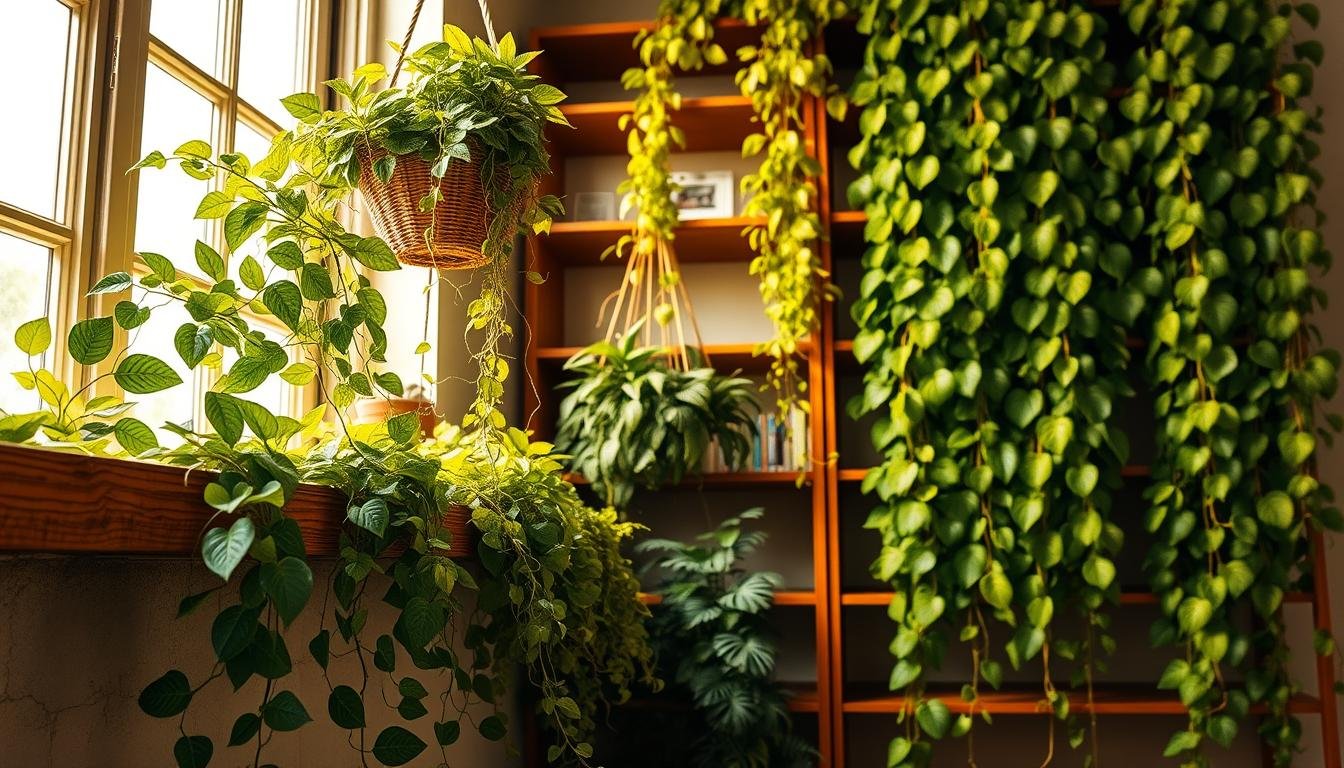
The String of Hearts is a unique and captivating trailing plant. It has heart-shaped leaves that trail down, perfect for hanging baskets or high shelves.
Care Tips: It likes bright, indirect light and well-draining soil. It’s easy to care for, great for busy people.
Golden Pothos
Golden Pothos has vibrant, golden leaves. It’s beautiful and easy to care for, loved by many.
Benefits: It purifies the air and grows well in different light levels, from low to bright.
| Plant | Lighting Needs | Maintenance Level |
|---|---|---|
| String of Hearts | Bright, Indirect Light | Low |
| Golden Pothos | Low to Bright Light | Low |
String of Hearts and Golden Pothos are great for bold decor. They’re easy to care for and add style to any room.
Perfect Trailing Plants for Low-Light Areas
Some trailing plants don’t need direct sunlight to grow well. They’re perfect for rooms with little natural light.
English Ivy and ZZ Plant are great examples. They’re not only beautiful but also easy to take care of.
English Ivy
English Ivy is a versatile, low-maintenance plant. It thrives in various lighting, including low light.
To care for English Ivy, water it when the top inch of soil is dry. Fertilize it sometimes to help it grow well.
ZZ Plant
The ZZ Plant is great for indoor spaces with little light. It needs very little water, making it perfect for those who are always busy.
ZZ Plant usually needs watering once a week. But this can change based on your home’s humidity and temperature.
Here’s a comparison of English Ivy and ZZ Plant in terms of their care requirements:
| Plant | Watering Needs | Light Requirements | Fertilization |
|---|---|---|---|
| English Ivy | Water when top inch of soil is dry | Low to bright indirect light | Fertilize occasionally |
| ZZ Plant | Water once a week | Low light | Rarely needs fertilization |
Both English Ivy and ZZ Plant are excellent for adding greenery to low-light areas. With the right care, they can flourish and enhance your home’s beauty.
Creative Display Ideas for Trailing Plants
Trailing plants can be a stunning centerpiece in your home. They bring elegance and freshness to any room.
Shelves and Ledges
Shelves and ledges are perfect for showing off your trailing plants. They turn your space into a beautiful vertical garden.
For a striking display, mix plants with different textures and colors on one shelf. This makes your display eye-catching.
Hanging Baskets
Hanging baskets are great for trailing plants. They can hang from the ceiling or a hook, adding a playful touch.
Choose a basket that matches your plants’ beauty. The right basket can make your plants look even more stunning.
Popular plants for hanging baskets include String of Hearts and Golden Pothos. They’re not only beautiful but also easy to care for.
Seasonal Care Tips for Trailing Plants
To keep your trailing plants healthy all year, it’s key to know their seasonal needs. These plants, like many houseplants, need different care as seasons change. Changing your care can greatly improve their health and look.
Indoor Care in Winter
In winter, trailing plants need less water and food because it’s colder and darker. Here’s what to do:
- Water them once a month, as they grow slower.
- Don’t fertilize, as they’re dormant in winter.
- Keep them away from cold drafts and extreme cold.
Some plants, like Pothos and English Ivy, can handle low light. This makes them perfect for dark winter rooms.
Outdoor Transition in Spring
When spring comes, plants start growing again. It’s time to change your care:
- Water more as they grow faster.
- Start fertilizing with a balanced mix to help them grow.
- Prune them to keep their shape and encourage new growth.
Spring is also a good time to repot if they’ve outgrown their pots. Use a mix that drains well to avoid root rot.
By following these tips, your trailing plants will thrive all year.
Common Pests Affecting Trailing Plants
Trailing plants are beautiful but can face pest problems. These issues can harm their health and look. It’s important to address these problems quickly.
Identifying Issues
Spider mites, mealybugs, and scale are common pests. Spotting them early is key to treating them. Spider mites turn leaves yellow or bronze, mealybugs look like white cotton, and scale forms small bumps.
Regularly check your plants for pests. Look at the undersides of leaves and stems. If you see unusual growths or pests, act fast.
Treatment Options
When you find pests, there are ways to treat them. For small problems, a mild soap and water wash can help. For bigger issues, insecticidal soap or neem oil can control pests.
- Insecticidal soap breaks down the insect’s exoskeleton.
- Neem oil stops insects from reproducing by messing with their hormones.
Isolate plants with pests to stop them from spreading. With the right treatment, your plants can stay healthy and look great.
Benefits of Trailing Houseplants in Home Decor
Adding trailing houseplants to your home is a great way to improve its look. These plants bring greenery and make your rooms feel more welcoming.

Trailing houseplants are super flexible, letting you express your creativity. You can put them on shelves or in hanging baskets. This adds interest to empty walls and corners.
Creating Depth
Indoor trailing plants are great for adding depth to a room. By placing plants at different heights and angles, you create a beautiful display. This draws the eye and makes the room more interesting.
This trick works well in small spaces. It makes the room seem bigger than it is.
Adding Greenery
Trailing houseplants also bring greenery to your home. They fit well with any decor, whether it’s simple or elaborate. You can pick the right plants to match your style and make your space better.
There are many trailing plant decor ideas out there. You can find the perfect plants to enhance your living area.
Enhancing Your Office Space with Trailing Plants
Trailing plants are more than just decorations. They help make your office a healthier place. Adding indoor trailing plants can make your workspace calmer and more productive.
Having trailing plants in the office can lower stress levels. Studies show that plants can lower blood pressure and reduce anxiety. This leads to a more relaxed team.
Stress Reduction
The calming effect of easy care trailing houseplants is huge. Just having plants around can reduce stress. It helps employees handle the demands of work better.
Improving Focus
Trailing plants also help improve focus and concentration. Being around plants can calm you down. This helps you stay on task and work more efficiently.
| Benefits | Description |
|---|---|
| Stress Reduction | Lower blood pressure and reduced anxiety levels |
| Improved Focus | Increased concentration and productivity |
| Aesthetic Appeal | Enhanced visual appeal of the office space |
To get the most out of trailing plants, follow some basic care tips. Make sure your plants get the right light and water. This will keep them healthy and improve your office.
Combining Trailing Plants with Other Flora
The art of mixing trailing plants with other plants is about finding a balance. This balance is between color and texture. By carefully choosing plants to pair, you can make your indoor space look great.
Color Coordination
Color is key when mixing plants. Pick plants that complement or contrast each other. For example, Golden Pothos and Snake Plants make a beautiful pair.
- Use plants with different shades of green for a single-color look.
- Pair plants with flowers or colorful leaves for a pop of color.
- Think about the color of your container and decor for harmony.
For more ideas on styling house plants, check out Gardens Illustrated for tips from experts.
Texture Contrast
Texture is also important for interesting indoor plant displays. Mixing plants with different textures makes your arrangement stand out. For instance, String of Hearts and ZZ Plant look great together.
- Combine plants with smooth leaves, like Peace Lily, with fuzzy ones.
- Use plants with different growth patterns, like upright and trailing.
- Try different container textures for more interest.
By focusing on color and texture, you can make amazing Trailing Plant Decor Ideas. These ideas will show off your creativity and make your space better.
Propagation Techniques for Trailing Plants
Trailing plants are fun to grow because you can easily make more of them. This lets you share your favorite plants with others. You can make more plants using two main ways: stem cuttings and leaf cuttings.
Stem Cuttings
Stem cuttings are a common way to grow more plants. First, pick a healthy stem with at least two nodes. Then, cut the stem just below a node with a sharp tool. Remove the lower leaves, leaving a few at the top.
Put the cutting in water or moist soil. Roots will grow in a few weeks.
Tips for Successful Stem Cuttings:
- Use a clean tool to prevent infection.
- Keep the soil consistently moist.
- Provide bright, indirect light.
Leaf Cuttings
Some plants can also grow from leaf cuttings. This means cutting a healthy leaf and putting it in water or soil. But, not all plants do well with leaf cuttings. So, it’s important to know what your plant needs.
Benefits of Leaf Cuttings:
- Less invasive than stem cuttings.
- Can be less stressful for the plant.
| Propagation Method | Success Rate | Time to Root Development |
|---|---|---|
| Stem Cuttings | High | 2-4 weeks |
| Leaf Cuttings | Moderate | 4-6 weeks |
Environmental Factors in Plant Growth
Knowing about environmental factors is crucial for caring for trailing plants. Their health and growth depend a lot on their surroundings. This includes humidity levels and temperature.
Humidity Levels
Trailing plants love humid places, best between 40% to 60% relative humidity. To keep it humid indoors, you can use a humidifier. Or group plants together to make a mini humid spot.
Tips for Maintaining Optimal Humidity:
- Use a hygrometer to check humidity levels.
- Don’t put plants near heating or cooling vents.
- Mist plants often, especially when it’s dry.
| Plant Type | Ideal Humidity Range |
|---|---|
| Pothos | 40-60% |
| English Ivy | 50-70% |
Temperature Preferences
Most trailing plants like daytime temperatures between 65°F to 75°F (18°C to 24°C). At night, they prefer it around 55°F to 65°F (13°C to 18°C). Keep them away from drafty windows or doors.
“Keeping the temperature steady is key for trailing plants. Avoid big changes to keep them healthy.”
Temperature Guidelines for Common Trailing Plants:
| Plant | Daytime Temp | Nighttime Temp |
|---|---|---|
| Spider Plant | 65-75°F | 55-65°F |
| String of Hearts | 70-80°F | 60-70°F |
By managing these environmental factors, you can make a perfect home for your trailing plants. This way, they stay healthy and grow well.
Conclusion: Beautify Your Space with Trailing Plants
Trailing houseplants are great for any indoor or outdoor space. They are easy to care for and look good. This makes them a simple way to improve your home or office.
Simplifying Your Decor
Adding trailing plants to your decor can make your space look better. You can start with a Pothos on a shelf or create a hanging basket with many plants.
Getting Started
Starting with trailing plants is easy. Choose the right plants for your space and follow the care tips in this article. With trailing plants, you can bring greenery into your space and enjoy its benefits.
FAQ
What are the best trailing plants for indoor spaces?
The top choices for indoor trailing plants are Pothos, Spider Plant, String of Hearts, and Golden Pothos. They are easy to care for and look great.
How do I care for my trailing houseplants?
To care for your trailing plants, make sure they get the right light. Water them right and fertilize them often. Each plant has its own needs, so learn what yours are.
Can trailing plants thrive in low-light conditions?
Yes, plants like English Ivy and ZZ Plant do well in low light. They’re perfect for rooms with little natural light.
How often should I water my trailing plants?
How often to water depends on the plant, soil, and where it’s kept. Generally, wait until the top inch of soil is dry before watering.
What are some creative ways to display trailing plants?
You can show off trailing plants on shelves, ledges, or in hanging baskets. They add greenery to any room. Mixing them with other plants can create beautiful displays.
How do I propagate trailing plants?
You can propagate trailing plants with stem or leaf cuttings. Take healthy cuttings, remove lower leaves, and plant them in good potting mix.
What are some common pests that affect trailing plants?
Pests like spider mites, mealybugs, and scale can harm trailing plants. Check your plants often and treat any infestations quickly to avoid damage.
Can trailing plants help purify the air in my home?
Yes, plants like Pothos and Spider Plant can purify the air. They remove toxins and pollutants from the air.
How can I use trailing plants to enhance my office decor?
Trailing plants can make your office look better and feel calmer. Choose easy-care plants like Pothos or ZZ Plant for busy offices.
What are the ideal environmental conditions for trailing plants?
Trailing plants like bright, indirect light and moderate humidity. They prefer temperatures between 65-75°F (18-24°C). Learn what your plants need for the best environment.