Table of Contents
What a Monstera Soil Mix Needs to Do
A good Monstera soil mix has one job: keep roots moist enough to grow, but airy enough to breathe. That sounds simple. It is not. Most people kill the balance in one direction or the other. They either use a dense, soggy mix that stays wet too long, or they go so chunky that the plant dries out faster than they can manage.
Current expert guidance is consistent on the core point: Monstera wants a rich but well-draining mix with organic matter and airflow around the roots. University and extension sources describe it as rich, well-draining, and high in organic matter, while plant experts commonly recommend improving standard potting mix with bark or perlite for better aeration. (Wisconsin Horticulture)
That tells you something important. You do not need a magical secret recipe. You need a substrate that manages four things at once: drainage, aeration, structure, and moderate moisture retention. If your mix can do those four, you are in good shape.
Why Standard Potting Soil Often Fails
A plain all-purpose potting mix can keep a Monstera alive. It often does not help it thrive. The issue is not that standard potting soil is “bad.” The issue is that it is usually too fine, too moisture-retentive, or too compacting for a climbing aroid that hates sitting wet around the roots.
That is why current SERP results for queries like best monstera soil mix, monstera soil recipe, and can I use regular potting soil for monstera are dominated by DIY chunky-mix guides, repotting how-tos, and expert plant-care articles. Across those pages, the repeated advice is clear: standard potting mix can work if you open it up with ingredients like orchid bark and perlite. The more current ranking content also tends to emphasize “chunky aroid mix” language because that matches both search demand and the plant’s real needs. (Houseplant Care Tips)
There is also a risk angle. Penn State Extension recommends a well-draining soilless potting mix with organic matter, and multiple sources warn that wet, poorly draining media can raise the chance of root problems. That lines up with what growers see in practice: Monsteras tolerate brief dryness better than chronically soggy roots. (Penn State Extension)
The Soil Science Behind a Healthy Monstera Root Zone
Monstera is not a desert cactus. It is also not a bog plant. It comes from tropical environments and, as an aroid, naturally grows with access to airflow, moisture, and support. Indoors, the potting mix has to recreate that balance in a container where water behaves very differently than it does on a forest floor.
If you understand that one idea, every ingredient choice makes more sense. You are not just mixing “dirt.” You are engineering a root environment. That root environment determines how fast excess water drains, how much oxygen stays available, how long the mix stays evenly moist, and how quickly the mix collapses into compaction over time.
Drainage vs Moisture Retention
People talk about well-draining soil like it means the soil should never hold water. Wrong. If the mix drains instantly and dries bone-dry in a day, that is not balanced. You still need a base that can hold some moisture and nutrients.
The goal is this: water moves through the mix freely, but a moderate amount remains available to the roots. That is why most effective Monstera mixes use a blend of moisture-holding materials such as potting mix, coco coir, or composted organic matter, plus airflow-creating materials like perlite, pumice, or orchid bark. Expert sources and current ranking pages keep landing on that same formula because it solves the real problem instead of just sounding fancy. (Penn State Extension)
Aeration, Compaction, and Root Rot Risk
Roots need oxygen. When soil stays packed and wet, oxygen drops. That is when trouble starts. University of Minnesota Extension notes that poor drainage and too much moisture can rot new roots, and other extension guidance warns against soggy conditions because Monstera is prone to root diseases when drainage is poor. (University of Minnesota Extension)
This is why chunkiness matters. Bark pieces, perlite, and pumice create pore space. That pore space keeps the root zone from turning into a wet brick. It also reduces compaction over time, which matters more than most people realize. A mix can look great on repotting day and still become dense and airless months later if it is built mostly from fine particles.
Best Ingredients for a DIY Monstera Soil Mix
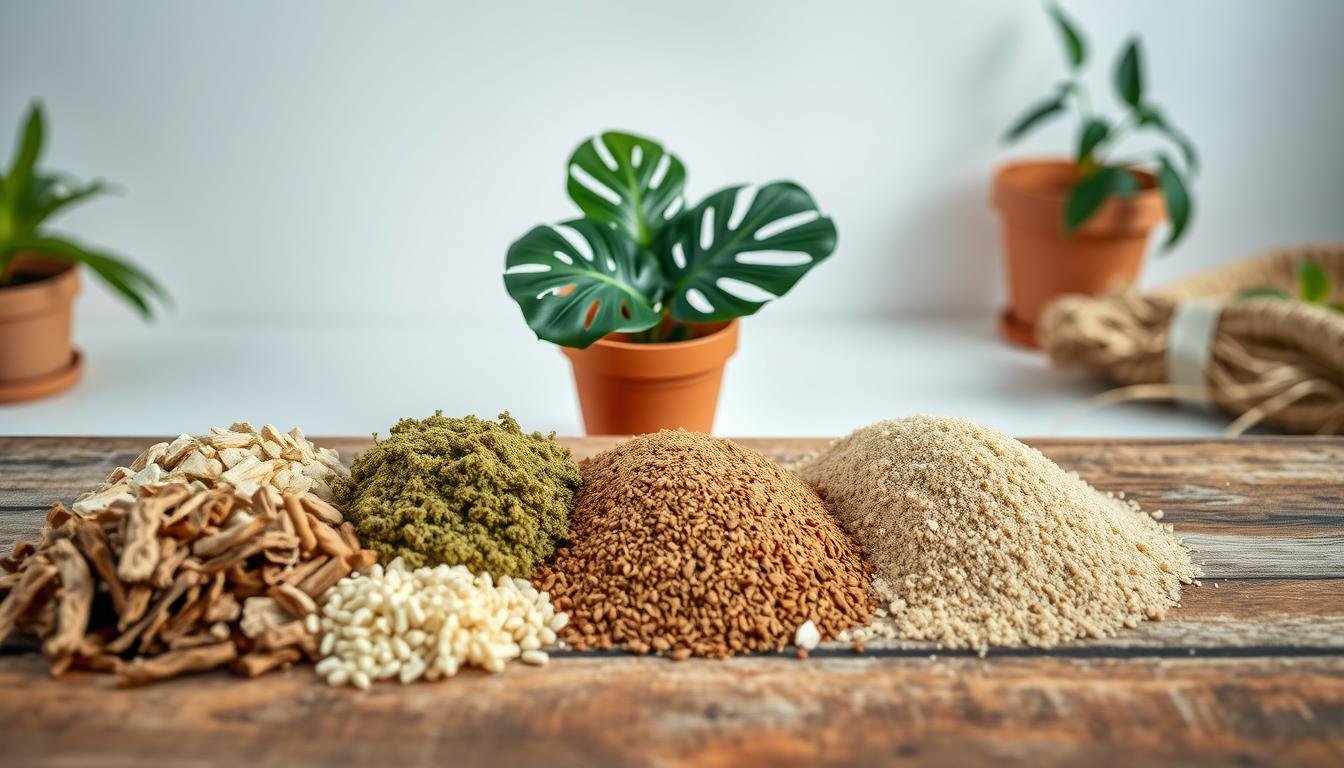
A strong DIY Monstera soil mix usually uses three layers of logic: a base for moisture and nutrients, chunky materials for airflow and structure, and optional add-ins for performance or convenience. You do not need every ingredient on the internet. You need the right roles covered.
Base Ingredients That Hold Moisture and Nutrients
Your base is the part that keeps the mix from drying too fast and gives roots access to steady moisture. Good options include a quality indoor potting mix, coco coir, and in some cases a modest amount of compost or worm castings. Penn State Extension specifically recommends a well-draining soilless potting mix rich in organic matter, which supports using a solid indoor base mix rather than building everything from scratch. (Penn State Extension)
Indoor potting mix is the easiest starting point because it usually includes organic components that hold moisture and nutrients. Coco coir helps with moisture buffering and texture, though too much can make the mix hold water longer than some growers want. Worm castings can add nutrients, but they should stay an add-in, not the bulk of the substrate.
The trap is using too much of the base layer. Once the fine, moisture-holding material becomes the majority by a large margin, drainage slows and compaction becomes more likely. That is when the “easy” option starts causing yellow leaves, fungus gnats, and mushy roots.
Chunky Ingredients That Create Airflow
This is where a Monstera mix earns its keep. Orchid bark, perlite, and pumice are the most common airflow ingredients because they create space in the mix without turning the pot into a desert.
Orchid bark adds structure and larger air pockets. It also fits the way Monstera roots naturally like to move around supports and textured material. Perlite improves drainage and lightens the mix. Pumice does something similar but is heavier, which can help stabilize large plants. Current ranking results and expert commentary consistently recommend bark and perlite as the simplest, highest-value amendments to a standard mix. (Homes and Gardens)
If your Monstera is large, top-heavy, or on a moss pole, a mix with some bark and a heavier aeration ingredient can feel more stable than a fluffy mix built mostly around perlite.
Optional Add-Ins and When They Help
Optional does not mean useless. It means you should add them for a reason. Worm castings can help if you want a little nutrient charge. Horticultural charcoal is often added for texture and drainage, though it is not mandatory. Coco chips can make a mix chunkier while still holding more moisture than bark alone. LECA can be useful in semi-hydro setups or as a minor structural addition, but it is not essential for a soil-based Monstera mix. (The Guardian)
Skip random “houseplant hacks” unless you know what problem they solve. A good substrate is not built by throwing in ten trendy amendments. It is built by matching ingredients to the way you grow.
The Best Monstera Soil Mix Recipe for Most Homes
Here is the answer most people came for.
Best Monstera soil mix for most homes:
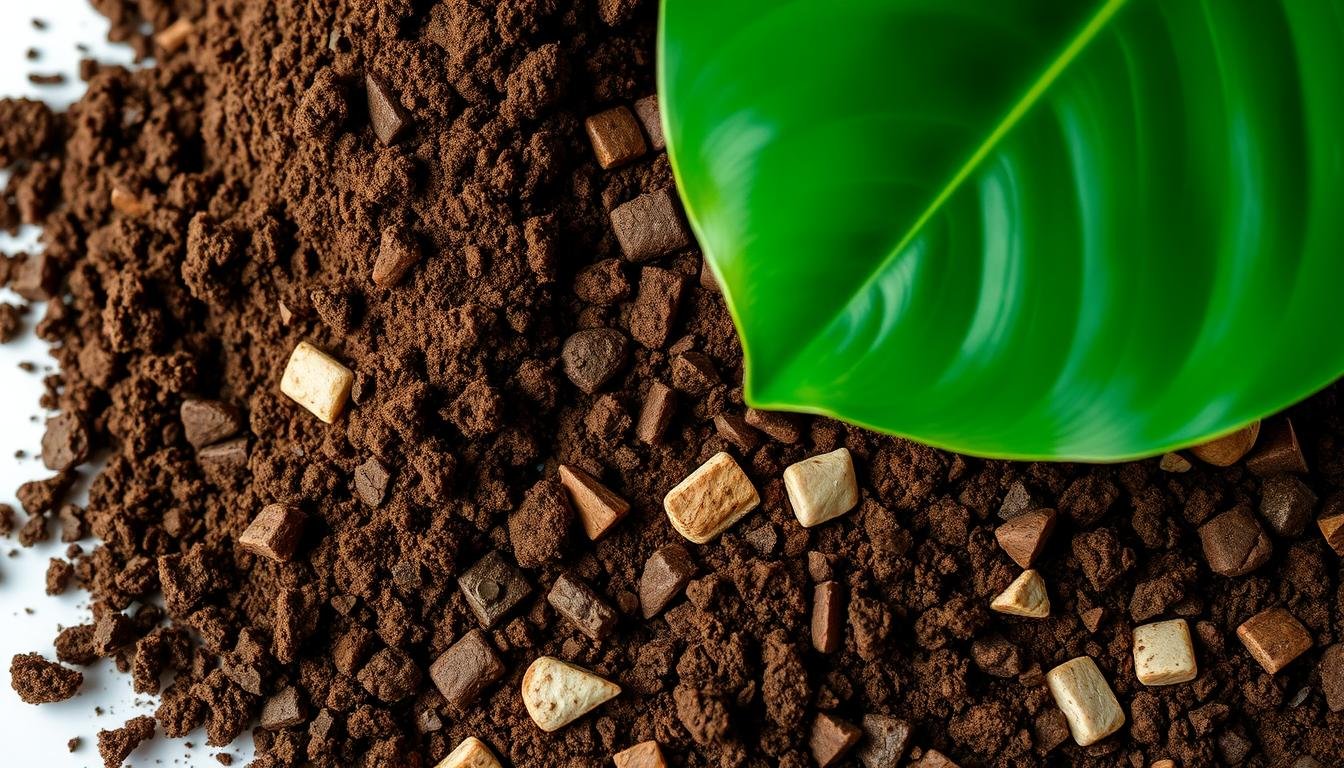
40% high-quality indoor potting mix, 30% orchid bark, 20% perlite or pumice, 10% worm castings or coco coir.
That is not the only workable recipe. But it is a strong middle-ground formula because it balances moisture retention, drainage, organic matter, and long-term structure. It also closely reflects the patterns showing up in current search results, where many successful mixes cluster around a base + bark + perlite structure, often with a small nutrient or moisture-buffering add-in. (tropicalplantkit.com)
Simple Beginner Recipe
If you want the easiest version, use:
- 1 part indoor potting mix
- 1 part orchid bark
- 1 part perlite
This equal-parts recipe is probably the most common DIY Monstera mix showing up in current search results and grower discussions. It is simple, easy to remember, and effective in a wide range of indoor conditions. It works especially well for people who tend to overwater or who live in moderate to humid environments. (Houseplant Care Tips)
Its main downside is that in very dry homes, very warm rooms, or terracotta pots, it can dry faster than beginners expect. That is not a flaw. It just means you may need to tune it.
Chunkier Recipe for Overwaterers and Humid Homes
If your home is humid, your pot is large, or you know you water too often, go chunkier:
- 30% potting mix
- 30% orchid bark
- 25% perlite or pumice
- 15% coco chips or coarse bark
This kind of recipe lines up with the chunkier “aroid mix” direction that has become more prominent in recent SERP results. It gives you more margin for error if your biggest risk is staying too wet for too long. (Dr Greenthumbs)
The trade-off is simple: faster drainage means you need to stay more aware of watering. A chunky mix protects roots from suffocation, but it does not water the plant for you.
Slightly More Moisture-Retentive Recipe for Dry Homes
If your indoor air is dry, your plant sits near HVAC airflow, or you use terracotta that dries quickly, use:
- 50% indoor potting mix
- 20% orchid bark
- 20% perlite or pumice
- 10% coco coir or worm castings
This still drains better than plain potting soil, but it gives the roots a bit more moisture buffering. It is often the better choice in lower humidity homes where super-chunky mixes dry too quickly between waterings.
How to Mix Monstera Soil Step by Step
Making the mix is easy. Making it correctly is about consistency. The goal is not to hit a ratio with laboratory precision. The goal is to create a texture that is airy, evenly blended, and suited to your plant and environment.
Start with a clean bin, tub, or bucket. Add your base mix first so the fine material is distributed evenly. Then add your bark, followed by perlite or pumice. If you are using worm castings or another fine amendment, mix that in last so it does not clump.
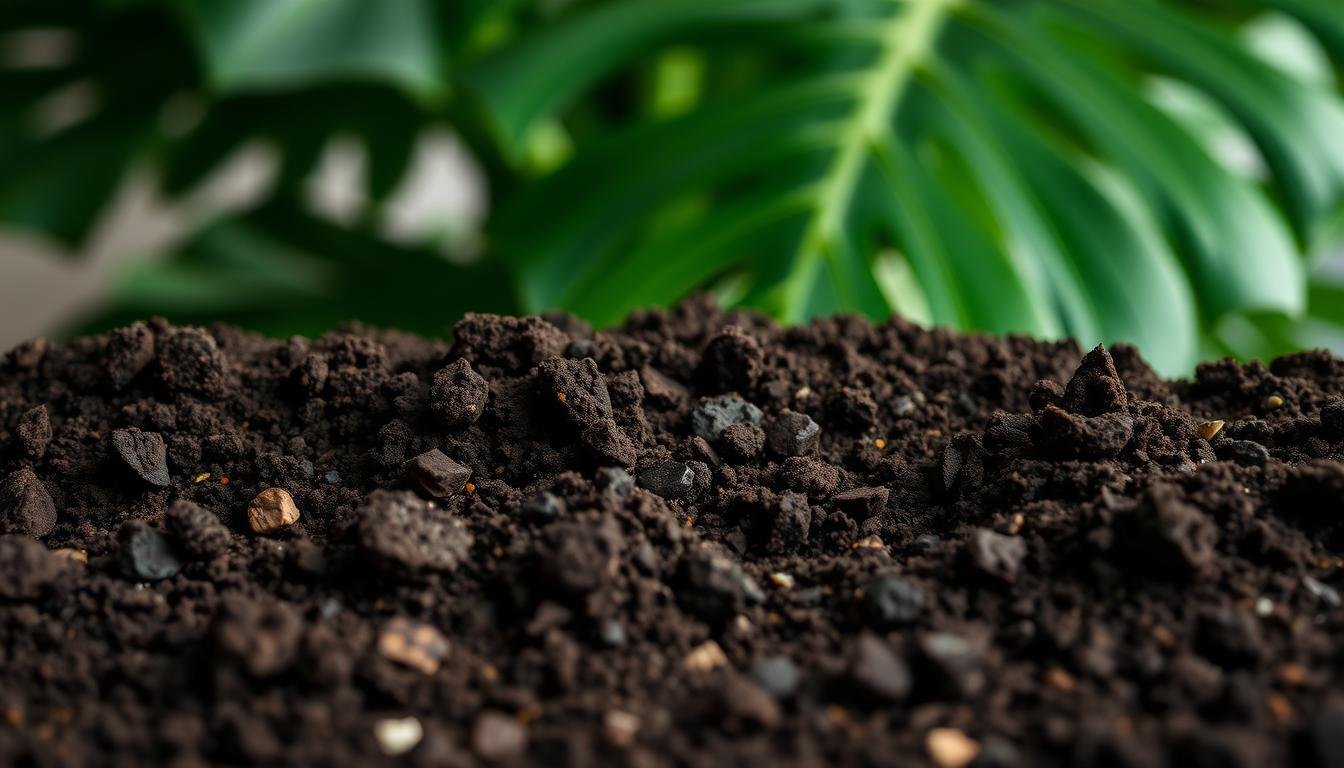
Once everything is combined, squeeze a handful. A good Monstera mix should feel light and springy, not muddy or paste-like. When you wet it lightly, it should hold together loosely, then fall apart with minimal pressure. That texture test matters because it quickly reveals whether the mix is too dense. If it compacts into a heavy ball, it is telling you something.
Before potting, check the particle balance. If the mix looks mostly like fine soil with a few bark chips sprinkled in, it is too dense. If it looks like a bowl of bark with almost no moisture-holding material, it may dry too fast. You want visible structure and visible base material. Not sludge. Not mulch.
How to Adjust the Mix for Your Home, Pot, and Watering Style
This is where most generic articles fail. They act like one recipe fits every home. It does not. A Monstera in a bright, warm room in Arizona does not need the same mix as a Monstera in a dim, humid apartment in Singapore.
Adjust the mix based on three things: your environment, your container, and your habits. If your home is humid or you water too frequently, increase the bark and perlite. If your home is dry or you forget to water, keep a little more base mix or coir. If you use terracotta, expect faster drying. If you use a large plastic or glazed ceramic pot, expect slower drying. The soil mix has to compensate for the rest of the system, not exist apart from it.
This is also why “copy my exact recipe” advice can mislead beginners. Two people can use the same ingredients and get different results because their light, humidity, pot size, and watering habits are different. The best mix is the one that dries at a healthy pace in your space.
Monstera Soil Mix vs Regular Potting Soil
Here is the clean comparison.
| Feature | Regular Potting Soil | Good Monstera Soil Mix |
|---|---|---|
| Drainage | Moderate to slow | Fast but balanced |
| Aeration | Often limited | High |
| Compaction risk | Higher over time | Lower |
| Root rot risk | Higher if overwatered | Lower when managed well |
| Water retention | Higher | Moderate |
| Best use | General houseplants | Aroids like Monstera |
A current expert quote summarized by Real Simple captures the practical view well: a standard potting mix can work, but adding bark or perlite improves aeration, while moisture control potting mixes are a poor fit because Monsteras do not like prolonged wetness around the roots. (Real Simple)
So, can you use regular potting soil? Yes. Should you use it alone if you want better root health and fewer watering issues? Usually no.
Can You Use Pre-Made Aroid Mixes?
Yes. A good pre-made aroid mix can work extremely well for Monstera. In fact, if you do not want to buy multiple ingredients or store bags of substrate components, it is often the most practical option.
The key is not the label. It is the texture. Some branded “aroid mixes” are genuinely airy and well balanced. Others are mostly marketing with a few chunks tossed into an ordinary peat-heavy base. Look for visible bark, a clear aeration component like perlite or pumice, and a structure that does not collapse into a dense mass when wet. Current commercial and editorial sources increasingly describe good aroid mixes as balancing organic matter, drainage, and airflow, which is the right lens to use when you compare products. (Rosy Soil)
Premade mixes are especially useful for people with only one or two plants. DIY makes more sense when you have a larger collection, want tighter control, or enjoy dialing in recipes.
How to Repot a Monstera Without Creating Soil Problems
Repotting is where good ingredients go to die if you use them badly. The biggest repotting mistake is not the recipe. It is pot sizing. A pot that is too large holds extra wet soil around roots that cannot use it yet. That slows drying and raises risk. Expert guidance commonly recommends sizing up only slightly, often around 1 to 2 inches wider than the current pot. (scottsmiraclegro.com)
When you repot, start with a container that has drainage holes. Add some fresh mix to the bottom, place the root ball, then backfill around it without packing the soil hard. Firm enough to stabilize the plant. Loose enough to preserve air pockets. Those are different things.
Do not bury the plant deeper than it was before unless you have a specific reason. If you use a moss pole or support, secure that first so you are not tearing through fresh roots later. Wisconsin Extension specifically notes that Monsteras benefit from support for their climbing habit and aerial roots. (Wisconsin Horticulture)
After repotting, water thoroughly once so the mix settles. Then let the plant return to a normal dry-down cycle. Do not keep the soil constantly wet because you are “helping it recover.” That is how repotting problems start.
Signs Your Current Soil Mix Is Wrong
Bad soil usually tells on itself before the plant fully crashes. You just have to notice the pattern instead of reacting to one leaf at a time.
If the soil stays wet for a week or more in average indoor conditions, especially in the growing season, that is a red flag. If water pools on top for a while before sinking in, the mix may be compacted or hydrophobic in odd ways. If the plant shows yellowing leaves, slow growth, a musty smell, or recurring fungus gnats, the substrate may be holding too much moisture.
The opposite problem exists too. If the mix dries so fast that the plant wilts constantly and roots never stay evenly moist, the mix may be too coarse for your environment. Good Monstera soil does not stay soggy forever, but it should not behave like an empty basket either.
The Most Common Monstera Soil Mistakes
The first mistake is chasing a recipe without understanding the environment. A popular chunky mix can fail in a dry home if you treat it like a moisture-retentive mix. The second is using too much dense base material. The third is overpotting. The fourth is assuming the soil mix alone fixes bad watering habits.
Another common mistake is confusing “well-draining” with “nutrient-free.” Monsteras still want a mix with some organic matter. Wisconsin Extension recommends a rich soil mix, and Penn State Extension recommends a well-draining soilless mix rich in organic matter. Those details matter because they keep you from swinging into extremes. (Wisconsin Horticulture)
One more mistake: keeping old, broken-down substrate too long. As bark decomposes and fine particles settle, the mix becomes denser. Even if the plant has not outgrown the pot, the substrate itself may have stopped working as intended.
Soil, Watering, and Environment: Why the Mix Never Works Alone
This is the part people skip, then wonder why the “perfect Monstera mix” did not magically solve everything.
Soil mix is one variable. Light, temperature, humidity, pot material, pot size, and watering frequency all change how that mix behaves. NC State notes Monstera prefers warm conditions and good drainage, while University of Minnesota says mature plants are often watered when the top 1 to 2 inches of soil is dry. That means the right watering schedule depends on how quickly your specific setup reaches that point. (Plant Toolbox)
A dense mix in bright light may still dry on time. A great chunky mix in low light and an oversized pot may still stay wet too long. So when you troubleshoot, stop asking only, “Is this the right soil?” Ask, “Is this the right soil for this pot, in this light, with my watering habits?”
That question gets better answers.
Conclusion
If you want the shortest useful answer, here it is: a Monstera soil mix should be airy, well-draining, and still capable of holding moderate moisture and nutrients. That usually means some combination of potting mix, orchid bark, and perlite or pumice, with small adjustments based on your home and habits. The most reliable starting point for most people is a balanced, chunky mix rather than plain potting soil.
You do not need perfection. You need a mix that avoids two failures: staying wet too long or drying too fast. Start with a simple recipe, watch how quickly it dries in your environment, and adjust. That is how you get healthier roots, steadier growth, fewer yellow leaves, and far less confusion.
FAQs
What is the best soil mix for Monstera?
The best all-around Monstera soil mix is usually a chunky, well-draining blend built from indoor potting mix, orchid bark, and perlite or pumice. A strong default recipe is 40% potting mix, 30% bark, 20% perlite, and 10% worm castings or coco coir. That gives you drainage, airflow, and enough moisture retention to support steady growth without leaving the roots suffocating in wet soil. (tropicalplantkit.com)
Can I use regular potting soil for Monstera?
Yes, but plain regular potting soil is often too dense and moisture-retentive to be the best choice on its own. The practical fix is simple: add orchid bark and perlite to improve aeration and drainage. That approach aligns with current expert guidance and with what is dominating the SERP for Monstera soil-related searches. (Real Simple)
Does Monstera need orchid bark and perlite?
It does not technically need those exact ingredients, but it does need what they provide: airflow, structure, and faster drainage. Orchid bark and perlite are popular because they are easy to find, easy to use, and effective. Pumice or coco chips can fill similar roles depending on your setup. The point is function, not brand loyalty to one amendment.
What pH does Monstera prefer?
Sources vary slightly, but Monstera is generally described as preferring a slightly acidic to neutral range. Penn State Extension lists neutral pH 6.0 to 8.0 for a houseplant setting, while UConn’s plant pH list places Monstera at 5.0 to 6.0. In practical home-growing terms, a mildly acidic to near-neutral mix is usually fine as long as drainage and root health are good. (Penn State Extension)
How often should I repot Monstera with fresh soil?
Repot when the plant is root-bound, when the mix has broken down and become dense, or when drainage has clearly worsened. Many growers repot every 1 to 2 years, but the real trigger is substrate performance, not the calendar. If the soil is compacting, staying wet too long, or smelling sour, fresh mix matters more than waiting for an anniversary date. (Real Simple)