Table of Contents
Why Monsteras Are So Popular With Beginners
A Monstera is one of the few houseplants that manages to be dramatic without being impossible. It looks expensive, tropical, and a little wild, but the actual care routine is simpler than the leaves make it seem. That gap matters. Beginners usually want something beautiful that forgives a few mistakes, not a plant that punishes them for missing one watering or placing it three feet too far from a window. A healthy Monstera can give you that balance.
There is a reason this plant keeps showing up across care guides, retailers, and troubleshooting pages in current search results: people want a houseplant that feels rewarding fast. The dominant SERP pattern for Monstera care is practical, beginner-focused content built around the same pain points: light, watering, soil, support, yellow leaves, drooping, and propagation. That tells you the real intent behind the keyword. People are not just asking, “What is a Monstera?” They are asking, “How do I keep this thing alive, make it look better, and stop panicking every time a leaf changes?” (The Spruce)
The good news is that Monstera deliciosa is genuinely beginner-friendly when you understand one thing: it is not a desert plant, and it is not a fern. It wants a middle ground. Give it bright to medium indirect light, let the top layer of soil dry before watering again, use a chunky, well-draining mix, and support it as it climbs. Miss one of those badly, especially watering or light, and the plant tells on you fast. Get them mostly right, and it rewards you with larger leaves, stronger growth, and eventually those famous splits and holes. (RHS)
What a Monstera Deliciosa Actually Is
Monstera deliciosa is a tropical climbing plant native to Central America, where it grows as an understory plant and climbs trees using aerial roots. That one detail explains half of its care needs. Understory plants are adapted to filtered light rather than intense all-day sun, and climbing plants usually perform better when given support instead of being left to sprawl. In nature, this plant can grow impressively large. Missouri Botanical Garden notes it can climb high into trees outdoors, while indoor plants are more typically kept in the 6- to 8-foot range. (missouribotanicalgarden.org)
The nickname Swiss cheese plant comes from the leaf openings, called fenestrations. Those splits are not a sign of damage. They are part of mature growth. Beginners often buy a young Monstera and assume something is wrong when the early leaves are plain and heart-shaped. Usually, nothing is wrong. Juvenile plants simply have smaller, less dramatic leaves. Better light, a climbing habit, time, and healthy growth all improve the odds of more pronounced fenestration. (The Sill)
One more useful clarification: not every plant sold as a “Monstera” is Monstera deliciosa, and not every “mini monstera” is a real Monstera. NC State Extension notes that Rhaphidophora tetrasperma, often sold as mini monstera, is not actually a Monstera at all. That matters because care overlaps, but growth habit and appearance can differ. If your goal is the classic oversized split leaves, you want Monstera deliciosa. (NC Extension Gardener Toolbox)
Quick-Start Monstera Care at a Glance
Here is the short answer most beginners actually need: place your Monstera in bright, indirect light, water it when the top 1 to 2 inches of soil are dry, keep it in a well-draining aroid-style mix, avoid letting it sit in water, and give it a pole or stake if you want larger, more upright growth. Keep it warm, protect it from cold drafts, and feed it lightly during active growth. That is the core system. Everything else is refinement. (RHS)
If you want a more practical translation, think of your Monstera like this: it likes the conditions of a bright room in a warm home, not a dark corner and not a blazing windowsill. It does not want to stay bone dry for long, but it also does not want swampy soil. It is more likely to struggle from too much water than too little. And if you want that lush, vertical, mature look, you need to treat it like the climber it is rather than a plant that will magically shape itself. (Bloomscape)
For beginners, this is the highest-return rule set: prioritize light, watering discipline, and drainage before you obsess over humidity gadgets, fertilizer brands, or fancy pruning techniques. Those details can help, but they do not rescue a plant sitting in low light and wet soil. Most Monstera problems start there. The plant is forgiving, but not psychic. It responds to conditions, not hope.
Light: The Biggest Growth Lever
If you change only one thing to improve your Monstera, change the light. Bright, indirect light drives stronger growth, bigger leaves, better spacing, and better odds of leaf splitting. The University of Minnesota Extension describes Monstera deliciosa as a good houseplant for medium-light locations, and its general indoor light guidance points to east-facing windows or spots near a west-facing window out of direct light for medium-light plants. The RHS similarly recommends bright but indirect light, with warnings that strong direct summer sun can scorch leaves. (University of Minnesota Extension)
That gives you a reliable placement strategy. A spot near an east-facing window is usually safe and productive. A little farther back from a south or west window, filtered through a sheer curtain, can also work well. What usually does not work long term is a dark room where the plant can “see the sky” but not much else. In low light, Monsteras can survive, but survival is not the same as thriving. You get slower growth, longer gaps between leaves, smaller foliage, and often a leggy shape. Retail and care sources currently ranking for this topic repeat that pattern because it shows up constantly in real homes. (University of Minnesota Extension)
Direct sun is where beginners overcorrect. “It’s tropical” does not mean it wants harsh afternoon sun through hot glass. Too much direct sunlight can bleach or burn leaves. A few gentler hours of sun may be tolerated in some homes, especially morning light, but the safe default is bright indirect light. If your leaves show pale, crispy patches on the side facing the window, that is a clue the light is too intense. If the plant leans hard, grows slowly, and never develops bigger split leaves, it probably needs more light.
Watering: The Mistake That Kills More Monsteras Than Anything Else
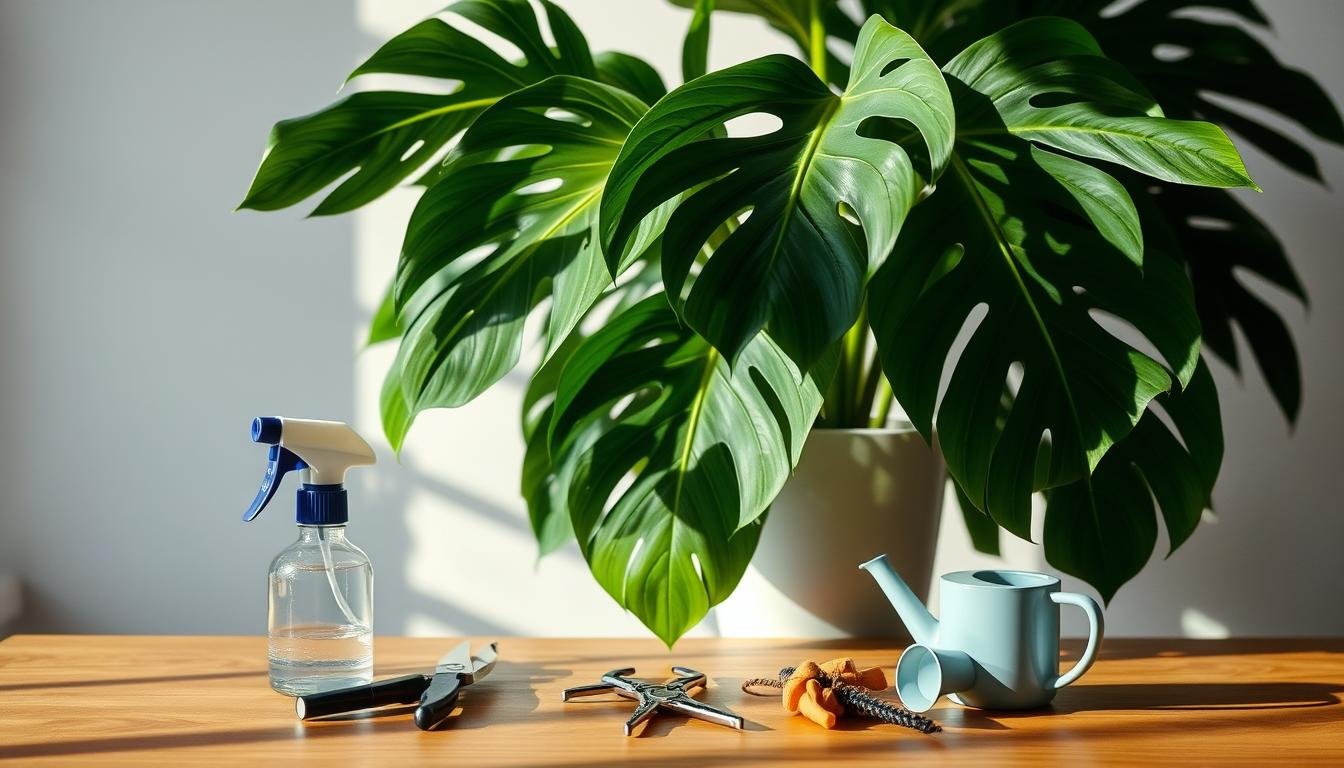
The most common Monstera mistake is simple: people water on a schedule instead of watering based on the plant and the soil. That is how you end up with root rot in winter and dehydration in summer. University of Minnesota Extension says mature Monsteras should be watered weekly, or when the top 1 to 2 inches of soil is dry. The Spruce and Bloomscape echo the same principle: check the upper soil layer first, then water thoroughly rather than adding tiny splashes on autopilot. (University of Minnesota Extension)
That means “how often should I water a Monstera?” does not have one universal answer. In a bright, warm room with active growth, it may need water around once a week. In lower light, cooler rooms, or winter, it may need significantly less. Pot size, soil mix, humidity, and season all change the pace. The right approach is boring but effective: push a finger into the soil, feel the weight of the pot, and water when the top layer has dried but the root ball is not staying dry for too long. (University of Minnesota Extension)
When you water, water deeply enough that excess moisture drains from the bottom. Then empty the saucer or cachepot so the roots are not left sitting in runoff. That step is not optional. The RHS warns against leaving the pot standing in water for long periods because roots can rot, and current troubleshooting pages consistently identify overwatering as the leading cause of yellowing and decline. (RHS)
How to Tell When Your Monstera Actually Needs Water
Your Monstera will tell you a lot if you know what to look for. A plant that needs water often feels lighter when you lift the pot, and the top inch or two of soil feels dry rather than cool and damp. Leaves may lose a bit of firmness and start to look mildly tired or less perky. That is your cue. Watering before that point, especially when the soil is still wet lower down, is where beginners create trouble.
A thirsty Monstera and an overwatered Monstera can both look droopy, which confuses people. The difference is in the soil. Dry soil plus drooping points toward thirst. Wet soil plus drooping points toward a root problem or poor oxygen at the roots. That distinction matters because the fixes are opposite. Giving more water to a plant already sitting in soggy mix is how you turn stress into damage. (Bloomscape)
Brown edges alone do not always mean thirst, either. Dry air, salt buildup, inconsistent watering, or too much direct sun can all play a role. That is why the best beginner move is not guessing from one symptom. Check the whole context: light, soil moisture, recent watering, temperature, and whether the plant is pushing new growth.
Soil and Pots: Build the Root Environment First
If light is the growth lever, soil and pot choice are the insurance policy. Monsteras want a mix that holds some moisture but still drains fast and lets roots breathe. The RHS recommends a slightly acid to neutral compost and warns against waterlogged conditions. In practice, beginners do well with an airy, chunky indoor mix often described as an aroid mix: potting soil for moisture retention, bark or coco chips for structure, and perlite or pumice for drainage. You do not need to make it complicated. You do need to avoid dense, soggy mix that stays wet for days. (RHS)
The pot matters too. Use a pot with drainage holes. Full stop. Decorative containers without drainage create a beginner trap because the plant may look stylish while the root zone becomes a swamp. A terracotta pot dries faster and can be helpful if you tend to overwater. Plastic retains moisture longer and can work well if your home is very dry or warm. Neither is universally better. Your habits matter more than the material.
Overpotting is another quiet mistake. People assume giving a young Monstera a massive pot is generous. Usually, it just keeps too much soil wet around a root system that cannot use it yet. Choose a pot only a bit larger than the current root ball unless the plant is badly root bound. Bigger is not better here. Better is balanced.
Temperature and Humidity: What Matters and What’s Overhyped
Monsteras like warmth because they are tropical plants, but you do not need to turn your home into a greenhouse. The RHS advises keeping Swiss cheese plants warm year-round at roughly 18–25°C (65–77°F), while broader Monstera care sources commonly cite a workable range around 65–85°F. Cold drafts and heat blasts from radiators are both bad bets. Stable, normal indoor warmth wins. (RHS)
Humidity matters, but not in the way social media sometimes suggests. Higher humidity can support larger leaves and better growth, and the RHS says Monsteras like humid air. But average household humidity is often enough for a healthy plant, especially if light and watering are right. The real issue is very dry air combined with heat or draft stress, which can contribute to brown edges and slower growth. Frequent misting is often oversold. Even The Spruce’s recent watering guidance points out that misting is not an effective fix for humidity compared with a humidifier. (RHS)
So what should a beginner do? Keep the plant away from cold windows in winter, heating vents, and blasting AC. If your home is consistently dry, a humidifier, grouping plants together, or placing the plant in a naturally brighter humid room can help more than random spritzing. But do not treat humidity as the first bottleneck. Most beginner Monsteras fail from bad light and overwatering long before they fail from 45% humidity.
Support, Climbing, and Aerial Roots
A Monstera is not really a tidy tabletop plant once it starts growing well. It is a climber. If you leave it unsupported, it often sprawls, leans, and becomes harder to shape. If you support it, the plant can grow more upright and often produces stronger, more mature-looking foliage over time. That matches its natural habit. University of Minnesota Extension explicitly describes Monstera deliciosa as a great climber, and aerial roots are part of that strategy. (University of Minnesota Extension)
Aerial roots freak beginners out for no good reason. They are normal. They help anchor the plant and can absorb moisture and nutrients in natural settings. You do not need to cut them all off just because they look strange. You can guide some into the soil, leave them alone, or trim a few if they become messy and you dislike the look. What you should not do is mistake healthy aerial roots for disease. They are a feature, not a flaw. (The Spruce)
Support also changes the look of the plant. A supported Monstera reads more vertical, intentional, and architectural. An unsupported one often looks wider, looser, and eventually unruly. Neither is wrong. But if your goal is bigger leaves and that classic statement-plant silhouette, some kind of support is one of the smartest upgrades you can make.
Moss Pole vs Stake: Which Support Should Beginners Choose
For beginners, the real choice is not “Do I need a support?” It is “How much maintenance do I want?” A moss pole better mimics the plant’s natural climbing surface and can encourage roots to attach, but it takes upkeep. You may need to keep it slightly moist, extend it as the plant grows, and tie stems in more deliberately. A simple stake or sturdy bamboo support is easier and lower maintenance, but it offers less surface for aerial roots to engage.
So which is better? If you want the most natural climbing setup and do not mind a bit more involvement, choose a moss pole. If you want structure with less fuss, use a stake. The best beginner choice is the one you will actually maintain. A perfect moss pole that dries out, tilts, and gets ignored is not better than a simple support system that keeps the plant upright and stable.
Fertilizing Without Burning Your Plant
A Monstera does not need heavy feeding to survive, but active growth responds well to light, steady nutrition. The RHS recommends a balanced liquid fertilizer monthly when in growth, and mainstream care guides generally point in the same direction: feed during spring and summer or whenever the plant is actively putting out leaves. That is enough for most beginners. (NC Extension Gardener Toolbox)
The biggest fertilizer mistake is not underfeeding. It is overfeeding. Too much fertilizer can lead to salt buildup, root stress, brown tips, or drooping. The recent troubleshooting guidance from The Spruce lists over-fertilization as one cause of drooping in Monsteras. So if you are unsure, err on the side of less. A diluted balanced fertilizer applied during active growth is safer than “more food equals faster giant leaves.” Plants do not work like that. (The Spruce)
A practical beginner rule: do not fertilize a struggling plant just because it looks weak. Fix the basic care first. If the roots are soggy, the light is poor, or the plant is stressed from a recent repot, fertilizer is not the rescue move. It is like giving protein powder to someone who has not slept in three days. Wrong intervention, wrong time.
Cleaning, Pruning, and Shaping for Better Growth
Monsteras have broad leaves that collect dust fast. Dust blocks light and makes the plant look dull even when it is healthy. Wiping leaves gently with a damp cloth every so often does two things at once: it improves appearance and helps you inspect for pests early. That second benefit matters more than people think. Mealybugs, spider mites, and thrips are easier to manage when caught early than after they spread into every new leaf crease. (The Spruce)
Pruning is less about “making the plant happy” and more about shaping, removing damaged growth, and controlling size. You can prune yellowing, torn, or badly damaged leaves, especially if they no longer add much to the plant. You can also trim to manage width or encourage a cleaner shape. Just do not go wild. A plant uses its leaves to make energy. Aggressive pruning on a plant already struggling with low light or poor root health usually slows recovery.
If your plant looks lopsided, the solution is usually not pruning first. It is often better light and better support. Monstera shape problems usually start with environment, not scissors. Prune to refine. Fix conditions to transform.
Repotting: When to Do It and How to Avoid Shock
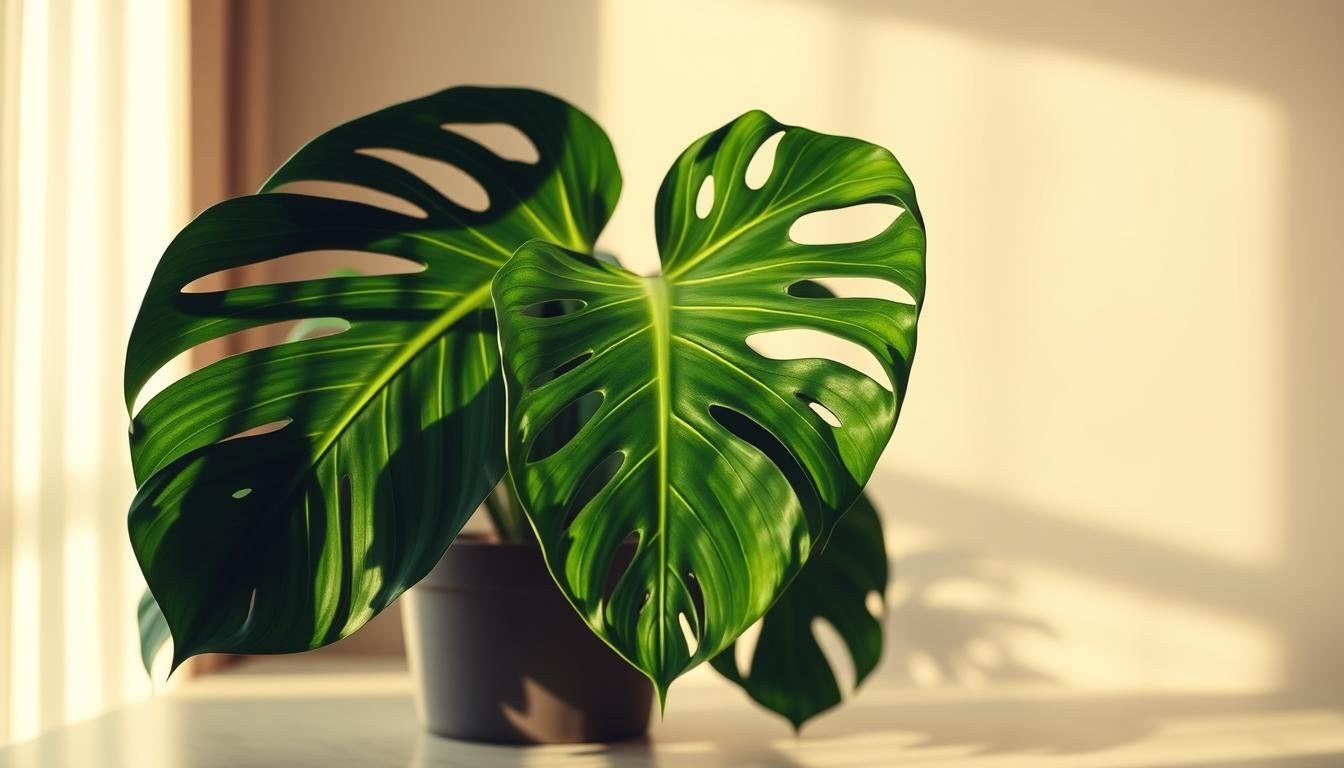
A Monstera does not need constant repotting, but it will eventually outgrow its container. Current care guidance commonly suggests repotting about every two years, while also watching for actual signs: roots circling the pot, roots emerging from drainage holes, water rushing through too fast, or a plant that dries out unusually quickly. Those signs matter more than the calendar. (The Spruce)
The safest repotting move is to size up gradually. Go one pot size larger, not dramatically bigger. Refresh the soil with a chunky, well-draining mix, keep the root ball reasonably intact, and water in after repotting so the mix settles. Then do something hard for beginners: leave it alone. Do not repot and fertilize heavily and move it across the house and start pruning in the same week. One stressor at a time.
Some mild slowing, slight droop, or adjustment after repotting is normal. Real repot shock becomes a bigger issue when roots are disturbed aggressively or when the new pot holds much more wet soil than the old root system can manage. The plant needs time to re-establish. Stable light, steady warmth, and disciplined watering help more than any “recovery tonic.”
Propagation: The Beginner-Friendly Way to Multiply Your Plant
Monstera propagation is popular for a reason: it is satisfying, useful, and not especially difficult once you understand the rule that matters. You need a node. University of Minnesota Extension is clear about this: Monstera deliciosa can only be propagated when the cutting includes a node, and propagated nodes can take 2 to 3 months before forming new leaves. That immediately cuts through a lot of beginner confusion. A leaf without a node may look alive in water for a while, but it will not become a new plant. (University of Minnesota Extension)
You can propagate in water, moss, or soil. Water is popular because it is easy to monitor and visually reassuring. Soil can work well too, especially if you want to avoid transitioning water roots later. There is no single magic medium. The bigger point is taking a healthy cutting, placing the node in the right environment, and having the patience not to interfere every two days.
Propagation is also a good excuse to prune strategically. If your Monstera is getting tall, unruly, or leggy, a clean cut above a lower node can give you both a more manageable mother plant and a new cutting to root. That is a strong beginner win: better shape, more plants, no wasted stem.
How to Propagate Monstera From a Node Cutting
Start by identifying a healthy section of stem with at least one node, and ideally a leaf and possibly an aerial root. Make a clean cut below the node using sterilized scissors or pruners. Place the node in water or a moist propagation medium, keeping the leaf out of the water if you are rooting in a jar. Put the cutting in bright, indirect light and keep conditions warm. Then wait.
That last step matters because beginners love to hover. New roots may form before new leaves, and new leaf growth can take time. University of Minnesota Extension notes that new leaves may take 2 to 3 months to appear. That timeline is normal, not failure. Once the cutting has established a decent root system, you can pot it into a well-draining mix and transition it into regular care. (University of Minnesota Extension)
If you propagate in water, do not leave the cutting in dirty water indefinitely. Change the water regularly. If you propagate in soil or moss, keep the medium evenly moist but not saturated. Rooting is about balance, not force.
Common Monstera Problems and How to Fix Them
Most Monstera problems come back to a few variables: light, water, roots, pests, and patience. That is good news because it means diagnosis is manageable. You do not need to become a botanist. You need to stop guessing wildly and work through the obvious factors in order.
A useful rule is this: when your plant looks off, do not react to the symptom first. Check the environment first. Yellowing leaves, drooping, stalled growth, and brown edges are not random. They are feedback. Read the conditions, then choose the fix. Beginners often do the opposite. They see a yellow leaf, then water more, fertilize more, move the plant, prune it, and repot it in one weekend. That usually makes the picture worse, not better.
Yellow Leaves, Drooping, Brown Tips, Pests, and No Splits
Yellow leaves are most commonly linked to improper soil moisture, especially overwatering, according to Bloomscape’s Monstera troubleshooting guidance. One yellowing lower leaf from age is usually not a crisis. Multiple yellow leaves, especially with wet soil, point toward watering or drainage issues. Check the soil, drainage holes, pot size, and root condition before doing anything else. (Bloomscape)
Drooping leaves can mean the plant is too dry, too cold, or stressed by over-fertilization. The recent Spruce guidance highlights cold damage, dry soil, and excess fertilizer as common causes. Again, the soil tells the truth. Dry soil plus droop suggests thirst. Cold exposure plus limp foliage points toward temperature stress. Wet soil plus droop usually means root trouble, not thirst. (The Spruce)
Brown leaf tips or edges are usually a care-balance issue, not a death sentence. Very dry air, inconsistent watering, too much direct sun, and salt accumulation can all contribute. The RHS notes that very dry air and proximity to a radiator can brown leaf edges, while strong direct summer sun can scorch foliage. That is why environment review beats random treatment. (RHS)
No leaf splits frustrate beginners more than almost anything. The usual reasons are straightforward: the plant is still juvenile, the light is too weak, or the plant lacks support and maturity. Fenestration improves with age, stronger growth, and often climbing support. You cannot force a tiny juvenile plant in a dim room to produce dramatic split leaves on command. You can create the conditions that make it more likely. (The Sill)
Pests usually show up when the plant is stressed or when they hitchhike in from another plant. Common issues include spider mites, mealybugs, aphids, and thrips. Check under leaves, at stem joints, and around new growth. Wipe leaves, isolate heavily infested plants, and treat early. A clean plant in decent conditions is easier to protect than a dusty, crowded plant in low light. (The Spruce)
One more issue deserves a direct answer: pet safety. The ASPCA lists Monstera deliciosa as toxic to dogs and cats because it contains insoluble calcium oxalates, which can cause oral irritation, drooling, vomiting, and difficulty swallowing if chewed or ingested. That does not mean you must never own one. It does mean you should keep it out of reach if you have curious pets. Safety advice should be practical, not dramatic. (ASPCA)
Conclusion
A beginner does not need a perfect Monstera routine. A beginner needs a repeatable one. Put the plant in strong indirect light. Water based on soil dryness, not guilt. Use a pot with drainage and a mix that breathes. Support the plant if you want it to climb and mature well. Then pay attention to what the plant is telling you instead of trying five fixes at once.
That is the real secret behind good Monstera care for beginners. Not hacks. Not expensive gadgets. Not panic. Just a few high-leverage choices made consistently. Monsteras are forgiving enough to let you learn, but responsive enough to show you when you are getting it right. Once you understand that, the plant gets easier, the growth gets better, and the whole experience gets a lot more fun.
FAQs
Is Monstera care easy for beginners?
Yes, Monstera deliciosa is widely considered beginner-friendly because it tolerates normal indoor conditions and has straightforward needs: indirect light, moderate watering, drainage, and warmth. The main catch is overwatering. If you avoid soggy soil and give it decent light, you are already ahead of most beginner problems. (University of Minnesota Extension)
How often should I water my Monstera indoors?
Water when the top 1 to 2 inches of soil are dry, not on a fixed calendar. In many homes that may be around once a week during active growth, but lower light, cooler temperatures, and winter conditions can stretch the interval. Always check the soil first. (University of Minnesota Extension)
Where should I place a Monstera in my house?
The best spot is usually near an east-facing window or a bright room where the plant gets plenty of indirect light without harsh afternoon sun. A filtered south- or west-facing spot can also work. Avoid deep shade, cold drafts, and positions right next to heating vents or radiators. (University of Minnesota Extension)
Why are my Monstera leaves not splitting yet?
Usually because the plant is still young, the light is too weak, or the plant lacks maturity and support. Fenestration improves as Monsteras age and grow under stronger conditions. Better light and a climbing support often help, but time still matters. (The Sill)
Are Monsteras toxic to cats and dogs?
Yes. The ASPCA lists Monstera deliciosa as toxic to cats and dogs due to insoluble calcium oxalates. Chewing the plant can cause mouth irritation, drooling, vomiting, and difficulty swallowing, so keep it out of reach of pets that nibble plants. (ASPCA)