Table of Contents
What the lifecycle means indoors and in the wild
The Monstera lifecycle is the full progression of a plant from seed to seedling, through juvenile and mature vegetative growth, and in rare cases to flowering and fruiting. That sounds simple. In practice, it is where most confusion starts. A Monstera in a tropical forest does not live the same life as a Monstera in a pot beside your sofa, and if you ignore that difference, your expectations get warped fast.
In the wild, Monstera deliciosa is a climbing evergreen vine native to Central America. It starts low, climbs trees, uses aerial roots to anchor itself, and can grow dramatically larger than the average indoor plant. Missouri Botanical Garden notes that wild plants can climb to around 70 feet, while indoor plants more commonly stay in the 6-to-8-foot range. RHS and UConn both reinforce the same pattern: Monstera is a climber, not a naturally bushy tabletop plant, and its mature leaf traits become more obvious as it scales upward with support. (Missouri Botanical Garden)
That single fact explains a lot. People often treat Monstera like a static decorative plant, then wonder why it stays juvenile. But the plant is wired to transition upward. Bigger leaves, deeper splits, and stronger fenestration are not random cosmetic upgrades. They are part of a developmental shift tied to age, energy, and climbing behavior. RHS specifically notes that once a plant feels it is climbing, it often produces larger, more mature leaves with more holes. (RHS)
Indoors, the lifecycle also compresses. Flowering and fruiting become rare. Seasonal changes matter more because light is weaker and less stable. Growth can slow sharply in winter. Pruning, repotting, poor drainage, and low light can all interrupt the clean progression from juvenile to mature. So when you think about the Monstera lifecycle, think less like a calendar and more like a developmental ladder. The plant climbs that ladder only when its environment tells it there is enough reason to keep going.
Stage 1: Seed and germination
The first lifecycle stage is the least familiar to most indoor growers because most people buy established nursery plants or cuttings, not seeds. Even so, the seed stage matters because it explains what the plant is trying to become from the start: a climbing aroid built for warm, humid, filtered-light conditions. University and botanical sources consistently describe Monstera as a tropical understory plant, which means the earliest phase is adapted to moisture, warmth, and protection rather than harsh direct sun. (University of Minnesota Extension)
Growing Monstera from seed is possible, but it is not the fastest or most predictable route for home growers. That is one reason propagation via cuttings dominates the current SERP. Search results overwhelmingly prioritize propagation and stage-based care rather than seed-starting because seed-grown Monsteras are slower, more variable, and less accessible for most readers. (University of Minnesota Extension)
Seed stage also sets up an important expectation: a Monstera does not emerge looking dramatic. There are no huge perforated leaves out of the gate. No tropical statement-plant energy. Just an early organism focused on rooting, anchoring, and basic leaf formation. That matters because many lifecycle misunderstandings come from judging an immature plant against photos of mature, highly supported specimens.
What happens during germination
During germination, the seed wakes up, sends out its first root, and begins the earliest stage of shoot development. The plant is not yet thinking about giant leaves. It is thinking about survival. It needs stable moisture, warmth, oxygen around the root zone, and enough light to begin photosynthesis without getting scorched. Since Monstera is adapted to understory conditions, that means bright but filtered light rather than intense direct sun. (RHS)
This early phase is fragile because too much water can suffocate the medium while too little moisture interrupts establishment. That pattern continues throughout the lifecycle, which is why root health is one of the most important long-term themes in Monstera care. RHS explicitly warns that poorly draining compost and overwatering can cause roots to rot and the plant to collapse. The lifecycle starts with roots, and it can end there too if that system fails. (RHS)
The useful takeaway is simple: germination is not a showy phase. It is a setup phase. The better the root-zone conditions early on, the easier every later stage becomes.
Stage 2: Seedling establishment
Once the seedling is up and running, the plant enters an establishment phase. This is where it begins building the structure it will rely on later: roots, simple leaves, petioles, and the first version of its growth habit. It still does not resemble the iconic mature Monstera that dominates houseplant media. That is normal. At this point, the plant is investing in capacity before aesthetics.
A seedling Monstera is basically laying pipe. It needs to expand its root system enough to support future leaf production, adjust to its growing medium, and start gathering energy reliably. Because Monstera is naturally a climbing vine, this stage is less about fullness and more about direction. Even when it still looks compact, its biology is already oriented toward vertical support and upward growth. UConn’s description of Monstera as a climbing vine and RHS’s emphasis on pole training both point to the same structural reality. (Home & Garden Education Center)
This is also the phase where people often make one of the worst mistakes: overpotting. They assume a tiny plant needs room to “grow into” a huge pot. In reality, RHS advises choosing a pot only a little larger than the rootball because oversized pots stay wet too long and increase the risk of root rot. Seedlings and young plants do not need extra wet compost. They need a root zone they can actually manage. (RHS)
Early roots, petioles, and simple leaves
At the establishment stage, the plant produces relatively small, simple leaves. These early leaves are usually entire rather than deeply split, and they are built for efficiency, not spectacle. UConn notes that fenestrations increase as leaf size progresses, which is a clean way of saying the classic “Swiss cheese” look is tied to later development. Small plant, simple leaf. Bigger, more mature plant, more complex leaf. (Home & Garden Education Center)
The roots matter just as much as the leaves. A healthy early root system lets the plant absorb water consistently, recover from transplant stress, and start growing with momentum. If the roots sit in dense, soggy soil, growth slows before the plant ever gets a chance to become impressive. This is why the best early medium for Monstera is not heavy and suffocating. RHS recommends an open, well-drained, slightly acidic mix and warns that roots can rot in poorly draining compost. (RHS)
This stage rewards restraint. Don’t chase size yet. Chase stability. A stable seedling becomes a vigorous juvenile. An unstable seedling becomes a stalled plant that spends months just trying to survive.
Stage 3: Juvenile growth
The juvenile stage is where most indoor Monsteras spend a huge chunk of their lives. This is also where most owners get impatient. The plant is clearly alive. It is producing leaves. It may even look healthy. But it still does not have those dramatic splits and inner holes everyone associates with a mature Monstera. That gap between expectation and biology is why “why does my Monstera have no holes?” remains such a strong search theme. (The Spruce)
RHS states that Swiss cheese plants usually start producing holey leaves once they are a few years old, and repeats that the heart-shaped leaves generally show their distinctive holes only after plants have been growing for some time. That detail matters because it kills a common myth: a lack of holes does not automatically mean something is wrong. Sometimes your plant is simply young. (RHS)
That said, age is only part of the story. Juvenile Monsteras can stay juvenile longer than necessary when light is weak, support is missing, or root health is compromised. Wisconsin Horticulture notes that inadequate light prevents development of leaf perforations, and RHS adds that low light results in leaves with fewer holes. So yes, a juvenile plant without holes can be normal. A plant that stays juvenile for years in poor conditions is a different issue. (Wisconsin Horticulture)
Why juvenile leaves have no holes yet
A direct answer: juvenile Monstera leaves usually have no holes because the plant has not reached sufficient maturity and environmental readiness to produce fenestrations. The leaf that emerges is the leaf you get. It does not later sprout holes like magic. New developmental traits show up on future leaves once the plant has enough energy and the right conditions.
Fenestration is tied to size, maturity, and climbing behavior. UConn explains that fenestrations form at the leaf midrib and increase as leaf size progresses. RHS says that once the plant feels it is climbing, it often produces larger, more mature leaves with more fenestrations. Put those together and the pattern is clear: the plant needs both developmental age and a believable reason to shift into a higher-output form. (Home & Garden Education Center)
This is why some growers get frustrated when they water and fertilize correctly but never offer support. They are feeding a climber while asking it to behave like a mound. The plant can survive that way. It just may not mature elegantly. If you want larger, more complex leaves, you have to support the lifecycle you want—not just the appearance you want.
Stage 4: Climbing transition
This is the turning point. The climbing transition is when Monstera starts behaving less like a generic green plant and more like what it actually is: a vine with ambitions. In the wild, it climbs trees. Indoors, that instinct shows up through longer growth, stronger aerial roots, and a better response when given a pole, plank, or other vertical structure. RHS, UConn, and Pennsylvania State Extension all emphasize this climbing habit and the value of support. (RHS)
This stage matters because support does more than keep the plant upright. It changes how the plant allocates energy. A Monstera with vertical support often produces larger leaves and more mature growth than one left to sprawl. That does not mean a moss pole is magic. It means the support aligns the indoor environment more closely with the plant’s natural developmental program.
There is also a practical side here. Without support, Monsteras become awkward fast. They get top-heavy, flop outward, and take up more horizontal room than many people expect. RHS warns that these plants become top-heavy as they grow and benefit from being tied to a moss pole, which also helps keep them upright. This is not aesthetic fussiness. It is lifecycle management. (RHS)
The role of nodes, aerial roots, and support
If you want to understand Monstera development, start with the node. The node is the growth hub on the stem where leaves, roots, and future growth can emerge. University of Minnesota states plainly that Monstera deliciosa can only be propagated when the cutting includes a node. No node, no true continuation of the plant’s lifecycle. That one fact also tells you why nodes are such a big deal in mature growth: they are the plant’s expansion points. (University of Minnesota Extension)
Aerial roots are not decorative weirdness. They are functional structures that help the plant climb and anchor. RHS explains that in tropical forests, Monstera roots from its stems attach to trees and support climbing growth. Penn State similarly notes that the plant uses aerial roots to attach in nature and that indoor plants need gentle attachment to support structures. (RHS)
A support such as a moss pole helps because it gives those instincts somewhere to go. When the plant can orient upward and attach, it often rewards you with better leaf size and maturity. Keep the support lightly moist if appropriate, secure the stems without strangling them, and think of the setup as a ladder. Monsteras grow better when they feel there is somewhere worth climbing.
Stage 5: Mature vegetative growth
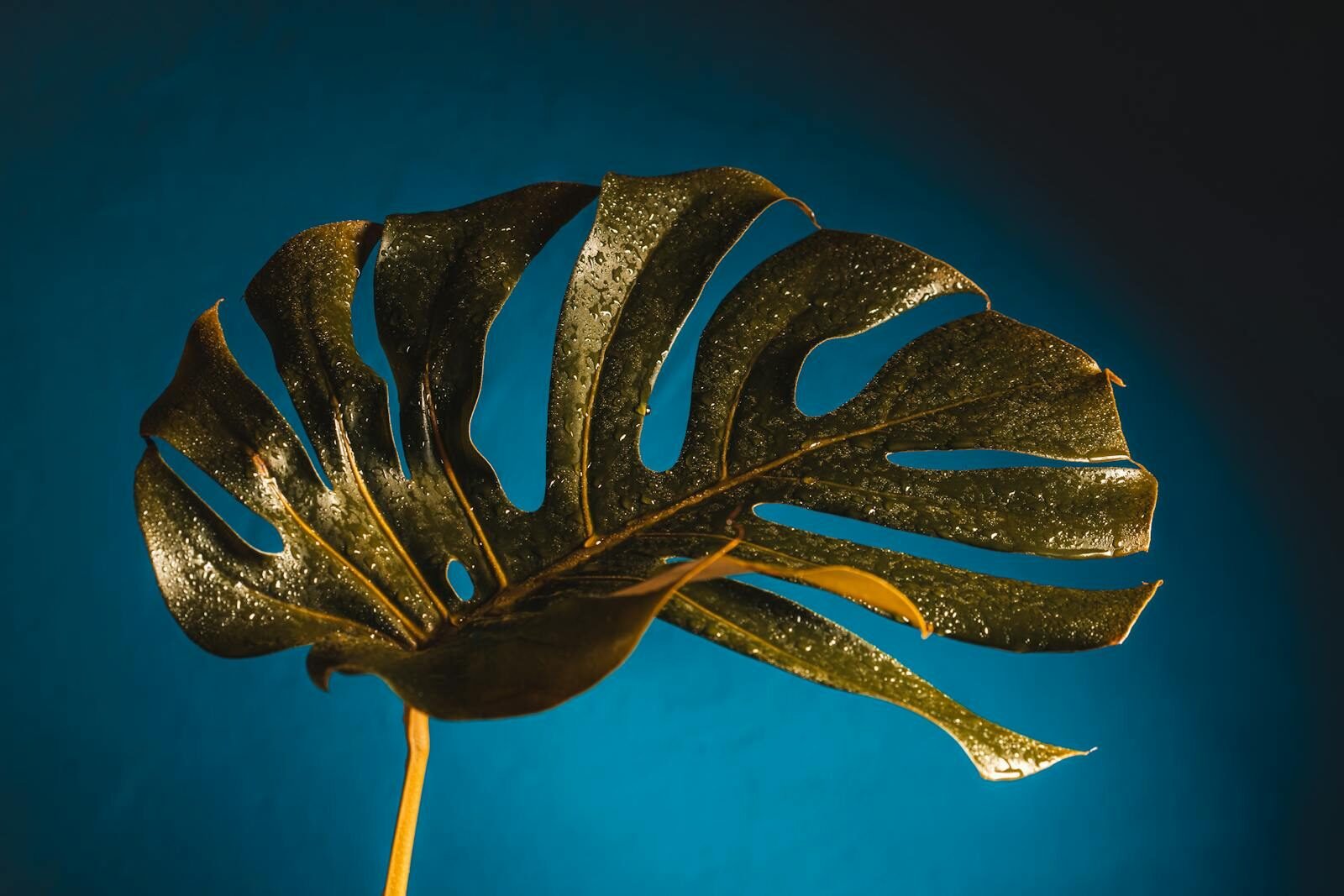
This is the phase people are really chasing. Mature vegetative growth is when the Monstera starts producing the large, architectural leaves that made it famous. The leaves get broader. Splits deepen. Internal holes become more obvious. The plant looks less tentative and more commanding. That change does not happen overnight, and it does not happen on every plant at the same pace, but the markers are consistent.
Missouri Botanical Garden notes that indoor plants typically reach around 6 to 8 feet, while UConn reports foliage capable of reaching about 36 inches wide under the right conditions. Those figures show what maturity looks like in practical terms: not a tiny desk plant with a few holes, but a substantial climbing specimen. (Missouri Botanical Garden)
Maturity is not just about age. It is about accumulated wins. Adequate light. Healthy roots. Enough warmth. Some humidity. Consistent feeding during active growth. Vertical support. Reasonable pot sizing. When those pieces line up, Monstera can move from “healthy enough” to “visibly mature.” When they don’t, you get a plant that survives but never quite levels up.
When fenestrations and splits increase
The clean answer is this: fenestrations and splits increase as Monstera leaves get larger and the plant becomes more mature, especially when it has enough light and a sense of climbing support. UConn states that fenestrations increase as leaf size progresses. Wisconsin Horticulture says inadequate light prevents leaf perforations. RHS adds that plants often produce more mature, holey leaves once they feel they are climbing. (Home & Garden Education Center)
That means the best way to get more splits is not to obsess over one imperfect leaf. It is to improve the conditions that shape the next leaf. Every new leaf is a report card. If the leaves are getting larger, stronger, and more complex, the plant is moving up the lifecycle. If they are smaller, flatter, and weaker, something is holding it back.
A useful comparison looks like this:
| Trait | Juvenile Monstera | Mature Monstera |
|---|---|---|
| Leaf size | smaller | much larger |
| Fenestrations | few or none | more holes and deeper splits |
| Growth habit | compact or awkward | strongly climbing |
| Support response | helpful but subtle | often dramatic |
| Visual effect | leafy plant | architectural statement plant |
That shift is why patience matters. A Monstera does not become iconic because you bought the right pot. It becomes iconic because you helped it mature.
Rare reproductive stage: flowering and fruiting
Here is the part many indoor growers never see: the reproductive stage. Monstera deliciosa can flower and fruit, but it rarely does so in typical indoor environments. University of Minnesota says flowers and fruit rarely form outside the plant’s natural habitat or controlled greenhouses. RHS goes further and notes that while wild plants may occasionally produce sweet, aromatic fruits, houseplants are extremely unlikely to fruit. (University of Minnesota Extension)
That matters because a lot of online content blurs the line between what Monstera can do biologically and what it usually does in a living room. Yes, flowering is part of the full species lifecycle. No, it is not the normal end point for the average indoor owner. Indoors, most Monsteras live almost entirely in the vegetative part of the lifecycle.
The fruit itself also comes with a safety caveat. RHS notes that even the fruit can be toxic if eaten before ripe, and ASPCA lists Monstera deliciosa as toxic to dogs and cats because of insoluble calcium oxalates, which can cause oral irritation, drooling, vomiting, and difficulty swallowing. So even though fruiting sounds exciting, it is not something to romanticize carelessly, especially in homes with pets. (RHS)
For most readers, the practical conclusion is simple: judge Monstera success by healthy mature vegetative growth, not by whether it flowers indoors. That is the real benchmark that fits actual home conditions.
What speeds up or slows down the lifecycle
If you strip away the noise, the Monstera lifecycle is heavily controlled by a short list of variables: light, root health, temperature, humidity, nutrition, support, and time. Not hacks. Not secret formulas. Just the few factors that most directly affect whether the plant has enough energy and structural context to mature.
RHS recommends warm conditions around 18 to 25°C, indirect light, moderate humidity, and balanced feeding during the growing season. Wisconsin Horticulture adds that Monstera performs best in bright light in summer and can tolerate a range of conditions once acclimated, but insufficient light blocks perforation development and temperatures below 50°F halt growth. These are not fine-print details. They are lifecycle levers. (RHS)
The biggest slowdown factor is often not outright neglect but consistent mediocrity. Light that is a little too low. Soil that is a little too dense. Watering that is a little too frequent. A pot that is a little too large. No single issue kills the plant, so the owner assumes everything is fine. But the plant never gets enough momentum to progress.
Light, humidity, water, nutrition, and pot size
Light is the biggest maturity driver. Low light tends to produce smaller leaves with fewer or no fenestrations, while brighter indirect light supports larger, more mature foliage. RHS and Wisconsin Horticulture both say this directly. If your Monstera is healthy but visually stuck, light is the first place to look. (RHS)
Humidity matters, but not in the exaggerated way social media often presents it. Monsteras come from humid tropical forests, and RHS notes that dry indoor air can lead to browning leaf edges. Medium to higher humidity helps, but humidity alone will not turn a weak, low-light plant into a mature one. Think of humidity as a support factor, not the main engine. (RHS)
Water needs to be consistent and restrained. RHS advises allowing the compost to become almost dry before watering thoroughly and reducing frequency in winter. University of Minnesota notes that mature plants are commonly watered weekly or when the top 1 to 2 inches of soil are dry. That is the right mindset: water based on root-zone dryness and season, not on guilt or habit. (RHS)
Nutrition helps during active growth, but it cannot compensate for weak fundamentals. RHS recommends a balanced liquid fertilizer during the growing season from April to September. Feed a plant that has light and root health, and you support momentum. Feed a plant in soggy soil and low light, and you just create extra stress. (RHS)
Pot size is a hidden factor. Bigger is not better. RHS explicitly warns against significantly larger pots because they stay wet too long and raise root-rot risk. A Monstera with too much wet soil around too few roots often grows slower, not faster. That is a classic example of a good intention producing a bad lifecycle outcome. (RHS)
Propagation and lifecycle reset
Propagation is where the Monstera lifecycle gets really interesting because it lets you continue the plant’s genetics while partially resetting its development. The most important rule is non-negotiable: you need a node. University of Minnesota says Monstera deliciosa can only be propagated when the cutting includes a node, and new leaves from propagated nodes can take 2 to 3 months to appear. (University of Minnesota Extension)
That waiting period matters because propagation content often makes the process look faster and cleaner than it is. A cutting can root before it visibly grows. That does not mean it failed. It means the plant is rebuilding enough infrastructure to resume development. In other words, propagation restarts the early establishment work on a smaller scale.
There is also a maturity nuance here. A cutting from a mature Monstera is genetically the same plant, but its next few leaves may still look smaller or less dramatic while it re-establishes. RHS points out that after pruning, new stems often have smaller, less mature leaves with fewer holes until the plant settles again. That same logic helps explain why newly rooted cuttings may not look peak-mature right away even if they came from a mature mother plant. (RHS)
If you want strong propagation results, think in stages. First root formation. Then water and nutrient uptake. Then leaf production. Then renewed climbing and maturity. People get disappointed when they expect a cutting to skip the rebuilding phase. It won’t.
Common lifecycle problems and stage-specific fixes
Most Monstera problems are lifecycle mismatches. The plant is in one stage, but the environment is pushing it backward, stalling it, or keeping it there too long. A seedling is overpotted. A juvenile is underlit. A climbing plant is left unsupported. A mature plant is repeatedly pruned and asked to look mature immediately after. Once you understand the lifecycle, the problems stop feeling random.
Take yellowing and collapse. RHS warns that overwatering or waterlogging from poorly draining compost can cause root rot and even plant collapse. That is not a cosmetic issue. It is a system failure. If roots fail, every stage above them fails too. (RHS)
Take weak leaves with no holes. Low light is the usual suspect, especially if the plant is otherwise old enough to have progressed further. Wisconsin Horticulture states that the plant will not develop perforations when light is inadequate, and RHS says leaves tend to have fewer holes in very low light. That is why “healthy but disappointing” Monsteras often need repositioning more than they need more fertilizer. (Wisconsin Horticulture)
Take safety in shared homes. ASPCA lists Monstera deliciosa as toxic to dogs and cats due to insoluble calcium oxalates, with symptoms including oral irritation, drooling, vomiting, and difficulty swallowing. That is part of responsible lifecycle advice too, because growth stages only matter if the plant can coexist safely with the people and animals around it. (ASPCA)
Why growth stalls, leaves shrink, or roots rot
Growth usually stalls because the plant is short on usable energy, short on oxygen at the roots, or short on structural cues. Low light cuts energy production. Waterlogged compost chokes roots. Lack of support keeps the plant in a less mature growth pattern. Cold temperatures slow metabolism. These are the most common reasons a Monstera stops progressing even though it is technically still alive. (RHS)
Leaves often shrink when the plant is stressed, recently pruned, underlit, rootbound, or trying to recover from root damage. Smaller new leaves are not always a crisis. They are feedback. They tell you the plant is reallocating resources or operating below ideal conditions. RHS specifically notes that after pruning, the new stems usually produce smaller, less mature leaves with fewer holes until the plant settles again. (RHS)
Roots rot when water sits too long around them in poorly draining media or oversized pots. This is one of the fastest ways to derail the lifecycle because it attacks the base system everything else depends on. That is why airy mixes, drainage holes, careful watering, and sane pot sizing matter so much. Not because they sound advanced, but because they protect the one part of the plant you cannot afford to compromise.
Conclusion
The Monstera lifecycle is not mysterious once you stop treating the plant like a static décor object and start treating it like a climbing tropical vine with clear developmental stages. It begins with seed and root establishment, moves through a long juvenile phase, transitions into climbing behavior, and reaches mature vegetative growth when conditions support larger, fenestrated leaves. Flowering and fruiting exist in the species lifecycle, but for most indoor growers they are rare side notes, not the main story. (RHS)
If you remember one thing, make it this: Monstera maturity is earned through alignment. Bright indirect light. Healthy roots. Airy soil. Warmth. Some humidity. A vertical support. Patience. That combination moves the plant forward. Poor light, overpotting, soggy soil, and no support keep it stuck. The plant is always telling you where it is in the lifecycle. You just have to read the leaves, roots, and growth pattern honestly.
That is the real opportunity here. When you understand the lifecycle, care gets easier. You stop forcing short-term fixes. You stop panicking over every unsplit leaf. And you start making the few changes that actually move the plant from surviving to maturing.
FAQs
How long does it take for a Monstera to mature indoors?
There is no single clock, but RHS says Monsteras usually start producing holey leaves once they are a few years old. Indoor maturity depends heavily on light, support, root health, and temperature, so two plants of the same age can look very different. (RHS)
Do Monstera leaves split later as they age?
No. A leaf generally emerges with the form it will keep. More splitting and fenestration show up on future leaves as the plant becomes more mature and conditions improve, not by old leaves changing later. That pattern is consistent with extension and horticultural guidance linking fenestration to leaf size and maturity. (Home & Garden Education Center)
Does a moss pole really make a difference?
Usually yes. A moss pole or similar support helps Monstera behave more like the climbing vine it is. RHS says plants often produce larger, more mature leaves with more holes once they feel they are climbing, so support can materially improve the maturity trajectory. (RHS)
Can I propagate a Monstera from just a leaf?
Not for true propagation. University of Minnesota states that Monstera deliciosa can only be propagated when the cutting includes a node. A leaf without a node may stay green for a while, but it cannot continue the plant’s lifecycle properly. (University of Minnesota Extension)
Is Monstera safe around pets?
No. ASPCA lists Monstera deliciosa as toxic to dogs and cats because it contains insoluble calcium oxalates. If ingested, it can cause oral irritation, drooling, vomiting, and difficulty swallowing, so placement matters in pet households. (ASPCA)