Table of Contents
Monstera Pest and Disease Guide
What this guide covers and how to use it
A sick Monstera rarely starts with a dramatic collapse. It starts with a clue. A few pale speckles. A sticky patch. A black spot with a yellow halo. A leaf that curls even though the soil feels wet. Miss those clues, and a minor issue turns into a cleanup project. Catch them early, and most Monsteras recover well.
This guide is built for one job: helping you figure out what’s wrong, what matters, and what to do next. Not every damaged leaf means disease. Not every yellow leaf means overwatering. And not every pest needs the same treatment. The point is not to panic. The point is to diagnose fast, act cleanly, and stop the problem from spreading.
That matters because the biggest causes of Monstera decline indoors are predictable. Authoritative houseplant and extension sources repeatedly point to sap-feeding pests, wet, airless root zones, and leaf spot issues linked to moisture and poor airflow as the main culprits. Current care guidance from RHS, University of Minnesota Extension, UC IPM, and UConn all lines up on that pattern. (University of Minnesota Extension)
The practical takeaway is simple: you do not need a lab to get most Monstera problems under control. You do need to separate pest damage, disease symptoms, and environmental stress quickly enough that you do not treat the wrong thing. That is where most plant owners lose time. They spray for pests when the roots are rotting, or they repot when the real problem is thrips hiding in new growth.
Quick diagnosis: what your Monstera is trying to tell you
If you want the fast answer, start with the pattern. Silvering, stippling, distorted new leaves, sticky residue, webbing, cottony clusters, or moving insects usually point to pests. Mushy roots, sour-smelling soil, drooping despite wet media, blackening stems, or widespread yellowing from the bottom up point toward root rot. Water-soaked spots, dark lesions with yellow halos, or spreading leaf spots after splashing water and poor airflow point more toward disease. (University of Minnesota Extension)
Brown and black spots are where people get confused. On Monstera, they can come from root rot, bacterial leaf spot, fungal spotting, sun scorch, fertilizer burn, or pest feeding. That is why color alone is a weak diagnostic tool. The stronger clues are texture, location, speed of spread, and whether the damage is on old leaves, new leaves, leaf undersides, or roots. Current Monstera troubleshooting pages rank because readers search exactly this way: not for a Latin diagnosis, but for a symptom they can see. (Epic Gardening)
When in doubt, inspect in this order: the undersides of leaves, the newest unfurling growth, the leaf joints, the petioles, and the root zone. Pests often hide before they become obvious. Thrips and spider mites can turn a healthy-looking plant into a dull, stressed one long before you notice insects. By contrast, root rot often shows up above the soil only after the roots have already been in trouble for a while.
Pest damage vs disease vs basic care issues
Here is the clean distinction. Pests feed on the plant. Diseases infect the plant. Care issues stress the plant and often create the conditions that allow the first two to take hold. That last part matters more than most people realize. A Monstera kept in soggy mix, low airflow, weak light, and crowded conditions is not just uncomfortable. It is easier for pathogens to spread and harder for the plant to fight back. RHS and UC IPM both stress moisture management and airflow as core prevention factors for indoor plant problems. (RHS)
Pest damage tends to look uneven and feeding-related. Think speckles, silvery scars, honeydew, webs, distorted new growth, or visible colonies. Disease damage tends to look more lesion-based. Think water-soaked areas, defined spots, halos, ooze, or tissue collapse. Care issues usually follow broader patterns like tip burn from dryness or salts, sun-bleached scorch patches, or general yellowing from poor root function. None of these rules are perfect, but together they let you rule out the wrong category fast.
A useful rule of thumb: if you can wipe, magnify, trap, or physically find the cause, it is often a pest problem. If the tissue looks infected and spreading without visible insects, think disease. If the entire plant’s growth has slowed, the pot stays wet too long, and leaves are declining from multiple positions, start with the roots before you reach for a spray bottle.
The most common Monstera pests
The most common indoor Monstera pests are spider mites, thrips, mealybugs, scale insects, and fungus gnats. On broader houseplant sources, those same pests keep showing up because they thrive indoors where airflow is limited and natural predators are absent. University of Minnesota Extension specifically notes that houseplants should be inspected weekly because indoor conditions let insect populations build without much resistance. (University of Minnesota Extension)
Not all of these pests are equally destructive. Thrips and spider mites usually do the fastest visible damage to foliage. Mealybugs and scale are slower but persistent, especially when hidden in tight nodes. Fungus gnats are often more of a signal than the main problem; they tell you the potting mix is staying too wet. Root mealybugs are less common but more serious because many people do not think to inspect the root ball until the plant is already struggling.
Spider mites
If your Monstera looks dusty, faded, or strangely tired, check for spider mites first. They are tiny sap-feeders, and the classic signs are fine stippling, pale specks, and eventually thin webbing, especially on leaf undersides and around petiole junctions. Damage often starts as a loss of rich green color before turning into bronzing or crisp decline. Dry indoor air helps them thrive, which is why infestations often intensify when heating is running or a plant sits in a warm, dry corner. RHS specifically flags red spider mite among common houseplant leaf-damage causes. (RHS)
Spider mites are dangerous because they multiply quietly. By the time you see obvious webbing, you may already have a meaningful infestation. They also hit stressed plants harder, so a Monstera already weakened by low light or poor watering usually shows faster decline. New growth may emerge smaller, older leaves lose color, and the whole plant can look dull rather than sharply diseased.
The fix is part mechanical, part chemical, part environmental. Start by isolating the plant and washing the foliage thoroughly, especially the undersides. Then use a contact treatment like insecticidal soap or horticultural oil, repeating based on label timing because one spray rarely solves the life cycle. If the room is extremely dry, raise humidity modestly and improve airflow, but do not create stagnant, wet conditions in the name of “helping” the plant.
Thrips
Thrips are the pest Monstera owners underestimate most. They are small, fast, and excellent at hiding in fresh growth. Their feeding causes silvery or gray scarring, dull patches, distorted emerging leaves, and often tiny black fecal specks. RHS notes that thrips feeding commonly creates a silvery-white discoloration marked by many tiny black spots, which is exactly why people mistake them for dust, mineral residue, or random cosmetic damage. (RHS)
Thrips matter because they are harder to eliminate than a surface colony of mealybugs. Adults move. Juveniles hide. Damage can continue even when you think the plant looks cleaner. On Monstera, thrips often target new leaves before they unfurl, so you get warped or scarred foliage that never fully recovers. If you are seeing distorted new growth plus silvery injury, do not wait around hoping it is a watering issue.
Treatment has to be disciplined. Isolate the plant. Rinse it down. Clean surrounding surfaces. Remove the worst-damaged leaves if the infestation is established. Then use a treatment that is effective for thrips and repeat it consistently, because breaking the life cycle matters more than hitting the plant once with a stronger product. Sticky traps can help monitor adults, but traps alone are not control. They tell you whether you still have movement, not whether the plant is safe.
Mealybugs and scale
Mealybugs look like bits of cotton. Scale insects look like little brown, tan, or shell-like bumps stuck to stems and leaves. Both are sap-feeders. Both weaken the plant over time. And both can leave behind honeydew, a sticky residue that encourages sooty mold growth. University and RHS sources repeatedly describe this sticky pattern as a hallmark of indoor sap-feeding pests. (CSU Engagement and Extension)
These pests are annoying for one reason above all: they hide where people do not clean well. Check the leaf axils, stem creases, petiole bases, and the underside of support ties or moss poles. A Monstera can look mostly fine from the front while a mealybug colony is building in one tight junction behind a leaf. That is why casual inspection misses them.
The upside is that small infestations are manageable. University of Minnesota Extension recommends physical removal for some indoor pests, including cotton swabs dipped in alcohol for mealybugs and manual removal for scale. That advice works best when the infestation is still localized. Once they are widespread, you will need repeated cleaning plus a contact treatment. One wipe-down is not enough. These insects are built for persistence. (University of Minnesota Extension)
Fungus gnats and root mealybugs
Fungus gnats are not usually the main reason a mature Monstera is failing. The adults are mostly a nuisance. The bigger issue is what they imply: the potting mix is staying damp long enough to support them. On seedlings and weak roots, larvae can contribute to root stress, but on larger houseplants they are more often a warning light for excess moisture than the primary villain. UC IPM and other houseplant problem guides treat them as part of the wider wet-soil ecosystem indoors. (UC Agriculture and Natural Resources)
That makes fungus gnats useful diagnostically. If you have them, do not just set traps and move on. Ask why the soil is staying wet. Is the mix compacted? Is the pot too large? Is the light too weak for the watering rhythm? Is a decorative cachepot holding water? Those are the real questions.
Root mealybugs are a different story. They are less common, but when they show up, the plant may look mysteriously weak even though the foliage does not show an obvious leaf pest. You may see white, cottony residue around the root ball or inner pot rim when repotting. If your Monstera declines without a clear cause and the root zone shows waxy white clusters, treat it as a serious problem. Fresh potting mix, root cleaning, and pot sanitation matter more here than repeated leaf sprays.
The most common Monstera diseases
For indoor Monsteras, the disease conversation usually comes down to root rot, bacterial leaf spot/blight, and a smaller group of fungal leaf issues. That is consistent across extension, IPM, and houseplant guidance. The mistake is assuming all dark spotting is “fungus.” Sometimes it is not an infection at all. Sometimes it is a bacterial issue. Sometimes it is root failure showing up in the leaves. Precision matters because the next action changes. (UC IPM)
Disease pressure indoors usually rises when three conditions stack up: excess moisture, weak airflow, and injured or stressed tissue. That is why crowded plant shelves, misting routines, and chronically wet soil can become part of the problem even when the intention is “better care.” A Monstera is tropical, yes. That does not mean it wants stale, wet, stagnant conditions.
Root rot
How do you know if a Monstera has root rot? The clearest signs are yellowing leaves, drooping despite wet soil, mushy or dark roots, stem softening, slowed growth, and potting mix that stays soggy too long. Root rot is usually tied to poor drainage and overwatering, especially when potting media age, compact, and lose aeration. UC IPM and Wisconsin Horticulture both emphasize that wet, oxygen-poor media allow root rot organisms such as Pythium and Phytophthora to thrive. (UC IPM)
This is the disease-equivalent of a clogged airway. Roots need oxygen. When the mix stays saturated, the plant cannot function normally even before pathogens move in. Then opportunistic organisms attack already stressed roots, and the plant above the soil starts throwing distress signals. The reason people misread root rot is that the leaves often look like they need more water. They droop. They yellow. They look tired. So people water again, which makes the root zone worse.
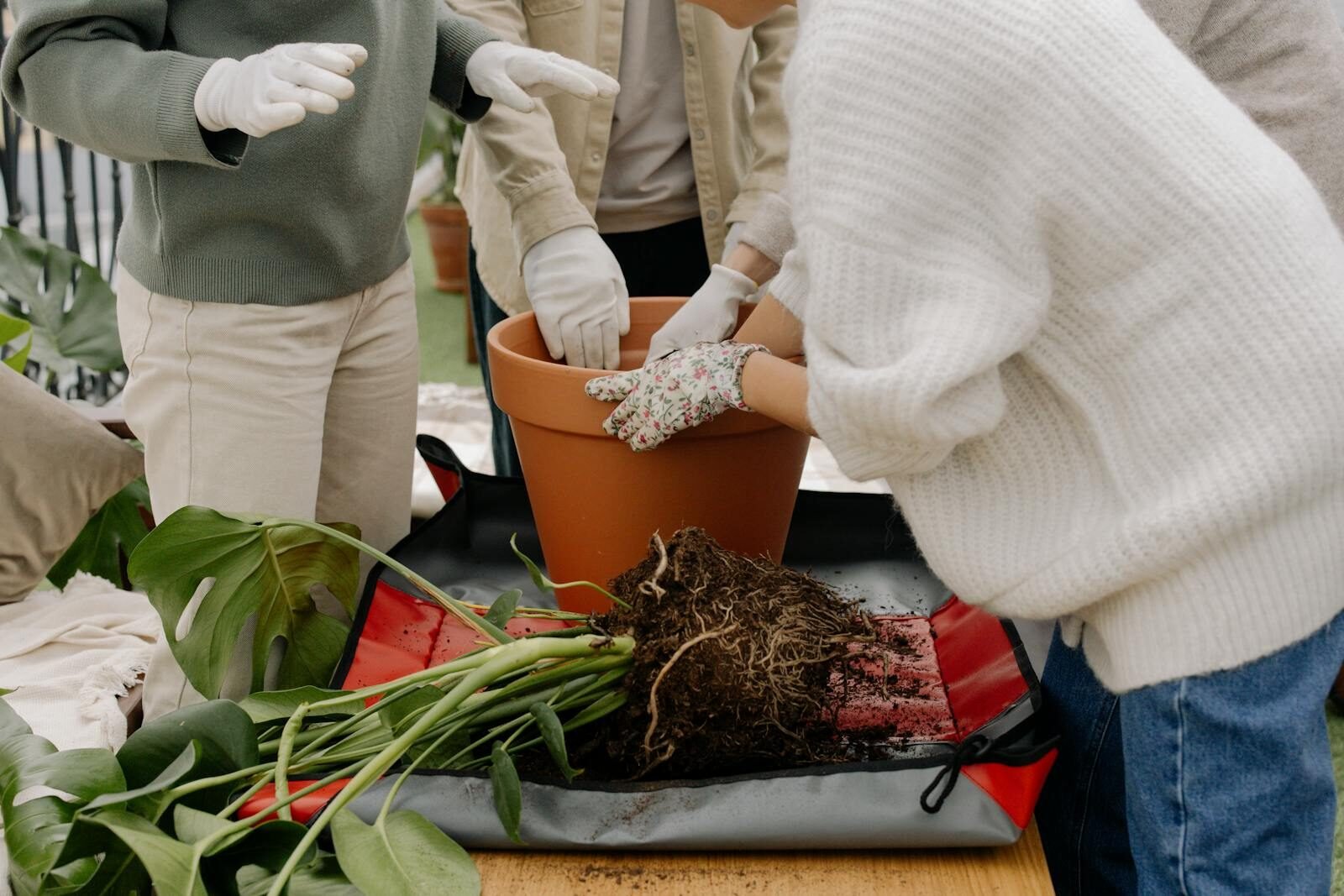
If you suspect root rot, unpot the plant. Do not guess from the top. Healthy roots are generally firm and lighter in color. Rotting roots are often dark, mushy, stringy, or foul-smelling. The rescue process is straightforward but not gentle: remove the plant, trim clearly dead roots with sanitized tools, discard saturated old mix, clean the pot, and repot into a well-draining aroid mix with real aeration. After that, your job is not to “baby” the plant with more water. Your job is to let the root zone breathe and reestablish.
Severe cases can beat you. If the stem base is collapsing or most roots are gone, recovery odds drop sharply. In those cases, healthy-node propagation may be smarter than trying to save the entire original root system. That is not failure. That is triage.
Bacterial leaf spot and blight
What does bacterial leaf spot look like on Monstera? Think dark brown to black spots, often with yellow borders, sometimes water-soaked, and sometimes with a sticky ooze. UConn’s Monstera fact sheet describes bacterial leaf spot on Monstera as dark brown spots with a yellow border and notes that chemicals are not recommended for routine management in that setting. The core management steps are environmental: reduce humidity around foliage, increase airflow, and avoid splash spread. (Home & Garden Education Center)
This matters because bacterial leaf spot behaves differently from simple scorch or old mechanical damage. It tends to spread under wet, humid conditions and can follow water movement, handling, or contaminated tools. MSU Extension and Maryland Extension both describe bacterial leaf spot symptoms as water-soaked lesions that darken and spread, often aided by splashing water. (University of Maryland Extension)
There is also a useful recent signal for topical authority here: a 2024 Plant Disease report documented Pseudomonas cichorii causing bacterial leaf spot on Monstera adansonii in Hawai‘i. That does not mean every houseplant owner needs to think in pathogen names first. It does mean bacterial problems on Monstera are real, not internet myth. (APS Journals)
Treatment starts with isolation and pruning of clearly affected tissue using sanitized tools. Then stop wetting the leaves. Improve spacing and airflow. Do not keep the plant in a cool, damp, stagnant corner and expect the spots to stop. If new lesions keep appearing after cleanup and environmental correction, the plant may not be worth keeping near other aroids. Severe, fast-spreading bacterial issues can justify disposal, especially in dense indoor collections.
Fungal leaf spots and powdery mildew
Fungal leaf spots on Monstera are less talked about than root rot, but they still happen, especially when foliage stays wet and air movement is poor. The symptoms can overlap with bacterial spotting, which is why diagnosis gets messy. In general, fungal leaf spots often look more dry or necrotic over time, while bacterial lesions more often start water-soaked. That said, overlap is real. Without lab confirmation, you are often making a best-fit diagnosis based on pattern and conditions. (NC State Extension)
Powdery mildew is easier to recognize because it creates a visible white, dusty growth on leaf surfaces. It is less iconic on Monstera than on some garden plants, but general indoor plant disease guides still include it among possible houseplant issues when airflow is weak and humidity patterns are unstable. If you see white coating rather than dark lesions, think mildew before you think rot. (UC Agriculture and Natural Resources)
The fix for most foliar fungal issues is familiar by now because the underlying logic stays the same: remove the worst tissue, keep foliage dry, improve airflow, reduce crowding, and stop creating an all-day damp surface. Fungicides may have a place in some ornamental settings, but for a home grower, sanitation and environment correction usually matter more than chasing a perfect bottle.
Treatment framework that actually works
The best Monstera pest treatment is not a product. It is a sequence. The same goes for disease management. People lose plants because they do the steps out of order. They spray first, inspect later. They repot into fresh soil without cleaning the pot. They prune infected leaves but keep the plant packed against ten others on the same shelf.
A smarter sequence looks like this: isolate, inspect, remove the worst damage, clean the plant and its space, treat the actual cause, then correct the environment that allowed the problem to build. That is basically integrated pest management adapted to houseplants. It is less flashy than miracle cures, but it works more often because it attacks the system, not just the symptom.
Isolation, cleaning, and pruning
The first move is isolation. Not tomorrow. Today. Many common Monstera pests move easily between indoor plants, and bacterial spread is helped by water, contact, and tools. A separate room is ideal. If that is not possible, create distance and stop shared splash, brushing foliage together, and routine handling from plant to plant. (University of Minnesota Extension)
Next, inspect methodically. Use bright light. A magnifier helps. Look under leaves, inside unfurling foliage, around petiole joints, and into the pot rim. Then prune only what is clearly lost or heavily infested. Do not strip the plant bare out of panic. Removing all damaged leaves at once can stress recovery. On the other hand, leaving a heavily infested or actively infected leaf in place because it still has “some green” is not kindness. It is a reservoir.
Cleaning matters more than people think. Wipe leaves. Rinse the plant if the issue is a foliar pest. Wash support poles, cachepots, trays, and nearby surfaces. Sanitize tools between cuts. This is not performative neatness. It removes eggs, residue, spores, bacterial spread pathways, and hiding places. A lot of “treatment failure” is really sanitation failure.
Best treatment options and when to escalate
For spider mites, mealybugs, and soft-bodied pests, insecticidal soap, horticultural oil, and direct physical removal are often enough when used repeatedly and thoroughly. University guidance supports physical removal and repeated contact approaches for many indoor pest situations. Coverage matters. Repetition matters. Missing the undersides of leaves means missing the problem. (University of Minnesota Extension)
For thrips, be more serious. Their life cycle and hiding behavior mean casual spraying often underperforms. Use a product labeled for indoor ornamental pests and specifically effective on thrips, repeat on schedule, and monitor with traps. If the plant is heavily infested and surrounded by other prized plants, escalation might mean removing the worst foliage, treating nearby plants prophylactically where label-appropriate, or discarding the worst offender to protect the collection.
For fungus gnats, sticky traps help reduce adults, but drying the top layer appropriately, correcting drainage, and replacing chronically wet media do the real work. For root rot, no foliar spray will fix the root zone. You must change the substrate and root conditions. For bacterial leaf spot, sanitation and environmental correction outrank chemistry in most home settings, and at least one Monstera-specific extension source explicitly says chemicals are not recommended for management there. (Home & Garden Education Center)
Escalate when one of three things is true: the problem keeps spreading despite proper repeated treatment, the plant is collapsing from the base, or the infestation has become a risk to nearby plants. Some Monsteras are salvage jobs. Some are better treated as propagation sources. Some are simply not worth turning into a months-long contamination source indoors.
Prevention system for long-term plant health
Prevention is less glamorous than rescue, but it is cheaper, cleaner, and more effective. A healthy Monstera in the right environment is not immune to pests and disease, but it is harder to overwhelm. Most prevention comes down to reducing stress and catching problems before they compound.
Start with the root zone. Use an airy mix that does not stay dense and waterlogged. Avoid oversized pots that hold moisture long after the plant can use it. Water based on root-zone drying and plant demand, not calendar guilt. If the top is dry but the bottom stays wet for days, that is a drainage problem, not a cue to water more carefully. RHS and UC IPM both emphasize the damage caused by overwatering and poorly draining compost or media in Monstera and houseplants generally. (UC IPM)
Then manage the canopy. Keep leaves clean enough that you can inspect them. Give the plant bright indirect light so it can actually grow, transpire, and dry at a reasonable pace. Maintain airflow so humidity does not turn into stagnation. Avoid routinely wetting leaves, especially in cool or crowded conditions. The tropical-plant instinct to “mist for humidity” often does more to encourage spotting than to help the plant.
Finally, quarantine everything new. Every new plant. Every cutting. Every nursery rescue. Fourteen days is better than zero. A month is better if you have a large collection. Most indoor pest disasters start with one “healthy-looking” newcomer parked right beside established plants.
Seasonal and variety-specific risk factors
Monstera problems do not happen evenly all year. In winter, low light and slower growth make overwatering more likely, which pushes root-rot risk up. Heated indoor air can also favor spider mites by creating dry conditions around foliage. In warmer months, higher temperatures and active growth can speed up pest reproduction, especially if you bring plants outdoors or open windows regularly. That seasonal swing explains why the same care routine can work in July and fail in January.
Variegated forms such as Thai Constellation also deserve a caution flag. Current care sources note they are often more prone to root issues and generally less forgiving than green Monstera types. Slower growth, more expensive tissue, and a tendency to be overpampered make them easy to overwater. If you grow variegated Monsteras, your margin for error is smaller. (lovethatleaf)
There is also a species and collection-size effect. Monstera adansonii often shows problems faster because the thinner leaves make feeding damage easier to notice. Dense aroid shelves create shared humidity, shared pests, and shared mistakes. The more plants you cluster, the more your plant care starts behaving like system management rather than one-plant care.
Conclusion
A good Monstera pest and disease guide does not just name problems. It helps you separate the likely from the unlikely, the urgent from the cosmetic, and the fixable from the foolish. That is the real game. Most Monstera issues fall into a small number of patterns: sap-feeding pests, waterlogged roots, and moisture-driven leaf disease. Once you know those patterns, the plant stops feeling mysterious.
The winning approach is simple, but not lazy: inspect often, trust patterns more than panic, isolate fast, clean thoroughly, treat the real cause, and fix the environment that gave it an opening. That beats random sprays every time. It also makes you better at houseplants in general, because the same logic carries across most indoor foliage plants.
If your Monstera is already struggling, start with the easiest high-signal questions. Is there visible pest evidence? Are the roots oxygen-starved? Are the spots water-soaked and spreading? Answer those honestly, and your next move becomes much clearer. Healthy Monsteras are vigorous. They tell you when they are happy. Sick ones do too. You just need to read the signals early enough to matter.
FAQs
1. What are the most common pests on Monstera plants?
The most common Monstera pests indoors are thrips, spider mites, mealybugs, scale insects, and fungus gnats. Thrips and spider mites usually cause the fastest visible leaf damage, while mealybugs and scale are slower but stubborn. Fungus gnats often signal wet soil rather than being the main cause of decline. (University of Minnesota Extension)
2. How do I know if my Monstera has root rot or just needs water?
A thirsty Monstera usually perks up after watering. A Monstera with root rot often droops even though the soil is already wet, and the pot may stay soggy for too long. The most reliable way to tell is to inspect the roots: healthy roots are firm, while rotting roots are dark, mushy, or stringy. (UC IPM)
3. What does thrips damage look like on Monstera?
Thrips damage often shows up as silvery or gray scarring, dull patches, tiny black specks, and distorted new leaves. Because thrips like fresh growth, you may notice damage on unfurling leaves before you spot the insects themselves. That combination is one of the clearest thrips patterns on Monstera. (RHS)
4. Should I cut off damaged Monstera leaves?
Yes, but selectively. Remove leaves that are heavily infested, clearly infected, or mostly dead. Keep lightly damaged leaves if they still support the plant and the active problem is under control. The goal is to reduce pest or disease pressure without over-stressing the plant by stripping too much foliage at once.
5. Can a Monstera recover from pests or disease?
Usually, yes. Monsteras recover well when the issue is caught early and the environment is corrected. Recovery is most realistic when the roots are still functional, the stem base is sound, and the pest or disease is not spreading aggressively. Once the crown or root system is badly compromised, propagation may be the smarter rescue strategy.