Table of Contents
What a Monstera Actually Needs to Thrive
A Monstera deliciosa is not hard to grow. That is why it became a houseplant staple decades ago and why it still dominates indoor plant collections now. But “easy” gets misunderstood. Easy does not mean careless. It means the plant is forgiving if you get the fundamentals right: bright indirect light, a warm room, roots that can breathe, and watering based on how fast the soil dries rather than some made-up weekly schedule. Monsteras are tropical climbing vines from Central America, and that matters because their natural behavior explains nearly every care rule that works indoors. (Missouri Botanical Garden)
Most weak Monsteras are not suffering from mystery issues. They are reacting to predictable mistakes: too little light, soggy soil, poor drainage, or no support as they mature. If you fix those four things, you solve most of the plant’s problems before they start. The rest—feeding, propagation, pruning, humidity tweaks—is useful, but secondary. Think of Monstera care like running a simple system: light drives growth, soil structure protects roots, water supports the system, and support encourages mature form. (RHS)
Bright indirect light is the growth engine
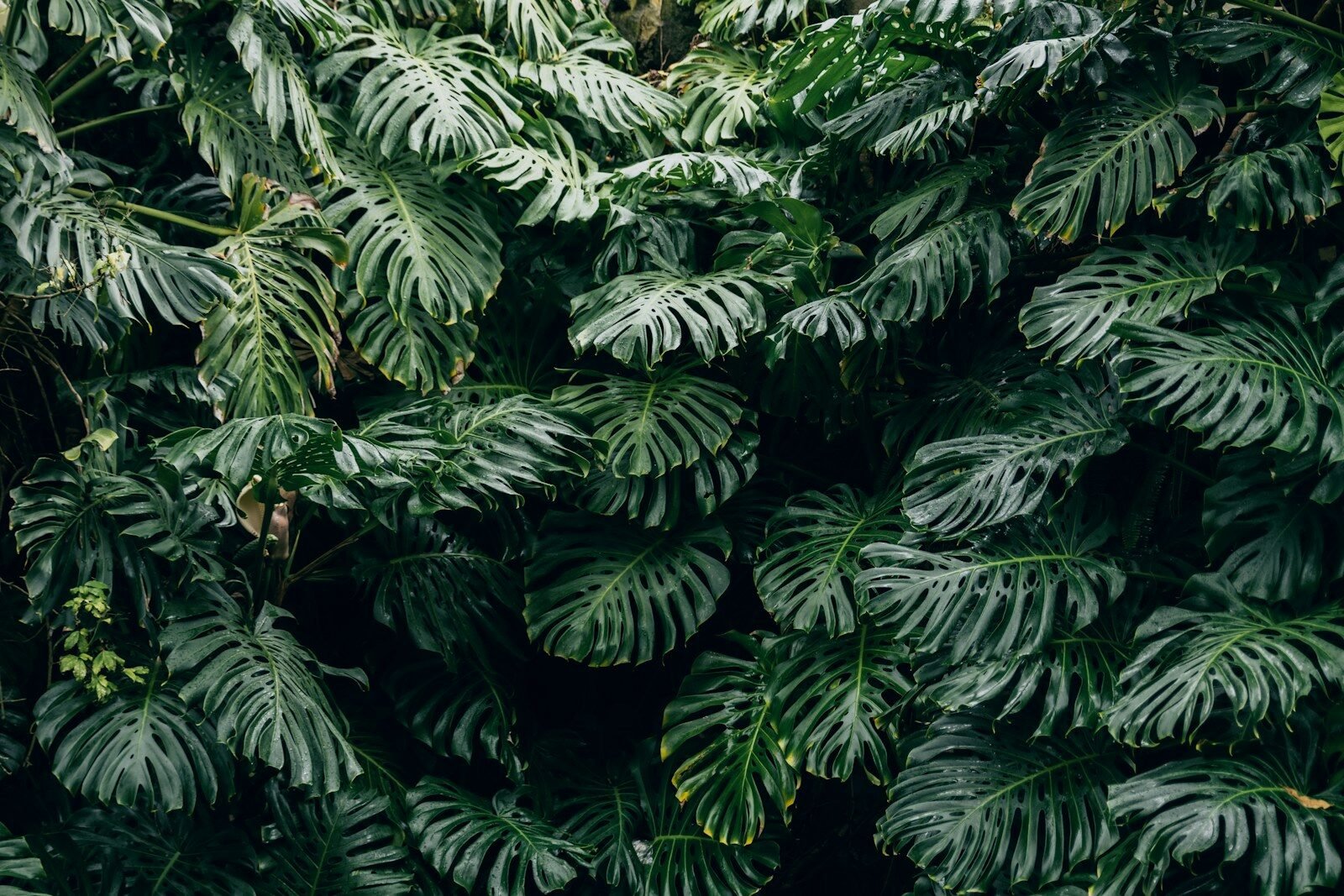
The best light for a Monstera is bright, indirect light. That means plenty of ambient brightness without long stretches of harsh direct sun hitting the leaves. RHS guidance places Swiss cheese plants near an east- or west-facing window or farther back in a brighter room, and warns that direct summer sun can scorch leaves. In low light, Monsteras may survive, but they tend to grow slowly, stretch out, and produce fewer holes in the leaves. Penn State Extension and the University of Minnesota also describe Monstera as an understory plant suited to medium-light or filtered-light conditions rather than blazing sun. (RHS)
This is the first care lever to pull if your plant looks underwhelming. Smaller leaves, long bare gaps between leaves, and a plant that leans hard toward the window usually point to inadequate light. The fix is not to blast it with direct afternoon sun. The fix is to move it closer to a bright window with filtered exposure. A Monstera placed a few feet from a sunny south-facing window often performs better than one jammed into a dim corner just because it “looks nice there.” Your plant does not care about the corner. It cares about photons. (RHS)
Water by soil dryness, not by calendar
Here is the clean rule: water a Monstera when the top 1 to 2 inches of soil have dried, then water thoroughly and let excess drain away. Penn State, UMN Extension, and RHS all align on this general approach, even if wording varies slightly. RHS says to let the compost become almost dry before watering thoroughly, and not to leave the pot sitting in water because roots can rot. Penn State says to water thoroughly and let the top 1 to 2 inches dry out between waterings. (RHS)
That means a fixed “every Sunday” schedule is lazy care. In summer, a large Monstera in strong light may need water faster. In winter, the same plant in cooler conditions may need far less. Pot size, soil texture, humidity, and season all change the pace. So instead of obeying the calendar, stick a finger into the soil, use a moisture meter if you want backup, and learn the weight of the pot before and after watering. Good plant care is less about routine and more about reading feedback. (RHS)
Chunky, fast-draining soil protects the roots
Monsteras want a potting medium that holds some moisture without staying dense and soggy. RHS recommends an open, well-drained, slightly acidic mix, even suggesting a blend that combines compost with orchid compost. Penn State notes that materials like bark, perlite, or charcoal can be added to improve a purchased mix. Missouri Botanical Garden also recommends a peaty soil-based potting mix with good drainage and allowing soil to dry somewhat between waterings. (RHS)
In plain English, you want chunky aroid-style soil. A practical home mix often includes indoor potting mix plus orchid bark and perlite. This matters because root rot is not usually caused by “too much love.” It is caused by roots staying wet in stale, airless soil. If your Monstera keeps declining despite “careful watering,” the issue is often the medium, not your intentions. Better airflow around roots gives you a wider margin for error. That is exactly what beginners need. (RHS)
Best Place to Keep a Monstera Indoors
Placement decides whether care feels easy or frustrating. A Monstera in the wrong room will fight you all year. A Monstera in the right room will make you think you have a gift. The sweet spot is usually a bright space with indirect light, stable warmth, decent airflow, and no repeated blasts from heaters, radiators, or cold drafts. That combination mirrors the plant’s tropical forest background better than a dark hallway or a window with punishing summer exposure. (RHS)
A good mental model is this: place it where you would comfortably read a book during the day without turning on a light, but where the sun is not hammering the leaves for hours. If the room is bright enough for you and the plant stays out of intense midday scorch, you are close. If the room feels gloomy, the Monstera knows it too. (RHS)
Temperature range that keeps growth steady
RHS recommends keeping Swiss cheese plants warm year-round, around 18–25°C (65–77°F), and away from cold draughts and direct heat sources like radiators. Missouri Botanical Garden also describes Monsteras as best in warm, humid indoor locations. That range supports steady growth without the stress that comes from abrupt temperature swings. (RHS)
If temperatures dip too low, growth slows and leaf damage becomes more likely. If the plant sits near heat vents or radiators, you may see dry brown edges, drooping, or erratic soil drying. Stable warmth beats extremes. One good room beats a “perfect” room that swings between chilly nights and hot daytime blasts. (RHS)
Humidity levels that prevent crispy edges
Monsteras tolerate average indoor conditions, but they prefer humid air, and Penn State notes a preference for humidity above 50%. RHS says dry air can brown the leaf edges and suggests options like grouping tropical plants, standing the pot above moist gravel, or misting leaves to raise humidity around the plant. (Penn State Extension)
This is where nuance matters. Humidity helps, but it does not override bad light or soggy soil. A humidifier will not rescue a Monstera drowning in dense compost. Still, if your plant grows in a centrally heated or air-conditioned home and the edges keep crisping, humidity is worth addressing. Bathrooms with strong indirect light can work well. So can a living room with a small humidifier nearby. Think of humidity as a performance enhancer, not the core engine. (RHS)
Soil, Pot, and Support Setup
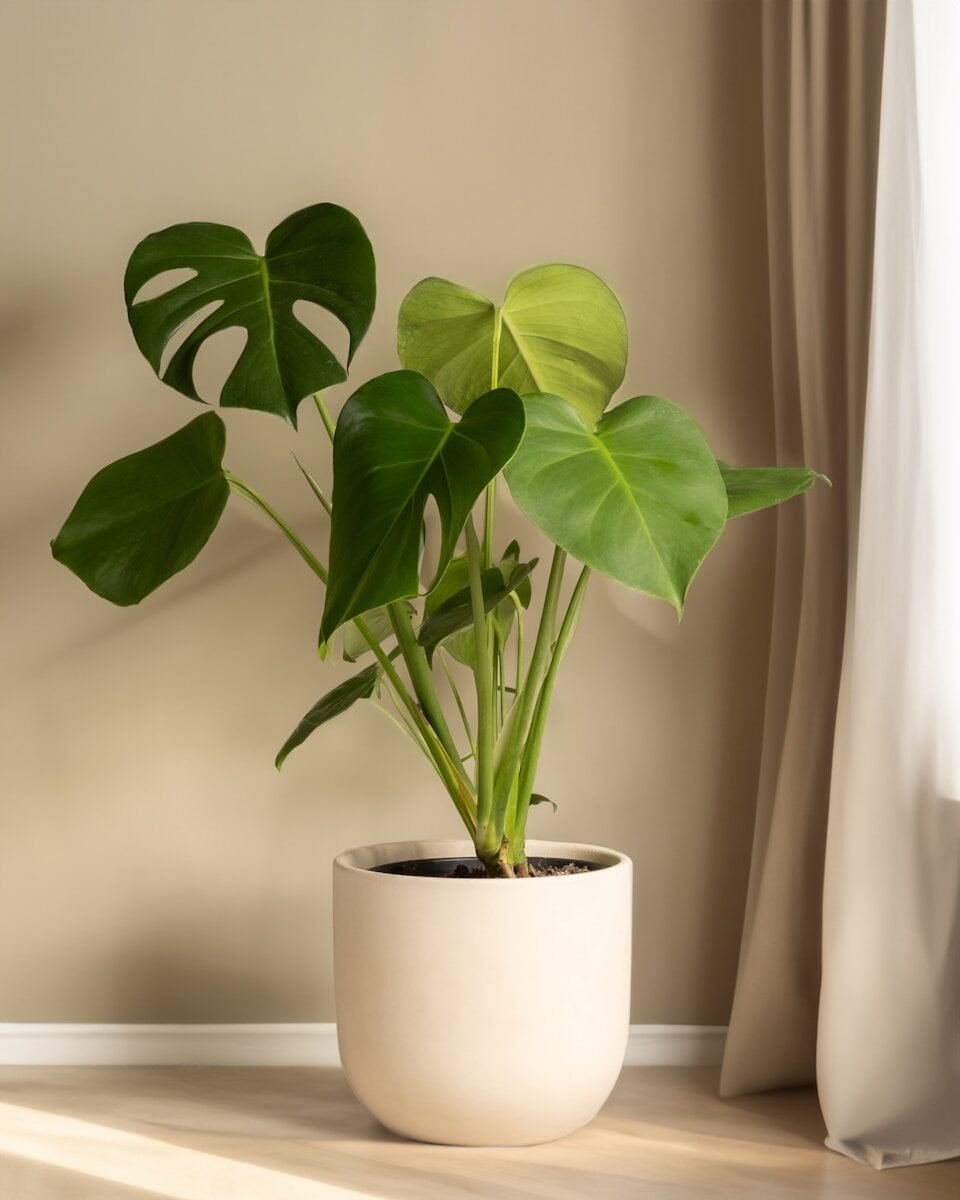
People obsess over fertilizer and ignore the container. That is backwards. The pot and support system shape root health, plant stability, and leaf maturity. Monsteras are climbers. Indoors, they become top-heavy. If you leave them unsupported in a flimsy nursery pot forever, they often sprawl, lean, and produce less impressive growth. Missouri Botanical Garden explicitly notes they can be grown on a pole or trellis, and that without support they tend to grow horizontally. RHS also recommends training them onto a moss pole. (Missouri Botanical Garden)
A good setup makes care easier. Use a pot with drainage holes. Use a mix that drains freely. Choose a container that fits the rootball without drowning the plant in excess wet soil. Then decide early whether you want a climbing statement plant or a looser, wider shape. Your setup choice changes how the Monstera grows. That is design and biology working together. (RHS)
Choosing the right pot size and when to repot
Bigger is not always better. RHS advises choosing a pot only a few centimeters larger than the previous one so the rootball fits comfortably without sitting in a giant mass of wet soil. West Virginia University’s houseplant guidance echoes the same logic more generally: sizing up by just 1–2 inches helps avoid excess moisture and root rot. (RHS)
Repot when you see signs, not because a social media post told you spring is “mandatory.” Signs include roots circling heavily, roots pushing from drainage holes, water racing straight through because the pot is packed with roots, or a plant that dries out unusually fast. Monsteras are vigorous growers, and RHS notes they often stay in the original pot for a year or two before needing an upgrade. The goal is not frequent disturbance. The goal is keeping the root zone functional. (RHS)
Moss pole, stake, or no support at all?
Yes, a Monstera usually benefits from support. A moss pole, plank, or sturdy stake gives the aerial roots something to grip, keeps the plant upright, and often helps create larger, more mature leaves over time. RHS says Swiss cheese plants are climbers and benefit from being trained or tied onto a moss pole, while Missouri Botanical Garden notes upper aerial roots can attach to a climbing pole and lower aerial roots can even be rooted into the soil. (RHS)
Do you absolutely need a moss pole? No. But if your goal is a taller plant with stronger form and better fenestration, support helps. This is one of the biggest content gaps in weaker Monstera guides: they treat the plant like a static tabletop specimen. It is a vine. If you care for it like a vine, it usually rewards you with better growth. If you let it flop, it often looks messy faster than you expect. (Missouri Botanical Garden)
Feeding, Growth, and Fenestration
A healthy Monstera is not a hungry monster, but it does benefit from regular feeding during active growth. RHS recommends a balanced liquid fertiliser from April to September, while Penn State suggests fertilizing every two weeks through the growing season and monthly in winter. The exact product matters less than consistency and restraint. Overfeeding can create salt buildup and stress. Underfeeding usually shows up as slower growth or paler leaves over time rather than instant collapse. (RHS)
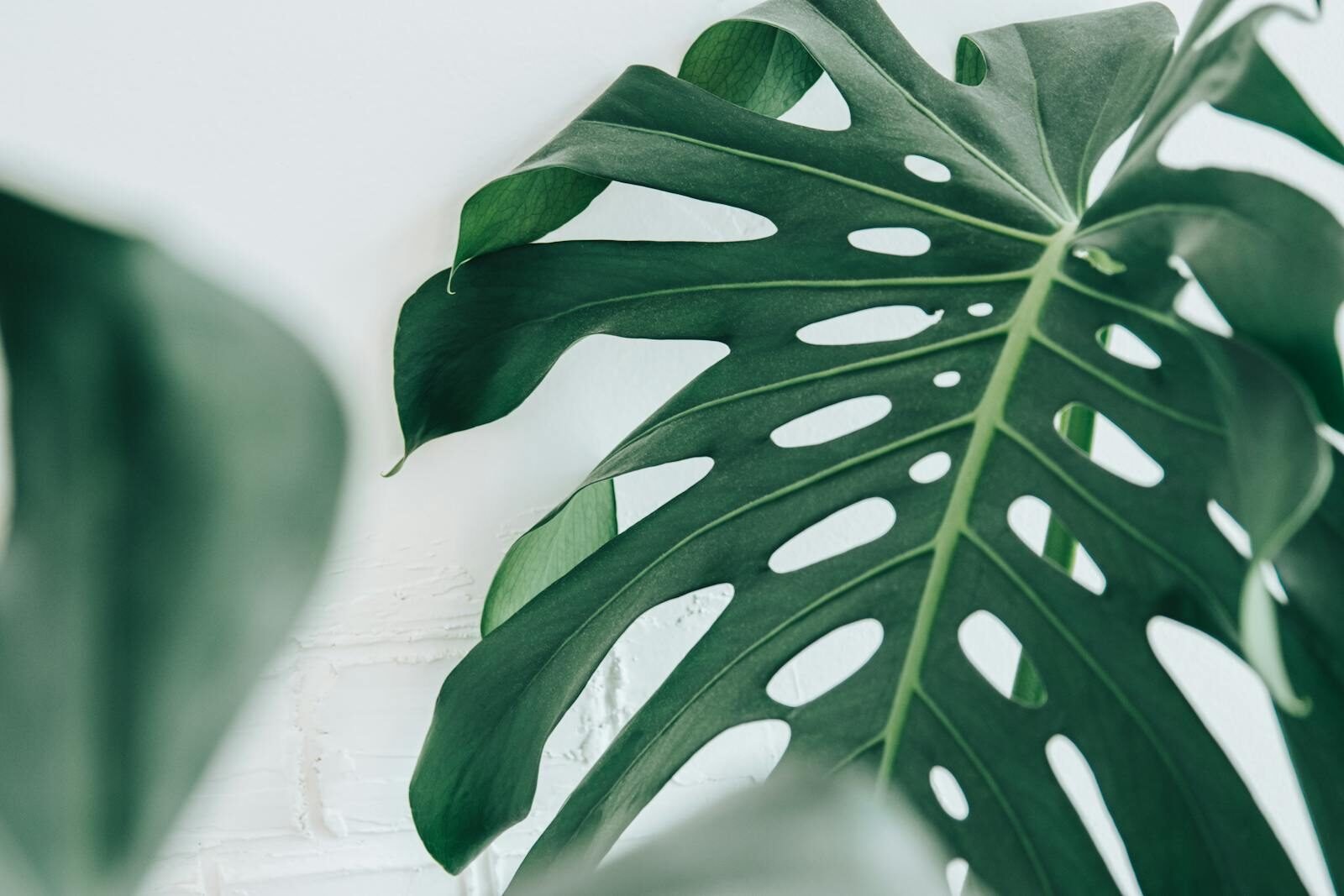
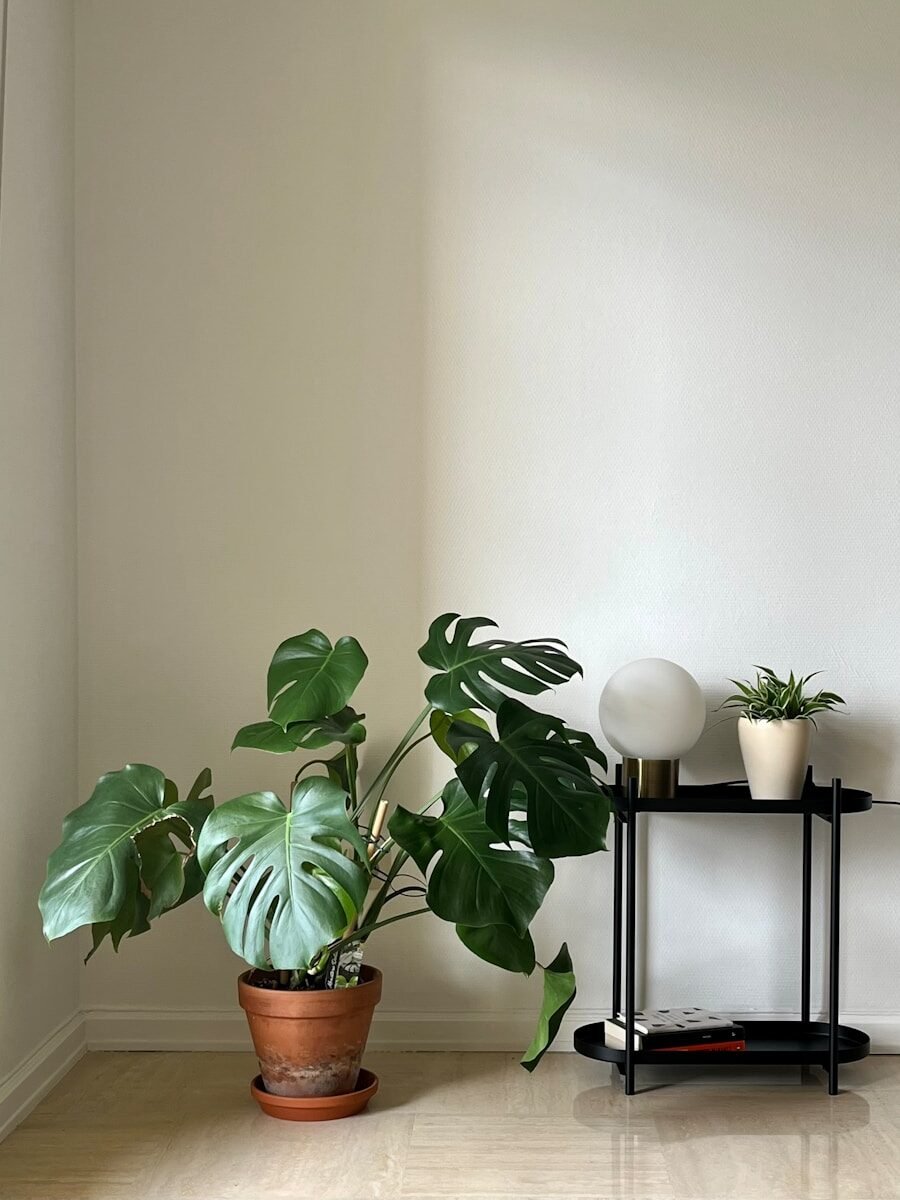
Fenestration—the splits and holes people actually buy Monsteras for—comes from maturity, sufficient light, and generally strong growth. RHS notes that younger plants and those in poor light often have fewer holes. So if your Monstera still has juvenile leaves, do not jump straight to fertilizer as the answer. Ask the obvious questions first: Is it bright enough? Is it climbing? Is it mature enough? Growth features are earned, not forced. (RHS)
How and when to fertilize
Use a balanced liquid fertilizer during active growth, dilute according to the label, and stop trying to outsmart the plant. This is not a bodybuilder. It does not need extreme inputs. The safe play is modest, regular feeding in spring and summer when the plant is actively producing leaves and roots. If your Monstera still pushes growth in warm bright indoor conditions during winter, lighter feeding can continue, which aligns with Penn State’s monthly winter guidance. (RHS)
If leaves are green, growth is steady, and the plant looks healthy, your feeding program is probably fine. If leaves are pale and growth is stalling while light and watering are already dialed in, fertilizer may help. But remember the sequence: light first, roots second, food third. Fertilizer cannot compensate for a plant sitting in a dim corner with wet soil. It just gives you a better-fed problem. (RHS)
Pruning and Propagation
Pruning a Monstera is usually about shape, damage removal, or size control rather than plant health. Remove yellow, dead, or badly damaged leaves with clean shears. If the plant is taking over the room, strategic cuts can reduce length and encourage a tidier form. Monsteras are vigorous enough that sensible pruning rarely sets them back for long when the rest of care is sound. RHS also notes these plants can be cut back if they become too large for the space. (RHS)
Propagation is where many people get sloppy. They snip a leaf, place it in water, and wait for magic. That is not how Monstera propagation works. A true propagation cutting must include a node because new growth comes from the node and axillary bud, not from a leaf alone. UMN Extension is explicit on this point: leaves and petioles alone will not produce new growth and will rot. (University of Minnesota Extension)
How to propagate Monstera the right way
To propagate a Monstera, take a cutting that includes at least one node, ideally with a leaf and healthy stem. UMN Extension says cuttings can be rooted from stem cuttings, air layering, or division, as long as each division includes a node. It also notes that propagated nodes may take 2 to 3 months before forming new leaves, which is useful because many people assume failure after two weeks and start over unnecessarily. (University of Minnesota Extension)
Water propagation is popular because you can see the roots, but UMN points out a real trade-off: roots grown in water are weaker than those formed in solid rooting media. That does not make water rooting wrong. It just means it is visually satisfying, not automatically superior. If you want a cutting to transition more smoothly into soil, rooting directly in a moist propagation mix can be the cleaner long-term move. The smart choice depends on your priorities: visibility and simplicity, or stronger soil-adapted roots from the start. (University of Minnesota Extension)
Common Monstera Problems and Fast Fixes
Most Monstera issues are pattern recognition. The plant is telling you something, and the trick is to read the whole pattern instead of reacting to one symptom. Yellow leaves do not always mean overwatering. Brown edges do not always mean underwatering. A droopy plant can be too dry, too wet, too cold, or stressed by root problems. That is why diagnosis has to start with context: light, soil moisture, pot size, drainage, temperature, and pests. (The Spruce)
Here is the quickest comparison:
| Symptom | Most likely causes | First thing to check |
|---|---|---|
| Yellow leaves | overwatering, low light, nutrient issues, root-bound stress | soil moisture and drainage |
| Brown crispy edges | dry air, underwatering, direct sun, heat stress | humidity, watering consistency, sun exposure |
| Drooping | dry soil, cold damage, overwatering, root issues | temperature and root-zone moisture |
| No holes in leaves | juvenile growth, low light, lack of support | light level and maturity |
| Black/mushy stems or roots | root rot | smell, softness, soggy mix |
These patterns line up with RHS guidance on scorched leaves, dry-air browning, and root rot risk, plus broader troubleshooting from horticultural publishers on yellowing and drooping. (RHS)
Yellow leaves, brown edges, drooping, and no splits
Yellow leaves are often the result of overwatering, especially if the soil stays wet for days and the pot lacks airflow. But consistent yellowing can also relate to poor light, nutrient deficiency, or a root-bound plant. Brown edges often point to dry air, inconsistent watering, or too much direct sun. Drooping can happen from either dryness or soggy roots, which is why blindly adding water is sometimes the worst move. And leaves without holes usually mean the plant is too young, too dimly lit, or not growing strongly enough yet. (The Spruce)
The best fix is almost always environmental correction, not a miracle product. Move the plant into better light. Check the root zone. Replace dense soil if needed. Add support. Improve humidity only if the basics are already right. Monsteras respond well to better conditions, but they do not recover instantly. Damaged leaves usually stay damaged. Judge success by the next few leaves, not by hoping the old ones will reverse course. (RHS)
Pests, root rot, and when the problem is serious
Missouri Botanical Garden lists common Monstera pests such as aphids, mealybugs, thrips, scale, and spider mites. These pests usually show up when the plant is stressed, dusty, or neglected for inspection. Wiping leaves helps for more than appearance; RHS notes that keeping leaves free of dust improves light absorption and helps you spot insects earlier. (Missouri Botanical Garden)
Root rot is the more dangerous problem because it hides below the soil line until the plant visibly declines. Warning signs include sour smell, black or mushy roots, stems collapsing near the base, and soil that remains wet too long. If you suspect rot, unpot the plant, cut away soft dead roots, and repot into a fresh, airy mix with drainage. Waiting usually makes it worse. Fast action gives the plant a chance. (RHS)
Monstera Plant Care by Season
Monstera care is not static across the year. In spring and summer, growth usually accelerates, which means the plant uses more water and nutrients. That is the main season for repotting, feeding, training onto support, and taking propagation cuttings. In fall and winter, growth often slows, soil stays wet longer, and the main risk shifts toward overwatering. RHS explicitly recommends watering less often over winter. (RHS)
This seasonal rhythm is why good growers do not chase perfect routines. They adjust. In brighter, warmer months, you may water more often and feed more regularly. In darker, cooler months, you ease off. The plant’s needs change because the environment changes. That flexibility is not advanced care. It is basic observation. (RHS)
Safety, Pets, and Placement Risks
Monstera is not a good plant for chewing pets or curious children. ASPCA lists Monstera deliciosa as toxic to cats and dogs because of insoluble calcium oxalates, which can cause oral irritation, drooling, vomiting, and difficulty swallowing. RHS also warns that the plant is poisonous and should be kept out of reach. (ASPCA)
That does not mean you cannot own one if you have pets. It means placement matters. Put it where chewing is unlikely. Use shelves, stands, or closed rooms if needed. If a pet bites the plant and shows symptoms, contact a veterinarian promptly. Plant styling matters less than safety. Always. (ASPCA)
Monstera Care Mistakes That Slow Growth
The biggest Monstera mistakes are boring, which is why they keep happening. People put the plant too far from light. They water on schedule instead of by soil dryness. They use a dense decorative pot setup with poor drainage. They repot into a huge container. They expect giant split leaves from a juvenile plant with no support. Then they buy fertilizer hoping to override all of that. It does not work. (RHS)
If you want a Monstera that looks expensive, treat it like a climbing tropical plant, not a passive piece of decor. Give it bright indirect light. Let the top layer dry before watering. Use airy soil. Train it upward. Feed during growth. Watch the next leaves for improvement. That is the whole game. Most “advanced” Monstera care is just beginner care done consistently. (RHS)
Conclusion
Monstera plant care is simple when you stop making it complicated. The plant wants bright indirect light, breathable soil, warm stable conditions, and watering based on dryness instead of habit. Add support as it matures, feed during active growth, and fix problems at the root instead of chasing symptoms on the leaves. That is how you grow a Monstera that does more than survive. That is how you grow one that actually looks the way people imagine when they buy it. (RHS)
FAQs
Is Monstera plant care good for beginners?
Yes. Monstera is beginner-friendly because it tolerates some missed waterings and adapts well indoors, but it still needs the basics done right: bright indirect light, drainage, and avoiding constant wet soil. Beginners usually do well once they stop treating it like a low-light plant. (Missouri Botanical Garden)
How often should I water a Monstera plant?
Water when the top 1 to 2 inches of soil are dry, then soak thoroughly and let excess water drain. Depending on light, season, pot size, and humidity, that may be around weekly or less often. The right answer is based on soil dryness, not a fixed schedule. (Penn State Extension)
Why doesn’t my Monstera have holes in the leaves?
Usually because the plant is still juvenile, does not get enough light, or is not growing with enough strength or support yet. RHS notes that younger plants and those in poor light often have fewer holes. Better light and patience solve this more often than anything else. (RHS)
Can I cut off Monstera aerial roots?
You can, but you do not have to. Aerial roots help the plant climb and, in some cases, can be directed into the soil or attached to a support. Removing a few for appearance is usually tolerated, but keeping them is often better for a mature climbing plant. (Missouri Botanical Garden)
Is Monstera toxic to cats and dogs?
Yes. ASPCA lists Monstera deliciosa as toxic to both cats and dogs due to insoluble calcium oxalates, which can cause oral irritation, drooling, vomiting, and swallowing difficulty. Keep the plant out of reach if you have chewing pets. (ASPCA)