Table of Contents
What makes a Monstera thrive indoors
The secret to a thriving Monstera is simple: stop treating it like a generic houseplant. It is a tropical climbing aroid that naturally grows in warm, humid, bright-but-filtered conditions, often using trees for support as it matures. Indoors, the healthiest plants usually get bright indirect light, thorough but spaced-out watering, steady warmth, decent humidity, and something to climb. When those pieces line up, Monsteras grow larger leaves, stronger stems, and eventually the dramatic splits and holes people buy them for. (RHS)
That matters because most Monstera problems are not random. Yellow leaves, curling, brown edges, slow growth, and missing fenestrations usually trace back to a mismatch between what the plant is built for and what the room is giving it. A dark corner, dense wet soil, cold drafts, or dry air can keep a plant alive while quietly stopping it from thriving. If you want a Monstera that looks impressive rather than merely surviving, you need to manage the environment instead of chasing symptoms one leaf at a time. (The Spruce)
A good mental model helps. Think of Monstera care as a system with five major levers: growth pattern, light, watering, humidity, and fertilizing. Soil, repotting, and support all matter too, but those first five drive most of the visible outcomes. Get them mostly right and your plant becomes forgiving. Get one badly wrong and the rest of your care routine has to work overtime just to keep up. (Plant Toolbox)
Understanding Monstera growth patterns
A Monstera does not grow like a compact desk plant. It grows like a climbing vine that wants to move upward, anchor itself, and produce bigger, more complex leaves as it matures. That growth habit explains a lot. It explains why unsupported plants can sprawl and look messy, why aerial roots appear, why older plants need more room, and why maturity changes the shape of the leaves. If you understand the pattern, your care decisions get a lot smarter. (RHS)
Monsteras also slow down and speed up with the seasons. In spring and summer, active growth usually means faster water use, more nutrient demand, and more visible leaf production. In fall and winter, lower light and cooler indoor conditions often slow growth, which means the same watering or feeding schedule that worked in July can become too much in December. Many people think the plant “suddenly declined,” when really the environment changed and the care routine did not. (Léon & George)
Another important point: bigger leaves are earned. Mature-looking Monsteras are rarely the result of luck. They are usually the result of adequate light, consistent care, time, and structural support. You can buy a large plant, of course, but if the environment is weak, new growth often comes in smaller than the older leaves. That is your plant telling you the conditions are not matching its potential. (The Spruce)
Juvenile vs. mature leaves and fenestration
Young Monsteras typically produce smaller, solid, heart-shaped leaves. As they mature, the leaves become larger and develop fenestrations, the natural splits and holes that make the plant iconic. Current horticultural guidance from the RHS notes that Swiss cheese plants usually start producing holey leaves only once they are a few years old, while other sources consistently tie fenestration to maturity plus good light and overall vigor. (RHS)
So why do the holes happen? The honest answer is that there are strong theories, but not one universally settled explanation. A peer-reviewed paper by Christopher Muir described Monstera fenestration as an unusual leaf trait lacking a fully convincing evolutionary explanation and proposed a model related to sunflecks and light capture in rainforest understories. Other work has suggested additional adaptive advantages, including water movement and environmental efficiency. The practical takeaway for plant owners is simpler than the evolutionary debate: fenestration increases with maturity and proper care, especially adequate light. (PubMed)
This is where many owners get frustrated too early. A juvenile Monstera with solid leaves is not failing. It is just juvenile. If the plant is healthy, growing steadily, and getting enough light, splits usually come with time. Chasing fenestration by overfeeding the plant or forcing extra water does not work. Light, time, and support do. (RHS)
Climbing habit, aerial roots, and support
Monsteras are climbers. In nature, they use other structures for support, and indoors they respond well to a moss pole, plank, or similar support that lets them grow upward instead of flopping outward. NC State specifically notes that sturdy support is necessary to prevent stems from breaking, and the New York Botanical Garden highlights moss pole care as part of keeping the plant happy. Support is not cosmetic. It changes how the plant allocates growth. (Plant Toolbox)
That is also why aerial roots are normal. They are not a sign the plant is unhealthy. They are part of how the plant climbs and stabilizes itself, and they can also help with moisture capture. You do not have to panic and cut them all off. You can tuck some into the pot, guide some onto the pole, or trim a few if they are unruly. But in general, seeing aerial roots on a Monstera means the plant is behaving like a Monstera. (NYBG Libguides)
If your goal is a fuller, more dramatic plant with larger leaves, giving it vertical support is one of the highest-leverage moves you can make. A trailing Monstera can survive, but a climbing Monstera is usually better positioned to look like the plant people imagine when they search for Monstera care. Think less “let it sprawl wherever” and more “help it grow the way it’s wired to grow.” (Plant Toolbox)
Light: the biggest lever in Monstera care
If you fix only one thing, fix the light. Most trustworthy Monstera care guidance converges on the same point: Monsteras do best in bright, indirect light. NC State recommends moderate brightness without direct sunlight, the RHS says indirect light, and Penn State describes the plant as liking humidity and bright indoor conditions rather than harsh direct exposure. In plain English: the plant wants plenty of light, just not the kind that fries the leaves. (Plant Toolbox)
Light drives almost everything readers care about. It affects leaf size, internode spacing, growth speed, fenestration, and even how efficiently the plant uses water. A Monstera in low light often survives by producing smaller leaves and slower growth. That survival mode is why people sometimes think they are “doing fine” in a dim room, right up until they compare the new leaves to the older ones and realize the plant has been shrinking its ambition. (The Spruce)
Too much direct sun creates the opposite problem. Monstera leaves can scorch, bleach, or curl when exposed to hot, harsh sun for too long, especially through intense south- or west-facing windows without diffusion. The plant likes brightness, not punishment. That distinction matters more than any rigid rule about cardinal directions. A bright east window might be perfect in one home and too dim in another depending on climate, obstructions, and season. (Home & Garden Education Center)
Best window placements and grow-light backup
For most homes, an east-facing window or a few feet back from a bright south- or west-facing window works well. The goal is to give the plant abundant ambient light or gentler direct morning light without long exposure to intense midday or afternoon sun. If your best natural light is strong, a sheer curtain often solves the problem. If your best natural light is weak, move the plant closer rather than assuming it will “adapt.” (RHS)
Grow lights can also be a smart backup, especially in darker apartments or winter months. They are not just for collectors. They are a practical fix when your room simply does not offer enough light to support mature growth. If your Monstera is producing tiny leaves, stretching toward the window, or stalling for months, the issue may not be fertilizer at all. It may just need more usable light. (The Spruce)
The easiest way to judge placement is not by theory but by response. If new leaves are getting larger over time, stems are not overly stretched, and the plant holds its shape without dramatic leaning, your light is probably in a workable range. If the plant is leggy, slow, and small-leaved, you likely need more light. If the leaves are pale, scorched, or crispy in patches facing the window, you likely need softer light. (The Spruce)
Signs of too little vs. too much light
Monstera light problems are easier to spot than most people think. The hard part is reading the signal correctly. Too little light often shows up as long gaps between leaves, slower growth, leaves that stay smaller, and delayed or absent fenestration. Too much direct light tends to show up as scorch, curling, faded patches, or brown crispy sections, especially on the most exposed leaves. (The Spruce)
Use the whole plant as your clue, not one imperfect leaf. Older lower leaves can yellow naturally over time. A single damaged leaf does not prove a crisis. Patterns matter more: repeated pale growth near the window points toward light stress, while months of tiny unsplit growth in a gloomy corner points toward insufficient light. Good plant care is less about reacting fast and more about diagnosing accurately. (The Spruce)
Watering without causing root rot
Here is the big watering truth: there is no perfect Monstera watering schedule that works for every home. Reliable sources consistently recommend watering thoroughly and then letting a meaningful portion of the potting mix dry before watering again. NC State advises allowing the top quarter to one-third of the medium to dry, while UConn recommends allowing the top 2–3 inches to dry between waterings. That is why “water every Sunday” is weak advice. The right answer depends on soil, pot size, season, light, temperature, and airflow. (Plant Toolbox)
Monsteras hate being waterlogged more than they hate being a bit dry. These are aroids with roots that need oxygen, and saturated soil is how you end up with root rot, yellowing, limp stems, and a plant that looks thirsty even though the pot is wet. Overwatering is not about frequency alone. It is about giving more water than the roots can process in the current conditions. A dark room plus a dense soil mix plus frequent watering is the classic setup for trouble. (Home & Garden Education Center)
The best routine is thorough and patient. Water until excess drains from the bottom, then let the plant use that moisture before you water again. Shallow sips encourage weak habits. Deep watering followed by some drying encourages stronger root behavior. In winter or low light, that dry-down period usually takes longer. In bright, warm, active growth, it usually happens faster. (Urbane Eight Inc.)
How to check soil moisture properly
If you want one habit that instantly improves Monstera care, it is this: check the soil before you water. Use your finger, a wooden skewer, or simply lift the pot and learn its weight when wet versus partially dry. The goal is not to guess. The goal is to confirm. Monsteras are far easier to care for when watering is driven by soil condition instead of calendar reminders. (Home & Garden Education Center)
Good signs your plant may be ready for water include the top few inches feeling dry, the pot feeling noticeably lighter, and leaves beginning to lose a little firmness without going limp. Bad signs of watering by habit instead of need include constantly damp mix, fungus-gnat problems, yellowing lower leaves, and a sour smell from the pot. Those are not signs to add more water. They are signals to slow down and check the root zone. (The Spruce)
This is also why watering apps and blanket schedules often fail people. They cannot see your room. A Monstera in a terracotta pot near a bright window in summer is living a completely different life from one in a plastic pot across a cool hallway in winter. Same species. Totally different dry-down rate. Care improves fast when you start managing conditions instead of following fixed dates. (Google Play)
Seasonal watering adjustments
Monstera watering should change with the seasons because the plant’s growth rate changes with the seasons. During active growth, especially in spring and summer, the plant often uses water faster and can handle a slightly more frequent rhythm. During fall and winter, when light levels drop and growth slows, the soil stays wet longer and watering needs usually decrease. Several current care sources call this out directly. (Léon & George)
That seasonal adjustment is where people win or lose. A plant that was happy being watered every 7 to 10 days in bright summer conditions might need much longer in winter. If you do not reduce frequency, roots sit in stale moisture, oxygen drops, and the plant starts sending distress signals. Many “mystery” yellow-leaf cases start right there. (The Spruce)
Humidity, temperature, and airflow
Monsteras come from tropical environments, so they appreciate warmth and moderate to high humidity. NC State lists a preferred temperature range of 60 to 85°F, Penn State says humidity is preferable above 50%, and recent RHS guidance emphasizes warm, humid air. That does not mean every home needs a greenhouse. It means dry, cold, drafty conditions make the plant work harder just to maintain itself. (Plant Toolbox)
Humidity matters most when it is persistently low. In dry indoor air, especially during winter heating, Monsteras can develop brown edges, curling, or slower unfurling of new leaves. University of Wisconsin notes that leaf edges can turn brown if humidity is too low, while recent troubleshooting content also repeatedly links leaf curl to low humidity and environmental stress. Humidity alone will not fix every problem, but chronically dry air can absolutely drag the plant down. (Wisconsin Horticulture)
Airflow matters too. You want the room to feel fresh, not stagnant, but you do not want the plant blasted by AC, heaters, or cold drafts. That kind of airflow does not “toughen up” the plant. It dries it out or chills it. Stable indoor conditions are usually better than dramatic swings. Tropical plants like consistency more than heroics. (Urbane Eight Inc.)
How much humidity Monstera really needs
For most homes, above 50% humidity is a solid working target, and more humidity often improves growth quality if the rest of the care is already right. Penn State specifically says Monstera prefers humidity above 50%, while RHS guidance for humidity-loving houseplants uses 60% or higher as a useful benchmark for tropical foliage plants. Monsteras can adapt to average indoor conditions, but they usually look better and expand leaves more cleanly when the air is not too dry. (Penn State Extension)
The key is to raise ambient humidity in a way that actually matters. A humidifier near the plant works. Grouping plants can help a bit. A pebble tray can modestly improve the microclimate right around the pot, and NC State mentions wet pebbles as one option in dry interiors. Misting is debated. It can offer temporary moisture on the leaf surface, but it usually does not raise room humidity meaningfully for long. If your air is truly dry, the humidifier is the grown-up fix. (Plant Toolbox)
There is also a point where people overcorrect. High humidity is great, but not if the room is stagnant and the soil is constantly wet. More moisture in the air does not cancel out poor root-zone care. Think balance: warm room, decent airflow, soil that drains well, and humidity high enough to reduce stress without turning the whole setup soggy. (Wisconsin Horticulture)
Fertilizing for steady, balanced growth
Fertilizer helps a Monstera grow, but it does not rescue bad fundamentals. If the plant is sitting in weak light or suffocating wet soil, adding fertilizer is like stepping on the gas with the parking brake on. The plant needs light and root health first. Once those are in place, feeding during active growth can support stronger leaves, faster growth, and better overall vigor. Multiple current care sources recommend regular feeding in spring through early fall. (Wisconsin Horticulture)
The safest advice for most indoor growers is simple: use a balanced liquid fertilizer during the growing season and ease off when growth slows. You do not need an exotic formula to grow a strong Monstera. You need consistency and restraint. Overfertilizing is one of those mistakes that feels productive right up until the leaf tips brown, salts build up, or the roots get stressed. More is not better. Better is better. (Urbane Eight Inc.)
A thriving Monstera usually shows you that the feeding routine is appropriate. New leaves come in healthy, the plant keeps moving during the active season, and there are no signs of burn or salt buildup. If the plant is pale or stalling in otherwise good conditions, mild nutrient support can help. If the plant is already stressed, fix the environment before you reach for the bottle. (Wisconsin Horticulture)
Which fertilizer works and how often to feed
A balanced, water-soluble or liquid houseplant fertilizer is usually the practical choice for Monsteras. Recent care sources commonly recommend feeding every 4 to 6 weeks through spring and summer, while some growers feed a bit more often at lower strength. That gives you flexibility. The exact brand matters less than the pattern: diluted, consistent, and tied to active growth. (Urbane Eight Inc.)
If you are unsure, start lighter than you think you need. Half-strength applications are often safer than aggressive full-strength feeding, especially in average home conditions where growth is slower than in a greenhouse. Watch the plant. A feeding plan should support the plant, not force it. And once autumn and winter arrive, taper down or pause unless the plant is still clearly growing under strong indoor light. (Léon & George)
Soil, pots, and repotting basics
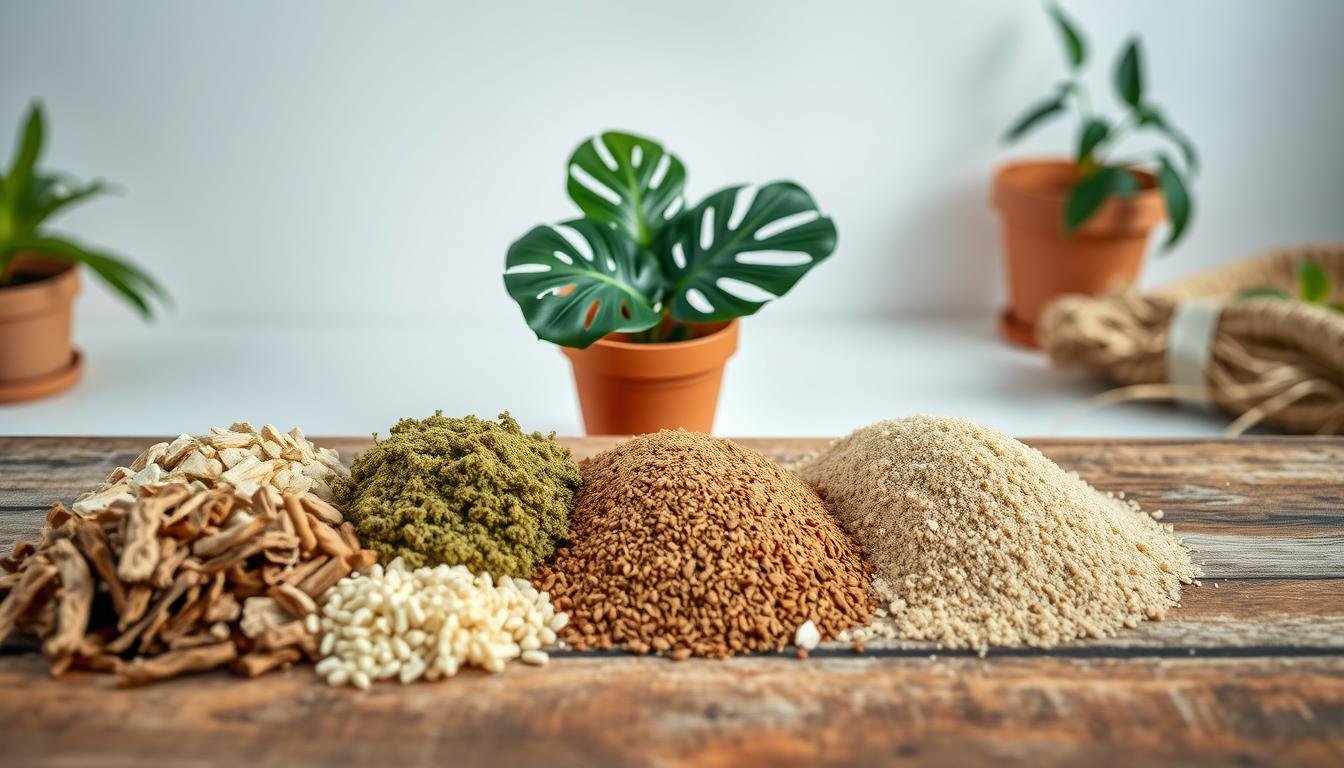
Monstera roots need a potting mix that holds some moisture but still drains well and leaves room for air. UConn recommends a well-draining, organic-rich mix, while multiple current sources suggest adding ingredients like perlite, bark, or coco coir to improve aeration and structure. The exact recipe can vary, but the principle is consistent: do not trap the roots in dense mud. (Home & Garden Education Center)
Pots need drainage holes. Not optional. Decorative containers without drainage create hidden risk because excess water has nowhere to go. If you want a nicer outer pot, use a nursery pot inside it and empty any standing water after watering. Wet feet are one of the fastest ways to sabotage a Monstera that otherwise has good light and decent humidity. (Urbane Eight Inc.)
Repotting is usually needed when roots crowd the pot, growth slows despite good care, the soil breaks down and stays wet too long, or roots circle heavily at the bottom. Recent care guides commonly suggest repotting every 1 to 2 years, but the better standard is plant condition, not a timer. Move up only one pot size or so, refresh the mix, and avoid turning the plant’s root zone into an oversized reservoir of wet soil. (Urbane Eight Inc.)
Common Monstera problems and fast fixes
Most Monstera problems can be traced back to a short list: light, watering, humidity, soil, temperature, or pests. That is good news because it means diagnosis can be systematic. Instead of guessing wildly, you can work through the likely causes in order. Start with the basics first because the basics cause most of the damage. A dramatic leaf symptom does not automatically mean a dramatic disease. (The Spruce)
Here is a practical cheat sheet for what common symptoms usually point to:
| Symptom | Most likely causes | First move |
|---|---|---|
| Yellow leaves | Overwatering, poor drainage, low light, nutrient imbalance, normal aging | Check soil moisture and drainage first |
| Curling leaves | Underwatering, low humidity, excessive direct light, pests | Check soil, humidity, and leaf undersides |
| Brown edges | Dry air, underwatering, salt buildup, sun scorch | Review humidity, watering pattern, and fertilizer strength |
| No splits / small leaves | Juvenile growth, insufficient light, lack of support | Increase light and give the plant something to climb |
| Drooping | Water stress, root issues, low light, environmental shock | Check root-zone moisture and recent changes |
These patterns are repeatedly reflected in current troubleshooting coverage and extension guidance, especially around moisture stress, low humidity, excessive light, and underperforming low-light setups. (The Spruce)
Before you “treat” anything, confirm the cause. Yellow leaves from overwatering and yellow leaves from underwatering do not need the same fix. Curling from dry air and curling from scorching sun do not need the same fix either. Good plant care is rarely about finding the most clever solution. It is about avoiding the wrong one. (The Spruce)
Yellow leaves, curling, browning, and stalled growth
Yellow leaves are commonly linked to overwatering, especially when the soil stays wet too long or drainage is poor. But that is not the only cause. Insufficient light, nutrient issues, and ordinary aging of older lower leaves can also play a role. The fastest way to narrow it down is to check the soil and look at the pattern: one old leaf yellowing is different from several leaves yellowing while the pot feels heavy and damp. (The Spruce)
Curling leaves are often a stress signal rather than a single diagnosis. Recent troubleshooting sources repeatedly point to watering imbalance, low humidity, too much direct light, poor soil, and pests as common triggers. That is why leaf curl should send you into detective mode. Check moisture, inspect the leaf undersides, and evaluate the room conditions before assuming the issue is one thing. (The Spruce)
Brown edges usually suggest dry air, inconsistent watering, salt buildup from fertilizer, or sun damage. University of Wisconsin specifically notes that low humidity can brown the edges, and other current sources tie scorching to too much direct sunlight. Brown tips are the plant’s way of saying the moisture balance above or below the soil line is off. (Wisconsin Horticulture)
Stalled growth or a Monstera that refuses to split is often more boring than people want it to be. Usually it comes down to not enough light, immaturity, no climbing support, or a plant sitting in care conditions that are too inconsistent to build momentum. The fix is usually not dramatic. It is better light, a better support system, and steady care over time. That is less exciting than a miracle product. It is also what works. (The Spruce)
One more thing matters for households with animals or children: Monstera deliciosa is toxic to dogs and cats if chewed, according to the ASPCA, because of insoluble calcium oxalates that can cause oral irritation, drooling, vomiting, and difficulty swallowing. So while it is an excellent indoor plant, placement matters. Thriving plant, smart boundaries. Both can be true at once. (ASPCA)
Conclusion
Thriving Monstera plants are not built on hacks. They are built on alignment. Give the plant the kind of environment it is designed for and it rewards you with stronger growth, larger leaves, and eventually the dramatic fenestration people love. That means bright indirect light, soil that drains, watering based on actual dryness instead of a rigid schedule, humidity that is decent rather than desert-dry, and fertilizer used to support growth instead of compensate for weak conditions. (RHS)
If you want one practical rule to remember, it is this: watch the plant, not the calendar. Monsteras tell you a lot through leaf size, color, firmness, spacing, and growth pace. Read those signals early and you can correct course before a small issue becomes a frustrating one. That is the real secret. Not doing more. Doing the right things, consistently, and letting the plant grow the way it wants to grow. (The Spruce)
FAQs
How often should I water a Monstera plant?
Water when the top portion of the mix has dried enough, not on a fixed weekly schedule. Reliable sources suggest letting the top 2 to 3 inches, or roughly the top quarter to one-third of the medium, dry before watering again. In brighter, warmer conditions that may be every week or so; in winter or lower light it may take much longer. (Home & Garden Education Center)
Why are my Monstera leaves not splitting?
Usually because the plant is still juvenile, not getting enough light, lacking support, or simply not mature enough yet. Fenestration is strongly associated with age, vigor, and better light. A healthy small plant with solid leaves is normal. The fix is patience, brighter indirect light, and a climbing support rather than more water or heavy fertilizer. (RHS)
Do Monsteras need direct sunlight?
Not harsh direct sun for long stretches. Monsteras do best in bright indirect light, though gentler direct morning light can work in some homes. Too much intense sun can scorch the leaves, while too little light can shrink leaf size and slow growth. (RHS)
What humidity level is best for Monstera?
A practical target is above 50%, with many tropical-plant setups performing even better around 60% or higher. Monsteras can adapt to average indoor air, but persistently dry rooms often lead to browning edges, curled leaves, or rough-looking new growth. (Penn State Extension)
What is the best fertilizer for a Monstera?
A balanced liquid or water-soluble houseplant fertilizer is usually the easiest and safest option. Feed during spring and summer, often every 4 to 6 weeks at moderate strength, and reduce or pause in slower winter conditions. The best fertilizer routine supports active growth without creating salt buildup or forcing a stressed plant. (Urbane Eight Inc.)