Table of Contents
The short answer: what yellow leaves usually mean
Yellow Monstera leaves usually mean stress, not mystery. In most cases, the stress comes from watering issues, light problems, root trouble, pests, nutrient imbalance, or sudden environmental change. The biggest offender is usually improper soil moisture, especially overwatering, but not every yellow leaf points to disaster. One aging lower leaf can be normal. Multiple yellow leaves, fast yellowing, drooping, mushy stems, or foul-smelling soil usually mean you need to act. (Bloomscape)
That distinction matters because a lot of people treat every yellow leaf the same way. They water more, fertilize more, move the plant, repot it, mist it, and basically throw six fixes at one problem. That often makes things worse. A Monstera is less like a dramatic plant and more like a dashboard warning light. The leaf is telling you something is off. Your job is to figure out which system failed before you start changing everything.
The good news is that yellowing usually leaves clues. Uniform yellowing points you one way. Yellow with crispy brown edges points another. Yellow leaves plus soggy soil and droop is a different story from yellow leaves plus bone-dry soil and curling. Once you learn those patterns, this gets a lot easier. You stop guessing and start diagnosing.
When yellow leaves are normal and when they signal a real problem
Not every yellow leaf means your Monstera is in trouble. The odd lower leaf on a mature houseplant can yellow and drop as part of normal aging, and plant-care sources consistently note that one older leaf fading out is often harmless. That is especially true if the rest of the plant looks strong, the newer growth is healthy, and the yellowing is limited to a single older leaf near the base. (RHS)
A problem is more likely when the yellowing is widespread, fast, or paired with other symptoms. That includes several leaves yellowing at once, yellowing on newer leaves, limp foliage, stalled growth, blackened roots, fungus gnats, sun-bleached patches, pest speckling, or a sudden shift after repotting or moving the plant. In other words, one old leaf is usually housekeeping. A pattern is a message.
This is also where expectations matter. A fully yellow leaf will not turn green again. Once tissue has lost chlorophyll and the plant has decided to abandon that leaf, you are not reversing it. What you can do is stop the underlying cause so the next leaves stay healthy. That mindset saves time. You are not trying to “heal” a yellow leaf. You are trying to protect the plant’s future growth.
A useful rule: if you see one lower leaf yellow slowly, monitor it. If you see multiple leaves yellowing, especially within a short window, inspect the roots, soil moisture, light, and pests the same day. Fast action matters most when roots are involved.
The most common culprit: watering problems
If you want the highest-probability answer to “why are my Monstera leaves yellow?”, start with watering. Multiple current care guides and experts point to improper moisture, especially overwatering, as the most common reason. Monsteras like their soil to dry somewhat between waterings. They do not want to sit in swampy mix, and they do not want to swing from bone dry to soaked on repeat. (Bloomscape)
The key mistake is thinking watering is about time. It is not. It is about conditions. A Monstera in bright light, warm air, and an airy mix may need water much sooner than one in low light, cool temperatures, and dense soil. Better Homes & Gardens notes that watering often falls somewhere around every one to two weeks, but the interval changes with light, temperature, humidity, and potting setup, which is exactly why calendar watering causes trouble. (Better Homes & Gardens)
Another issue is inconsistency. Bloomscape notes that alternating between very dry soil and very wet soil can stress a Monstera and contribute to yellowing. That pattern is common in real homes: the plant gets ignored, then drenched, then ignored again. The roots get stressed, uptake becomes uneven, and the leaves show the damage. (Bloomscape)
Signs your Monstera is overwatered
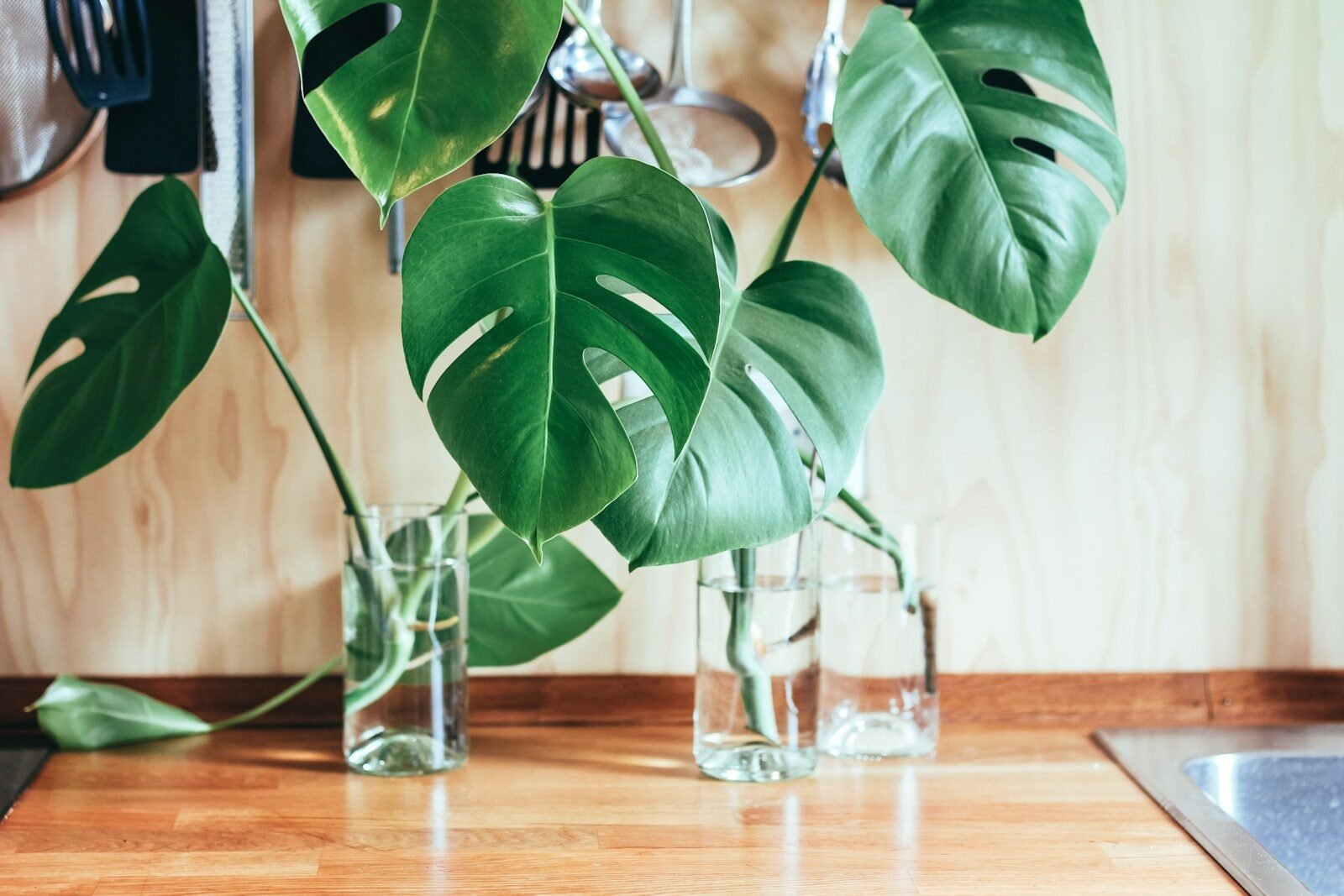
An overwatered Monstera usually looks tired, soft, and heavy. The yellowing often appears broad and uniform, not crisp and papery. Leaves may droop even though the soil is wet. The pot may feel heavy for days. You might notice a musty smell, fungus gnats, soft stems, or blackened roots if you slide the plant out of the pot. Plant-care sources repeatedly tie overwatering to root rot because waterlogged soil limits oxygen around the roots, and once roots fail, the plant cannot regulate moisture or nutrients properly. (Bloomscape)
The most useful clue is this: wet soil plus yellow leaves is more dangerous than dry soil plus yellow leaves. Dryness is stressful, but roots can often recover quickly. Rotting roots are a bigger structural problem. If the soil stays wet far longer than it should, the pot lacks drainage, or the mix is dense and compacted, overwatering becomes very likely even if you are not watering “that often.” Overwatering is about airless roots, not just volume.
People also confuse “I only water once a week” with “I cannot be overwatering.” That is not how it works. In low light, winter, or dense soil, once a week can still be too often. Roots do not care about your routine. They care about oxygen.
When overwatering is the cause, your fix is not to stop watering forever. It is to restore the wet-dry balance. Let the mix dry appropriately, make sure the pot has drainage holes, consider switching to a chunkier aroid mix, and inspect roots if symptoms are escalating. If roots are brown, mushy, and smelly, trim the damaged sections and repot into fresh, well-draining medium. That is often the turning point.
Signs your Monstera is underwatered
An underwatered Monstera usually looks lighter, thirstier, and sharper around the edges. The leaves may droop, but instead of feeling soft and waterlogged, they often feel thinner or limp. Edges can brown first and then yellow, and the soil may pull away from the pot’s sides or feel hard and dry well below the surface. Better Homes & Gardens and other care guides note that dry conditions can lead to wilting and browning before broader yellowing develops. (Better Homes & Gardens)
Underwatering is not always caused by neglect. Sometimes people water lightly and often instead of watering deeply. That wets the top layer but leaves much of the root zone dry. Other times the plant is root-bound, so water rushes through without actually rehydrating the soil mass. In both cases, the owner thinks, “But I watered it,” while the plant is still thirsty.
Here is the useful difference between overwatering and underwatering: both can cause droop and yellowing, but the soil tells the truth. If the root zone is dry, the plant needs water. If the root zone is wet and the plant still droops, the roots may be compromised. That is why checking below the surface matters more than touching the top half inch and guessing.
To fix underwatering, water thoroughly until excess drains out, then let the plant drain fully. If the soil has become hydrophobic and water runs straight through, bottom watering or repeated slow watering can help rehydrate it. Then adjust your routine based on how fast the plant actually dries in your space.
Light problems: too little, too harsh, or too sudden
Monsteras want bright, indirect light. The Royal Horticultural Society advises indirect light and warns that direct sun can scorch leaves, while very low light leads to weaker growth. Other care guides echo the same point: Monsteras can tolerate lower light than some houseplants, but too little light can still contribute to yellowing, slower growth, and smaller leaves with fewer fenestrations. (RHS)
Light problems often get misread because people treat light like a yes-or-no variable. It is not. A plant near a north-facing window in winter is living a different life from one near an east window or several feet back from a bright south window with a sheer curtain. Two Monsteras in the same room can behave differently depending on where the shadows fall.
A sudden light change can also trigger stress. Move a plant from a dim corner to strong afternoon sun and leaves can yellow or scorch. Move it from a brighter spot into a darker one and it may start shedding older foliage while stretching for light. The plant is adapting, but adaptation has a cost.
What low light yellowing looks like
Low light yellowing tends to be slower and less dramatic than sunburn. The plant may look washed out, leggy, or stalled before you notice multiple yellow leaves. Lower leaves often go first because the plant is not getting enough energy to maintain all its foliage. That matches current houseplant guidance: insufficient light can slow growth and contribute to yellowing, especially in already stressed plants. (Bloomscape)
Think of light as the plant’s income. If income drops, it starts cutting expenses. Older leaves are expensive to keep. So the plant reclaims nutrients and lets some foliage go. That is why low light problems often look like gradual decline instead of sudden collapse.
The fix is simple in theory: move the plant somewhere with brighter indirect light. In practice, that usually means nearer a bright window, but not pressed against hot direct sun for hours. If your home is naturally dim, a grow light can help. Just do not make a massive jump overnight. Increase light with some care so the plant can adjust.
What sun stress and leaf scorch look like
Too much direct sun usually leaves clearer damage. Instead of overall dull yellowing, you may see bleached, faded, yellow patches that later turn tan or crispy. This is less “I’m thirsty” and more “I got burned.” RHS specifically notes that direct sun can scorch Monstera leaves, and that guidance lines up with what experienced growers see: the tissue often looks pale first, then dry and damaged. (RHS)
This is common when a Monstera is placed right in a hot south- or west-facing window without filtration, especially if it was previously in gentler light. Morning sun is often tolerated better than harsh midday or afternoon sun, but intensity depends on climate, season, and glass exposure.
If sun stress is the issue, move the plant slightly back from the window or use a sheer curtain to soften direct rays. Damaged areas will not recover, but new growth should look healthy once the exposure is right.
Root and pot problems that quietly cause yellow leaves
Sometimes the visible issue is leaves, but the real issue is below the soil line. Monsteras can yellow when their roots are rotting, crowded, suffocating, or stuck in a bad mix. This is why above-ground diagnosis alone can mislead you. If you keep fixing the leaf and ignoring the root system, the cycle repeats.
Roots control water uptake, nutrient uptake, and overall resilience. When roots are healthy, the plant can handle small care mistakes. When roots are compromised, even decent care stops working. The plant cannot use what you give it.
Root rot and root-bound stress
Root rot is usually tied to chronically wet conditions, poor aeration, or containers that drain poorly. As the roots fail, leaves yellow because the plant can no longer absorb water and nutrients properly. You often see a confusing combination: wet soil, drooping leaves, and yellow foliage at the same time. That contradiction is classic root trouble. (Bloomscape)
A root-bound Monstera can also yellow, though for a different reason. When roots circle tightly and fill the pot, they compete for limited space, water, and nutrients. The plant dries out faster, feeding becomes less effective, and growth can stall. The Spruce specifically notes root-binding as one cause of yellow leaves in Monstera. (The Spruce)
Here is the practical difference. With root rot, roots are often brown, mushy, or foul-smelling. With root-bound stress, roots are usually firm but densely packed, circling the pot. One needs cleanup and fresh mix. The other needs more room.
If your plant is yellowing despite decent care, slide it gently from the pot and look. That five-minute inspection often reveals the real issue faster than another month of guesswork.
Soil mix, drainage, and pot size mistakes
Monsteras do best in a well-draining, airy mix, not dense mud. Recent care guidance recommends blends that improve airflow, often with components like bark or perlite. Better Homes & Gardens specifically points to better-draining soil and additions like bark or vermiculite to reduce yellowing risk. (Better Homes & Gardens)
The pot matters too. No drainage hole means the bottom of the pot can stay wet far longer than the top suggests. An oversized pot can also backfire. RHS notes that overpotting can contribute to yellowing because extra soil holds extra moisture around roots that are not using it yet. (RHS)
This is one of the sneakiest Monstera problems because the plant may look fine for a while. Then the mix stays wet longer and longer, the roots get less oxygen, and the leaves start yellowing weeks later. People blame the last watering when the real problem was the container and soil system all along.
A good setup is not fancy. It is just fast enough to drain, open enough to breathe, and stable enough to hold some moisture without staying soggy. That balance solves a lot of “mystery” yellowing before it starts.

Nutrient issues and fertilizer mistakes
If watering, light, and roots check out, look at nutrition. Yellowing can reflect a nutrient deficiency, but this is where people often oversimplify. “It needs fertilizer” is not always the answer. Sometimes the plant lacks nutrients. Sometimes nutrients are present but unavailable because the roots are stressed, the soil is exhausted, or the pH and moisture conditions are off.
The Royal Horticultural Society describes chlorosis as yellowing caused by multiple possible factors, including nutrient problems. General houseplant guidance also notes that nitrogen deficiency often shows on older leaves first, while iron-related chlorosis can appear as yellowing between green veins. (RHS)
Pattern matters here. If an older leaf yellows evenly, nutrition could be part of the story. If newer leaves show yellowing with green veins, that points more toward chlorosis and nutrient uptake trouble. If you have been fertilizing heavily and the leaf edges are burning, too much fertilizer may be the issue rather than too little. Better Homes & Gardens and Martha Stewart both include overfertilization and nutrient imbalance among common causes of yellow Monstera leaves. (Better Homes & Gardens)
A balanced approach works best. Feed during active growth, not aggressively year-round. If the soil is old and compacted, refreshing the mix may help more than adding more fertilizer. And if roots are unhealthy, fix the root problem first. Feeding a stressed root system is like adding groceries to a house with a broken front door. The supply is not the first problem.
Pests, disease, temperature, and humidity stress
Water and light cause most yellowing, but they are not the only players. Pests, fungal problems, cold drafts, dry air, and sudden environmental shifts can all tip a Monstera into yellow-leaf territory. This is why diagnosis has to stay broad until the pattern is clear.
Monsteras are tropical plants. They like warmth, stable conditions, and moderate to high humidity. Recent care guidance places ideal humidity roughly in the 60% to 80% range, and older Monstera care sources warn that low humidity and temperature extremes can contribute to stress and yellowing. The Spruce notes problems below 60°F or above 90°F, while RHS also warns about cold conditions, drafts, and sudden drops in temperature. (Better Homes & Gardens)
That does not mean your home must mimic a rainforest. It means avoid the obvious stressors: heating vents, cold windows in winter, blasting AC, and wildly inconsistent care. A plant can survive some discomfort. Repeated stress is what shows up in the leaves.
Pest damage that starts as yellowing
Pests often start subtle. Spider mites, thrips, mealybugs, and scale can all weaken a Monstera and cause yellowing, stippling, dullness, and distorted growth. Bloomscape and other plant-care sources list pests as a common yellow-leaf cause. (Bloomscape)
The tricky part is that pest yellowing does not always look like one clean yellow leaf. It may look like speckling, patchy fade, tiny dots, webbing, sticky residue, or leaves that lose color unevenly. By the time the leaf turns obviously yellow, the infestation may have been there for weeks.
Inspect the undersides of leaves, the petiole joints, and new growth. If you see movement, residue, cottony clusters, or fine webbing, isolate the plant and treat it. Pest pressure can also combine with low humidity and poor light, which makes the symptoms feel messier than they really are.
Cold drafts, dry air, and environmental shock
Sometimes your Monstera is not sick. It is just annoyed. Move it, repot it, expose it to a draft, let indoor air get very dry, or swing the temperature sharply, and you may see yellowing. RHS includes too cold a temperature, sudden drops in temperature, and draughts among yellow-leaf triggers for houseplants generally. (RHS)
Dry air usually causes brown edges first, but long-running humidity stress can contribute to broader decline. Houseplant sources commonly recommend increasing humidity through placement, grouping, or humidification rather than relying on constant misting alone. (Bloomscape)
Repotting can also cause temporary leaf loss or yellowing. That does not always mean the repot was wrong. Roots get disturbed. The plant reallocates energy. Give it stable care and time before you start “correcting” everything again. Overreacting to transplant shock is a common way to stack problems.
How to diagnose yellow Monstera leaves step by step
This is the part that saves you from random fixes. When a Monstera yellows, run this checklist in order.
First, ask: is it one old lower leaf or a broader pattern? If it is one older leaf and the rest of the plant looks healthy, monitor it. If multiple leaves are affected, keep going. RHS and general Monstera care sources support the idea that isolated lower-leaf yellowing can be normal while widespread yellowing suggests a care issue. (RHS)
Second, check the soil moisture at root level, not just the top surface. Push a finger deeper, use a moisture meter if you like, or lift the plant from the cachepot and feel the actual pot weight. Wet root zone plus yellowing points toward overwatering or root trouble. Dry root zone plus yellowing points toward thirst or root crowding.
Third, inspect the light situation. Has the plant been in very low light? Did you just move it into stronger direct sun? RHS guidance is clear that Monsteras prefer bright indirect light and can scorch in direct sun. (RHS)
Fourth, inspect the roots and pot setup if symptoms persist. Look for mushy roots, circling roots, compacted soil, lack of drainage, or a pot that is far too large. This is where hidden problems usually reveal themselves.
Fifth, examine the leaf pattern:
| Symptom pattern | Most likely cause |
|---|---|
| Even yellowing, wet soil, droop | Overwatering or root rot |
| Yellowing with crispy edges, very dry soil | Underwatering or low humidity |
| Pale/yellow plant, leggy growth | Too little light |
| Bleached yellow patches, crispy damage | Too much direct sun |
| Yellowing between green veins | Nutrient issue or chlorosis |
| Speckled yellowing, webbing, residue | Pests |
Sixth, consider recent changes. Repotting, moving rooms, cold nights, new fertilizer, or a new watering routine can all explain “sudden” yellowing. Plants react to change with a delay, so the cause may be something that happened a week or two ago, not just yesterday.
This process is boring compared with buying a miracle plant tonic. It is also what works.
How to fix yellow Monstera leaves and prevent it from happening again
The right fix depends on the cause. That sounds obvious, but it matters because yellow leaves are a symptom, not a diagnosis. Once you know the cause, the repair path gets much simpler.
If the problem is overwatering, let the plant dry appropriately, remove it from a non-draining decorative pot after watering, and repot into an airy mix if the current medium stays wet too long. If roots are rotted, trim the mushy parts and repot into fresh mix. Then wait. Constantly disturbing the plant after repotting slows recovery.
If the problem is underwatering, water deeply and fully, not with a few timid splashes. Rehydrate the root ball if the soil has gone hydrophobic. Then monitor how quickly the plant dries in your home and adjust based on reality, not a generic schedule.
If the issue is light, move the plant toward brighter indirect light. Too dim? Move it closer to a window or add a grow light. Too harsh? Pull it back or filter the sun. The goal is bright, steady exposure without hot, direct scorch.
If the issue is nutrition, feed lightly during active growth with a balanced fertilizer and refresh exhausted soil when needed. If you suspect fertilizer burn, flush the soil and back off. More is not better here.
If the issue is pests, isolate the plant and treat consistently. One quick wipe usually does not solve an established infestation. You need follow-through.
If the issue is environmental stress, stabilize the setup. Keep the plant away from cold drafts, direct vent airflow, and abrupt condition changes. Humidity support can help, especially in very dry indoor air. (The Spruce)
Two questions come up constantly here.
Should you cut off yellow Monstera leaves?
Usually, yes—once the leaf is mostly or fully yellow. A half-green leaf can still contribute some energy, so you can leave it until more of it fades. Use clean pruners and cut near the base of the petiole without damaging the stem.
Can yellow Monstera leaves turn green again?
Usually, no. Once tissue has turned fully yellow, it will not regain normal green color. Focus on healthy new growth. That is the metric that tells you whether your fix worked.
Prevention is simpler than cure. Water based on soil dryness, not calendar guilt. Use a pot with drainage. Give the plant bright indirect light. Choose an airy mix. Avoid dramatic changes. Check the leaves and roots before problems snowball. These are not glamorous tips. They are the ones that keep Monsteras green.
Conclusion
If your Monstera leaves are yellow, do not start with panic. Start with pattern recognition. In most cases, the answer is one of a few usual suspects: watering stress, light issues, root problems, nutrients, pests, or environmental shock. The fastest way to get the right answer is to look at the soil, roots, light exposure, and leaf pattern together, not in isolation. (Bloomscape)
The smartest mindset is simple: a yellow leaf is feedback. One lower leaf may be normal. Several yellow leaves are your sign to investigate. If the soil is wet, think roots. If the soil is dry, think thirst or root crowding. If the pattern is patchy or bleached, think sun. If the yellowing is weirdly patterned, think pests or nutrients. Once you stop guessing, Monsteras become a lot easier to manage.
And that is the real win. Not just fixing this round of yellow leaves, but learning how to read the plant before the next problem gets momentum.
FAQs
What does it mean if only one Monstera leaf is yellow?
One yellow leaf, especially a lower older leaf, is often normal aging rather than a crisis. If the rest of the plant is healthy, the growth is strong, and no other leaves are yellowing, you usually do not need a major intervention. Watch for whether the yellowing spreads. If it stays isolated, it is probably routine leaf turnover. If more leaves follow, inspect watering, roots, and light.
Why are the bottom leaves on my Monstera turning yellow first?
Bottom leaves often yellow first because they are the oldest and easiest for the plant to shed when energy is limited. That can be normal aging, but it can also happen when the plant is in low light, root-bound, or struggling with inconsistent watering. Lower leaves are usually the first budget cut. If you see several lower leaves yellowing together, check whether the plant is not getting enough light or whether the root zone is staying too wet.
How do I know if yellow leaves mean root rot?
Yellow leaves suggest root rot when they show up alongside wet soil that stays wet too long, drooping leaves, a sour or musty smell, soft stems, or mushy dark roots. The strongest clue is the contradiction: the plant looks thirsty, but the soil is wet. Healthy roots should be firm. If the roots are brown, soft, and falling apart, root rot is likely and repotting is usually the right move.
Why is my Monstera yellow after repotting?
Repotting can cause short-term stress because the roots get disturbed and the plant needs time to re-establish. A little yellowing after repotting does not automatically mean you did something wrong. The bigger risk is using a pot that is too large or a mix that stays wet too long, which can trigger overwatering issues after the move. Keep conditions stable, avoid overwatering, and give the plant time to settle before making more changes.
Should I mist my Monstera if the leaves are yellow?
Not as your main fix. Yellow leaves are more often caused by watering, light, roots, pests, or nutrients than by a simple lack of misting. Dry air can contribute to stress, but misting alone usually does not solve the real issue and may be too temporary to matter much. If humidity is genuinely low, a humidifier, better placement, or grouping plants is usually more useful than constant misting.