Table of Contents
Types of Monstera Plants
Monstera is one of the most searched houseplant groups for a reason. The leaves look dramatic. The plants can be forgiving. And once you start browsing, you run into a mess of names, half-accurate labels, collector slang, and overpriced listings. That is where most guides get fuzzy. They show pretty leaves, list a few names, and leave you to untangle the rest.
This guide fixes that. You will get the main Monstera types people actually grow, the rare ones collectors chase, the names sellers get wrong, and the differences that matter when you are trying to identify or buy one. The goal is not to memorize obscure Latin names for fun. The goal is to help you make a better decision, avoid common mistakes, and understand why one Monstera thrives in your living room while another belongs in a greenhouse cabinet. Current horticultural references also make one thing clear: while the genus is large, only a relatively small set of species shows up regularly in the houseplant trade. Kew currently recognizes 71 accepted Monstera species, while the RHS notes that only a couple are widely grown as houseplants, with Monstera deliciosa by far the best known. (Plants of the World Online)
What Monstera Actually Is
At the botanical level, Monstera is a genus in the Araceae family, the same broad plant family that includes many other popular aroids. Kew’s Plants of the World Online currently lists 71 accepted species in the genus, and those species are native to tropical regions of the Americas. Many are climbing plants adapted to wet tropical forest conditions, which explains the aerial roots, the love of support structures, and the way leaf shape changes as plants mature. (Plants of the World Online)
The signature look most people associate with Monstera is fenestration: natural holes, slits, or splits in the leaf. Those holes are not damage. They are part of the plant’s normal leaf architecture once it matures under the right conditions. Research on Monstera fenestration has explored several possible adaptive benefits, including improved performance in low-light forest conditions and reduced resistance to wind and rain. The exact evolutionary story is still debated, which is worth saying plainly because many popular plant articles present a single explanation as settled fact when it is not. (PubMed)
Species, varieties, cultivars, and trade names
This part matters because the Monstera market is full of labels that sound scientific but are really a mix of taxonomy, horticulture, and sales language. A species is a formally recognized plant, like Monstera deliciosa or Monstera adansonii. A variety or subspecies is a taxonomic rank below species, though many sellers use the term loosely. A cultivar is a cultivated plant selected for a trait, like stable variegation. A trade name is often just a market label that helps sell a familiar-looking plant.
That is why buyers get confused by names like “Monstera borsigiana,” “Monstera Peru,” “Monstera Esqueleto,”or “mini monstera.” Some of those names point to real horticultural distinctions. Some point to taxonomic synonyms. Some are placeholder names. Some are flat-out not true Monsteras at all. If you understand that difference, you immediately get better at identifying plants and spotting misleading listings. (Houseplant Care Tips)
Quick Answer: The Main Types of Monstera People Actually Grow
If you want the fast answer, these are the main Monstera types most indoor growers encounter:
| Type | Why people want it | Best fit |
|---|---|---|
| Monstera deliciosa | Classic huge split leaves | Most homes, beginners |
| Monstera adansonii | Smaller, holey “Swiss cheese” leaves | Shelves, hanging or climbing |
| Monstera dubia | Shingling juvenile leaves | Collectors who like unusual growth |
| Monstera siltepecana | Silvery juvenile foliage | Smaller spaces, foliage lovers |
| Monstera standleyana | Sleek leaves, often variegated | People who want a different look |
| Monstera obliqua | Extremely rare, delicate, heavily perforated | Advanced collectors only |
| Variegated deliciosa forms | White or cream marbling | Collectors willing to pay more |
That list aligns closely with what the current SERP surfaces again and again: deliciosa, adansonii, dubia, siltepecana, standleyana, obliqua, and variegated forms such as Thai Constellation and Albo. Editorial plant sites and retailer guides consistently position these as the most searched and commercially relevant Monstera types, even though the full genus is much larger. (The Spruce)
For most people, the real decision is not “Which of the 71 species should I own?” It is “Do I want the classic big-leaf climber, the smaller vine with holes, the silver juvenile foliage, or the rare collector plant that demands more attention?” Once you see the topic that way, the category becomes much easier to navigate.
Monstera deliciosa
If there is one plant that defines the category, it is Monstera deliciosa. This is the plant most people picture when they hear Swiss cheese plant: large, glossy leaves that develop deep splits and perforations as the plant matures. Kew lists it as an accepted species native from parts of Mexico to Guatemala, and the RHS identifies it as the most popular houseplant Monstera by a wide margin. (Plants of the World Online)
Why does deliciosa dominate? Because it gives you the biggest payoff for the least confusion. Mature foliage is dramatic. Care is relatively straightforward compared with rarer species. It responds well to a support pole. And it tolerates normal home conditions better than many collector Monsteras. Extension and horticultural references consistently point to bright indirect light, warm conditions, and an airy, well-draining mix as the baseline for strong growth and better fenestration. (RHS)
It is also the Monstera most likely to look disappointing when young. Small nursery plants usually have simple, heart-shaped leaves with few or no splits. That throws beginners off. They think they bought the wrong plant. They usually did not. They bought a juvenile plant that needs time, light, and support to mature.
Deliciosa vs. “borsigiana”
This is one of the biggest naming tangles in the Monstera world. In online marketplaces, “Monstera borsigiana” is often sold as if it were a separate species from Monstera deliciosa. The cleaner reality is that Kew treats Monstera borsigiana as a synonym, not a separate accepted species, and IPNI records Monstera deliciosa var. borsigiana as a historical botanical name. In plain English: the trade often uses borsigiana to describe a smaller, faster, more vining form, but that does not make it a separate species in current accepted taxonomy. (Plants of the World Online)
That does not mean growers are imagining differences. In the plant trade, people often use large form deliciosa and small form/borsigiana as practical categories. The problem is that those labels are not as botanically clean as sellers make them sound. Growth habit, internode spacing, maturity, environment, and training all affect appearance. So if you are buying one, focus less on whether the label says borsigiana and more on the actual plant in front of you: stem spacing, leaf size potential, variegation quality if applicable, rooting, and overall health.
Thai Constellation, Albo, and other variegated deliciosa forms
Most of the high-demand variegated Monsteras you see online are forms of Monstera deliciosa in horticultural trade. The two best-known names are Thai Constellation and Albo. The broad pattern on the SERP is clear: these plants are highly searched, highly photographed, and often framed as premium collector plants because variegation slows growth, reduces total chlorophyll, and makes each plant visually distinct. (The Spruce)
The key buyer distinction is practical. Thai Constellation usually shows creamy, speckled variegation spread through the leaf, while Albo is known for stronger white sectoring or marbling. That matters because the care risk changes with the amount of white tissue. More white usually means less photosynthetic capacity and more browning risk. It also matters because beginners often buy variegation with their eyes, not with their setup. If your home is dim and dry, a heavily variegated Monstera is usually a worse first choice than a healthy green deliciosa.
Monstera adansonii
Monstera adansonii is the second major Monstera people encounter, and for many homes it is the smarter first buy. Kew recognizes it as an accepted species with a tropical American native range, and houseplant guides consistently place it among the most accessible Monstera types after deliciosa. (Plants of the World Online)
The appeal is obvious. You still get fenestrations, but in a lighter, smaller, faster-growing vine. It works on a moss pole, a plank, or even trailing from a hanging planter, though climbing tends to produce better leaf size and stronger form. Compared with deliciosa, it fits tighter spaces and looks “finished” earlier because the foliage is naturally smaller. That makes it easier to style in apartments, offices, and shelves where a mature deliciosa would eventually become a furniture negotiation.
It is also the Monstera most often confused with other plants. Sellers throw around names like Monkey Mask, Swiss cheese vine, and even obliqua for plants that are really adansonii. That confusion is part of why adansonii ranks so heavily in search: people are not just shopping for it; they are trying to confirm whether the plant they bought is actually the thing the label claimed.
Narrow form, wide form, and why labels get messy
Within the houseplant trade, growers often refer to narrow form and wide form adansonii. These are useful visual categories, but they are not always sold with precision. Some references also distinguish between subspecies or regionally associated forms, and Kew recognizes accepted infraspecific taxa such as Monstera adansonii subsp. adansonii and subsp. laniata. (Plants of the World Online)
For buyers, the useful takeaway is this: leaf shape, hole pattern, thickness, and growth habit vary, and the plant trade does not always label those differences cleanly. So do not over-trust a seller’s subtype name. Trust the plant. If you want a compact, easier-growing, visually classic fenestrated vine, healthy adansonii of any commonly sold form is usually a solid choice. If you want collector-level precision, buy from a seller who can show mature growth, node structure, and propagation history.

Monstera obliqua
Monstera obliqua is the plant that launched a thousand mislabels. Kew recognizes it as an accepted species, native from Costa Rica through parts of tropical South America and Trinidad. It is real. It is not a myth. But it is also far rarer, more delicate, and more often confused with adansonii than casual buyers realize. (Plants of the World Online)
The visual difference that matters most is leaf substance. A true obliqua has famously thin, delicate foliage with a very high proportion of perforation to leaf tissue. In practical terms, it can look almost skeletal. That beauty is exactly what makes it hard to keep. Popular horticultural guides describe it as slow-growing, high-humidity dependent, and much better suited to controlled environments than average living rooms. (Soltech)
Here is the blunt version: if you think you found a cheap Monstera obliqua at a local shop, you almost certainly did not. Most buyers who think they own obliqua actually own Monstera adansonii or another more common plant sold under a more glamorous name. That does not make your plant less good. It just means the name matters less than the reality of what you are caring for.
Monstera dubia
Monstera dubia is one of the most visually interesting species in the genus because its juvenile stage barely looks like what many people expect from a Monstera. Kew recognizes it as an accepted species with a broad native range from Mexico into tropical South America and Trinidad. (Plants of the World Online)
The juvenile plant is famous for shingling: flattened leaves pressed closely against a vertical surface, often with a patterned, almost silver-green look. That growth habit is what makes dubia so collectible. It does not just grow up a support. It hugs it. And once it matures enough to climb high and establish itself, the foliage can transform dramatically. That shift from juvenile to mature form is one of the clearest examples in Monstera of how much growth stage affects appearance. (Wikipedia)
Dubia is not the hardest Monstera, but it is not the easiest either. If you grow it like a trailing pothos, you miss the whole point. It needs a vertical surface to express the growth habit that makes it special. So this is the right Monstera for someone who enjoys training plants, not just watering them.
Monstera siltepecana
Monstera siltepecana is one of the best examples of a plant that wins people over with juvenile foliage rather than mature leaf drama. Kew lists it as an accepted species native from eastern Central and southern Mexico to Nicaragua. (Plants of the World Online)
Its juvenile leaves often have a noticeable silvery sheen with contrasting green veins, which makes it stand out from the more familiar green-on-green Monsteras. As the plant climbs and matures, it can begin developing fenestrations, but the silver juvenile look is often the reason people buy it in the first place. That makes siltepecana appealing to growers who want something more textural and refined than a standard deliciosa.
This is also a good example of why support changes everything. Left to trail, siltepecana may stay attractive but relatively juvenile-looking. Given a plank or pole, it has a better chance to transition into more mature foliage. So if you see photos online that look wildly different from the plant at the nursery, the missing variable is often not species identity. It is growth stage and support.
Monstera standleyana
Monstera standleyana is a bit of an outlier in the way people think about Monsteras because it often lacks the dramatic perforated look buyers expect from the group. Kew recognizes it as an accepted species with a native range from southeastern Nicaragua to northwestern Colombia. (Plants of the World Online)
What makes standleyana valuable is contrast. The leaves are narrower, smoother, and more streamlined than the huge split leaves of deliciosa or the holey leaves of adansonii. In variegated forms, especially the ones circulating in the plant trade, it gives a cleaner, more graphic look. If your mental model of Monstera is “every leaf must have holes,” standleyana breaks that model fast.
This matters from a buying standpoint because many newer plant owners assume a non-fenestrated Monstera is immature or unhealthy. Sometimes that is true. With standleyana, it is just the plant’s look. That makes it a useful reminder that Monstera is a genus, not a single leaf shape.
Monstera “Peru” and the naming problem
The plant widely sold as Monstera Peru is one of the clearest examples of why houseplant naming needs caution. In the trade, Monstera Peru usually refers to a compact climbing plant with heavily textured, almost quilted leaves and little to no dramatic fenestration. It is popular because the foliage looks thick, glossy, and sculptural. Editorial and retail guides often include it in Monstera roundups. (The Spruce)
The complication is taxonomy. Kew’s Plants of the World Online shows Monstera karstenianum as a synonym of Philodendron opacum, not an accepted Monstera species. That does not mean the trade plant people call Monstera Peru disappears. It means the naming around it is muddier than most sellers imply. (Plants of the World Online)
For the buyer, the practical question is not “Can I solve every taxonomic debate?” It is “Am I buying the plant I expect?” If you want thick, textured foliage and compact climbing growth, the plant sold as Monstera Peru may still be exactly what you want. Just do not assume every trade label maps neatly onto current accepted taxonomy.
Other Rare Monstera Types Collectors Should Know
Once you move beyond the mainstream group, you enter the collector zone. This is where plant people start chasing unusual venation, strange juvenile forms, extreme fenestration, or simply rarity in cultivation. The common risk here is paying for novelty without understanding the plant’s actual growth habit or difficulty.
The rare Monstera conversation also changes quickly because availability shifts with propagation, tissue culture, and collector demand. A plant that was nearly impossible to find a few years ago may now show up at specialty sellers or even big retailers, while some names stay genuinely scarce because the plant is harder to propagate, slower to grow, or more fragile in ordinary home conditions. Current coverage around rare Monsteras still repeatedly circles back to obliqua, unusual variegated forms, and newer collector obsessions such as Burle Marx Flame, which illustrates how fast the rare-houseplant conversation keeps moving. (Homes and Gardens)
Lechleriana, acuminata, esqueleto, and pinnatipartita
Monstera lechleriana is appreciated for fenestrated foliage and climbing growth, but it tends to fly under the radar compared with deliciosa or adansonii. It is often described as relatively manageable for a rare Monstera, which makes it attractive to collectors who want something less common without jumping straight to obliqua-level difficulty. (Kew Species Data)
Monstera acuminata is an accepted species native from Mexico into Central America and is known for strong juvenile-to-mature transformation. It is another reminder that a Monstera’s look can change radically as it climbs and ages, which is why buying from photos of mature specimens can mislead beginners expecting the same look from a small rooted cutting. (Plants of the World Online)
Monstera Esqueleto is especially important because it shows how messy plant naming can get. The name is widely used in cultivation, but it is not an accepted species epithet in the way buyers often assume. Kew recognizes Monstera epipremnoides as an accepted species, but the plant sold as Esqueleto has circulated under confusion with epipremnoides and is often treated in horticulture as a placeholder or trade identity rather than a clean taxonomic endpoint. (Plants of the World Online)
You may also run into collector references to Monstera pinnatipartita, a species admired for foliage that becomes deeply divided with maturity. Even when a rare Monstera is real and correctly named, the same rule still applies: ask what the plant looks like now, what it can look like later, and what conditions it needs to bridge that gap.
How to Identify the Right Monstera Before You Buy
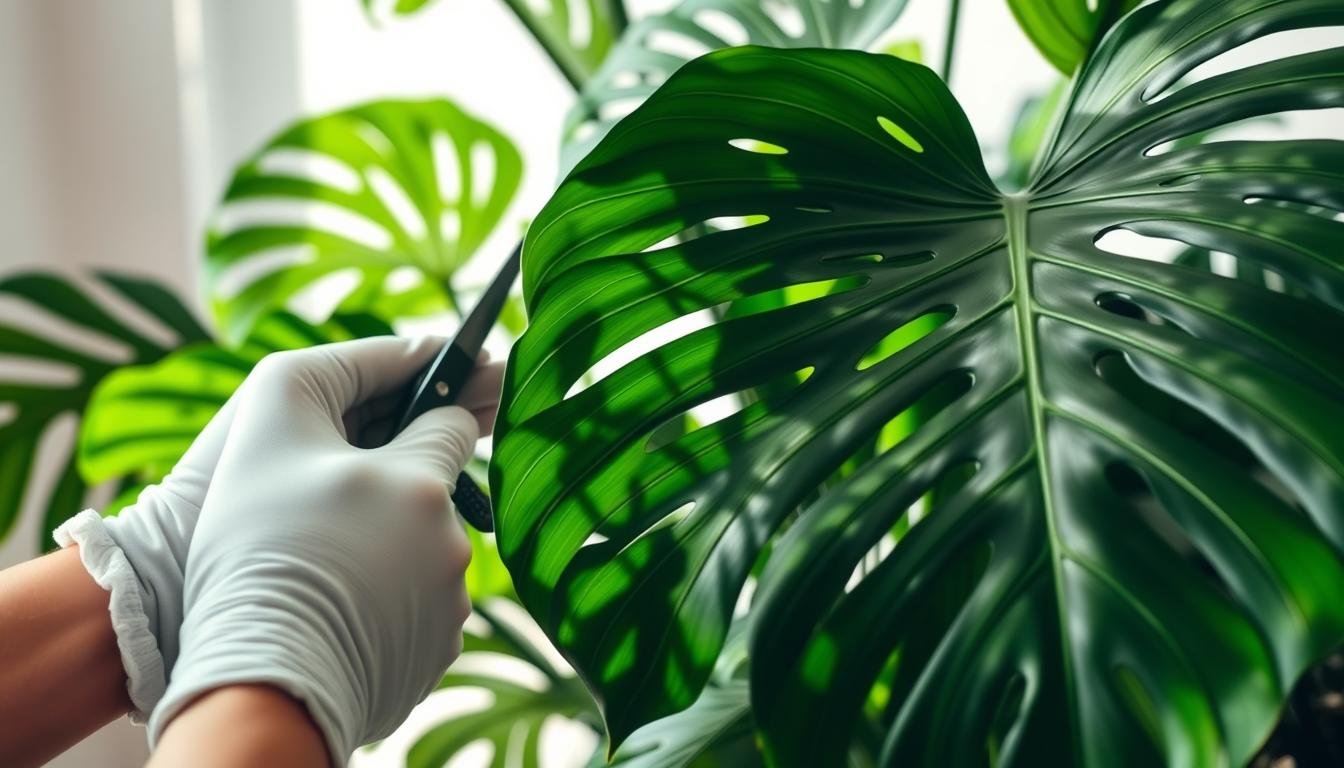
The fastest way to identify a Monstera is to stop looking at the label first and start looking at the plant. Trade labels are useful, but they are not enough. Good identification starts with leaf texture, leaf shape, fenestration pattern, stem spacing, growth habit, and whether the plant is clearly juvenile or mature.
Here is the practical framework. If the leaves are getting huge with broad splits, you are likely in deliciosa territory. If the leaves are smaller and perforated in a more vine-like package, you are likely looking at adansonii. If the leaves are flattened tightly to a board or bark surface, think dubia or another shingling type. If the leaves are silvery in juvenile form, think siltepecana. If the leaves are narrow and often sold with splashy variegation but not dramatic holes, standleyana becomes a candidate.
Second, ask whether the plant is being sold as a species, a form, or a marketing name. That question filters out a lot of confusion immediately. Thai Constellation is not a separate species from deliciosa. Mini monstera is not a true Monstera. Borsigiana is not a clean separate species in accepted taxonomy. Buyers who know those three facts avoid a huge share of the market’s naming noise. (Houseplant Care Tips)
Common Mistakes and Misleading Plant Names
The biggest mistake people make is assuming every plant sold under a Monstera-related name is a clean botanical category. It is not. The houseplant trade blends science and sales. That is normal. The problem starts when buyers do not realize where one ends and the other begins.
Mistake one: treating “mini monstera” as a true Monstera. Most references agree that mini monstera is actually Rhaphidophora tetrasperma, a different genus that only resembles Monstera in leaf shape and climbing habit. It is a great plant. It is just not a Monstera. (The Spruce)
Mistake two: assuming every heavily perforated small-leaf plant is obliqua. In reality, true obliqua is rare and demanding. Most plants sold casually under that name are far more likely to be adansonii or another more common plant. (Plants of the World Online)
Mistake three: overlooking growth conditions when judging identity. A juvenile deliciosa grown without support can look underwhelming. An adansonii grown well on a pole can look far more impressive than buyers expect. A siltepecana trailing in low light may never resemble the mature specimen photos that inspired the purchase. In other words, misidentification and underperformance are often confused.
One more thing that deserves a blunt note: Monstera plants are toxic to cats and dogs if chewed or ingested, according to the ASPCA, because of insoluble calcium oxalates. That does not make them un-ownable. It does mean pet households should place them strategically and know the risk. (ASPCA)
Conclusion
The best way to understand the types of Monstera plants is to separate three things: botany, trade naming, and buyer reality. Botany tells you that Monstera is a large tropical genus with dozens of accepted species. Trade naming tells you why labels like Thai Constellation, Albo, borsigiana, Peru, and Esqueleto show up everywhere. Buyer reality tells you what actually matters: how the plant grows in your home, how hard it is to keep, and whether the name on the tag matches the plant in the pot. (Plants of the World Online)
For most people, the shortlist is simple. Monstera deliciosa is the classic, best-known choice. Monstera adansonii is the easier smaller-space alternative. Dubia, siltepecana, and standleyana appeal if you want something more unusual without going straight into high-risk collector territory. Obliqua is the name to respect, not impulse-buy. And variegated forms are stunning, but only worth the premium if your setup can support them.
That is the real filter. Buy the plant that matches your conditions, not just your Pinterest board. Do that, and Monstera gets a lot less confusing and a lot more fun.
FAQs
What are the most common types of Monstera plants?
The most common Monstera types in the houseplant trade are Monstera deliciosa and Monstera adansonii. After those, you will most often see Monstera dubia, Monstera siltepecana, Monstera standleyana, and variegated forms like Thai Constellation and Albo in specialty shops and online plant stores. (The Spruce)
How many Monstera species are there?
Kew’s Plants of the World Online currently lists 71 accepted Monstera species. That number reflects the botanical genus as a whole, not the much smaller set of species commonly sold as indoor houseplants. (Plants of the World Online)
Is Monstera deliciosa the same as borsigiana?
In current accepted taxonomy, Monstera borsigiana is not treated by Kew as a separate accepted species from Monstera deliciosa. In the plant trade, though, people often use borsigiana informally for a smaller, faster-growing form. So the horticultural label may still be useful descriptively, but it is not a clean separate species name. (Plants of the World Online)
Is mini monstera a real Monstera?
No. The plant commonly sold as mini monstera is usually Rhaphidophora tetrasperma, which is a different genus. It looks similar and has somewhat similar care needs, but it is not a true Monstera. (The Spruce)
Which Monstera is best for beginners?
For most beginners, Monstera deliciosa is the best starting point if you have room for it, while Monstera adansonii is often the better choice for smaller spaces. Both are far more forgiving than collector plants like obliqua, and they are also easier to find accurately labeled and reasonably priced. (The Spruce)