High-humidity indoor plants are species that use moist air—ferns, prayer plants, and many tropicals show fewer brown tips when relative humidity stays above roughly 50%. That does not mean every humid room is automatic plant paradise. Light, drainage, and how often you actually shower or run a humidifier still decide success.
This guide compares ten species by humidity fit, light needs, and watering discipline, with a comparison table, quick picks for common situations, and links to full species care on LeafyPixels. For shower-specific placement, see Best Bathroom Plants.
The ten best indoor plants for high humidity for most homes are Boston fern, Bird’s nest fern, Maidenhair fern, Calathea, Prayer plant, Philodendron, Pothos, English ivy, Spider plant, Parlor palm. They are not interchangeable—some need daily watering, some tolerate neglect, and several are toxic to pets.
What High Humidity Does—and Does Not Do
Elevated humidity reduces transpiration stress on thin leaves. University extension guidance lists humidity among core indoor success factors alongside light, water, and drainage. (University of Georgia Extension)
Humidity does not replace watering, fix dark rooms, or save pots without drain holes. A kitchen that steams when you boil pasta helps nearby calatheas; a closed bedroom with a humidifier running into soggy soil still rots roots.
Quick Pick: Best Plant for Your Situation
For classic humid-room fern texture, choose Boston fern.
For patterned pet-safe leaves, choose prayer plant or calathea.
For easiest trailing green, choose pothos—humidity is a bonus, not a requirement.
For pet-aware humid rooms, choose spider plant and parlor palm.
How to Choose
Judge candidates on light first, then humidity fit, drainage, and watering habits. Daily hot showers help ferns; a humidifier running twice a week does not create greenhouse conditions. Use pots with drain holes and empty saucers after watering.
How We Selected These Ten
Chosen for documented humidity preference, realistic indoor light fit, nursery availability, and LeafyPixels care depth. We excluded succulents that rot in constantly damp air.
Comparison Table
Boston fern
Best for: humid rooms and daily misting routines
Difficulty: Medium
Light: Bright–medium indirect
Water: Keep evenly moist
Best placement: Hanging basket or bathroom shelf
Pet safety: Non-toxic to cats and dogs (ASPCA)
Typical indoor size: 12–24 in. arching fronds
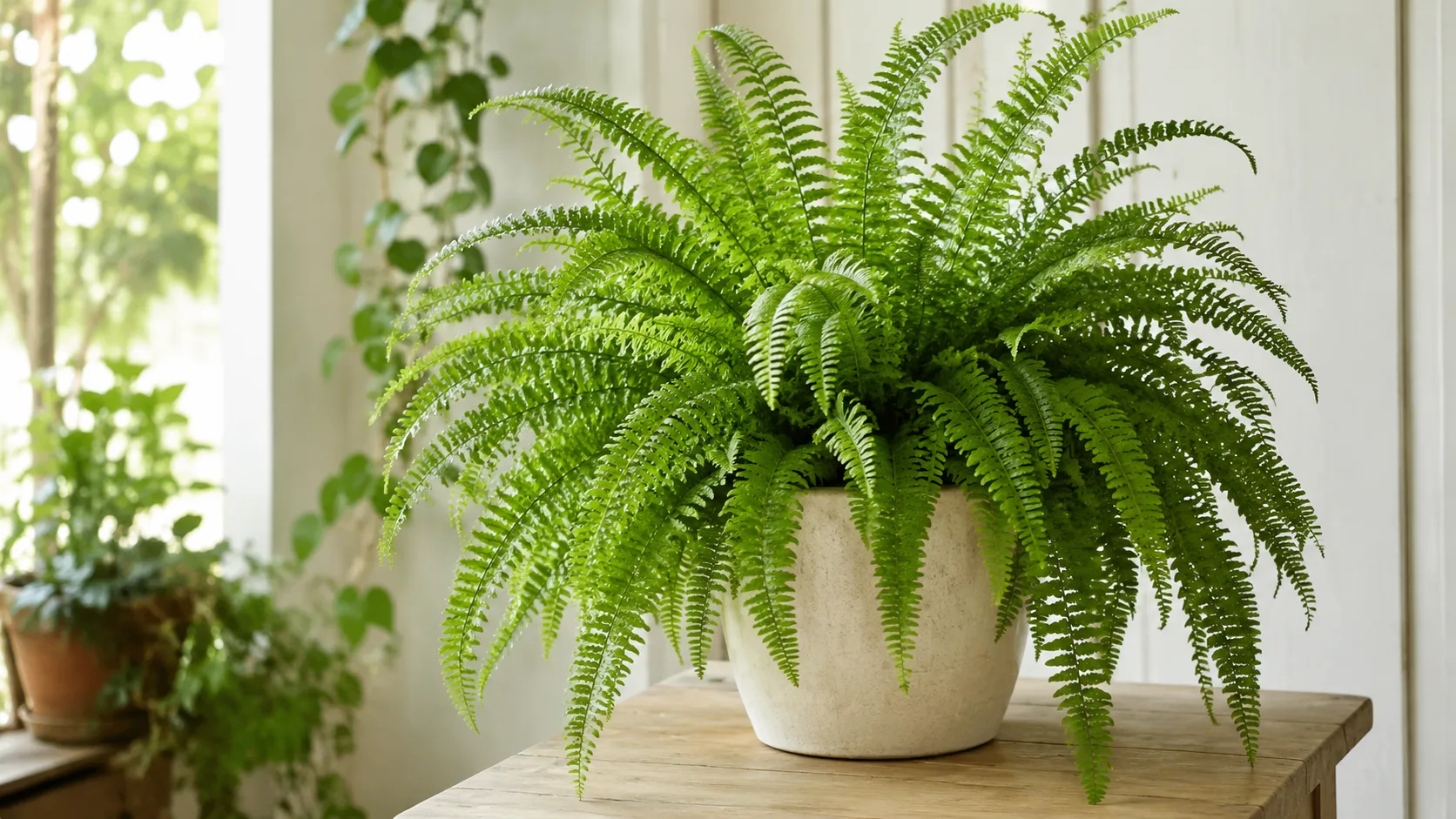
Boston fern is the classic humidity lover—feathery fronds that crisp in dry winter air but perk up when moisture stays above 50%.
Why it works: True fern texture that visibly benefits from humid air.
Who it is for: Growers who can water often and have medium-to-bright indirect light.
Care reality: Check soil every few days; fronds brown when roots dry or sit wet.
Common mistake: Expecting shower steam alone to replace watering in a dry bedroom.
Limitation: Not forgiving in low-humidity, rarely used bathrooms.
Useful care guides:
Bird’s nest fern
Best for: modern humid shelves
Difficulty: Medium
Light: Medium indirect
Water: When top inch dries
Best placement: Shelf away from crown-wetting
Pet safety: Non-toxic to cats and dogs (ASPCA)
Typical indoor size: 12–18 in. rosette
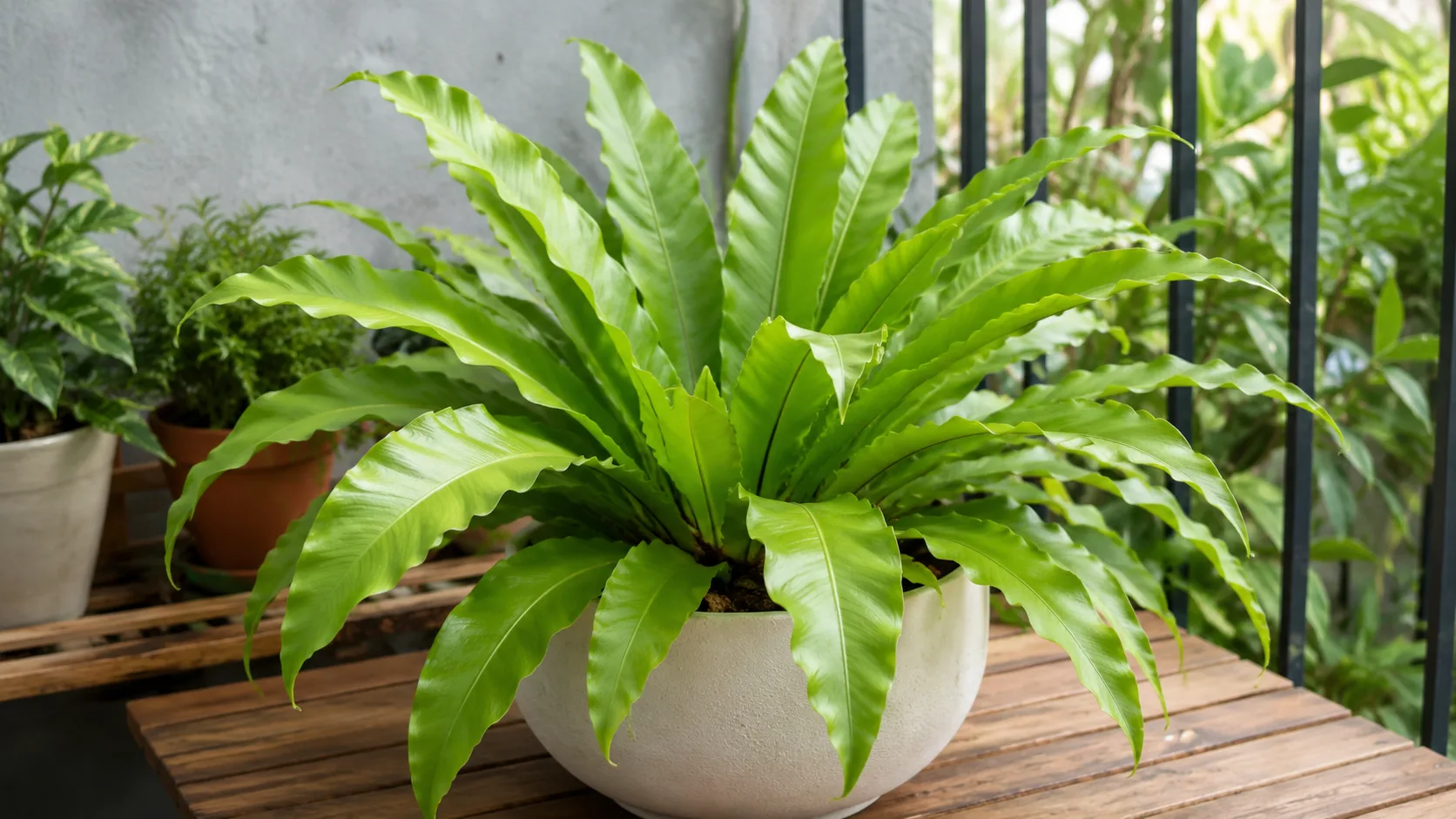
Bird’s nest fern grows from a central crown that must stay dry—humidity keeps leaf edges supple without misting the rosette center.
Why it works: Sculptural rosette that uses humidity without Boston fern chaos.
Who it is for: Design-focused rooms with moderate light.
Care reality: Likes humidity; hates waterlogged crowns and cold drafts.
Common mistake: Misting the center rosette instead of watering soil.
Limitation: Less tolerant of neglect than pothos.
Useful care guides:
Maidenhair fern
Best for: bright humid rooms
Difficulty: Demanding
Light: Bright indirect
Water: Consistently moist soil
Best placement: Bright windowsill with humidity tray
Pet safety: Non-toxic to cats and dogs (ASPCA)
Typical indoor size: 12–18 in.
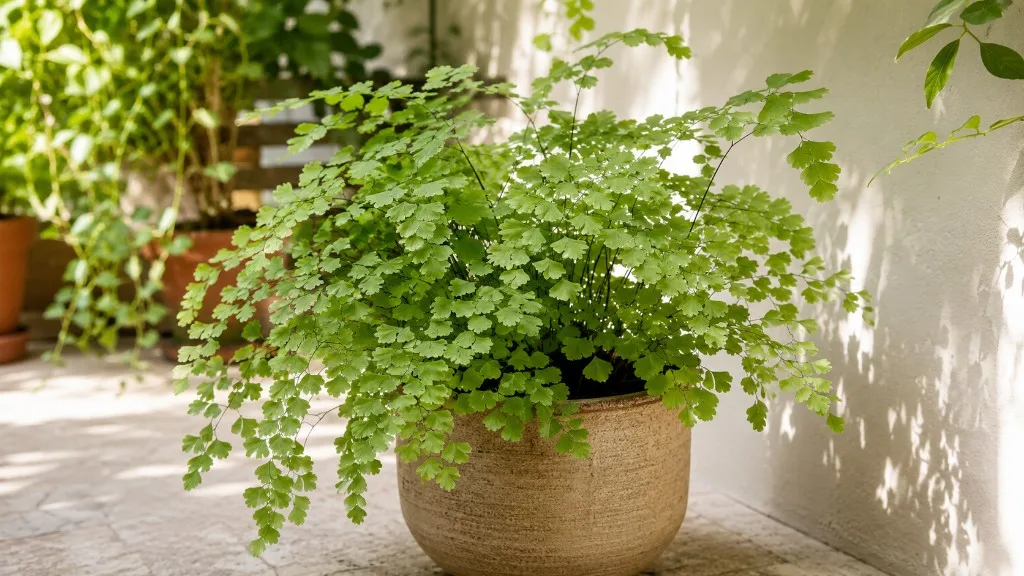
Maidenhair fern wilts overnight when soil dries—high humidity reduces stress but does not remove watering discipline.
Why it works: Fine texture unmatched by tougher tropicals.
Who it is for: Experienced growers with bright windows.
Care reality: Treat as high-maintenance; never let soil go bone-dry.
Common mistake: Buying for a dim north window without supplemental humidity.
Limitation: Poor beginner pick despite humidity tolerance.
Useful care guides:
Calathea
Best for: patterned leaves in humid rooms
Difficulty: Demanding
Light: Medium indirect
Water: When top inch dries
Best placement: Away from heating vents
Pet safety: Non-toxic to cats and dogs (ASPCA)
Typical indoor size: 12–24 in.
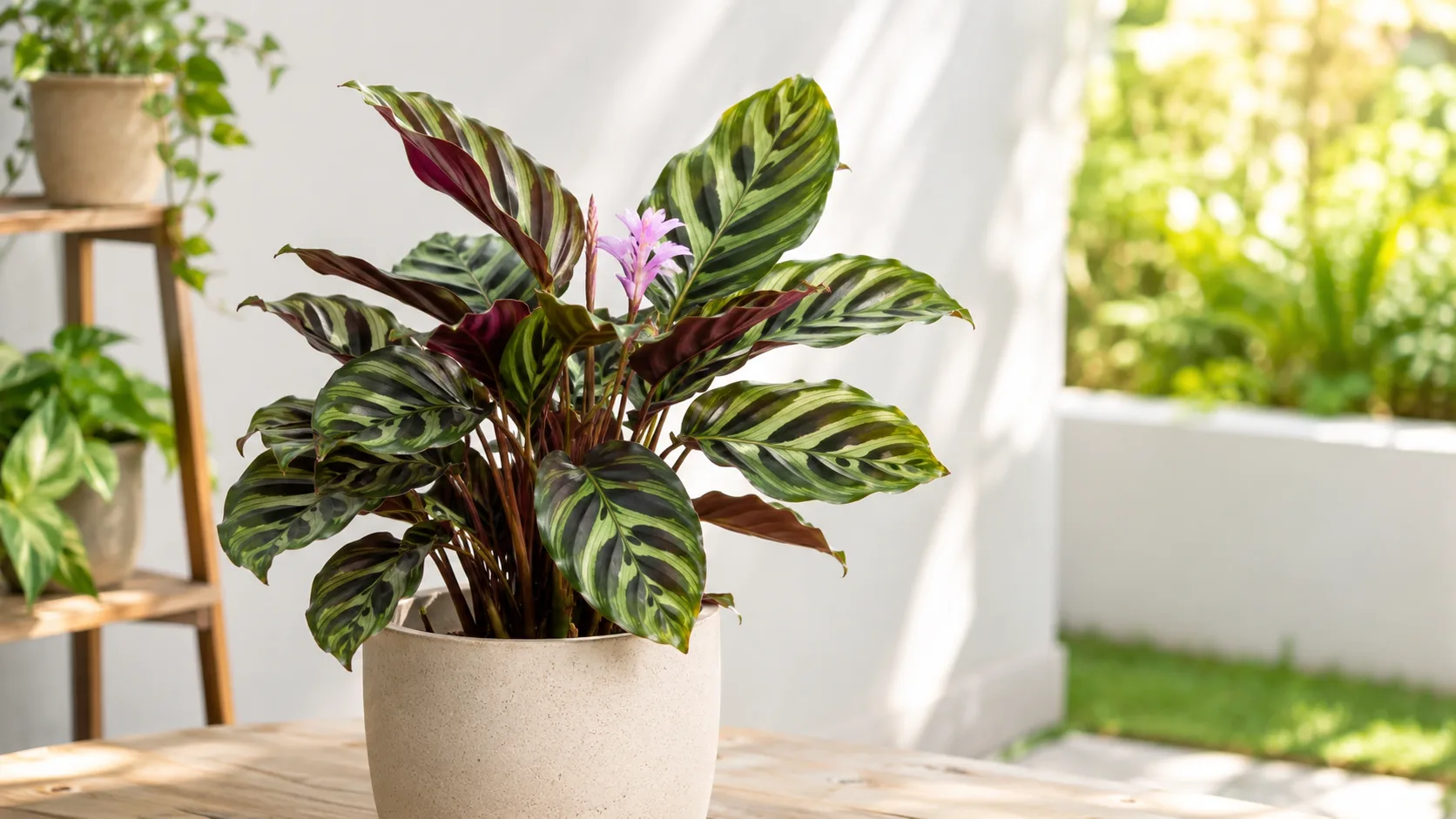
Calathea brings graphic leaves that brown at the edges in dry air—humidity above 50% keeps patterns crisp.
Why it works: Bold patterns that genuinely need moisture in the air.
Who it is for: Attentive growers past their first easy plant.
Care reality: Humidity helps; fluoride in tap water still causes tip burn.
Common mistake: Overwatering because the room feels humid.
Limitation: More demanding than prayer plant in dry winters.
Useful care guides:
Prayer plant
Best for: patterned foliage with medium care
Difficulty: Medium
Light: Medium indirect
Water: When top inch dries
Best placement: Counter near window
Pet safety: Non-toxic to cats and dogs (ASPCA)
Typical indoor size: 10–18 in.
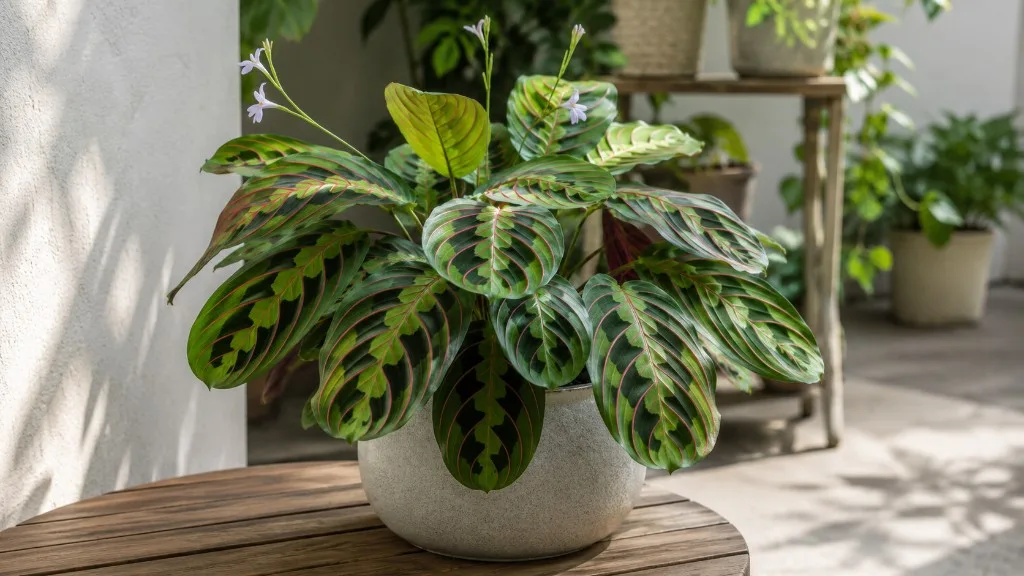
Prayer plant folds leaves at night—normal behavior. Humidity supports steady moisture without maidenhair-level fuss.
Why it works: Pet-safe pattern plant that uses elevated humidity.
Who it is for: Growers wanting calathea aesthetics with slightly more forgiveness.
Care reality: Consistent moisture; dry winter heating defeats humidity gains.
Common mistake: Ignoring brown tips from tap water fluoride.
Limitation: Declines in dark, dry rooms.
Useful care guides:
Philodendron
Best for: trailing corners in humid rooms
Difficulty: Easy
Light: Medium indirect
Water: When top 2 in. dry
Best placement: Hanging hook or high shelf
Pet safety: Toxic if ingested
Typical indoor size: Vines 6–10 ft
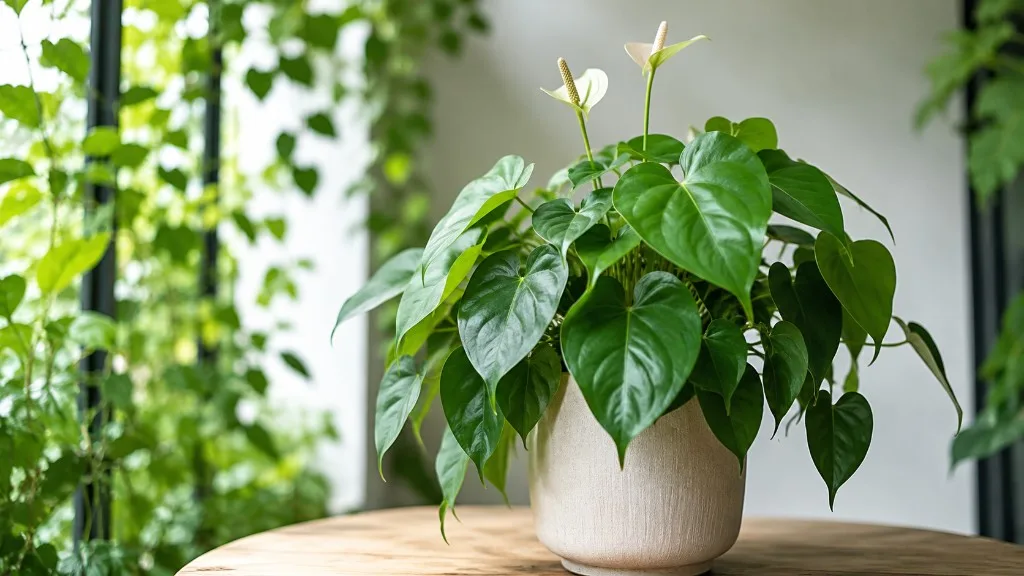
Philodendron handles moderate humidity as a bonus—heart-leaf types trail without fern-level watering.
Why it works: Trailing habit with easier care than most ferns.
Who it is for: Beginners who want vertical green in humid spaces.
Care reality: Forgiving of missed waterings; less forgiving of dark soggy pots.
Common mistake: Assuming humidity removes need to check soil.
Limitation: Toxic to pets—choose spider plant for pet homes.
Useful care guides:
Pothos
Best for: first humid-room plant
Difficulty: Easy
Light: Low–medium indirect
Water: When top 2 in. dry
Best placement: Shelf or hanging basket
Pet safety: Toxic if ingested
Typical indoor size: Vines 6–10 ft
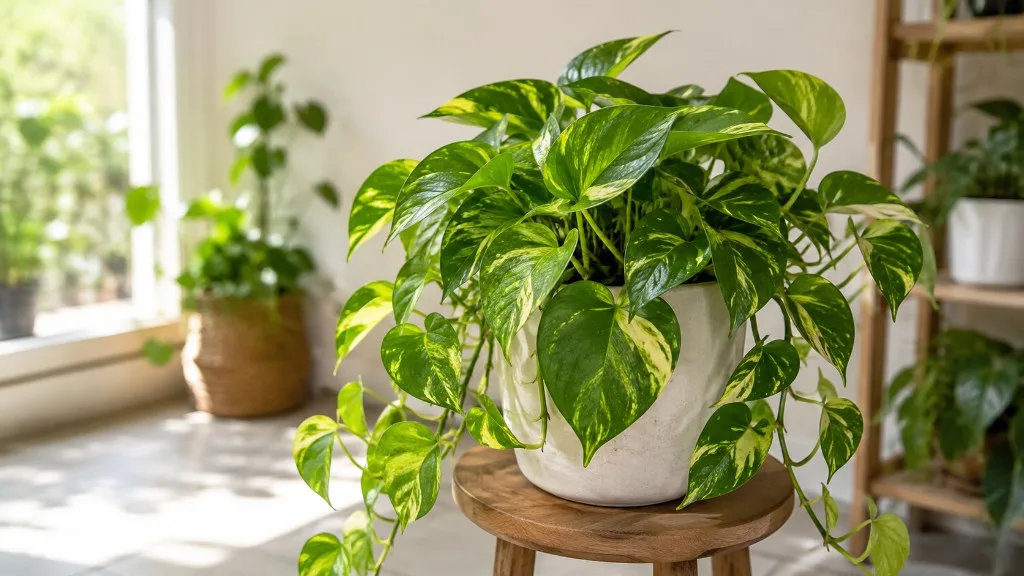
Pothos tolerates humidity swings better than ferns and recovers from occasional overwatering.
Why it works: Highest forgiveness on most humidity lists.
Who it is for: Renters and beginners in variable humidity.
Care reality: Grows slower in dim light; still needs drainage.
Common mistake: Keeping in sealed cachepots because air feels moist.
Limitation: Toxic to pets; not a true humidity specialist.
Useful care guides:
English ivy
Best for: cool humid hanging baskets
Difficulty: Medium
Light: Medium indirect
Water: When top inch dries
Best placement: Hanging basket with airflow
Pet safety: Toxic if ingested
Typical indoor size: Trailing vines
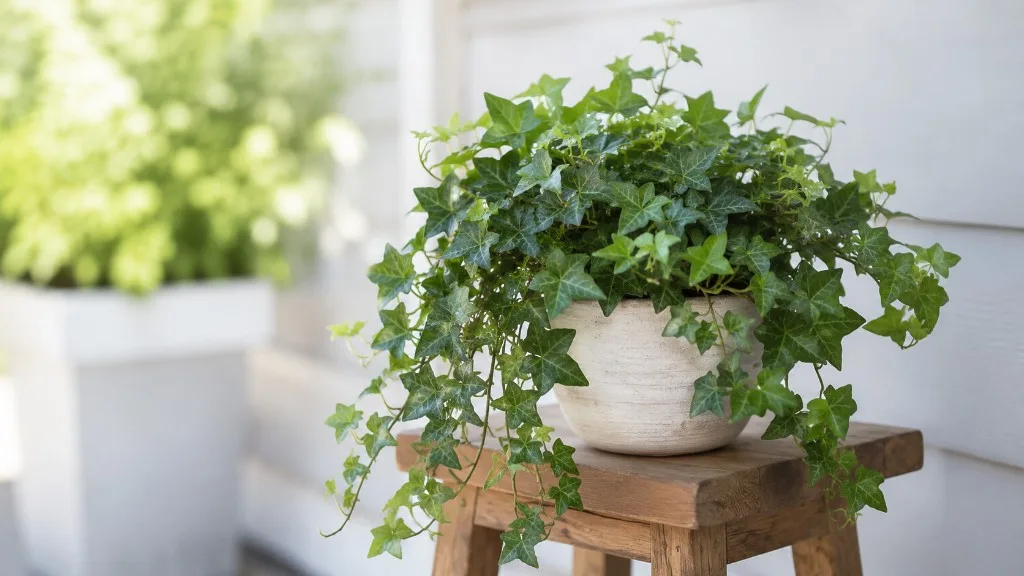
English ivy enjoys cool, humid air more than hot dry living rooms—ventilation matters indoors.
Why it works: Classic trailing form for elevated humid spots.
Who it is for: Growers who inspect monthly for spider mites.
Care reality: Humidity helps; stale wet soil still causes decline.
Common mistake: Dark placement without enough daylight.
Limitation: Toxic; mite-prone without airflow.
Useful care guides:
Spider plant
Best for: family rooms with moderate humidity
Difficulty: Easy
Light: Bright–medium indirect
Water: When top 2 in. dry
Best placement: Hanging basket
Pet safety: Non-toxic to cats and dogs (ASPCA)
Typical indoor size: 12–24 in.
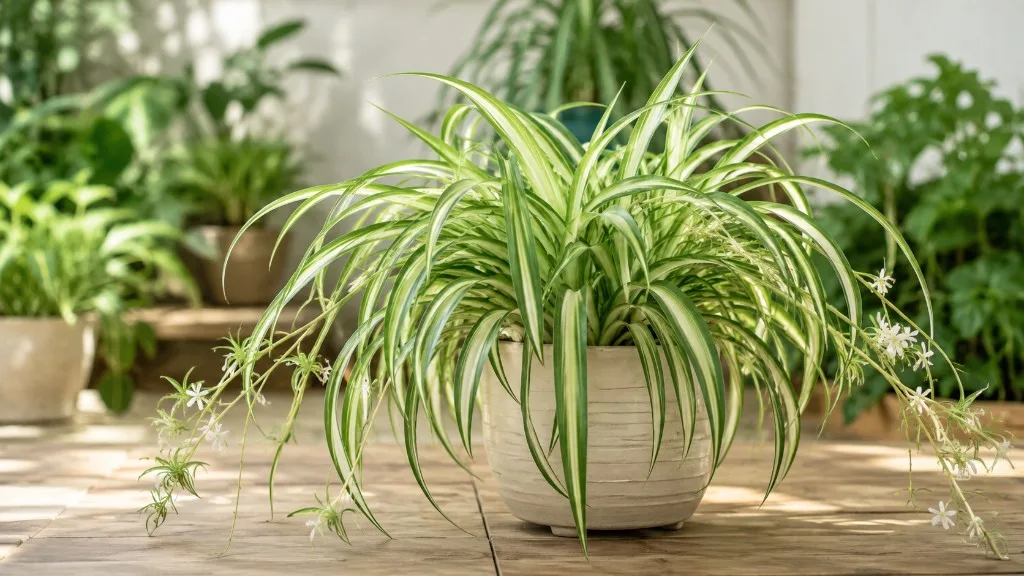
Spider plant enjoys humidity but rots in waterlogged soil—common in overwatered humid rooms.
Why it works: Easy care plus ASPCA non-toxic status.
Who it is for: Households with kids or pets.
Care reality: Likes moisture in air; still needs dry-down between waterings.
Common mistake: Overwatering because the room feels damp.
Limitation: Spiderettes attract curious pets.
Useful care guides:
Parlor palm
Best for: humid floor corners
Difficulty: Easy
Light: Low–medium indirect
Water: When top 3–5 cm dries
Best placement: Floor corner with diffuse light
Pet safety: Non-toxic to cats and dogs (ASPCA)
Typical indoor size: 2–4 ft
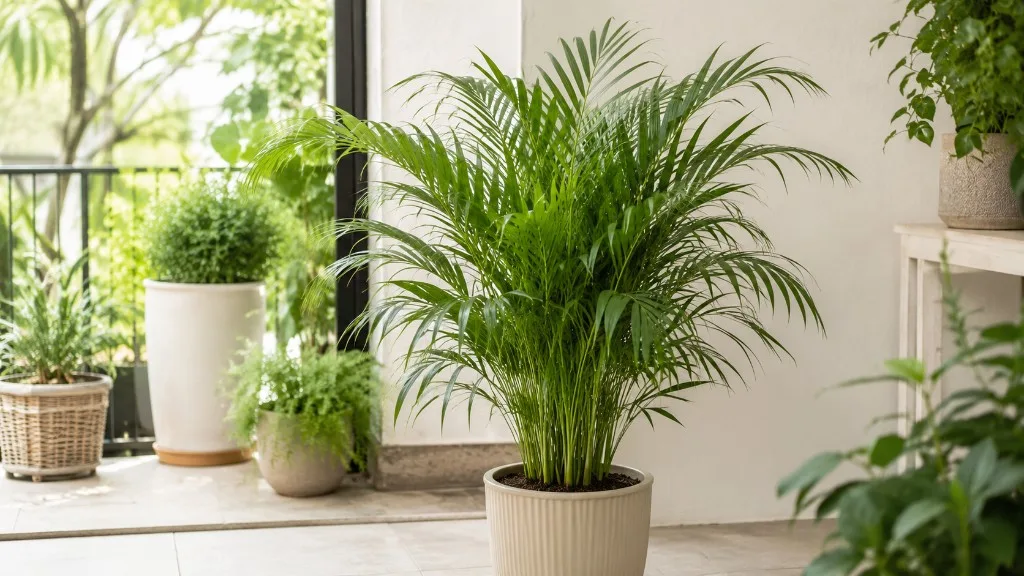
Parlor palm tolerates average humidity but shows fewer brown tips when air stays moist.
Why it works: Palm elegance with pet-safe credentials.
Who it is for: Owners wanting floor-scale green in humid rooms.
Care reality: Slow grower; declines slowly enough to correct mistakes.
Common mistake: Hot direct sun through clear glass.
Limitation: Not fast-growing statement foliage.
Useful care guides:
Common Mistakes
Assuming humid air replaces watering. Roots still need a rhythm; leaves just lose less moisture to dry air.
Skipping drainage in damp rooms. Stagnant soil kills more humidity lovers than dry air.
Choosing maidenhair for low light. Humidity without brightness still fails delicate ferns.
Ignoring pet toxicity. Pothos and philodendron are easy humid-room trailers but toxic if chewed.
Conclusion
Match light and drainage before chasing humidity. Boston fern and prayer plant reward consistent moisture; pothos and spider plant forgive more mistakes. Start with one plant, observe for two weeks, then expand.