Yes, a pebble tray can help brown leaf tips if low humidity is part of the problem. It works by adding a small amount of moisture to the air immediately around the plant as water evaporates from the tray. Extension guidance and current plant-care references consistently list pebble trays as one way to raise local humidity, especially for tropical houseplants during dry indoor periods. At the same time, those same sources make another point just as clearly: brown tips often come from more than one cause, and a tray will not fix issues like erratic watering, fertilizer salt buildup, or sensitivity to chemicals in tap water. (Yard and Garden)
That is the real answer most plant owners need. A pebble tray is not nonsense, but it is also not a magic reset button. Think of it as a supportive fix, not a full diagnosis. If your plant is a humidity-loving tropical and the air in your home is dry, the tray may reduce further browning at the margins over time. If the plant is dealing with fluoride, sodium, overfertilization, root stress, or long dry spells between waterings, the tray may do little beyond making you feel proactive. (Home & Garden Information Center)
Table of Contents
What a Pebble Tray Actually Does
A pebble tray is a shallow watertight tray or saucer filled with pebbles and a small amount of water. The pot sits on top of the pebbles rather than directly in the water. As the water evaporates, it increases humidity in the immediate area around the plant. That definition is consistent across current ranking how-to pages and university guidance, and it matters because the effect is local, not room-wide. (The Spruce)
That local effect is exactly why pebble trays help some plants and disappoint other people. If you have one fern, calathea, orchid, or peace lily sitting in a dry room with forced-air heat, even a modest humidity bump close to the leaves can be useful. If you expect the tray to raise humidity across the entire room, it will usually fall short. University extension advice increasingly frames pebble trays as a small assist, while humidifiers, plant grouping, and better placement usually produce broader, more reliable humidity support. (Extension | University of New Hampshire)
How It Works
Plants lose water through their leaves in a process tied to transpiration. When the surrounding air is very dry, that moisture loss speeds up, and the most exposed, least-prioritized parts of the leaf often show stress first. Leaf tips are especially vulnerable because they sit at the far end of the plant’s water-delivery path. When the plant cannot replace moisture fast enough, those tips can dry, crisp, and turn brown. (Pennington)
A pebble tray helps by slowing the dryness around the plant, at least a little. The wider the tray and the more consistently it contains water below the pebble line, the more evaporation it produces. Still, this is a microclimate tool, not a climate-control system. That distinction matters because a tray may help prevent new tip damage in a moderately dry spot, but it is rarely enough for plants that want very high humidity or for homes sitting in the 30–40% range during winter heating season. Connecticut and Penn State horticulture guidance both note that many tropical houseplants prefer substantially more humidity than typical winter indoor air provides. (treleaf)
Why Brown Leaf Tips Happen
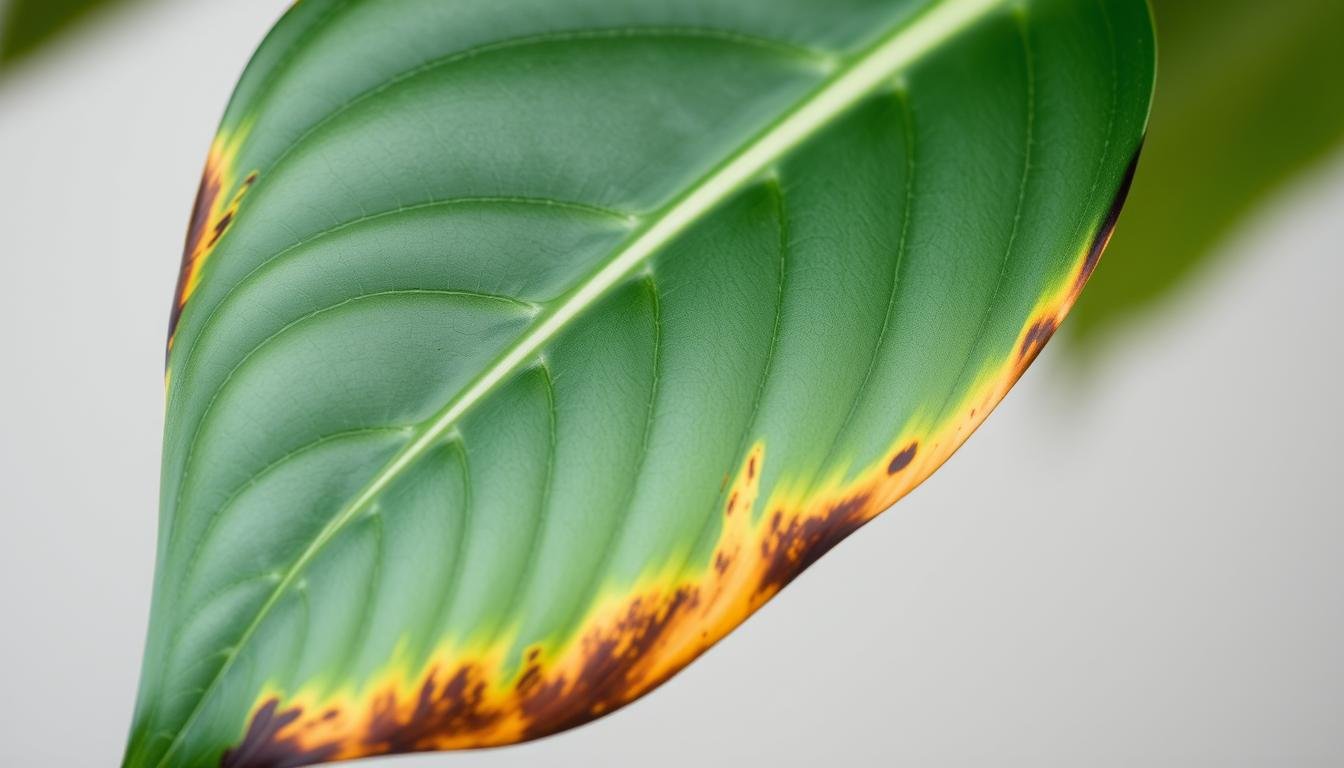
Brown tips are easy to see and easy to misread. Many plant owners blame humidity first because brown edges look dry, and sometimes that instinct is right. The problem is that brown tips are a symptom, not a diagnosis. Iowa State, Clemson, Wisconsin, and UC IPM all point to several overlapping triggers: low humidity, inconsistent watering, excess fertilizer salts, poor water quality, heat or drafts, and sometimes light or root-zone stress. (Yard and Garden)
That overlap explains why one internet tip often fails. You add a pebble tray, but the plant still browns because the soil is going bone-dry between waterings. Or the room is humid enough, but your spider plant or dracaena is reacting to fluoride or chlorine in tap water. Or the plant is sitting near a vent, getting hit with dry moving air all day, while fertilizer residue keeps concentrating in the potting mix. Brown tips are usually the plant telling you something about its water balance is off, and the trick is figuring out which part of the system is causing it. (Iowa State University Extension)
Low Humidity
Low humidity is a real and common cause of brown leaf edges and tips, especially in winter when indoor heating dries the air. Iowa State’s current guidance calls low humidity the most likely cause in many houseplant cases and specifically recommends raising humidity with a humidifier, pebble tray, terrarium, or plant grouping. Nebraska extension says drying and browning at the leaf edges and tips is a common symptom of low humidity, and New Hampshire extension notes that pebble trays can help a little while humidifiers produce more benefit. (Yard and Garden)
This cause is most believable when the plant is a tropical foliage type and the pattern matches dry-air stress. Think crispy margins, curling, new leaves that unfurl poorly, or symptoms that get worse when the heat is on. Plants like calatheas, ferns, orchids, philodendrons, and many peace lilies are more likely to respond to humidity support than tough, dry-air-tolerant plants. If the problem spikes in winter or after moving the plant near a heater, a pebble tray becomes a more logical part of the fix. (The Spruce)
Other Common Causes
Humidity is only one lane in the troubleshooting map. Inconsistent watering is another major trigger, especially when the root ball swings from very dry to very wet. Iowa State specifically notes that allowing plants to dry out too long between waterings can lead to brown tips and edges. UC IPM also lists excessively dry or wet soil as a common cause, which is why a plant can show “dry-looking” tips even when the real issue is stress at the roots. (Yard and Garden)
Then there is salt buildup, which is a big one and often underdiagnosed. Excess fertilizer and mineral-heavy water leave residues in the potting mix over time. Clemson notes that crusty deposits on the soil or pot rim are a sign of salt accumulation, and UC IPM lists overfertilization and salt buildup among the usual causes of brown tips. Those salts pull moisture away from roots and leaf tissue, which is why the damage often shows up at the tips first. (Home & Garden Information Center)
Tap water quality is the other major reason pebble trays disappoint people. Some common houseplants are sensitive to fluoride, chlorine, or sodium. Wisconsin horticulture says low humidity, dry soil, salts, and chemicals in tap water can all cause brown tips on spider plants. NC State notes brown leaf tips in certain calathea types from fluoride in tap water, and Michigan State explains that fluoride toxicity often appears as dead tissue at tips and margins. Letting water sit can reduce chlorine, but it does not remove fluoride or sodium. For sensitive plants, switching to rainwater, distilled water, or reverse-osmosis water is often more effective than chasing humidity alone. (Wisconsin Horticulture)
Which Plants Benefit Most
A pebble tray makes the most sense for humidity-loving tropical houseplants that are otherwise being cared for reasonably well. If the plant naturally comes from warm, moist understory conditions and you are seeing mild browning at the tips or edges, a tray can be a practical low-effort upgrade. Current plant-care pages and extension resources repeatedly point to ferns, calatheas, orchids, philodendrons, and similar tropicals as strong candidates. These are the plants that tend to show stress fastest when the air becomes too dry. (treleaf)
It helps less with plants that either tolerate dry air well or are browning for reasons unrelated to humidity. Succulents and cacti are obvious examples because they do not need the same humid conditions tropical foliage plants do. Arizona Cooperative Extension notes that cacti and other succulents are comfortable in much lower humidity ranges than many foliage plants. Even among tropicals, the tray will do little if the real issue is poor water quality, chronic overfeeding, or a badly timed watering routine. (UA Cooperative Extension)
This is where species clues matter. Spider plants, dracaenas, calatheas, and peace lilies are classic brown-tip plants, but not all for the same reason. Spider plants and dracaenas are famous for reacting to tap-water chemicals. Calatheas can react to both dry air and water contaminants. Peace lilies are often blamed on humidity when tap-water additives may be the bigger issue. If you know your plant’s usual weak point, you make better decisions faster. (Iowa State University Extension)
How to Use a Pebble Tray Correctly
A pebble tray only works well when it is set up the right way. Use a watertight tray or saucer, fill it with clean pebbles, then add water so the water line stays below the top of the pebbles. The pot should rest on the pebbles, not sit directly in the water. That matters because a pot sitting in water can keep the root zone too wet and invite root problems. Several current care guides and older horticulture references make this point clearly: the tray should humidify the air, not turn into a bottom-watering swamp. (The Spruce)
Tray size also matters more than people think. A tiny saucer under a large pot does not evaporate much water, so the effect stays weak. Some current guides recommend using a tray that extends at least a bit beyond the pot diameter, and broader horticulture advice says wider trays create more evaporation and therefore more localized humidity. If you are going to bother, make the setup physically capable of doing something. (treleaf)
Placement matters too. The tray works best where dry air is the actual issue and where air movement is not stripping moisture away immediately. If the plant is next to a heater, radiator, or vent, the tray may barely keep up. If you combine the tray with sensible placement, a cluster of plants, and a species that actually values humidity, it becomes more useful. Used in isolation under the wrong plant in the wrong spot, it becomes décor with rocks. (Extension | University of New Hampshire)
Common Setup Mistakes
The first mistake is letting the pot touch the water. That changes the tray’s job from humidity support to accidental overwatering. Constant moisture at the base of the pot can keep the soil too wet, starve roots of oxygen, and create the kind of stress that produces more browning, not less. Brown tips from root trouble and brown tips from dry air can look similar at first glance, which is why this mistake confuses people. (UC IPM)
The second mistake is expecting a pebble tray to solve high-demand humidity problems on its own. A tray can help at the plant’s immediate boundary layer, but it does not replace a humidifier in a dry room. New Hampshire extension says pebble trays can help a little, while portable humidifiers provide the most benefit. Purdue’s long-standing guidance makes the same practical point in plain language: a humidifier is the most effective way to raise relative humidity, while pebble trays can help when used with grouping. (Extension | University of New Hampshire)
The third mistake is ignoring the potting mix. If you have visible salt crust on the soil or pot rim, a humidity tray is not the first fix. If you are watering with softened water or fertilizing heavily, you may be feeding the real problem while trying to treat a side symptom. The plant does not care that you built a nice tray if the root zone is chemically harsh. (Home & Garden Information Center)
When a Humidifier Is the Better Tool
If your room is genuinely dry, a humidifier is the stronger, more reliable fix. That is not marketing hype; it is simply the difference between local evaporation from one tray and actual room-level humidity management. Extension guidance from New Hampshire and Purdue points in the same direction: grouping and pebble trays can help, but humidifiers provide the most meaningful increase in relative humidity. (Extension | University of New Hampshire)
A humidifier becomes the better choice when you have multiple tropical plants, chronic winter dryness, repeated brown-tip issues despite decent watering, or species known to want elevated humidity. It also becomes more defensible when you measure the room and find it staying low. Connecticut and Arizona extension resources both point to hygrometers as useful tools because guessing humidity is unreliable. If you are at 30–40% and trying to keep moisture-loving plants happy, a humidifier is usually a smarter investment than asking a shallow tray to do industrial work. (Home and Garden Education Center)
That does not mean a tray is pointless. It means the tray is best treated as a small, passive assist. For one or two plants, it can be enough. For a shelf full of calatheas, marantas, ferns, and orchids in heated winter air, it is usually not enough by itself. The best setup is often layered: proper watering, gentler water quality, no harsh drafts, grouped plants, and humidity support that matches the species. (Yard and Garden)
How to Trim Damaged Tips Without Making the Plant Look Worse
Here is the part many people resist: brown tips do not turn green again. Once that tissue is dead, it stays dead. What you can do is stop the problem from spreading and improve the plant’s appearance by trimming carefully. Current care references on leaf scorch and brown tips agree on that basic point. (Pennington)
Use clean scissors and trim along the natural shape of the leaf rather than slicing straight across unless the leaf shape makes that impossible. Leave a very thin margin of brown instead of cutting into healthy green tissue. That helps the cut edge age more naturally and avoids creating a fresh wound right in living tissue. If a leaf is mostly brown, removing the whole leaf may look better and allow the plant to redirect energy to healthier growth. (The Guardian)
Do not let trimming become your whole strategy. Cosmetic cleanup is fine, but it is not treatment. If the plant keeps producing new brown tips, you still have an unresolved care issue. The only win that matters is healthy new growth. That is your scoreboard. (The Spruce)
What to Do If Brown Tips Keep Coming Back
If you already added a pebble tray and the problem continues, stop guessing and work the problem in order. First, ask whether the plant actually needs higher humidity. Tropical plants with thin leaves, soft foliage, and understory origins often do. Succulents and tougher foliage plants often do not. If humidity still seems plausible, measure it with a hygrometer before escalating. That one small reality check can save weeks of trial and error. (Home and Garden Education Center)
Second, review your watering pattern, not just your intentions. Brown tips often show up when the soil repeatedly gets too dry between thorough waterings. A plant that is watered “regularly” can still be watered badly if the root ball dries unevenly, the pot is too rootbound, or the mix has become hydrophobic. Iowa State specifically flags inconsistent watering as a common cause, and Pennington’s explanation of tip burn lines up with the same core issue: the leaf tips lose out first when water delivery is disrupted. (Yard and Garden)
Third, check for salt buildup and water quality. White crust on the soil or pot rim is a clue. So is a plant type known to react badly to tap water, such as spider plant, dracaena, peace lily, or some calatheas. Flush the pot thoroughly with cleaner water, reduce fertilizer if you have been feeding aggressively, and consider switching to distilled, rain, or reverse-osmosis water for sensitive plants. This step solves more “mystery brown tips” than a lot of people realize. (Home & Garden Information Center)
Fourth, inspect placement. Dry forced air, hot sun through glass, or cold drafts can all produce or worsen edge browning. UC IPM lists too much sun or heat through a window, low relative humidity, and drafts among the common causes. A plant near a vent may need relocation more than it needs another humidity gadget. (UC IPM)
Once you correct the likely cause, watch the next leaves, not the old damage. Plants recover forward. If new growth comes in clean, you fixed the issue even if older leaves still show scars. If every new leaf still arrives with browning, keep troubleshooting instead of doubling down on the same solution. (The Spruce)
Conclusion
A pebble tray can help brown leaf tips, but only when dry air is genuinely part of the problem. It is a modest, local humidity tool, not a cure-all. For humidity-loving plants in a mildly dry spot, it can reduce stress and help prevent further browning. For plants dealing with bad water quality, fertilizer salts, root stress, hot drafts, or inconsistent watering, it will not solve the root cause. (Yard and Garden)
The smart move is simple: use the pebble tray if the plant is a real humidity lover and your setup is otherwise solid, but do not stop there. Check watering consistency. Check for salt crust. Think about tap water. Get the plant away from vents. Use a humidifier when the air is truly dry and the plant actually needs more moisture. Brown tips are not random. They are clues, and pebble trays help most when you read those clues correctly. (Yard and Garden)
FAQs
Can a pebble tray save leaves that are already brown?
No. Brown leaf tips are dead tissue, so they will not turn green again. What a pebble tray can do is help reduce further damage if low humidity is contributing to the problem. Once conditions improve, the goal is clean new growth, not healing old tips. Trim the damaged edges if you want a neater look. (Pennington)
How long does it take for a pebble tray to help?
You will not get a dramatic overnight turnaround. A tray works gradually by slightly improving local humidity around the plant, so the real sign is that new leaves or newer leaf edges stop browning as quickly. If you see no improvement after a few weeks of otherwise good care, humidity may not be the main issue. At that point, check watering consistency, salts, and water quality next. (Extension | University of New Hampshire)
Should the bottom of the pot touch the water?
No. The pot should sit on the pebbles above the water line, not directly in the water. If the base of the pot stays in water, the mix can remain too wet, which raises the risk of root stress and rot. A pebble tray is supposed to humidify the surrounding air, not keep the pot saturated from below all the time. (The Spruce)
Do pebble trays work for calatheas and peace lilies?
They can help, because both are often grown as humidity-loving indoor plants. The catch is that both groups can also be sensitive to tap-water contaminants, especially fluoride and other dissolved chemicals, so humidity is not always the full story. If your calathea or peace lily still gets brown tips with a tray in place, switching to distilled, rain, or reverse-osmosis water may matter more than adding extra ambient moisture. (The Spruce)
Is misting better than a pebble tray?
Usually not. A pebble tray provides a steadier, passive source of local evaporation, while occasional misting gives only very temporary moisture and is widely considered a weak way to change room humidity meaningfully. Purdue’s extension guidance specifically says occasional misting does not effectively change relative humidity, while pebble trays and grouping can help and humidifiers work best overall. If you want a meaningful upgrade, a humidifier beats both. (Purdue University)