Brown Leaves on Adenium: Caudex & Soil Checks
Quick answer
Brown leaves on Adenium are dead tissue that will not re-green. First step: touch the brown area and press the caudex while probing soil 5–7 cm deep. Crispy brown with a light dry pot and firm caudex points to underwatering or sun scorch; soft brown on wet mix with a spongy base points to overwatering or root stress.
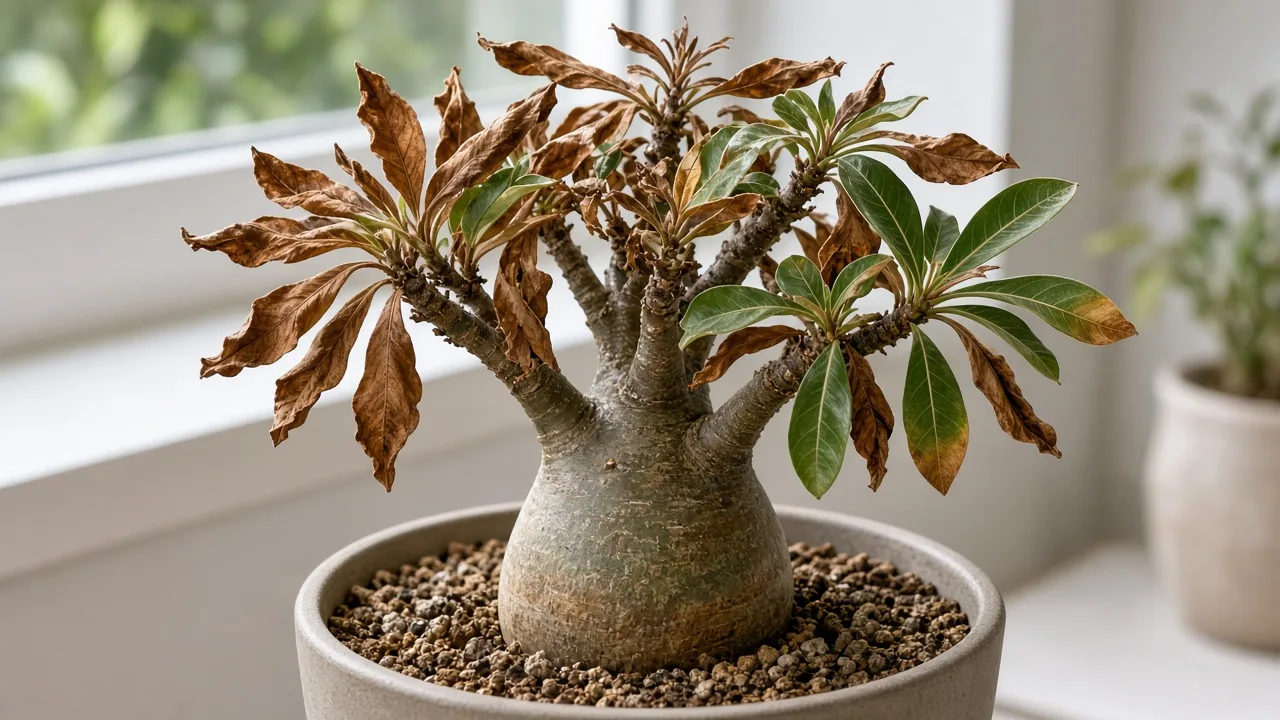
Brown Leaves on Adenium: Causes, Checks & Fixes
This guide covers brown leaves on Adenium. See also the general Brown Leaves guide, watering, and light pages for this plant.
Brown Leaves on Adenium: Causes, Checks & Fixes
Quick answer
Brown leaves on Adenium obesum (Desert Rose) mean tissue has died—whether from drought, rot, sun, cold, or normal aging before dormancy. For how whole-leaf browning works in general, see our brown leaves guide. On Adenium, the caudex tells the story faster than the foliage: a firm swollen base with crispy brown leaves differs completely from a soft base on wet mix.
First step: touch the brown tissue and press the caudex with clean fingers while probing soil 5–7 cm deep. Crispy, papery brown with a light pot and firm caudex points to underwatering or direct sun scorch. Soft dark brown on cool wet mix with a spongy caudex points to overwatering or advancing root rot.
When to use this page vs other Adenium guides
| What you see | Read next |
|---|---|
| Wet mix + soft caudex | Overwatering |
| Dry mix + wrinkled firm caudex | Underwatering |
| Tan patches on sun-facing leaves only | Sunburn |
| Brown spots before necrosis | Leaf spot disease |
| Leaf drop in cool months, firm caudex | Watering guide — dormancy |
What brown leaves look like on Adenium
Healthy Desert Rose holds thick, glossy green leaves on stiff branches above a firm water-storing caudex. Browning breaks that pattern in distinct ways:
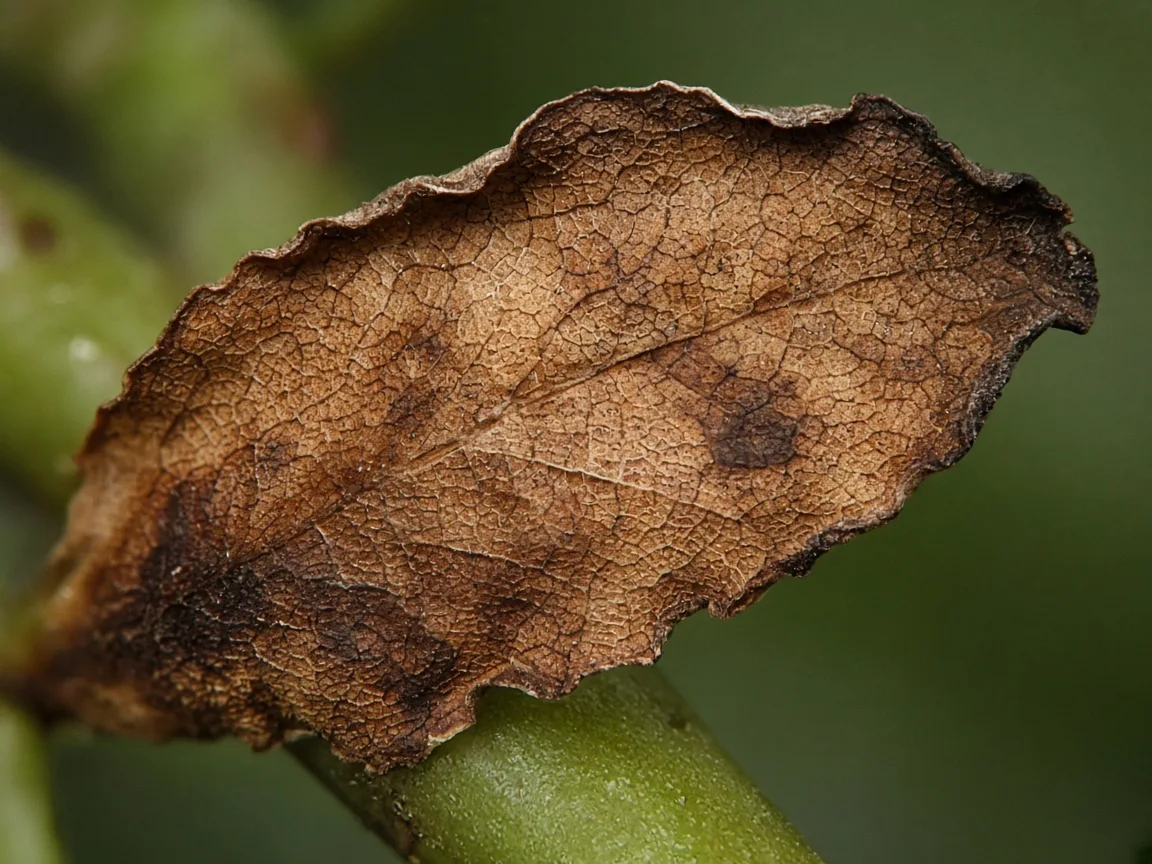
Brown necrotic Adenium leaf tissue—crispy margins suggest drought or sun; soft brown on wet mix suggests roots.
- Crispy brown tips or whole dry blades, light pot — Margins desiccate first; tissue feels like paper. Severe thirst or low humidity on a plant that needs bright sunlight for six hours or more daily.
- Soft dark brown lower leaves, wet heavy soil — Limp petioles; sometimes yellowing below the brown. Root oxygen loss from chronic wet mix around the caudex.
- Tan patches on the window-facing side only — Papery bleached areas where afternoon rays hit. Direct sun on shade-adapted succulent leaves.
- Brown-then-drop in cool short days — Leaf yellowing and drop may occur below 55°F (13°C) as part of natural winter rest—not always a disease.
- Single lowest leaf browning slowly — Often normal senescence while apical growth stays green.
Always check newest leaves at branch tips. Brown on fresh growth is more urgent than one aging lower leaf fading out.
Reading the caudex before you water again
This is the plant-only section that does not apply to leafy ferns or prayer plants. Adenium stores water in its swollen trunk base. Press it with clean fingers:
- Firm like a ripe apple — Roots are likely functional. Match brown texture to dry stress, sun, or aging—not automatic repotting.
- Spongy or denting — Stop all water even if leaves look dry. See overwatering before adding moisture.
- Slight wrinkling on fully dry gritty mix — Acceptable in summer active growth; water deeply only when dry 5–7 cm down per the watering guide.
Pair caudex feel with pot weight. A heavy, cool pot days after you thought you watered lightly means wet mix at depth even when the surface looks dry.
Why Adenium gets brown leaves
Adenium obesum evolved in semi-arid Africa as a drought-adapted succulent tree. Brief dry spells are safer than repeated soaking.
Severe dehydration. Extended dryness causes irreversible margin death. Desert Rose in full summer sun uses water fast; a missed week on a root-bound pot can crisp several leaves at once.
Root injury from overwatering. Damaged roots fail to supply water evenly. When soil stays wet and lower leaves turn soft dark brown, root stress is the driver—not thirst.
Sun scorch. Adenium will not flower under low light and needs strong sun for bloom—but sudden move to harsh afternoon glass without acclimation can bake exposed tissue.
Dormancy and cold. During cool rest, all leaves and flowers will drop as part of their natural cycle. Brown edges on leaves before they fall can be normal—not a reason to soak a dormant plant.
Pest or disease spots. Untreated lesions on fleshy leaves can advance into brown necrotic patches. Check undersides for spider mites and mealybugs.
How to confirm the cause
- Texture — Crispy = dry stress, sun, or salts. Soft = rot, disease, or wet-root failure.
- Soil moisture at 5–7 cm — Dry throughout with light pot = thirst. Wet and heavy = pause watering.
- Caudex firmness — Soft on wet mix = escalate to rot guides.
- Leaf location — Window-facing patches = sun. Lowest node only, slowly = senescence or dormancy.
- Season — Cool months + firm caudex + dry mix = dormancy pattern.
- New growth — Green tips = lower urgency. New leaves opening brown = escalate.
First fix for Adenium
Touch the brown tissue, press the caudex, and probe soil at 5–7 cm depth—then match one correction to crispy-dry versus soft-wet, not panic over one browned leaf.
- Crispy brown + dry mix + firm caudex — Water deeply until it runs from drainage holes, then withhold until dry 5–7 cm down. See underwatering.
- Soft brown + wet mix + spongy caudex — Stop watering immediately. See overwatering.
- Tan sun-facing patches only — Move to bright indirect light or filter harsh afternoon sun; do not compensate with extra water.
- Dormancy drop with firm caudex — Withhold water per the watering guide; resume when new growth appears in spring.
Do not fertilize stressed Desert Rose. Do not repot on day one unless rot is confirmed.
Recovery timeline
Brown leaf tissue does not re-green. Judge recovery by firm caudex, stable soil dry-down, and clean new leaves at branch tips. Mild drought stress often stabilizes within one to two watering cycles. Rot recovery takes weeks to months depending on how much caudex tissue was lost.
Mistakes to avoid
- Watering a soft caudex because leaves look dry
- Soaking a dormant plant in winter because leaves are dropping
- Removing every leaf before fixing moisture or light
- Fertilizing to “green up” necrotic tissue
How to prevent brown leaves next time
Use gritty fast-draining mix, match water to season and pot weight, acclimate to stronger light gradually, and respond to crispy margins before whole blades necrose. See the Adenium overview and problems hub for sibling guides.
Related Adenium guides
Conclusion
Brown leaves on Adenium will not turn green again—focus on stopping spread and growing clean new foliage. Press the caudex, probe soil depth, note sun exposure, then fix the matching cause. Prevention comes from predictable dry-down, strong seasonal light, and respecting dormancy.