Pale Leaves on Adenium: Light & Root Checks
Quick answer
Pale leaves on Adenium look washed-out, yellow-green, or lime instead of deep glossy green—usually from insufficient light, root stress on wet mix, or cool dormancy—not a single nutrient guess. First step: note whether the whole plant is pale or only older lower leaves, then check light hours and caudex firmness before adding fertilizer.
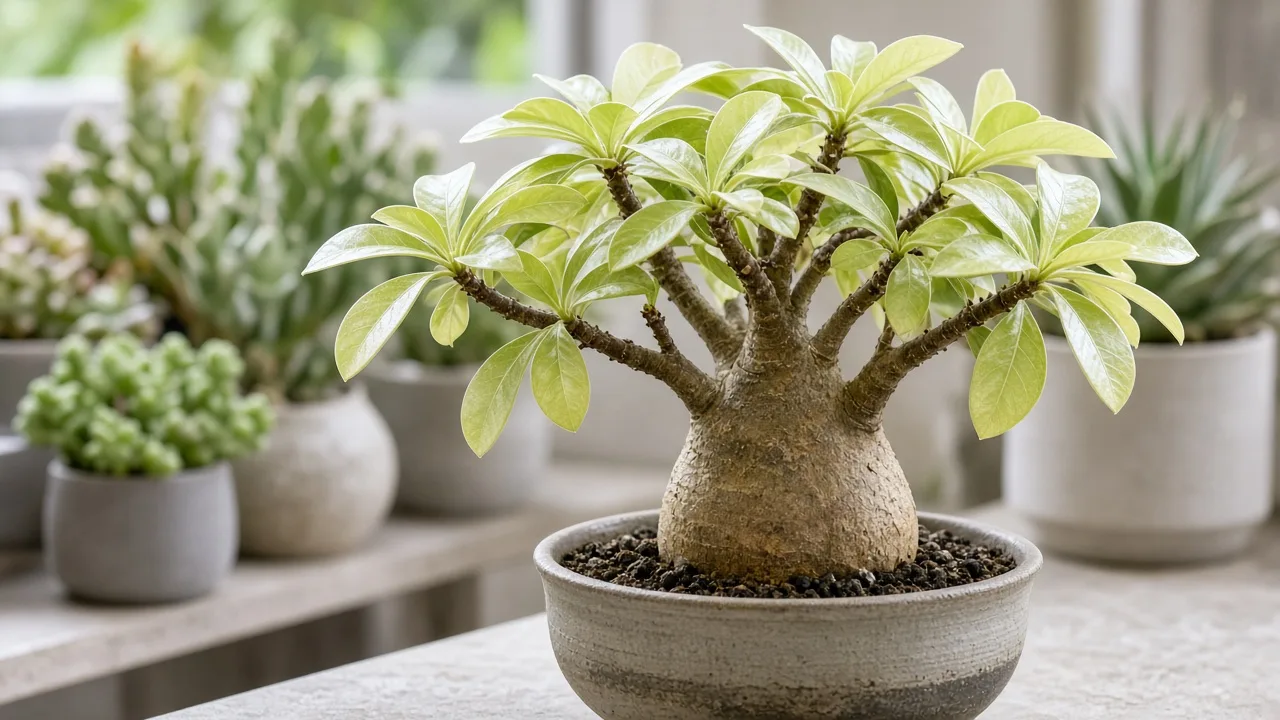
Pale Leaves on Adenium: Causes, Checks & Fixes
This guide covers pale leaves on Adenium. See also the general Pale Leaves guide, watering, and light pages for this plant.
Pale Leaves on Adenium: Causes, Checks & Fixes
Quick answer
Pale leaves on Adenium obesum look washed-out, yellow-green, or thin instead of the thick glossy deep green Desert Rose shows in strong sun. For general chlorosis patterns, see our pale leaves guide. On Adenium, weak light and wet roots are more common than fertilizer deficiency indoors—and dormancy pale-yellow is normal in cool months.
First step: compare newest leaves at branch tips to older lower leaves, then check how many hours of direct sun the pot receives and whether the caudex is firm on appropriate dry-down.
When to use this page vs other Adenium guides
| Pattern | Read next |
|---|---|
| Yellow lower leaves + wet mix | Overwatering |
| Whole plant pale in dim corner | Not enough light |
| Yellow between veins on new leaves | Iron deficiency |
| Pale + leaf drop in cool months | Watering guide — dormancy |
| Uniform pale after heavy feed | Fertilizer burn |
What pale leaves look like on Adenium
Pale yellow-green Adenium leaf—compare newest branch-tip leaves with older lower blades and caudex firmness.
Healthy Desert Rose leaves are dark green, thick, and glossy with a slight central groove. Paleness shows as:
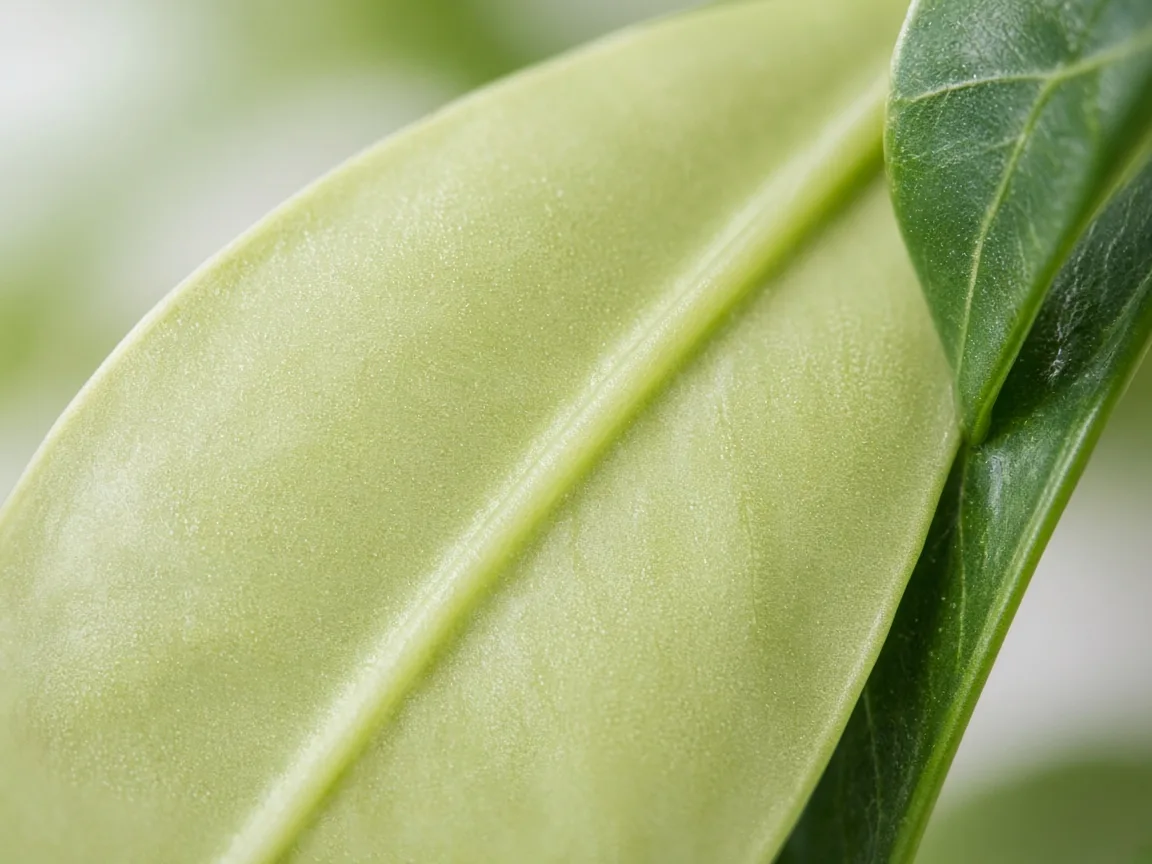
Pale yellow-green Adenium leaf—compare newest branch-tip leaves with older lower blades and caudex firmness.
- Uniform lime or yellow-green across the whole plant — Often in a dim indoor corner or winter greenhouse with short days. Adenium will not flower under low light conditions.
- Pale lower leaves only, green tips — Mobile nutrients or normal aging; lower blades fade before drop.
- Yellow-green with limp stems on wet mix — Root stress—not hunger. Caudex may feel soft.
- Mottled pale patches — Suspect mosaic virus or pest stippling; not simple chlorosis.
- Seasonal fade before leaf drop — Leaf yellowing may occur in chill below 55°F (13°C) during dormancy.
Check newest leaves first. Pale new growth in summer with strong sun points to roots or nutrients. Pale only on old leaves with green tips is lower urgency.
Light and the glossy leaf test
Adenium is a sun succulent, not a low-light foliage plant. Without six hours or more of bright sunlight daily, leaves lose depth of color and stems stretch. This plant-only rule fails on snake plants or aglaonemas.
Quick light audit:
- Count direct sun hours on the pot—not just “bright room.”
- If the plant leaned toward glass, rotate and increase exposure gradually.
- After two weeks of stronger sun, new leaves should open darker. If they stay pale, look at roots.
Caudex and pot-weight cross-check
Desert Rose stores water in its swollen caudex, not in leaf tissue alone. Pale leaves on a firm caudex usually mean light or seasonal pattern—not automatic repotting. Pale leaves on a soft caudex with heavy wet soil mean root stress mimicking deficiency:
- Lift the pot when you know the mix is fully dry versus two days after watering.
- Press the caudex with clean fingers—firm like a ripe apple vs spongy denting.
- Probe 5–7 cm deep with a skewer. Surface dust-dry on peat-heavy mix can hide wet roots below.
- Compare branch tips to lowers—whole-plant lime wash on dry gritty mix with firm caudex = light first; yellow-green lowers on wet mix = water first.
This caudex-first logic does not apply to leafy ferns or prayer plants.
Lookalike symptoms
| Pattern | Caudex | Soil | Likely cause |
|---|---|---|---|
| Whole plant lime-green | Firm | Dry gritty mix | Not enough light |
| Lower leaves pale, green tips | Firm | Dry | Normal aging or nitrogen deficiency |
| Uniform pale + limp stems | Soft | Wet heavy | Overwatering |
| Mottled pale patches | Firm | Any | Mosaic virus or pests |
| Fade then drop in cool months | Firm, dry | Dry | Dormancy per watering guide |
Why Adenium gets pale leaves
Insufficient light. Most indoor pale Desert Rose simply need more direct sun. Bloom failure and pale foliage often arrive together.
Root stress from wet mix. Damaged roots cannot take up nutrients evenly. Pale-yellow leaves on heavy wet soil mimic deficiency—press the caudex before feeding.
Dormancy. Natural yellowing before leaf drop in cool rest is not fixed with fertilizer.
True nutrient lack. Rare on gritty mix with summer feeding during active growth. Suspect only after light and roots check clean. See nitrogen deficiency if old leaves yellow while new stay pale.
Pests. Mealybugs are listed pests on Adenium; heavy mite or aphid feeding can also stipple leaves lighter. Inspect tips first.
How to confirm the cause
- Light hours — Less than six hours direct sun in summer = primary suspect.
- Caudex + soil — Soft caudex on wet mix = root issue, not feed.
- Which leaves — Whole plant vs lower only vs new growth.
- Season — Cool short days = dormancy pattern.
- Feed history — Recent heavy dose vs months without any feed in active growth.
First fix for Adenium
Move the plant to the brightest available spot with six or more hours of direct sun in warm active growth—acclimate over one week if it came from dim shade.
If caudex is firm and mix dries appropriately:
- Increase sun gradually; watch for sunburn on sudden harsh moves.
- After two weeks of better light, if new leaves still open pale, apply dilute liquid feed per label only during active summer growth.
If caudex is soft or soil stays wet:
- Stop fertilizer. See overwatering first.
If cool dormancy:
- Withhold water and accept leaf drop per watering guide.
Recovery timeline
Improved light often shows darker new leaves within two to four weeks in warm conditions. Root-stressed plants recover slower—sometimes one full growth flush after dry-down stabilizes. Dormant pale leaves drop naturally; new spring growth should be green.
Improvement signs: Deep glossy new leaves at branch tips, firm caudex, lighter pot weight between scheduled soaks, simultaneous flower bud formation in summer.
Worsening signs: Pale spreading to every new leaf within days, caudex softening on wet mix, limp branches despite moist soil, or mottled distortion without pest confirmation—escalate to root rot or mosaic virus routes.
Mistakes to avoid
- High-dose fertilizer on wet mix
- Keeping Desert Rose as a dark-corner foliage plant
- Confusing dormancy yellow with nitrogen lack
- Repotting and feeding the same week
How to prevent pale leaves next time
Give strong seasonal sun, gritty soil, predictable watering, and light summer feeding only when actively growing. See Adenium overview and problems hub.
Related Adenium guides
Conclusion
Pale Adenium leaves usually ask for more sun or drier roots—not more fertilizer. Read new growth and caudex firmness, fix light or moisture, then feed lightly only in active summer. Deep green glossy new leaves are the recovery signal.