Pale Leaves on Aglaonema Cutlass: Light & Root Checks
Quick answer
Pale leaves on Aglaonema Cutlass look washed-out green with weak silver veining on narrow lances—usually very low light, root stress on wet mix in dark offices, or nitrogen lack on old lower leaves. First step: compare silver vein contrast on the newest leaf, then check whether the top half of the pot has dried.
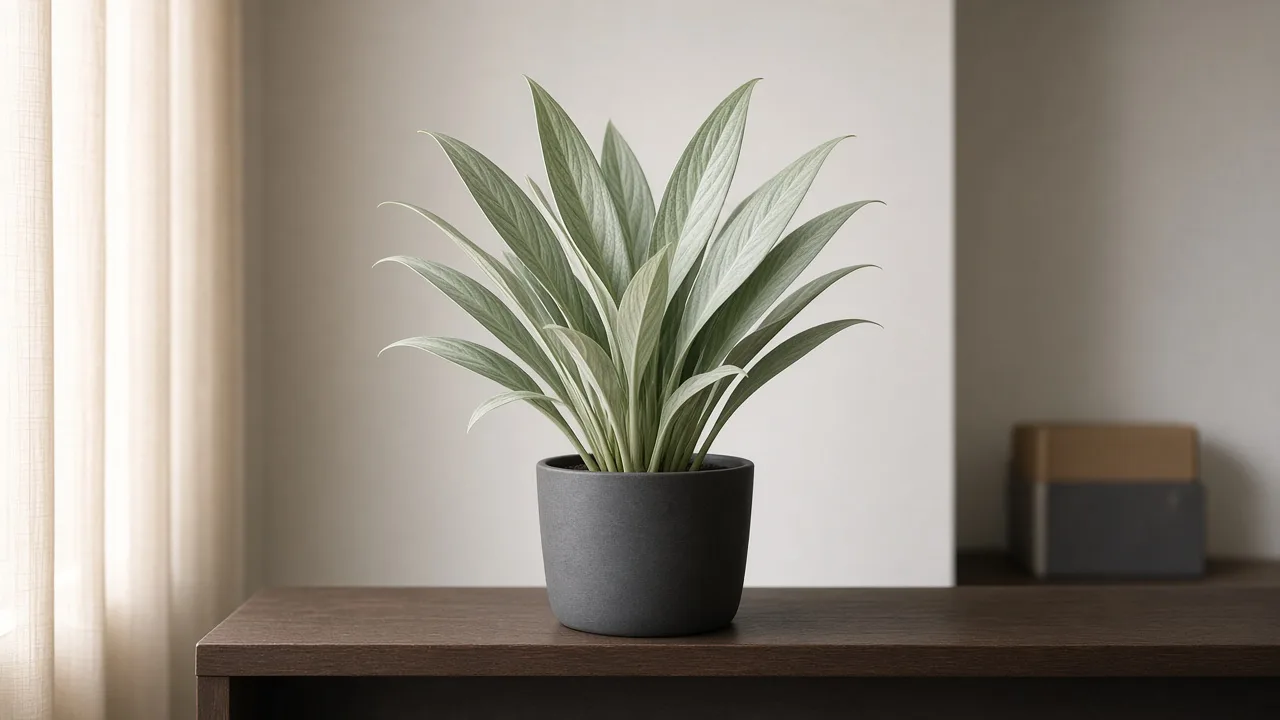
Pale Leaves on Aglaonema Cutlass: Causes, Checks & Fixes
This guide covers pale leaves on Aglaonema Cutlass. See also the general Pale Leaves guide, watering, and light pages for this plant.
Pale Leaves on Aglaonema Cutlass: Causes, Checks & Fixes
Quick answer
Pale leaves on Aglaonema commutatum ‘Cutlass’ show washed-out green color and faded silver veining on narrow lance-shaped foliage. For how chlorophyll loss and low light interact in general, see our pale leaves guide. On Cutlass, the signature marbling dulls before the plant looks obviously sick—because the dark green base still reads as “alive” in a dim office.
First step: photograph the newest leaf and compare silver vein contrast against a healthy reference; then stick your finger into the top half of the pot to see whether mix has dried.
If the whole plant looks uniformly dull in a windowless cubicle, light is the lead suspect. If only lower lance leaves are pale while the crown stays greener on a heavy wet pot, roots and watering deserve attention first—see overwatering.
When to use this page vs other Cutlass guides
| Pattern | Read next |
|---|---|
| Dark corner, wet pot, yellow lower leaves | Overwatering |
| Very dim room, long petioles, slow growth | Not enough light |
| Old lower lances fade first, light and water OK | Nitrogen deficiency |
| Yellow-green washout, not just dull silver | Yellow leaves |
| Stems stretch, small new leaves | Leggy growth |
| Fine stippling on leaf undersides | Spider mites |
What pale leaves look on Aglaonema Cutlass
Cutlass is a ribbon-type Chinese evergreen: long narrow blades with silver marbling along the veins on a dark forest-green base. Pale stress rarely looks like bleached white patches at first. More often you notice:
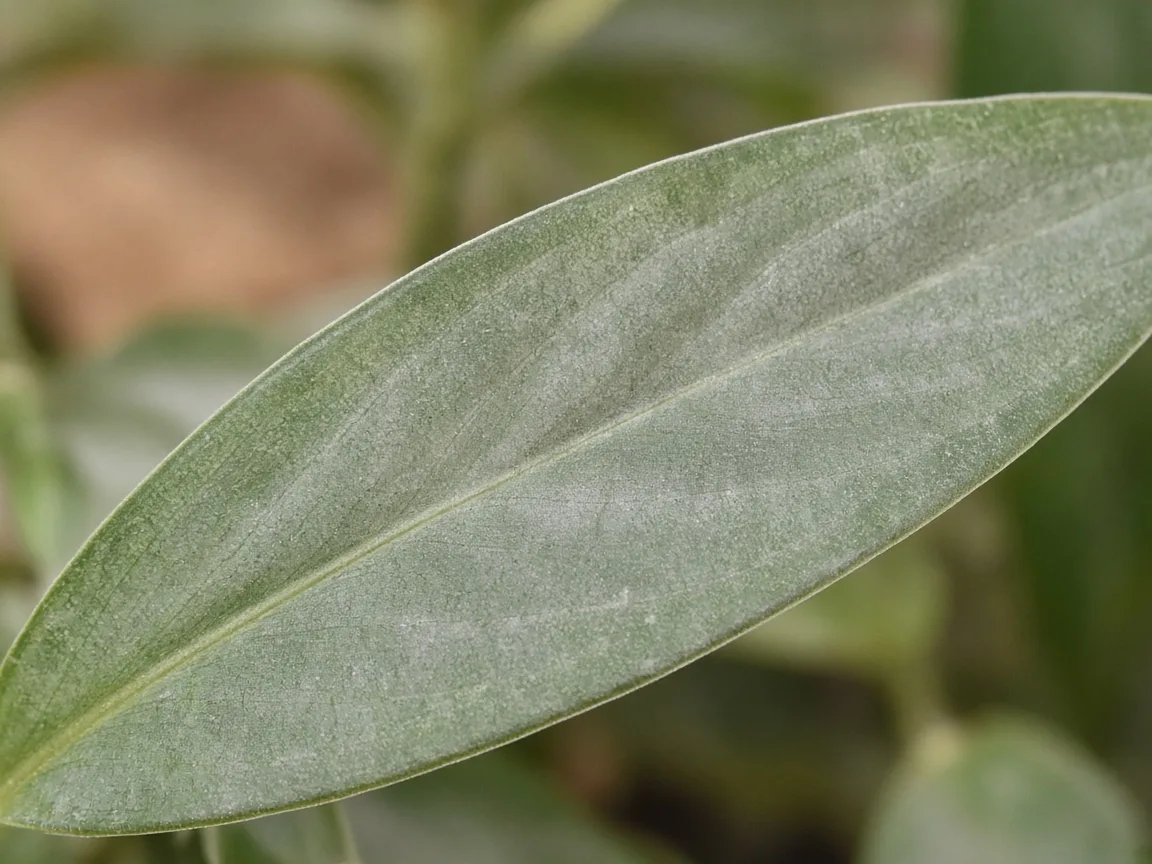
Washed-out green with weak silver stripe contrast on a Cutlass lance—compare the newest leaf against a healthy reference before fertilizing.
- Uniform washed-out green with weak silver stripes — The plant still looks green from across the room, but close up the veining has lost contrast. Chinese evergreens adapt to low light yet lose color intensity in very dim interiors.
- Pale lower lance leaves, greener tips — Mobile nitrogen moves upward when roots are stressed or the mix is depleted. Lower blades lighten while newer crown leaves hold more green.
- Thin, small new leaves on longer petioles — Low light reduces leaf size and stretches spacing between leaves. Silver pattern may look smeared rather than crisp.
- Yellow-green lower leaves on a heavy pot — Chronic wet mix in slow-growing conditions. NC State notes root rot follows overwatering on Aglaonema kept too wet.
Healthy Cutlass should show firm lance leaves with readable silver veining against the dark green background. Judge the newest two or three leaves, not only older blades that naturally age.
Why Cutlass fades before it turns yellow
Pink and cream-heavy aglaonema hybrids look sick quickly in shade because they lack chlorophyll over large leaf areas. Cutlass is different. Its dark green “camouflage” variegation carries more chlorophyll per square inch, so it can survive office fluorescents and north-window rooms while still dulling silver striping and slowing growth.
UF/IFAS publication EP160 documents that Aglaonema can tolerate interior light as low as roughly 25 foot-candles—survival territory, not the band where Cutlass shows its best pattern. Commercial growers use heavy shade, and EP160 notes leaves lose color and stand upright at the brighter end of production shade. At home that translates to a practical rule: Cutlass can look acceptable while quietly under-lit.
That biology matters for diagnosis. Owners often wait for yellow leaves before acting. On Cutlass, pale silver loss is the earlier warning.
Silver vein fade test
This check only makes sense on ribbon aglaonemas where pattern contrast is the cultivar’s main signal.
- Photograph the newest fully opened lance leaf under the same room lighting each week.
- Move the plant one step brighter—closer to a north or east window, or a few feet forward from a sheer-curtained south pane per the light guide.
- If silver veining sharpens on the next new leaf within three to five weeks, light was the limiter.
- If veining stays weak and the pot remains heavy with wet surface mix, shift to root checks before fertilizing.
Existing stretched pale tissue may not fully revert. Recovery means tighter new leaves with restored stripe contrast.
The office dimness + wet-pot trap
Cutlass is sold as a low-light plant, and that reputation causes a specific failure mode in real offices:
- The plant sits far from windows under ceiling fluorescents only.
- Growth and water use slow dramatically.
- The owner keeps watering on a summer calendar—or the cachepot never drains.
- Mix stays wet for weeks while light stays marginal.
- Lower lance leaves pale and yellow-green; crown may still look passable.
This is not two separate problems. Slow drying in dim light plus frequent watering is the combination that turns pale leaves into root rot. Cutlass tolerates brief drying better than prolonged saturation—match water to how fast the top half of mix dries in your room, not a blog’s weekly schedule. See the watering guide for the half-pot check.
Why Aglaonema Cutlass gets pale leaves
Very low light
The most common cause of whole-plant washout is insufficient filtered daylight. The Royal Horticultural Society recommends filtered light for ‘Cutlass’. Ceiling lights alone often deliver only survival-level brightness.
Overwatering stress in dim rooms
When roots sit in oxygen-poor wet mix, they cannot take up nutrients efficiently. Lower leaves pale first. Aglaonema is excellent for low light but still needs a well-drained pot that dries on a reasonable cycle.
Nitrogen deficiency on older leaves
If light is adequate, watering is balanced, and only the oldest lower lances fade while new growth stays green, depleted mix may be the issue—especially on plants that have not been repotted or fed in years. Confirm before feeding; see nitrogen deficiency.
Spider mites and sap loss
Pale stippling with fine webbing on narrow leaf undersides is pest stress, not shade. Dry heated air favors mites on Aglaonema. Inspect before you move the plant to brighter light, which can worsen mite spread if untreated—see spider mites.
Normal aging
One or two oldest outer lance leaves slowly losing gloss at the base of a dense clump can be normal turnover. Worry when multiple leaves at once pale, or when new growth emerges dull.
How to confirm the cause
| Pattern | Pot weight | New growth | Likely cause |
|---|---|---|---|
| Whole plant dull, long petioles | Normal to light | Small pale new lances | Low light |
| Lower leaves yellow-green | Heavy, wet surface | Crown greener | Wet roots |
| Oldest lowers only | Normal | New leaves healthy | Nitrogen / old mix |
| Stippling + webbing | Any | Patchy pale spots | Spider mites |
| One old outer leaf | Normal | Rest healthy | Aging |
Work through the table before stacking fixes. Photo the same leaves in three days—spreading paleness needs faster action than stable cosmetic dullness.
First fix for Aglaonema Cutlass
Move the plant to the brightest filtered spot you can offer—north or east window, or several feet back from sheer south glass—and pause watering until the top half of mix dries.
That single step addresses the two most common combined failures: marginal light and wet slow-growing roots. Do not fertilize, repot, and relocate on the same day.
After one week:
- If the pot was heavy, continue the dry-down rhythm from the watering guide.
- If mites are present, treat per the pest page before optimizing light.
- If light was already strong and only old lowers are pale after a year in the same mix, consider a light spring feed at half strength per the fertilizer guide—only after roots and light are stable.
Step-by-step recovery
- Brighten filtered light gradually over one to two weeks if the plant came from deep shade. Sudden hot sun through bare west glass can scorch narrow leaves.
- Check drainage — nursery pot lifts freely; no standing water in cachepots.
- Water when the top half dries, then soak until drainage runs free. Clemson Extension advises even moisture without waterlogged roots.
- Remove only fully yellow or mushy lower leaves with clean shears. Keep as much photosynthesizing tissue as the plant can support.
- Watch the next two new lance leaves for firmer texture and sharper silver veins—that is your scoreboard.
Recovery timeline
Expect noticeably sharper silver veining on new leaves within three to five weeks after light and moisture are corrected. Slow winter growth may extend that to eight weeks.
Older pale lance blades often stay lighter permanently. Success means the problem stops spreading and new crown leaves look like Cutlass again.
If paleness spreads while soil stays wet and stems soften at the base, unpot within days and inspect roots—see root rot.
Lookalike symptoms
- Yellow leaves — stronger yellow wash, often with wet-soil root decline.
- Brown tips — margin-focused crisping, often fluoride or drought, not whole-blade washout.
- Slow growth — may coexist with pale color but is not the same diagnosis.
- Direct sun bleach — pale patches on leaves facing glass, not uniform vein fade.
Mistakes to avoid
- Fertilizing a pale plant on wet soil in a dim room
- Misting foliage to “help humidity” while soil stays saturated—humidity is rarely the limiter for Cutlass
- Assuming pale means “needs more water” because leaves look limp—check roots first
- Discarding the plant while crown leaves are still firm and new growth is possible
How to prevent pale leaves next time
Place Cutlass where it receives filtered daylight most of the day, not only artificial light. Pair placement with the soil guide—airy peat- or coco-based mix with perlite so the half-pot dry-down check stays honest.
Missouri Botanical Garden recommends a well-drained peaty potting mixture indoors and light feeding during active growth. Feed only when the plant is growing, not when it is pale and stressed.
Inspect newest leaves monthly. A slow fade in silver contrast is easier to correct than a crown full of yellow lances after months in a dark wet corner.
When to worry
Treat as urgent if:
- Crown leaves pale and soften while soil is wet
- Multiple new leaves emerge thin and colorless at once
- Stems collapse at soil line with sour-smelling mix
- Pale patches spread with webbing or sticky residue
Those patterns point beyond cosmetic low light—escalate to root and pest guides quickly.
Related Aglaonema Cutlass guides
- Overview — placement and growth expectations
- Light — foot-candle targets and window placement
- Watering — half-pot dry-down rhythm
- Not enough light — when dim rooms stretch stems
- Problems hub — full symptom index
Scope note: Use this page when silver veining fades or leaves look washed-out without obvious pest patches or tip burn. Use sibling pages when yellowing, wet-soil rot, or stretch dominate the picture.
Conclusion
Pale Cutlass leaves are usually a light signal masked by dark green foliage, or a root signal from wet mix in slow-growing shade. Brighten filtered exposure, let the top half of the pot dry, and judge recovery by the next lance leaves—not by hoping old blades darken again.