Distorted Leaves on Pink Dalmatian Aglaonema: Thrips &
Quick answer
Distorted leaves on Aglaonema Pink Dalmatian usually mean feeding damage on tender new flush, cold shock on pink-speckled tissue, or edema from overwatering in a dim corner. First step—inspect the newest unfolded leaf for silver streaks, puckering, or sticky residue before changing soil or fertilizer.
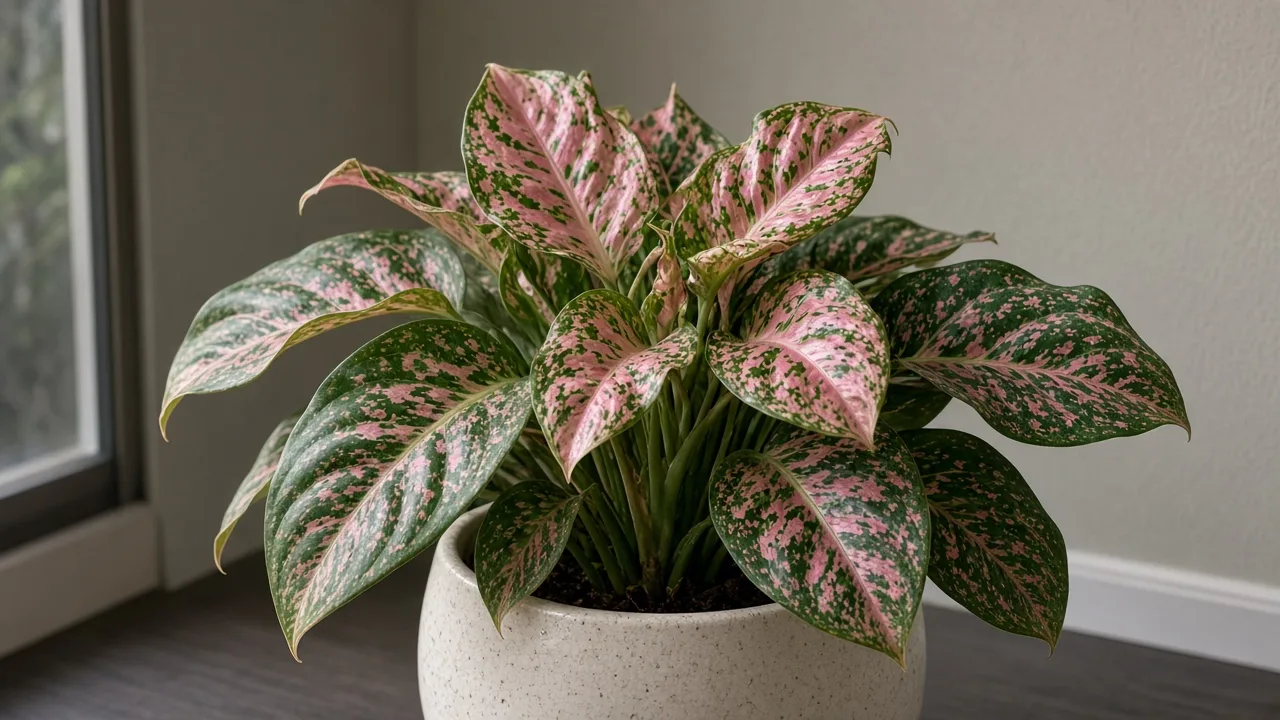
Distorted Leaves on Aglaonema Pink Dalmatian: Causes, Checks & Fixes
This guide covers distorted leaves on Aglaonema Pink Dalmatian. See also the general Distorted Leaves guide, watering, and light pages for this plant.
Distorted Leaves on Aglaonema Pink Dalmatian: Causes, Checks & Fixes
Quick answer
Twisted, puckered, or crinkled new leaves on Aglaonema Pink Dalmatian are alarming on a cultivar prized for clean pink speckles—but distortion almost always starts on the newest unfolding flush, not random old foliage. For how general leaf warping works across houseplants, see our distorted leaves guide. On Pink Dalmatian, pale pink tissue scars first, so the damage pattern often follows the variegation map rather than the whole blade.
First step: hold the newest leaf to a window and look for silver streaks, sticky shine, or cold-draft stiffening on the pink zones.
When to use this page vs other Pink Dalmatian guides
| Pattern | Read next |
|---|---|
| Silver streaks + sticky new leaves | Thrips |
| Cottony wax in crown axils | Mealybugs |
| Uniform pale wash, not crinkle | Pale leaves |
| Lengthwise cupping, not twist | Curling leaves |
| Wet heavy pot + sour smell | Overwatering |
What distorted leaves look like on Pink Dalmatian
Pink Dalmatian carries speckled pink variegation on green lance-shaped leaves typical of Chinese evergreen. Distortion shows up differently than on solid-green cultivars because the pink zones lack chlorophyll and scar easily.
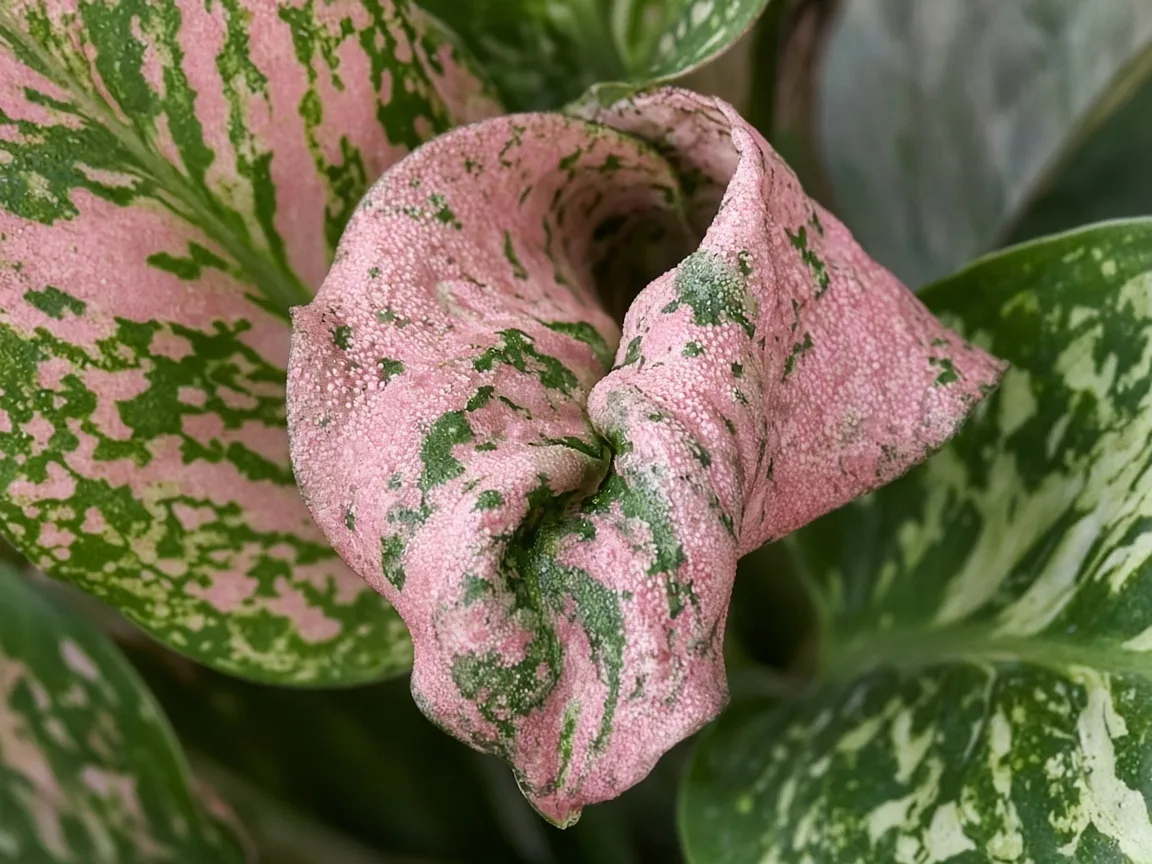
Puckered pink tissue and a twisted unfolding tip on Pink Dalmatian—compare with firm older leaves lower on the stem.
Thrips or aphid feeding on new flush:
- Silvery streaks or speckling on the pale pink sections of unfolding leaves
- Leaf tips that stay hooked or corkscrewed after the blade should have flattened
- Sticky residue or tiny dark frass specks on the crown
- Damage concentrated on the top two to three newest leaves
Cold draft or chill damage:
- Sudden warp on leaves near an AC vent, winter door, or cold window glass
- Stiff, leathery texture on pink tissue that was soft the day before
- Often affects several leaves at the same height on the stem
Edema from overwatering in dim light:
- Raised translucent blisters on the underside of pale zones
- Puckering without insects or silver scarring
- Heavy pot that stays wet more than ten days after watering
Salt or fertilizer burn on variegation:
- Brown crisping along pink speckles while green tissue stays intact
- Follows a recent feed or top-dress, not pest streaks
Check newest leaves first—Pink Dalmatian grows from a short crown, and problems on fresh flush escalate fast in heated dry air.
Why Pink Dalmatian gets distorted leaves
Thrips love tender variegated flush. Western flower thrips rasp pale tissue as leaves unfurl, leaving permanent scars. Pink Dalmatian’s pink spots are thinner and more vulnerable than the green background—damage looks worse than on ‘Maria’ or solid-green types.
Cold air warps expanding cells. NC State notes Aglaonema is intolerant of cold and prefers daytime temperatures in the 70–80°F range. A night below 15°C (60°F) beside a draft can distort leaves that were expanding at the time.
Overwatering in a dim corner causes edema. Pink Dalmatian needs medium to bright indirect light to hold its pink. In deep shade, the plant drinks slowly while roots stay wet—cells burst and leaves pucker. See not enough light if pink is fading alongside distortion.
Over-fertilizing burns pale tissue first. The pink zones photosynthesize less; excess salts accumulate on the margins of light tissue before green areas show burn. Hold feed after any distortion event.
Lookalike symptoms to rule out
| What you see | Key check | Likely cause | Distortion? |
|---|---|---|---|
| Hooked new tips + silver streaks | Sticky shine; thrips on white paper tap | Thrips | Yes |
| Cottony clusters in axils | Pink smear when crushed | Mealybugs | Sometimes |
| Lengthwise cup, not twist | Dry top half of soil | Curling leaves | No |
| Even pale wash across plant | Fixed pattern loss, no crinkle | Pale leaves | No |
| Chewed holes with margins | Caterpillar frass | Holes in leaves | No |
How to confirm the cause
- Isolate the plant before handling foliage—thrips walk to neighbors on the same shelf.
- Tap a suspect new leaf over white paper—thrips look like tiny moving dashes; aphids are round and slow.
- Feel the pot weight and probe the top half of soil—soggy mix with blisters points to edema, not pests.
- Note placement—AC vent, winter window, or door draft within one metre explains chill warp on one side of the plant.
- Review recent fertilizer—distortion within a week of feeding suggests salt burn on pink tissue.
- Inspect lower older leaves—if only new flush is affected, pests or chill are more likely than chronic root rot.
First fix for Pink Dalmatian
If you see silver streaks or sticky new growth: rinse every leaf and stem with lukewarm water, especially the crown where pink flush emerges. Isolate the pot and see thrips for repeat soap treatments—do not fertilize or repot the same week.
If the pot is heavy and wet with blistered pale tissue: stop watering until the top half of soil dries completely, then resume on the watering guide schedule.
If cold draft is the culprit: move the plant to a stable 18–27°C (65–80°F) spot away from vents before doing anything else.
Recovery timeline
Clean new leaves that open flat within two to four weeks mean your fix worked. Already-expanded crinkled leaves will not smooth out—judge recovery by the next crown flush. Pink Dalmatian grows slowly; a full crown can take a season to look balanced again after severe thrips scarring.
How to prevent distorted leaves
- Keep the pot in medium to bright indirect light so pink stays firm and soil dries predictably.
- Water when the top half of soil dries—not on a calendar—in winter.
- Inspect new pink flush weekly October through March when indoor heating dries leaf surfaces.
- Flush the pot annually if you feed regularly; variegated tissue burns on salt buildup.
- Quarantine new aglaonemas before placing beside Pink Dalmatian.
Related Pink Dalmatian guides
Conclusion
Distorted Pink Dalmatian leaves are a new-growth signal—thrips scarring, cold shock on pale tissue, or edema from a wet pot in dim light. Fix the crown environment first; the pink speckles will tell you whether the tissue was scarred or starved.