Distorted Leaves on Red Valentine Aglaonema: Thrips & Draft
Quick answer
Distorted leaves on Aglaonema Red Valentine—twisted, puckered, or crinkled new blades—usually mean thrips on the crown flush, cold shock on expanding tissue, or edema from a wet pot in dim light. First step: inspect the newest unfolded leaf for silver streaks on the pink-red panels.
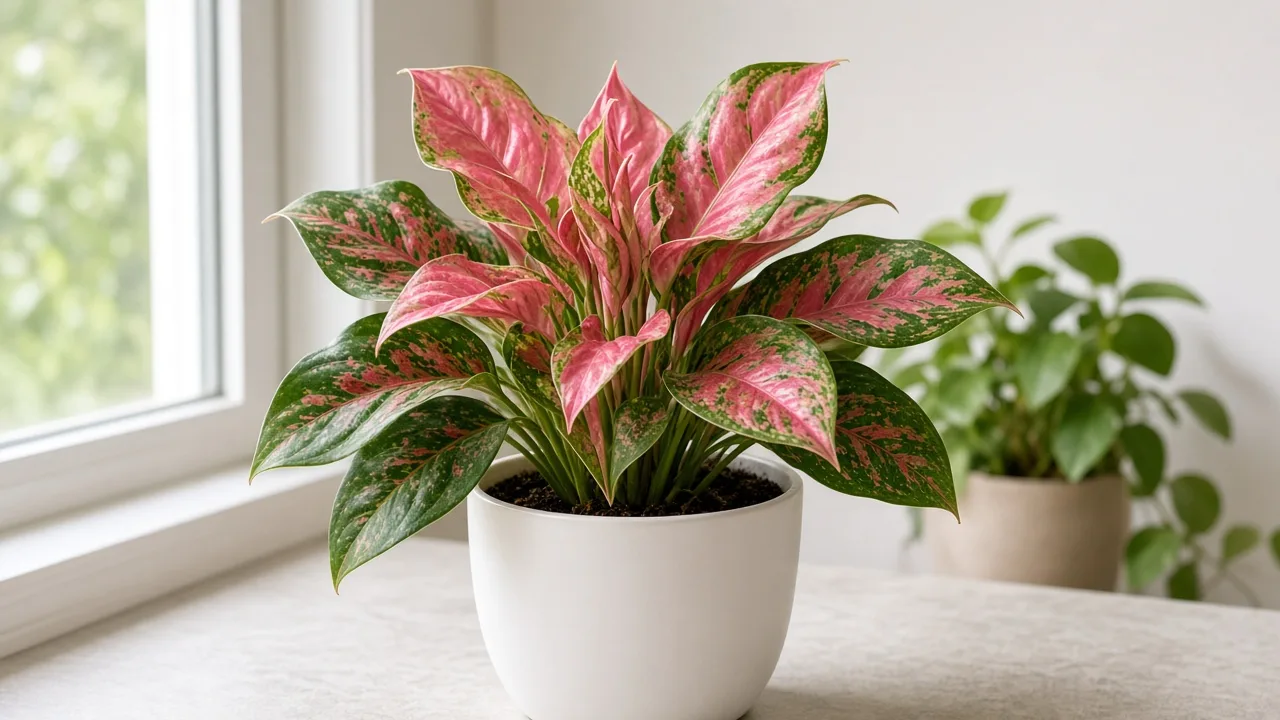
Distorted Leaves on Aglaonema Red Valentine: Causes, Checks & Fixes
This guide covers distorted leaves on Aglaonema Red Valentine. See also the general Distorted Leaves guide, watering, and light pages for this plant.
Distorted Leaves on Aglaonema Red Valentine: Causes, Checks & Fixes
Quick answer
Twisted, puckered, or crinkled new leaves on Aglaonema Red Valentine start on the newest unfolding crown flush—not random lower foliage. See our distorted leaves guide for general mechanics. On Red Valentine, large pink-red panels scar before green tissue, so damage often follows the variegation map on the blade you are watching.
First step: inspect the newest unfolded leaf for silver streaks, sticky shine, or stiff crinkle from a cold draft.
When to use this page vs other Red Valentine guides
| Pattern | Read next |
|---|---|
| Silver streaks + sticky leaves | Thrips |
| Cottony wax in crown | Mealybugs |
| Lengthwise cup on dry pot | Curling leaves |
| Faded wash, flat blades | Pale leaves |
| Chewed holes with margins | Holes in leaves |
What distorted leaves look like on Red Valentine
Red Valentine carries lance-shaped leaves variegated with pink, red, and green—with larger pink-red sections than green cultivars like Maria. New blades should emerge broad and flat. Distortion breaks that pattern on crown tissue first.
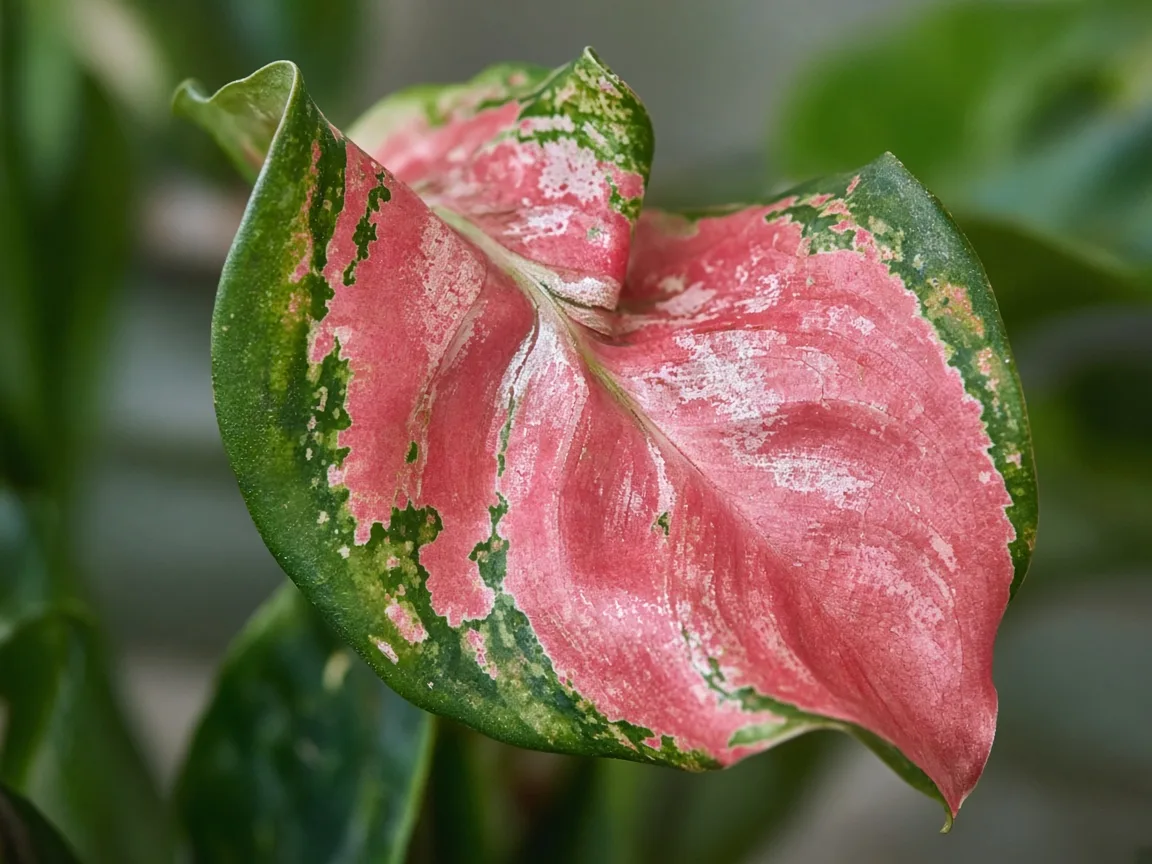
Puckered pink-red tissue on Red Valentine new growth—compare with firm older leaves below.
Thrips feeding (most common indoors):
- Silvery streaks and hooked tips on the top one or two unfolding leaves
- Sticky residue or tiny black specks on pale pink zones where chlorophyll is thin
- Damage concentrated on new flush, not mature lower blades
Cold draft warp:
- Stiff crinkle on leaves at the same height on the stem—often near an AC vent, winter window, or entry door
- Pink-red panels stiffen and cup before green tissue shows stress
Edema from overwatering in dim light:
- Translucent blisters on pale undersides with a heavy wet pot
- Puckering without stippling or insects—see overwatering if lower leaves yellow too
Sun scorch on pale panels:
- Crisp brown patches on pink-red tissue after direct sun hit a south or west window
- Distortion follows the sun-exposed side of the crown—distinct from insect silver streaks
Fertilizer burn:
- Crisp margins on pale zones within a week of feeding
- Green areas on the same leaf may look normal while pink panels crisp first
Check newest leaves—twist on fresh pink growth is urgent. One old distorted lower leaf with a clean crown is often mechanical bruising after a move.
How distortion maps onto Red Valentine’s pink-red panels
Red Valentine’s showy color comes from anthocyanin-rich tissue with less chlorophyll than green Aglaonemas. That makes three distortion types easy to read:
- Pest scarring follows pale zones first—silver streaks sit on pink-red panels while the green midrib still looks normal.
- Light stress fades color before it twists—if pink washes dull green without crinkle, see not enough light instead.
- Direct sun marks the panel facing the glass—brown crisp patches on one side of the blade, not random crown-wide twist.
This variegation map is why Red Valentine owners often notice distortion before Maria growers would on the same shelf.
Why Red Valentine gets distorted leaves
Thrips rasp tender unfolding leaves. Pale pink-red panels lack the chlorophyll buffer green tissue has, so scarring shows immediately on new flush.
Aglaonema is cold-intolerant—drafts below 15°C (60°F) warp cells while leaves expand. Red Valentine’s slow growth means a single cold night can scar every leaf in the current crown flush.
Overwatering when the plant sits in low light causes edema: roots keep drinking while transpiration is slow, and cells burst into puckered blisters on pale undersides.
Over-fertilizing burns pale tissue first. The light zones on Red Valentine’s broad glossy blades photosynthesize less; excess salts crisp pink margins before green areas show burn. Hold feed after any distortion event.
Physical bruising from moving the pot creases unfolding leaves—damage appears on one side of the crown after a recent relocation.
Crown flush inspection on slow-growing Red Valentine
Red Valentine-specific steps:
- Part foliage at the center—the softest pink new leaves distort first.
- Backlight pale panels—stippling and silver streaks show earlier on pink-red tissue than on green.
- Tap the top unfolding leaf over white paper—thrips look like tiny moving dashes.
- Compare to overview photos—normal Red Valentine leaves are broad and flat, not narrow and hooked.
- Feel pot weight—heavy soggy mix with blisters points to edema, not pests.
Because variegated aglaonemas grow slowly, one damaged crown flush can dominate the plant’s look for months—early crown checks matter more than on fast-growing pothos.
Lookalike symptoms to rule out
| What you see | Key check | Likely cause | Distortion? |
|---|---|---|---|
| Hooked tips + silver streaks | Sticky shine; thrips on paper tap | Thrips | Yes |
| Cottony clusters in axils | Pink smear when crushed | Mealybugs | Sometimes |
| Lengthwise cup, not twist | Dry top half of mix | Curling leaves | No |
| Even pale wash | Fixed pattern loss, no crinkle | Pale leaves | No |
| Chewed holes with margins | Caterpillar frass | Holes in leaves | No |
How to confirm the cause
- Isolate the plant before handling foliage—thrips walk to neighbors on the same shelf.
- Tap a suspect new leaf over white paper—moving dashes confirm thrips.
- Probe the top half of the mix—soggy heavy pot with blisters points to edema, not pests.
- Note placement—AC vent, winter window, or door draft within one metre explains chill warp.
- Review recent fertilizer—distortion within a week of feeding suggests salt burn on pale tissue.
- Inspect lower older leaves—if only new flush is affected, pests or chill are more likely than chronic root rot.
First fix for Red Valentine
If you see silver streaks or sticky new growth: rinse every leaf and stem with lukewarm water, especially the crown. Isolate and see thrips for repeat treatments.
If the pot is heavy and wet: stop watering until the top half of the mix dries completely per your watering guide.
If cold draft is the culprit: move the plant to a stable 18–27°C (65–80°F) spot away from vents before doing anything else.
Mistakes to avoid
- Do not repot and spray on the same day—pick one stressor to fix first.
- Do not mist the crown; wet foliage spreads fungal problems on Chinese evergreen.
- Do not strip all distorted leaves; green tissue still feeds the plant while it recovers.
- Do not chase color with fertilizer on a stressed Red Valentine—pale panels burn first.
- Do not place Red Valentine in direct sun to “fix” fading pink; sun scorches the same pale tissue.
Recovery timeline
Clean flat new leaves within three to five weeks signal success. Crinkled expanded leaves stay crinkled. Red Valentine grows slowly—a full crown can take a season to look balanced after severe thrips scarring.
Prevention
- Stable 18–27°C (65–80°F) placement away from AC blasts
- Water when the top half of soil dries per watering guide
- Bright filtered light without direct sun on pale panels—see light guide
- Weekly new-flush checks October through March when indoor heating dries leaf surfaces
- Hold fertilizer until new growth looks firm for two weeks after stress
- Quarantine new aglaonemas before placing beside Red Valentine
Related Red Valentine guides
Conclusion
Distorted Red Valentine leaves are a new-growth signal—thrips scarring on large pink-red panels, cold shock on expanding tissue, or edema from a wet pot in dim light. Fix the crown environment first, then judge recovery on the next flush.