Pale Leaves on Aglaonema: Light & Root Checks
Quick answer
Pale leaves on Aglaonema usually mean too little light fading the silver and red pattern, or wet soil in a dim corner stressing roots—not a mystery nutrient problem. First step: probe whether the top 2 inches of soil are dry or wet, then compare newest crown leaves with older lower blades.
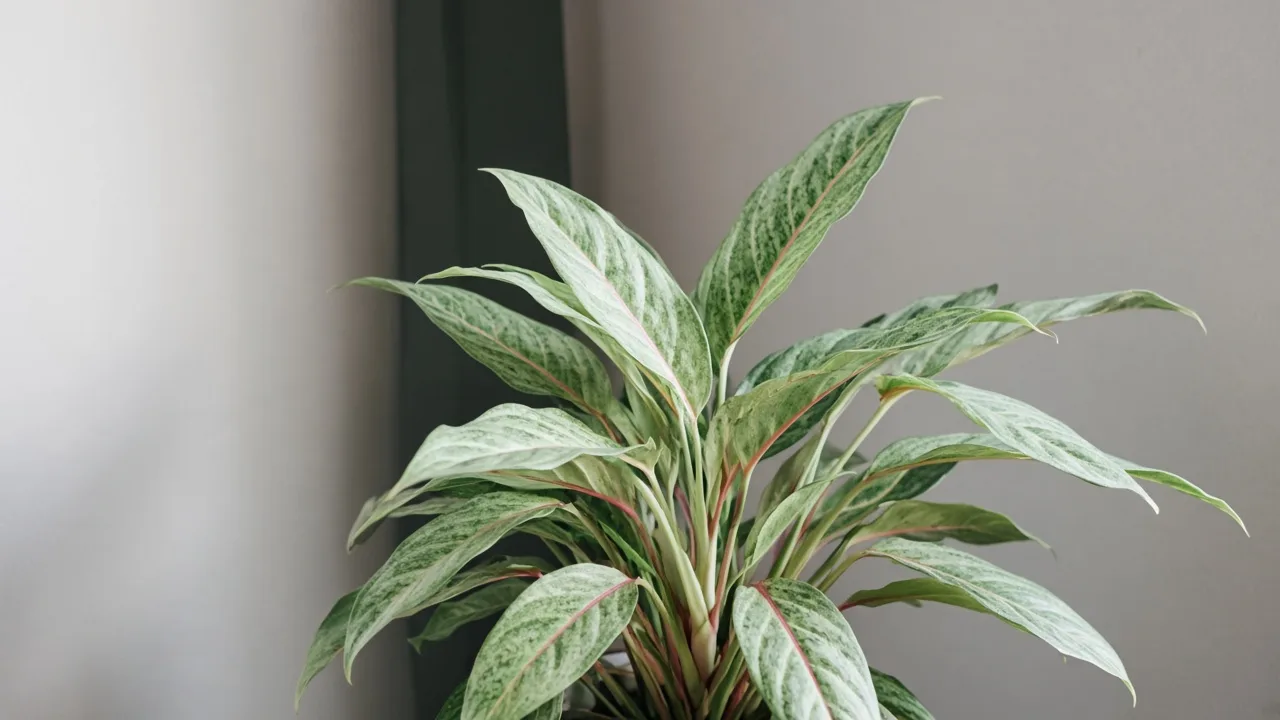
Pale Leaves on Aglaonema: Causes, Checks & Fixes
This guide covers pale leaves on Aglaonema. See also the general Pale Leaves guide, watering, and light pages for this plant.
Pale Leaves on Aglaonema: Causes, Checks & Fixes
Quick answer
Pale leaves on your Chinese evergreen (Aglaonema commutatum) are rarely a single nutrient mystery. On this shade-tolerant Araceae with broad, patterned blades, pale color almost always means too little light fading the silver and red pattern, or wet soil in a dim corner stressing roots before yellowing shows. For general pale-leaf causes, see our pale leaves guide—on Aglaonema, texture and placement on the plant tell you which branch to follow.
First step: feel the leaves and probe soil. Soft, pale, limp blades on a heavy wet pot point to root stress. Firm but washed-out green with long petioles point to low light. Do not fertilize until you know which.
When to use this page vs other Chinese evergreen guides
| What you see | Read next |
|---|---|
| Deep shade fade, long stems | Not enough light |
| Wet soil, yellow lower leaves | Overwatering |
| Oldest leaves pale first, firm new growth | Nitrogen deficiency |
| Yellow not pale, lower leaves dropping | Yellow leaves |
| Fine stippling on pale blades | Spider mites |
This page covers uniform or washed-out pale foliage on existing leaves. If only new growth is twisted or crinkled, start with distorted leaves.
What pale leaves look like on Chinese evergreen
Aglaonema carries lance-shaped leaves patterned in green, silver, and red. Pale color shows up differently on that broad surface than on narrow grass-like leaves or thick succulents.
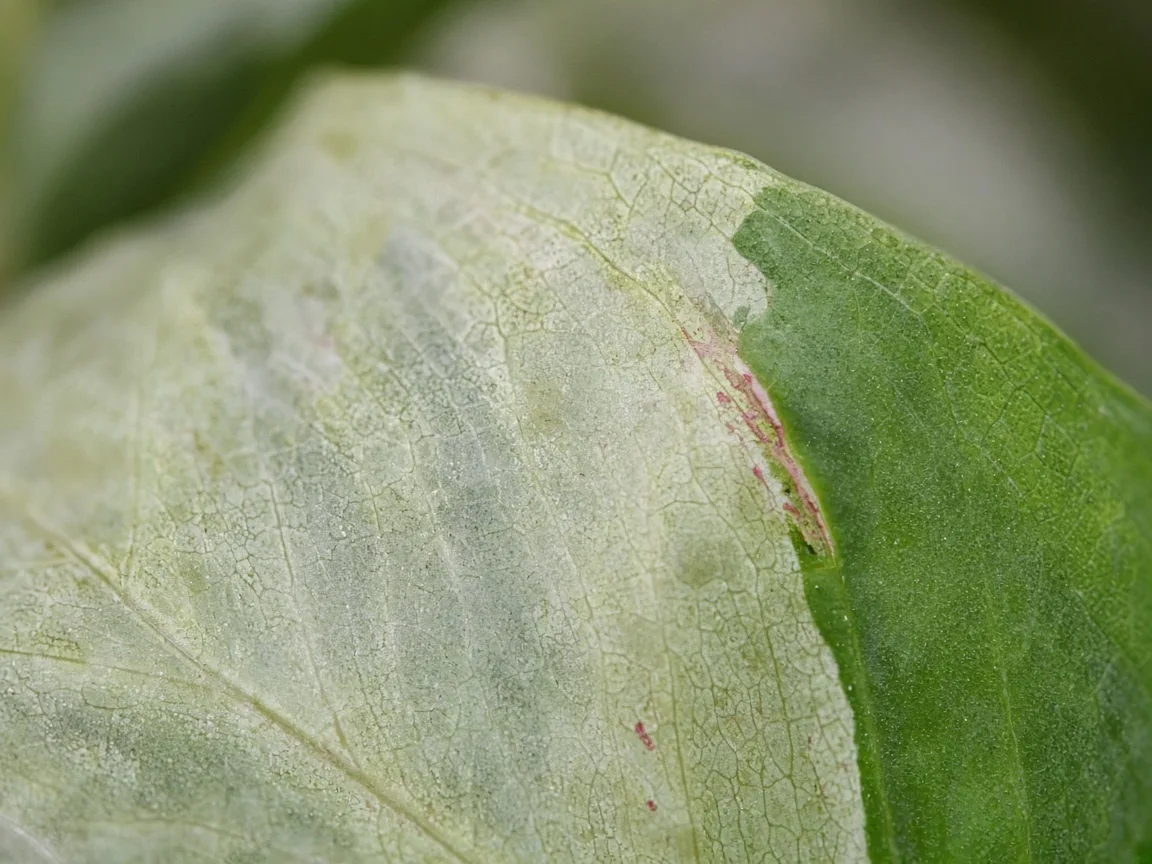
Washed-out silver and red pattern on a Chinese evergreen leaf—compare with firm texture vs soft limp tissue from wet roots.
Low light etiolation (most common indoors):
- Uniform pale green with long, thin petioles reaching toward the nearest window
- Silver and red pattern fades to plain green across the whole blade
- Newest leaves may look slightly greener than old ones that were grown in better light
- Plant leans or grows asymmetrically toward light source
- Often in offices, hallways, or north-facing rooms with no supplemental light
Root stress from overwatering in low light:
- Pale, soft, slightly limp leaves—not crispy
- Pot feels heavy; top 2 inches stay wet for days
- Pattern may look washed but petioles are not unusually long
- Lower leaves pale before upper ones; crown may still look greener briefly
- Often follows a winter of reduced light plus unchanged watering schedule
Nitrogen deficiency (after water is ruled out):
- Oldest lower leaves turn pale yellow-green first
- New growth stays relatively firm and greener
- Slow growth over months in the same pot without fertilizer
- Not sudden—develops gradually on a plant with correct moisture
Spider mite stippling (lookalike):
- Fine pale dots on upper leaf surface, not uniform wash
- Webbing on undersides in dry heated air
- Leaves may look dull gray-pale rather than evenly light green
Check newest crown leaves first. Pale fresh unfurling tissue with soft texture means active root or moisture stress and needs faster action than old lower leaves fading naturally.
Why Chinese evergreen gets pale leaves
Chinese evergreens prefer evenly moist, well-drained soil and tolerate low indoor light—a combination that makes pale leaves easy to misread. Owners often assume fertilizer when the real issue is placement or watering rhythm.
Deep shade fades variegation. The silver and red pattern on Aglaonema blades needs moderate light to hold color. In a dim corner, the plant survives but produces chlorophyll-heavy green growth with stretched petioles. Pale uniform green is etiolation, not disease.
Low-light overwatering trap. Aglaonema in a dark room uses little water. Chronically damp soil deprives roots of oxygen. Leaves pale and soften before classic yellowing appears—especially on patterned cultivars where color loss is noticed first.
Seasonal light drop. Autumn and winter shorten days. A plant that looked fine in summer may pale by January without any change in your watering—light dropped, not nutrients.
Nitrogen lag on old mix. After a year or more in the same pot, oldest leaves may pale if nitrogen is depleted—but only after moisture and light are correct. Feeding stressed roots makes pale soft growth worse.
How to confirm the cause
Work through these checks in order before buying fertilizer:
- Texture test. Pinch a pale leaf. Soft and limp suggests wet roots. Firm but pale suggests light. Crispy pale edges suggest underwatering or mites—different guides.
- Petiole length. Long thin stems reaching sideways or upward mean low light etiolation—measure against a healthy reference photo or light guide.
- Moisture at depth. Probe the top 2 inches of soil. Soggy mix plus pale soft leaves means fix drainage and dry-down, not more light alone.
- Which leaves are affected. All leaves uniformly pale with long petioles = light. Lower leaves only, firm new growth = possible nitrogen after water check. Crown pale and soft = urgent root stress.
- Underside inspection. Fine stippling and webbing point to spider mites in dry air—not nutrient lack.
Silver pattern fading on patterned Aglaonema blades
Three details matter on this species and would mislead you on a snake plant or pothos:
Silver grooves need light to hold contrast. The pale pattern channels are the first to wash out in deep shade. Owners think “nutrients” when the plant simply needs a brighter filtered spot.
Patterned tissue hides early yellowing. Pale green can precede yellow on variegated blades—you may notice washed silver before classic chlorosis.
Never move from deep shade to direct sun. Aglaonema scorches in direct sun. Brighten gradually to an east window or a few feet back from south glass.
First fix for Chinese evergreen
Match one correction to your diagnosis—do not stack light, water, and fertilizer changes on the same day.
If petioles are long and soil is correctly dry: move to low to bright indirect light—a spot where you can read comfortably without harsh sun on the leaves. Rotate the pot weekly.
If soil stays wet and leaves feel soft: stop watering until the top 2 inches dry. See overwatering if lower leaves are yellowing too.
If light and water are stable for months and only oldest leaves pale: consider dilute balanced fertilizer per fertilizer guide—only after two weeks of correct care.
Step-by-step recovery
After the first fix:
- Relocate gradually. Move the pot closer to filtered light over a week if coming from deep shade—avoid sun scorch on patterned blades.
- Let the pot dry correctly. Wait for the top 2 inches to dry, then water until a little drains—empty the saucer within 30 minutes.
- Watch new growth for three to four weeks. Stronger silver and red on emerging leaves mean light is adequate. Continued pale stretch means move brighter still within indirect range.
- Do not fertilize until new leaves look firm and patterned for two weeks. Feeding pale stressed roots pushes weak etiolated growth.
- Repot only if soil never dries, roots are circling, or mix is years old—see soil guide.
Lookalike symptoms
| Pattern | Texture | Likely cause |
|---|---|---|
| Uniform pale green, long petioles | Firm, stretched | Not enough light |
| Pale soft leaves, heavy wet pot | Limp | Overwatering |
| Oldest leaves pale first | Firm new crown | Nitrogen deficiency |
| Fine dots, webbing | Dry stippled | Spider mites |
| Yellow not pale, lower drop | Soft or firm | Yellow leaves |
Mistakes to avoid
- Do not fertilize pale Aglaonema in a dim wet corner—roots cannot use it and growth stays weak.
- Do not move instantly to a south window—direct sun burns patterned tissue.
- Do not assume pale means “needs water” without probing soil—wet roots cause pale soft leaves too.
- Do not remove all pale leaves at once if the plant is stressed—keep enough foliage to recover.
- Do not ignore seasonal light changes—reduce winter watering when growth slows.
Recovery timeline
Pale tissue on existing leaves may not fully regain pattern—judge success by new growth. After correct light or moisture, expect stronger color on crown leaves within three to five weeks in warm indoor conditions. Severe root stress from chronic overwatering may need six to eight weeks once dry-down stabilizes.
If new leaves stay pale and stretched after a month in brighter indirect light, re-check soil moisture and inspect for mites before assuming nutrients.
How to prevent pale leaves next time
- Place in low to bright indirect light—not deep interior corners
- Water when top 2 inches of soil dry—adjust seasonally
- Rotate the pot monthly for even light on all sides
- Use well-draining mix so surface dries predictably
- Quarantine and inspect new plants before shelf placement
When to worry
Treat as urgent when:
- Crown leaves pale and soften while soil stays wet—possible advancing root rot
- Pale new growth coincides with wilting and sour soil smell
- Fine webbing spreads to neighboring plants—isolate and treat mites
- Entire plant collapses after a cold draft—Aglaonema is cold-intolerant
Related Chinese evergreen guides
- Overview — culture baseline for this species
- Watering — top 2 inches dry-down rhythm
- Light — placement to hold variegation
- Problems hub — full symptom index
Conclusion
Pale leaves on Chinese evergreen are light and root-stress signals first, with nitrogen and mites as lookalikes. Feel the leaf, probe the soil, fix placement or watering, and let patterned new leaves tell you whether you solved it.