Pale Leaves on Ajwain Plant: Causes, Checks & Fixes
Quick answer
Pale leaves on ajwain plant (Plectranthus amboinicus) most often mean too little light for this shade-intolerant kitchen herb—not a mystery nutrient problem. First step: crush a newest leaf for aroma, then check whether new fuzzy growth is washed-out yellow-green with long gaps between pairs. Move to brighter indirect light with gentle morning sun before fertilizing.
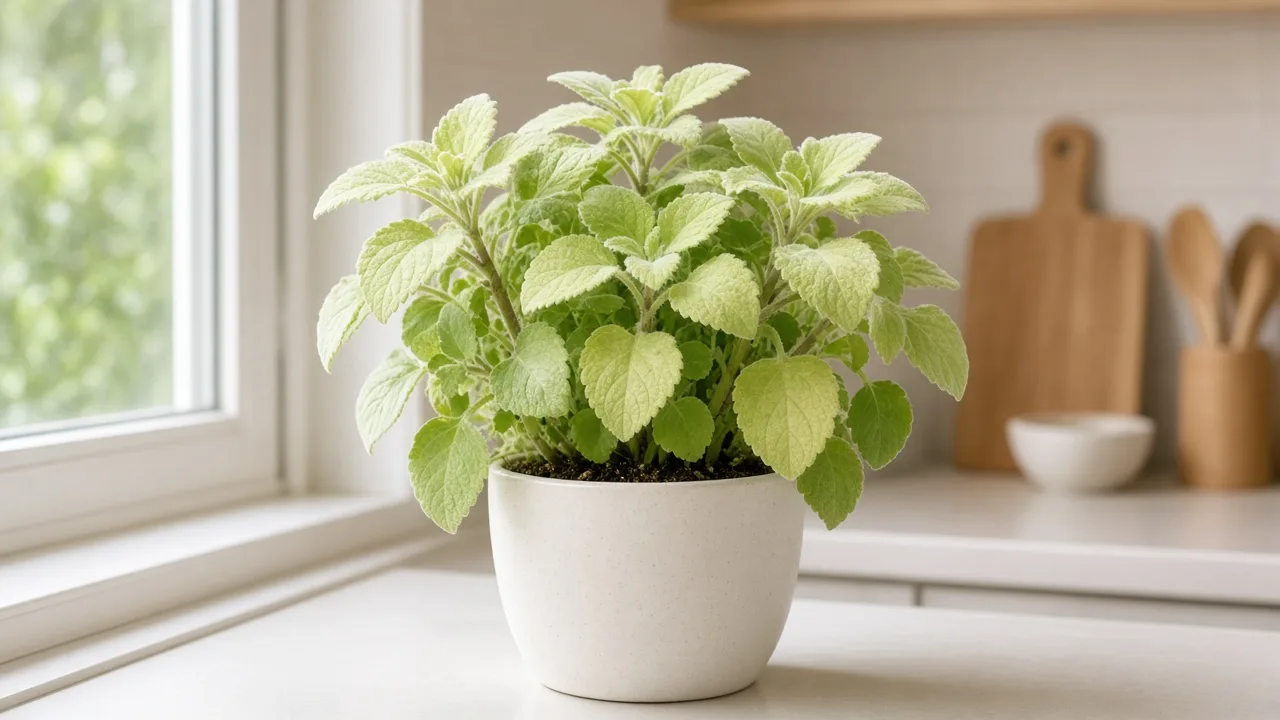
Pale Leaves on Ajwain Plant: Causes, Checks & Fixes
This guide covers pale leaves on Ajwain Plant. See also the general Pale Leaves guide, watering, and light pages for this plant.
Pale Leaves on Ajwain Plant: Causes, Checks & Fixes
Quick answer
Plectranthus amboinicus—the ajwain plant, Indian borage, or Cuban oregano on kitchen windowsills—is a mounding semi-succulent herb with thick fuzzy leaves on square, water-storing stems. Pale leaves look washed-out, yellow-green, or dull silver-green instead of the firm, aromatic green this fast grower shows in good light. For general chlorosis mechanics, see our pale leaves guide. On ajwain, pale new leaf pairs plus weak scent when crushed and long gaps between opposite pairs is the signature low-light pattern.
First step: crush the newest fuzzy leaf and look at the next pair opening from the center. Weak oregano-thyme aroma with washed-out yellow-green color means move to brighter placement before you change watering or feed. Pale soft leaves on soil wet 2–3 cm down for many days means hold water and check stem firmness instead.
NC State lists this species as shade-intolerant with fleshy, velvety leaves on thick square stems. Survival in a dim hallway is not thriving—pale foliage is how the plant tells you chlorophyll production is falling behind. Full species context: ajwain plant overview.
When to use this page vs other Ajwain Plant guides
| What you see | Read next |
|---|---|
| Long stretched stems, weak aroma | Not enough light |
| Soft yellow on wet soil | Yellow leaves or overwatering |
| Oldest lowers pale first, firm new growth | Nitrogen deficiency |
| Green veins, pale between on new leaves | Iron deficiency |
| Fine speckles and webbing on fuzzy undersides | Spider mites |
| Bleached patches on sun-facing glass side | Ajwain light guide — hot midday burn |
This page covers uniform washed-out pale foliage. If leaves are yellow and limp on saturated mix, start with yellow leaves on ajwain plant.
What pale leaves look like on ajwain plant
Healthy ajwain shows firm, opposite fuzzy leaf pairs in a mounding, spreading habit with a strong aromatic scent when crushed. Pale color breaks that pattern in recognizable ways.
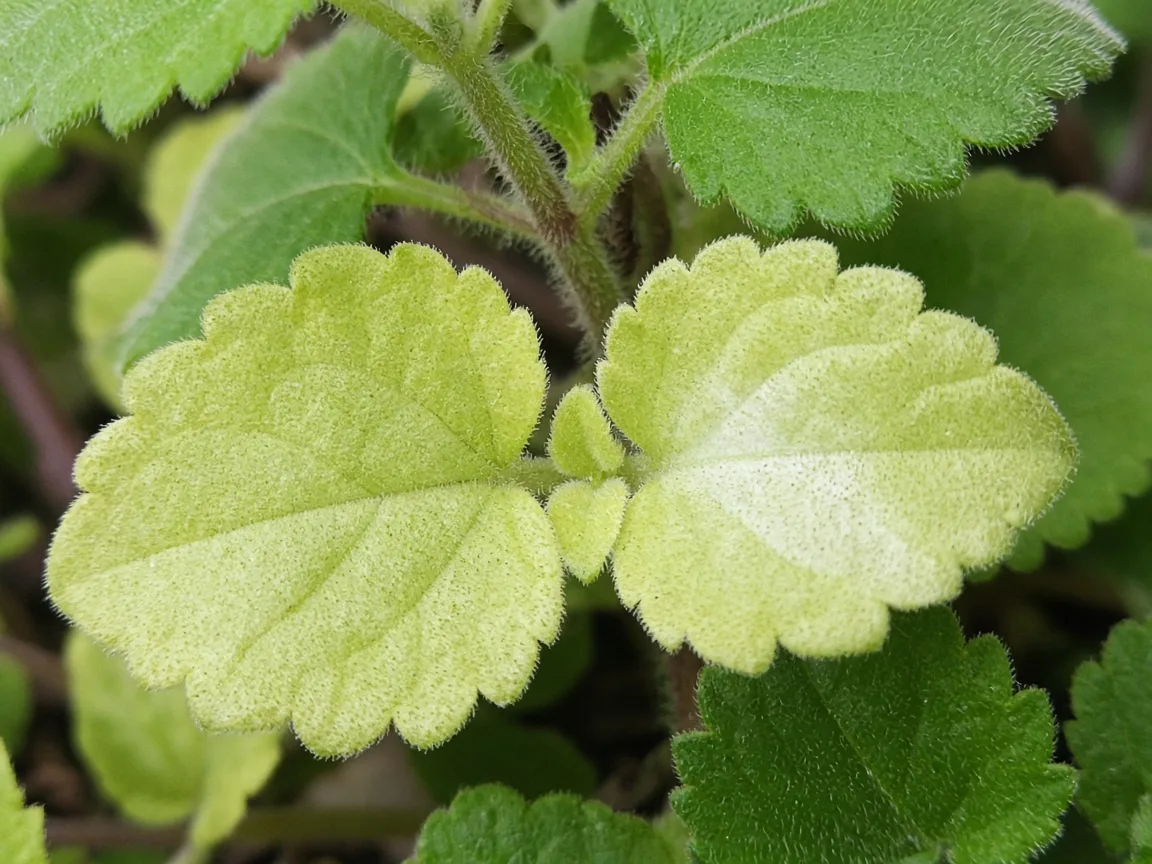
Pale Leaves symptoms on Ajwain Plant - compare washed-out fuzzy tissue with firm green pairs on the same plant.
Low-light chlorosis (most common indoors):
- Uniform washed-out yellow-green or dull silver-green across several leaf pairs—not isolated spots
- New fuzzy leaves open smaller and thinner than mature blades a few nodes back
- Long gaps between opposite leaf pairs as stems stretch toward the brightest direction
- Aroma weakens when you crush a leaf—one of the fastest ajwain-specific checks
- Plant leans toward the window; back side of a kitchen shelf stays darker and paler
Root-stress pale (wet soil in a dim corner):
- Lower leaf pairs fade pale yellow-green while mix stays damp at 2–3 cm depth for 10+ days
- Leaves feel soft, not crisp; square stems may stay firm at first
- Growth stalls; pattern may overlap with yellow leaves as stress advances
- Pot feels heavy; fungus gnats may hover when soil never dries
Sun-bleach pale (too much hot glass):
- Pale or whitish patches on leaves touching south or west window glass—not uniform washout
- NC Extension notes full sun can burn the leaves; RHS recommends full light with shade from hot sun
- Tissue may crisp brown at edges after sudden exposure—opposite problem from dim-room chlorosis
Nitrogen deficiency (after water and light are ruled out):
- Oldest lower leaf pairs turn pale yellow-green first
- New center growth stays relatively firm and greener
- Develops gradually in the same pot over months without feed—see nitrogen deficiency on ajwain plant
Spider mite stippling (lookalike):
- Fine yellow speckles across the fuzzy leaf surface, not uniform washout
- Webbing possible on undersides in dry heated rooms
- Confirm with spider mites on ajwain plant before treating light
Worry when pale color spreads to new center pairs, pairs with wet soil and soft square stems, or the plant stops producing aromatic new growth—not when one older pair looks slightly dull on an otherwise firm, scented plant.
Why ajwain fades before it yellows
Shade intolerance in a kitchen herb
Ajwain is marketed as an easy windowsill plant, but NC State tags it shade-intolerant. In a dim kitchen alcove or north-facing room, the plant still grows toward photons—but opens paler, thinner fuzzy leaves with longer internodes rather than stopping entirely. That is why pale foliage often appears before widespread yellow leaves.
Metabolism slows in weak light, so owners who water on a summer calendar keep mix damp while the plant uses little water. The compound trap—pale tips plus wet soil—is a common path to root rot on ajwain plant even when you are not obviously overwatering.
The aroma test on fuzzy Lamiaceae leaves
Unlike smooth houseplant blades, ajwain stores aromatic oils in glandular hairs on the lower leaf surface. When light is too low, oil production drops along with chlorophyll. Crush the newest leaf: healthy ajwain smells strongly of oregano-thyme; pale stressed plants smell faint or flat. This check separates true chlorosis from a cultivar baseline—there is no variegated “supposed to be pale” type on standard green ajwain.
Square stems and semi-succulent water storage
NParks describes thick fleshy leaves on approximately four-sided stems. Ajwain stores water in that tissue, so pale limp leaves on bone-dry mix point to underwatering—but pale limp leaves on wet mix point to root oxygen loss, not thirst. Pinch the square stems at the soil line: firm stems with pale uppers suggest light first; soft stems with wet soil mean root stress.
Harvest pace vs light budget
Because ajwain is grown for harvest, heavy clipping without matching light leaves few photosynthetic leaves to feed regrowth. A freshly stripped pot in a dim corner often pushes pale, weak new pairs. The fix is brighter placement and lighter harvest until color returns—not immediate fertilizer on a stressed root zone.
How to confirm the cause
Work through this inspection in order:
- Aroma on newest leaf — Crush and sniff. Weak scent supports low light or general stress; strong scent on pale leaves may mean sun-bleach or pest stippling instead.
- Which leaves are pale — All new pairs uniformly washed out = light likely. Oldest lowers only = nitrogen possible after moisture check. Speckled pattern = pests.
- Gap between opposite pairs — Measure spacing on the palest stem. Stretched gaps over ~2 inches (5 cm) with pale tips confirm etiolation—overlap with leggy growth.
- Moisture at 2–3 cm depth — Cool and damp at your fingertip means pause watering. Dust-dry through that zone with a lightweight pot suggests drought stress instead.
- Stem firmness at soil line — Pinch square stems where they enter the mix. Firm supports light or nitrogen paths. Soft with wet soil confirms root stress.
- Window placement — Dim interior shelf vs hot south glass touching leaves? Bleach patches on glass-side leaves mean pull back from midday sun while keeping brightness.
- Leaf undersides — Check fuzzy surfaces for webbing or stippling before assuming chlorosis.
Confirmed low light shows at least two signs: washed-out new pairs, stretched internodes, weak aroma, and leaning growth toward the brightest direction.
First fix for ajwain plant
Move the pot to brighter indirect light with gentle morning sun—and verify the top 2–3 cm of mix is dry before you add anything else.
That single placement correction fixes most indoor pale ajwain. An east window, a bright kitchen sill with sheer curtain, or a spot 1–2 feet from a south or west window (not pressed against hot midday glass) is the usual target. Do not compensate with fertilizer, misting, or repotting unless roots are already mushy.
After light improves:
- Resume watering only when the top 2–3 cm of mix is dry—see ajwain watering guide
- Pinch the palest stem tips after two weeks of brighter growth to encourage bushier green pairs—details in ajwain pruning guide
- Reduce harvest until new pairs open deeper green with strong scent
Make this one correction first. Wait two weeks before stacking feeding, repotting, or pest treatments unless you have confirmed mites or rot.
If soil is wet and stems are soft
When a spot-check finds brown, slimy roots and sour-smelling mix, escalate to root rot recovery: unpot, trim dead roots, repot into fresh gritty mix. Do not fertilize pale foliage on wet roots.
If sun-bleached on hot glass
Shift the pot back from direct midday sun while keeping bright indirect light. Remove severely bleached leaves; protect from afternoon blast on west windows.
If nitrogen deficiency is confirmed
Only after light is adequate and soil dries normally: a half-strength balanced liquid feed during active growth—see ajwain fertilizer guide. Oldest lowers should green up on new growth within two to three weeks; existing pale blades may not fully darken.
Recovery timeline
Fully pale leaves rarely return to deep green. Recovery is measured by new fuzzy pairs opening with stronger color and aroma from the center of the mounding shrub:
- Mild low light — New pairs often deepen within one to two weeks after brighter placement. Aroma returns on crush tests within two to three weeks.
- Wet-root pale — Color may not improve until soil oxygen returns; allow full dry-down cycles. New growth resumes within two to four weeks if roots are still firm.
- Advanced root rot — Recovery is partial and slow. If stems soften further or new pairs stay pale after light and dry-down fixes, propagate healthy tip cuttings as backup.
Signs of improvement: tighter spacing between leaf pairs, stronger scent, firm square stems, pot weight dropping on a normal schedule. Signs of worsening: sour smell, soft stems, pale new center pairs, soil that never dries.
What not to do
Do not fertilize a pale plant in a dim, wet corner. Salt on stressed roots worsens washout and can burn fuzzy leaf edges.
Do not assume pale means thirsty when soil is already damp—ajwain stores water in fleshy leaves and thick stems.
Do not mist fuzzy leaves to “boost humidity.” Wet foliage in stagnant air invites fungal spotting without fixing chlorosis.
Do not repot on day one unless roots are mushy or mix has failed. A bigger pot slows dry-down in low light.
Do not strip every leaf for harvest while the plant is pale—leave enough photosynthetic tissue for recovery.
How to prevent pale leaves on ajwain plant
- Place in bright indirect light with some gentle morning sun—UF/IFAS recommends partial shade outdoors and the same brightness discipline indoors
- Water on dryness, not calendar — Top 2–3 cm dry between drinks; slower in cool dim months
- Use gritty, fast-draining mix — See ajwain soil guide; well-drained soil with only occasional irrigation outdoors applies indoors too
- Rotate the pot monthly so all sides of the mounding habit receive even light
- Harvest lightly while regrowth is pale; let new pairs firm up before the next heavy clip
- Keep above 15°C (60°F) — Cold windowsills slow metabolism and compound pale growth in winter
When to worry
Treat pale leaves as urgent when:
- New center pairs stay pale for two weeks after a light move
- Soil smells sour or square stems feel soft at the soil line
- Pale color spreads quickly across the whole plant, not just the shaded back side
- Aroma disappears entirely and growth stalls
A slightly dull older pair on an otherwise firm, scented plant in good light is minor. Widespread washout with wet soil and soft stems is not—inspect roots the same week.
Ajwain care cross-check
| Checkpoint | Healthy target | Pale-leaf risk when wrong |
|---|---|---|
| Light | Bright indirect with gentle morning sun | Deep shelf, north room, back of counter |
| New leaf color | Firm deep green fuzzy pairs | Washed-out yellow-green opens |
| Aroma | Strong oregano-thyme on crush | Faint or absent scent |
| Soil moisture | Top 2–3 cm dry before watering | Wet mix for days in dim corner |
| Stem feel | Firm square stems at soil line | Soft base with saturated soil |
| Harvest | Moderate clips with regrowth | Heavy strip in low light |
Fix the failed checkpoint before adding fertilizer, repotting for size, or treating for pests you have not confirmed.
Related Ajwain Plant guides
- Ajwain Plant overview
- Ajwain Plant light
- Ajwain Plant watering
- Not enough light on Ajwain Plant
- Yellow leaves on Ajwain Plant
- Nitrogen deficiency on Ajwain Plant
- Leggy growth on Ajwain Plant
- Ajwain Plant problems
Related tool
Use the Plant Problem Diagnosis Tool to narrow causes for pale leaves on this plant before changing multiple variables at once.