Brown Leaves on Alocasia Amazonica: Water & Light Checks
Quick answer
Brown leaves on Alocasia Amazonica are necrotic tissue on dark glossy arrow-shaped leaves with pale veins—usually underwatering on a dry corm, overwatering root stress on wet chunky mix, sun scorch on window-facing blades, or salt burn on tips. First step: probe top 1–2 inches of mix, squeeze corm firmness, and feel whether brown tissue is crispy or soft.
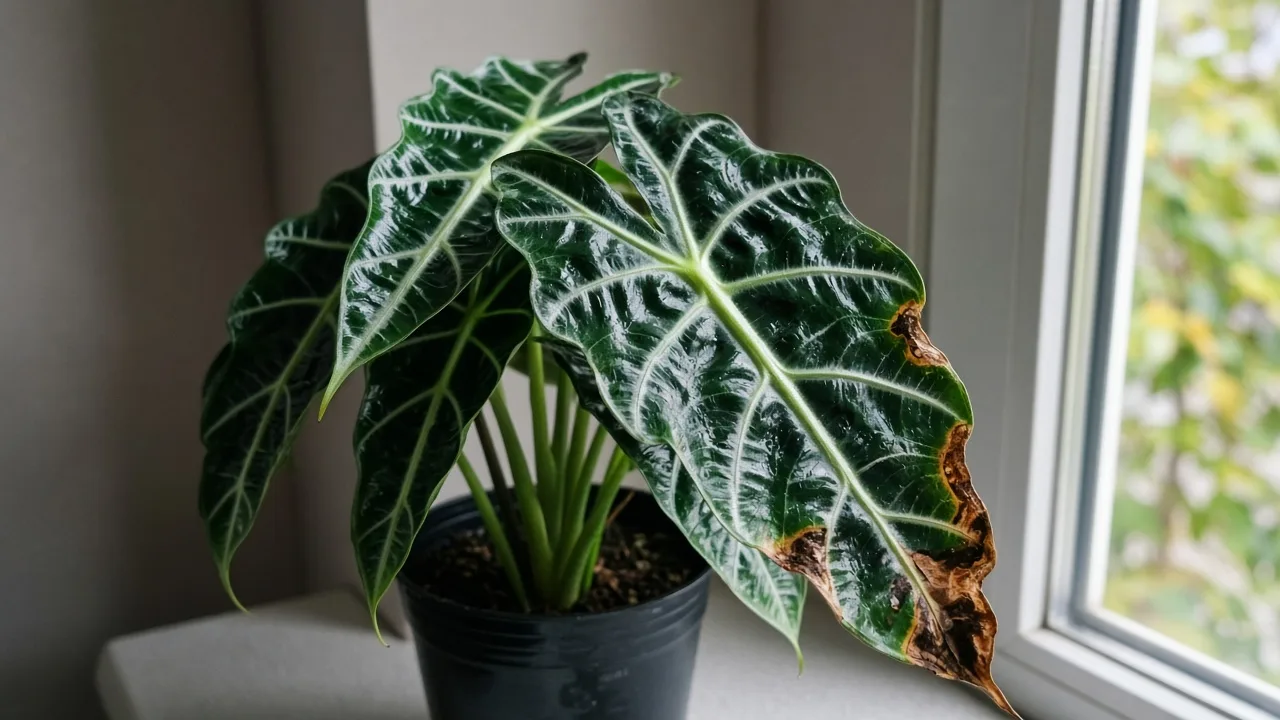
Brown Leaves on Alocasia Amazonica: Causes, Checks & Fixes
This guide covers brown leaves on Alocasia Amazonica. See also the general Brown Leaves guide, watering, and light pages for this plant.
Brown Leaves on Alocasia Amazonica: Causes, Checks & Fixes
Quick answer
Brown leaves on Alocasia Amazonica (African Mask plant) mean dead tissue on dark glossy arrow-shaped leaves with pale veins—not reversible fade. See our brown leaves guide. On Amazonica, top 1–2 inches dry-down plus corm firmness and crispy-vs-soft texture separate thirst from corm rot faster than fertilizer.
First step: probe top 1–2 inches of chunky aroid mix, squeeze the corm at the soil line, and note whether brown tissue is crispy-dry or soft and limp.
When to use this page vs other Amazonica guides
| Pattern | Read next |
|---|---|
| Tips only with yellow halos | Brown tips |
| Wet heavy pot, soft corm | Overwatering |
| Dry light pot, cupped leaves | Underwatering |
| Tan window-side patches | Direct sun scorch—move back from glass |
| Mushy crown | Root rot |
What brown leaves look like on Alocasia Amazonica
Amazonica’s dark glossy arrow-shaped leaves with pale veins should stand stiff and upright. Brown is permanent necrosis on that arrow tissue.
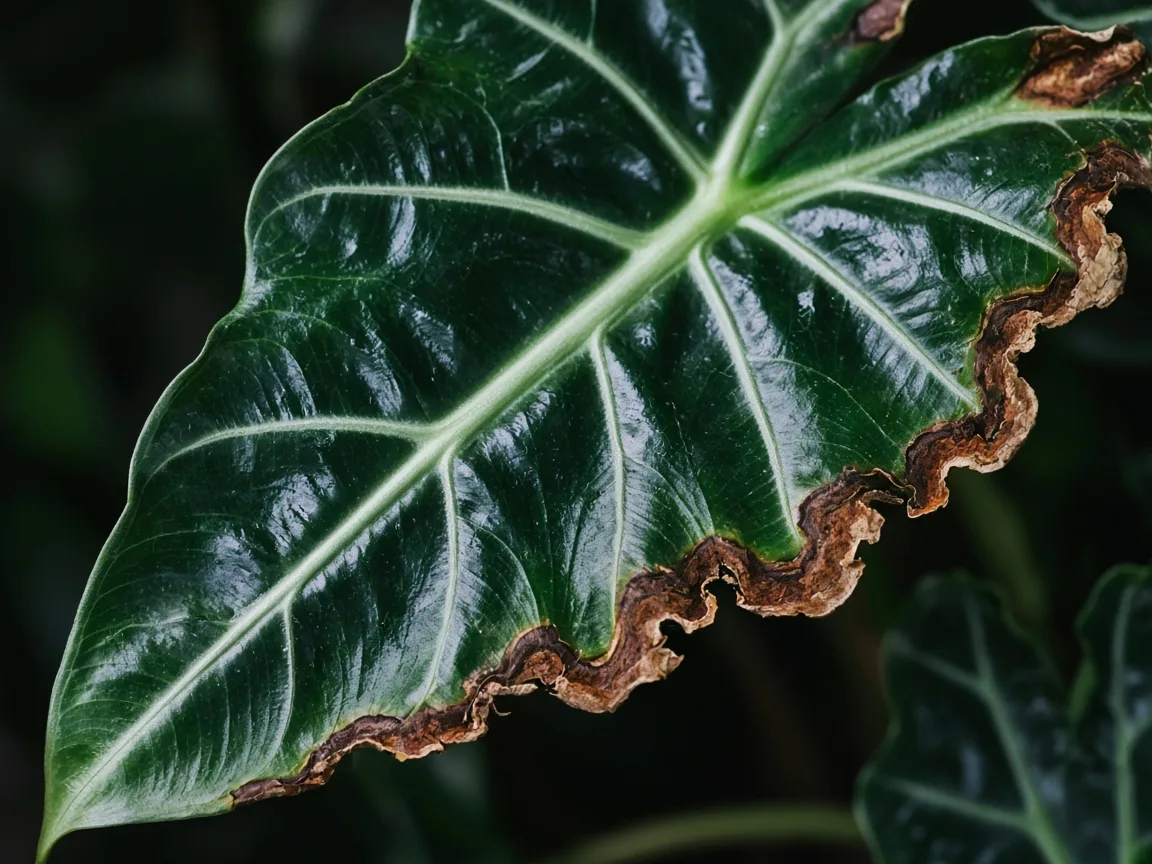
Crispy brown necrosis on Amazonica—compare with firm green tissue on the same petiole.
Thirst brown (underwatering):
- Crispy brown margins on light dry pot when top 1–2 inches of mix is dry
- Arrow blades feel thinner; pale veins stand out on dark glossy tissue
- Corm still firm at soil line
- Often hits outer or newest arrow leaves first—the corm draws reserves for new growth
Root-stress brown (overwatering):
- Soft brown lower arrow leaves on wet heavy pot
- Yellowing may precede brown on oldest blades
- Corm feels soft or mushy at soil line
- Root oxygen loss on saturated aroid mix—see overwatering
Salt and fertilizer burn:
- Crispy tips with yellow halos spreading inward
- Not soft uniform brown—follows heavy feeding or accumulated salts
- Flush soil or repot if severe; hold fertilizer on stressed plant
Sun scorch brown:
- Tan-to-brown patches on window-facing arrow side
- Dark glossy blades scorch in direct afternoon sun—Amazonica wants bright indirect light, not direct rays
Pest bronzing:
- Fine stippling with bronzed patches on new flush—spider mites in dry heated air
Check newest arrow leaves—brown on fresh crown growth is urgent; one fully brown lower blade may be normal senescence if corm is firm.
Why Alocasia Amazonica gets brown leaves
Amazonica stores limited water in the corm. As a corm-based aroid, it cups and browns arrow blades when top 1–2 inches of chunky mix go dry—especially in bright placements where evaporation outpaces a weekly watering habit.
Wet mix in dim light rots corms while leaves brown. Amazonica uses water steadily in bright indirect light but stalls in winter dormancy. Calendar watering in cool months keeps chunky mix soggy—soft brown lowers and mushy corm follow.
Dark arrow blades scorch near glass. Glossy tissue absorbs heat; afternoon sun through a west window burns one side while the rest of the plant looks fine.
Salt buildup browns tips first. Amazonica pushed with frequent fertilizer in dry winter air shows tip burn before whole-blade necrosis—distinct from thirst or rot texture.
Corm stress brown-out on arrow leaves
Amazonica-specific three-way check:
- Thirst: Dry top 1–2 inches + light pot + firm corm + crispy brown = soak thoroughly, drain saucer.
- Rot: Wet heavy pot + soft corm + soft brown lowers = stop water; see root rot if mushy.
- Scorch: One-sided tan brown on window-facing blade = move to bright indirect, not direct sun.
Squeeze the corm before you water. Firm corm with dry mix needs a drink; soft corm in wet mix needs dry-down, not another soak.
Lookalike symptoms
| What you see | Often confused with | How to tell them apart |
|---|---|---|
| Crispy tips + yellow halo | Thirst | Salt burn—flush soil, hold feed |
| Soft brown + wet pot | Thirst | Mushy corm—overwatering |
| Tan one-sided patches | Disease | Window side only—scorch |
| Stippled bronzing | Sunburn | Mites on new flush |
| One brown lowest arrow | Emergency | Firm corm, clean new growth |
How to confirm
- Probe top 1–2 inches—dry vs wet.
- Squeeze corm firmness at soil line.
- Feel brown tissue—crispy vs soft.
- Check window placement vs light guide.
- Review feeding history for salt burn.
- Photo same leaves in three days—spreading soft brown on wet mix = escalate.
First fix for Alocasia Amazonica
Match one correction to soil moisture and corm firmness: if top 1–2 inches is dry and the corm is firm with crispy brown, water thoroughly and drain the saucer within 30 minutes. If the mix is wet and brown tissue is soft, stop watering until top 1–2 inches dries.
Move scorched plants to bright indirect light away from direct glass.
If corm softens—see root rot today.
Hold fertilizer on brown stressed Amazonica. Amazonica needs bright indirect light and chunky draining mix—fix environment before feeding.
Remove fully brown arrow leaves once cause is corrected.
Mistakes to avoid
- Watering wet heavy pot because arrow blades look thirsty
- Ignoring soft corm while trimming brown lowers only
- Direct sun to “fix” pale plant—scorches dark glossy blades
- Fertilizing brown Amazonica in winter dormancy
- Repotting on day one without checking moisture and corm—correct watering first on firm corm
Recovery timeline
Correct moisture shows clean new arrow leaves in two to four weeks during active growth. Corm rot recovery takes weeks to months after dry-down and possible repot into fresh chunky aroid mix.
Severely necrotic blades stay brown permanently—judge success on firm corm and next flush.
Prevention
- Water when top 1–2 inches of chunky mix dries—see watering guide.
- Bright indirect light per light guide.
- Reduce watering sharply in winter dormancy per RHS guidance.
- Empty saucers within 30 minutes.
- Rinse monthly for mites in winter heat.
- Feed lightly only in active summer growth.
Related Alocasia Amazonica guides
Conclusion
Brown Amazonica leaves are moisture, corm, and light signals on arrow foliage—probe top 1–2 inches, squeeze the corm, and match crispy vs soft before repotting or feeding.