Scale Insects on Alocasia Dragon Scale: Bullate Ridge
Quick answer
Scale insects on Alocasia Dragon Scale look like small tan or brown bumps glued to petioles, leaf axils, and the ridged valleys between bullate scales—often mistaken for natural texture until leaves turn sticky or dull. First step: isolate the plant and scrape every visible bump with a cotton swab dipped in 70% isopropyl alcohol.
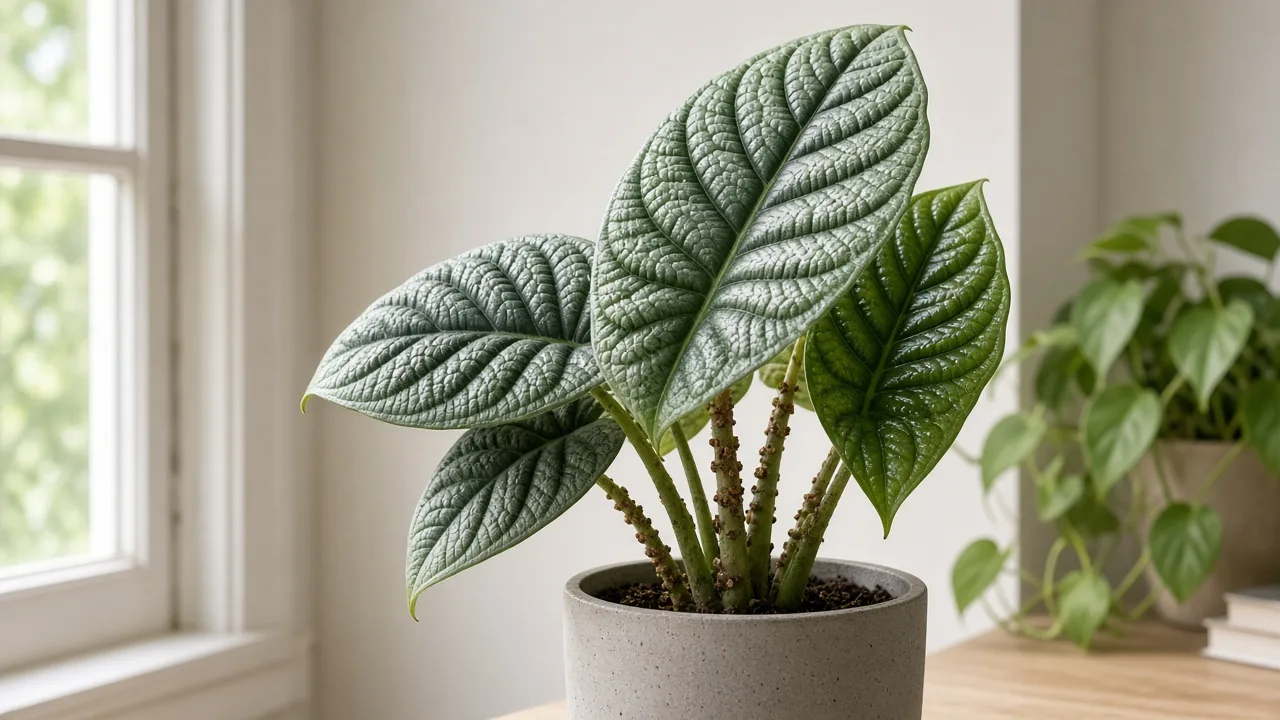
Scale Insects on Alocasia Dragon Scale: Causes, Checks & Fixes
This guide covers scale insects on Alocasia Dragon Scale. See also the general Scale Insects guide, watering, and light pages for this plant.
Scale Insects on Alocasia Dragon Scale: Causes, Checks & Fixes
Quick answer
Scale insects on Alocasia baginda ‘Dragon Scale’ appear as small, immobile tan, brown, or bark-colored bumps glued to petioles, leaf axils, and the ridged valleys between bullate scales on leaf undersides. They pierce tissue, drain sap, and excrete sticky honeydew that can lead to black sooty mold on the metallic cuticle—often before you notice the insects themselves.
For how scale biology and crawler timing work in general, see our scale insects guide. On Dragon Scale, bumps often hide in bullate valleys and crown axils—the same sheltered zones where mealybugs and aphids also congregate on soft new growth.
First step: isolate the Dragon Scale and scrape every visible scale with a cotton swab dipped in 70% isopropyl alcohol.
This page is for confirmed or strongly suspected immobile bumps plus stickiness—not for cottony wax in axils (mealybugs), pear-shaped insects on unfurling spears (aphids), fine stippling with webbing (spider mites), or whole-plant collapse on wet soil (overwatering).
When to use this page vs other Alocasia Dragon Scale guides
| What you see | Likely cause | Next step |
|---|---|---|
| Immobile tan or brown bumps on petioles and ridged undersides + sticky dull patches | Scale insects | Stay on this page—isolate and alcohol-scrape |
| White cottony wax in crown axils | Mealybugs | Mealybugs guide—wax smears when crushed |
| Pear-shaped insects on unfurling spear | Aphids | Aphids guide |
| Fine stippling + webbing on scaled blades | Spider mites | Spider mites guide |
| Silvery scarring without raised bumps | Thrips | Thrips guide |
| Whole plant limp, wet mix, no bumps | Overwatering or root failure | Overwatering or root rot |
Honeydew on Dragon Scale bullate leaves feels tacky when you run a finger along a ridged valley—not dry crispy edges from low humidity. Ant trails on the pot rim often appear before you spot scale hidden on petiole bases.
What scale insects look like on Alocasia Dragon Scale
Scale insects are protected by a waxy or shell-like cover and spend most of adult life immobile on plant tissue. On Dragon Scale they concentrate on petioles, leaf axils, ridged valleys on leaf undersides, and the corm crown where new spears emerge—not scattered randomly across the flat metallic upper surface facing the window.
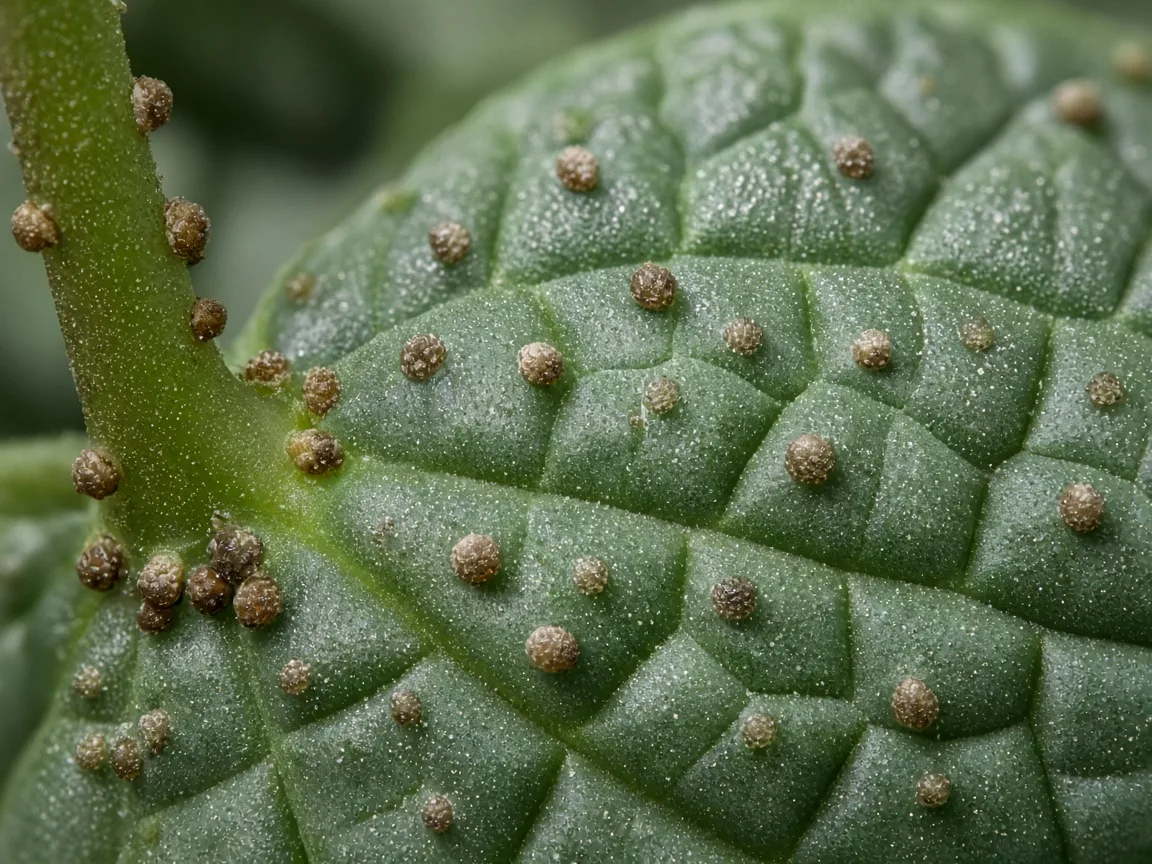
Tan scale bumps on a Dragon Scale petiole at the ridged bullate leaf underside—compare with smooth metallic scaled tissue above.
Typical signs on Dragon Scale:
- Flat or dome-shaped tan, brown, or gray bumps on green-brown petioles and in valleys between raised bullate scales
- Bark-colored disks at petiole bases where leaves emerge from the crown
- Sticky honeydew dulling the metallic green-silver finish and collecting in ridged grooves
- Black sooty mold growing on honeydew deposits on scaled blades
- Ant trails on pot rims or humid cabinet shelves farming honeydew
- Yellow leaves and stalled unfurling spears when feeding is heavy
- Raised bumps that flake off when scraped—unlike mealybugs, which smear cottony wax when crushed
Soft scale excretes honeydew and produces sooty mold; armored scale bumps often look flatter with concentric rings and do not leave sticky residue. Both types hide well on Dragon Scale petioles until you tilt leaves and inspect valleys with bright light.
Healthy Dragon Scale leaves are thick, bullate, and ridged with a metallic green-silver upper surface—young spears emerge tightly furled before the cuticle hardens into scale-like texture. Mature blades can look perfect from across the room while petiole bases are encrusted—do not assume the plant is clean because the metallic surface facing the window looks fine.
Where scale hides on bullate ridges and crown spears
Alocasia baginda ‘Dragon Scale’ is a compact jewel alocasia with a small underground corm and a short crown. Scale concentrates where petioles meet the corm, in valleys between raised bullate scales, and along the central unfurling spear before the ridged cuticle hardens—the same inspection zone for aphids and mealybugs.
Petiole bases at the crown are the primary hideout. Tan and bark-colored scale disks blend with green-brown petiole tissue until colonies enlarge or honeydew catches light in bullate grooves below.
Ridged valleys on leaf undersides stay shaded from casual top-down glances. Tilt every blade and run a flashlight along the valleys between raised scales—bumps that look like natural texture from above become obvious in the grooves.
Bullate metallic grooves on the leaf back trap honeydew and dead scale shells in the ridged surface. What looks like a dull spot on the metallic upper blade may be sticky residue when you touch the valley on the underside.
The central unfurling spear is soft tissue scale colonizes before the ridged cuticle develops. Inspect the tight sheath where the newest leaf emerges—crawlers settle here first because the tissue is tender and sheltered.
Humid cabinet neighbors let crawlers walk between touching aroid leaves on shared shelves. Dragon Scale is often grown at 70–80% humidity among other alocasias—one infested neighbor can seed bumps on your specimen within weeks.
This valley-and-crown inspection pattern is plant-specific. A philodendron guide tells you to search broad flat leaf undersides; on Dragon Scale you are tracing each ridged valley and crown axil with a swab or lens.
Why Alocasia Dragon Scale gets scale insects
Scale insects are common sap-sucking pests on houseplants that arrive on nursery stock, shared benches, or nearby infested specimens. What makes Dragon Scale vulnerable is its geometry and collector-cabinet culture, not weak culture alone.
Bullate ridges create protected feeding sites. The same textured cuticle that makes this cultivar distinctive creates valleys a rinse misses. Adult scales are relatively protected from contact sprays by their waxy covering, so disks in petiole axils survive one casual wipe.
Slow growth means fewer replacement leaves. Dragon Scale often carries only a handful of scaled blades at a time. Heavy feeding on one or two leaves shows up fast as yellowing or stalled spears—there is no deep canopy to hide damage.
Humid aroid collections spread crawlers. Scale hitchhikes on new plants and moves slowly between pots on the same shelf. One infested neighbor beside a clean Dragon Scale in a humid cabinet is a common indoor pattern.
Ant protection keeps colonies rebounding. Ants on pot rims defend honeydew sources on upper petioles, blocking lady beetles and lacewings that would otherwise control numbers.
Indoor stability favors overlapping generations. Where all life stages persist year-round on houseplants, populations can build without outdoor biological control.
Dragon Scale is more often troubled by spider mites in dry air, but scale still appears in warm, sheltered indoor conditions and humid cabinets where aroids touch.
How to confirm the cause
Work through these checks before treating:
- Scrape test — Pry a bump with a toothpick or alcohol swab. Scale should flake off with gentle pressure; mealybugs smear pink beneath cottony wax
- Valley-and-axil focus — Disks sit in ridged valleys and petiole axils, not evenly across every metallic upper blade
- No cottony wax — White tufts that smear pink when dabbed point to mealybugs, not scale
- No webbing — Fine silk with stippling points to spider mites, not scale
- Honeydew and ants — Sticky shine with ant trails supports sap feeders; wrinkled leaves without stickiness fits underwatering
- 10× lens on petiole bases — Immobile domes versus soft pear-shaped aphids on new tips
- Corm firmness — Press the crown base. Firm tissue with dry mix suggests a foliage pest. Soft crown with sour soil is rot—see root rot, not scale alone
If the corm is firm, soil smells neutral, and the only issue is immobile bumps with stickiness, scale fits. If the pot stays heavy for days, soil smells sour, and the crown softens while mix stays wet, rule out root rot from chronic overwatering before spraying.
Scale vs. mealybugs, thrips, and natural bullate texture
| What you see | Likely cause | Key check |
|---|---|---|
| Hard tan or brown bumps on petioles, no fluff | Scale insects | Bump flakes off when scraped; may have sticky honeydew |
| Soft white cottony tufts in crown axils | Mealybugs | Clusters smear pink when crushed |
| Silvery streaks on new growth, tiny black frass | Thrips | No raised shells; shake leaf over paper |
| Metallic ridged texture on mature blades | Normal Dragon Scale foliage | Texture is fixed to the leaf; no bumps or stickiness |
| Scattered pinprick stipples + fine webbing | Spider mites | Paper tap shows moving specks |
Getting the diagnosis right matters because humidity fixes alone will not clear scale, and alcohol wasted on natural texture damages leaves without killing pests.
First fix for Alocasia Dragon Scale
Isolate the plant and scrape every visible scale with a cotton swab dipped in 70% isopropyl alcohol.
That single action removes adults you can reach and confirms the pest is alive—not dust or natural bullate texture—before you commit to sprays. Manual removal with alcohol swabs is effective for small houseplant infestations; test a hidden section of one ridged leaf first and wait 24 hours before treating the whole plant. Thick alocasia cuticle can show burn on sensitive tissue in hot direct cabinet lighting.
Spot-test alcohol on one bullate leaf first
Choose a lower leaf with a small cluster or an inconspicuous valley on the underside. Dab alcohol on the bump only—not the entire blade. Wait 24 hours in bright indirect light per the Dragon Scale light guide. If the tissue stays firm with no spreading yellow or brown patch, proceed crown to petiole, working valley by valley rather than soaking the whole plant on day one.
Light vs. heavy infestation protocols
Light colonies (a few petiole bumps, firm corm, no ants): isolation plus alcohol scrapes every five to seven days for at least three cycles is often enough. Wipe honeydew from scaled leaf surfaces with a damp cloth, changing cloths if you move between plants.
Heavy infestations (bumps on multiple petioles, widespread honeydew, ants present): continue alcohol scrapes on reachable disks, then add insecticidal soap labeled for ornamental houseplants covering leaf undersides, axils, and the crown thoroughly. Repeat every five to seven days for two to three cycles. Avoid horticultural oil on the first day unless a spot test passed—Dragon Scale’s textured cuticle holds oils in ridges and burns more easily than smooth-leaved houseplants.
Wear gloves when handling heavily infested tissue. Dragon Scale contains calcium oxalate crystals typical of alocasias and can irritate skin; keep the plant out of reach of pets during treatment.
Do not repot, prune heavily, or fertilize on the same day you start treatment. Do not increase watering because new spears look limp—check soil moisture at 2–3 cm depth per the watering guide first. One clear correction at a time makes it easier to read the plant’s response.
Step-by-step recovery
After the initial alcohol scrape:
- Repeat scrapes every five to seven days for at least three cycles to catch newly hatched crawlers hidden in crown crevices and ridged valleys
- Apply insecticidal soap if colonies persist after several scrape rounds. Cover undersides, axils, and the crown thoroughly; repeat at label intervals through one full pest generation
- Wipe sooty mold off leaves with plain water once honeydew production stops. Heavily coated blades can stay blemished even after mold is gone
- Manage ants if they protect colonies on pot rims or saucers. Ant barriers help natural enemies reach scale
- Keep the plant isolated until you see no new bumps for at least two weeks after the last treatment
Treatment during dormancy
When Dragon Scale slows or drops leaves in cooler months, focus on the crown and any remaining petiole bases rather than expecting rapid new flush. Scrape visible disks on exposed tissue, keep the plant isolated, and avoid overwatering a sparse pot—wet mix around a resting corm invites rot while you fight pests. Resume full valley and crown inspection when new spears emerge in warm weather.
Recovery timeline for slow-growing Dragon Scale
Alcohol scrapes show results within a few days when colonies are moderate. A full soap course may take two to three weeks with label-interval repeats. Sooty mold fades as honeydew dries up; expect cleaner new spears within four to eight weeks during active growth once insects stay gone.
Old honeydew-stained or yellowed scaled leaves rarely regain pristine color—judge recovery by firm corm tissue, new crown leaves opening without bumps, and no fresh disks for two weeks after treatment ends. Dragon Scale replaces leaves slowly compared with faster houseplants; a clean new spear matters more than old blemishes re-greening.
Signs recovery is working:
- No fresh bumps at petiole bases or in ridged valleys
- New spears unfurl without disks tucked in the sheath
- Honeydew stops reappearing on petioles within days of wiping
- Ant activity on stems declines
Signs the problem is worsening:
- Bumps spread to neighboring aroids in the same cabinet within days
- New spears fail to open while petioles look encrusted
- Crown softening with sour soil—assess root rot separately from pest damage
What not to do
- Do not apply undiluted alcohol to the entire plant without a spot test—alcohol can injure foliage on sensitive tissue
- Do not spray alcohol or soap on sun-stressed, heat-shocked, or wilted plants without testing one leaf first
- Do not soak the central crown with rinse water or soap in humid cabinets—Dragon Scale is rot-sensitive when the growing point stays wet overnight
- Do not use homemade dish-soap sprays; commercial insecticidal soaps are formulated to reduce phytotoxicity on foliage
- Do not ignore ants—they protect scale colonies from natural predators
- Do not return the plant to a shared shelf until you have confirmed two weeks without new insects
- Do not increase nitrogen feeding during an active infestation—see the fertilizer guide and pause until pests are gone
How to prevent scale insects on Alocasia Dragon Scale
Quarantine every new Dragon Scale for two to three weeks before placing it in a humid collection. Inspect crown centers and ridged undersides weekly during spring and summer active growth—not just the showy metallic upper surfaces.
Feed lightly during active growth only—avoid heavy nitrogen that produces soft, pest-friendly shoots. Maintain good airflow between grouped plants even in high-humidity setups so foliage dries after treatment or watering. Sterilize pruning shears with rubbing alcohol between plants when trimming multiple aroids.
During routine care, tilt leaves toward light and check bullate valleys where texture creates pockets. Wipe petiole bases clean so new bumps are visible against green-brown tissue.
When to worry
Escalate treatment if colonies rebound after three full soap cycles, honeydew covers most petioles, or multiple plants in the same humid display show scale within days. That pattern suggests a shared source plant still infested.
Treat as urgent when bumps encrust multiple petioles, ants swarm stems or saucers, new spears stall for more than a week despite good light, or sticky residue coats every ridged valley. Severe infestations may require discarding the plant to protect a large aroid collection before crawlers spread to every neighbor.
A single small bump on one petiole with a firm corm elsewhere is manageable with isolation and scrapes—not an emergency, but act within days before crawlers spread through ridged valleys you cannot see from above.
Related Alocasia Dragon Scale guides
- Alocasia Dragon Scale overview
- Alocasia Dragon Scale watering
- Alocasia Dragon Scale light
- Alocasia Dragon Scale soil
- Mealybugs on Alocasia Dragon Scale
- Spider Mites on Alocasia Dragon Scale
- Alocasia Dragon Scale problems
Related tool
Use the Pest Identifier Tool to narrow causes for scale insects on this plant before changing multiple variables at once.