Brown Leaves on Alocasia Polly: Causes, Checks & Fixes
Quick answer
Brown leaves on Alocasia Polly usually mean low humidity (crispy dry margins on arrow tips), overwatering (soft brown patches with yellow halos), or pre-dormancy leaf drop—not a single disease. First step: stick your finger 2–3 cm into the mix and lift the pot; a heavy wet pot with soft petioles needs dry-down, while a light pot with crispy edges needs humidity or water.
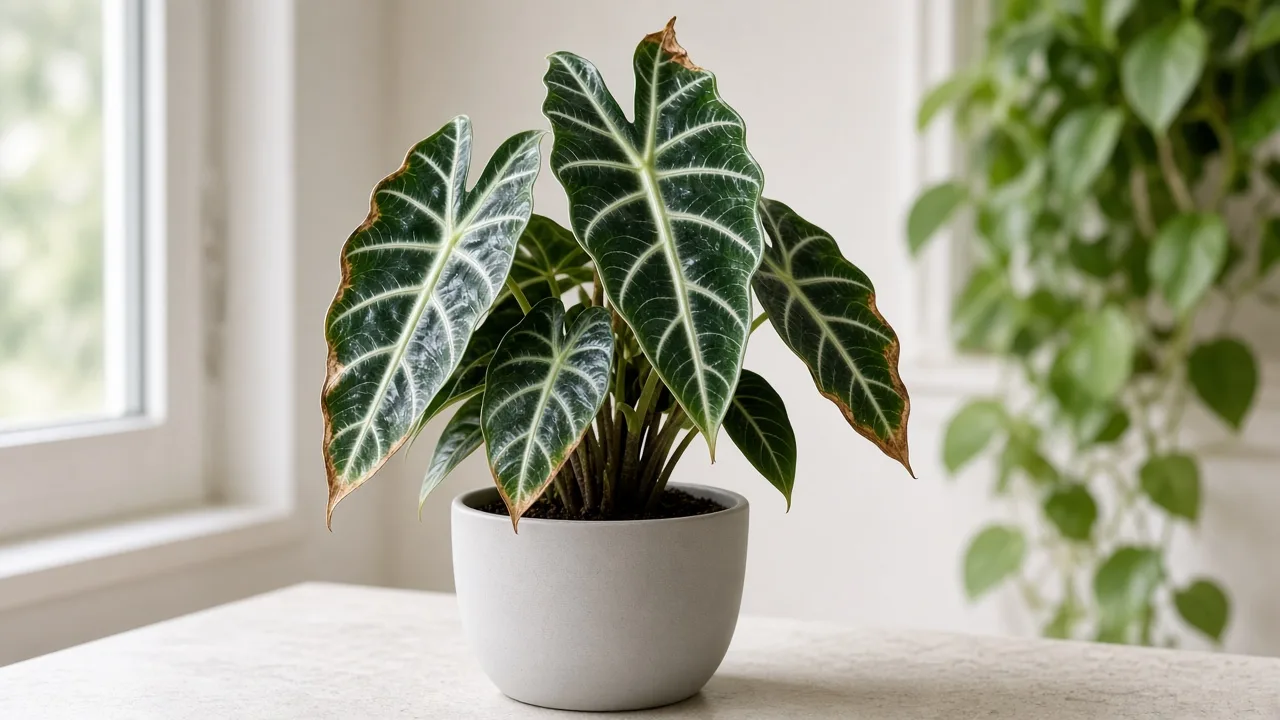
Brown Leaves on Alocasia Polly: Causes, Checks & Fixes
This guide covers brown leaves on Alocasia Polly. See also the general Brown Leaves guide, watering, and light pages for this plant.
Brown Leaves on Alocasia Polly: Causes, Checks & Fixes
Quick answer
Brown leaves on Alocasia Polly (Alocasia × amazonica ‘Polly’) stand out fast because the plant’s signature glossy, arrow-shaped foliage has almost no forgiving buffer—dead tissue reads as obvious tan, rust, or black patches against dark green blades and white veins.
First step: stick your finger or a chopstick 2–3 cm into the mix and lift the pot. A heavy, wet pot with soft petioles points to overwatering or advancing root rot. A light pot with dry, crispy brown edges points to drought or low humidity. Several leaves yellowing then browning in autumn while the underground corm stays firm often means dormancy—not a rescue emergency.
For how broad leaf browning works across houseplants, see our brown leaves guide. On Polly, the pattern almost always ties to arrow-tip humidity loss, corm-safe watering, or seasonal dormancy on a compact jewel alocasia.
When to use this page vs other Polly guides
- Brown tips — if damage is limited to margins and tips without full-leaf browning
- Yellow leaves — yellow appears before brown, especially on lower leaves
- Overwatering — wet mix, mushy petioles, sour smell
- Root rot — corm and roots soft after chronic wet soil
- Low humidity — crispy edges with otherwise normal watering
- Spider mites — stippled pale dots and fine webbing on glossy leaves
- Wilting — limp leaves with brown may follow either rot or drought
What brown leaves look like on Alocasia Polly
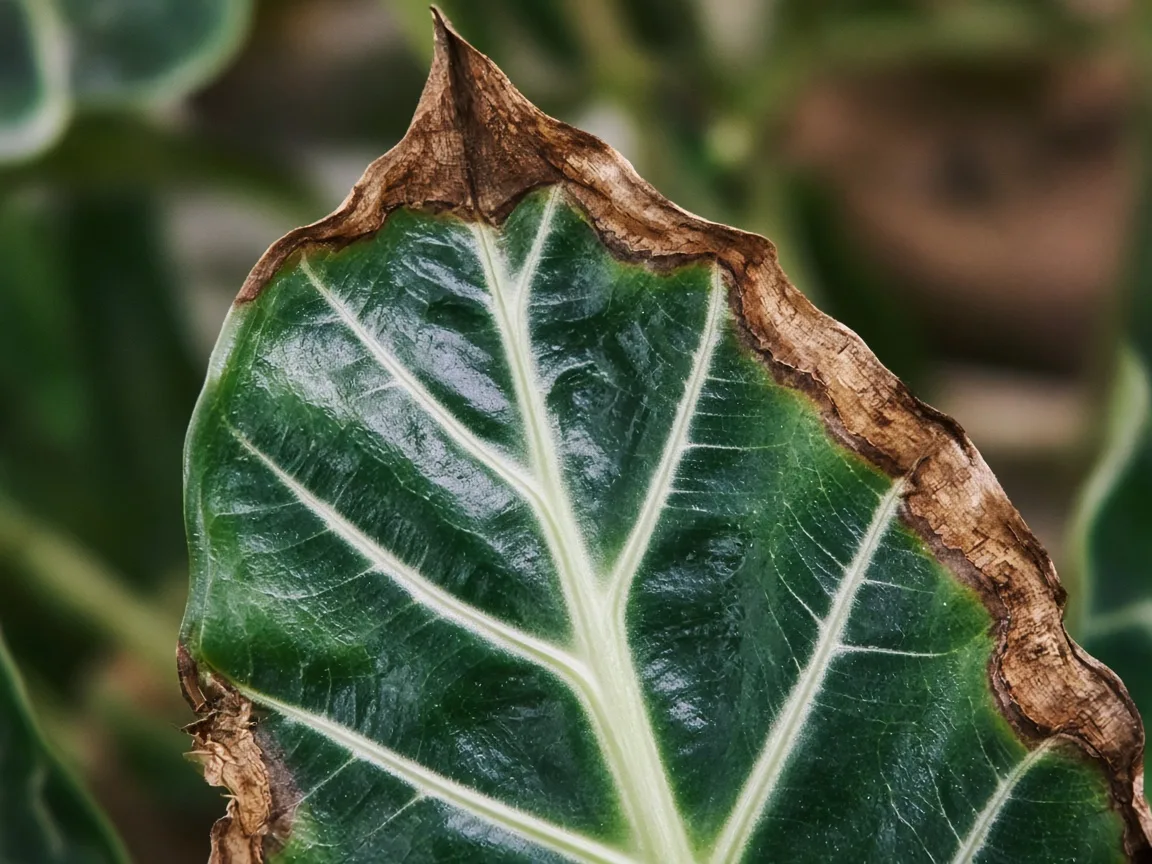
Brown leaf margins on Polly — compare crispy dry arrow tips with soft waterlogged spots on the same plant.
Low-humidity brown:
- Dry, papery brown at the pointed tips and outer margins
- Glossy surface looks dull; white veins stay visible against necrotic tissue
- Soil moisture normal; air feels dry near heaters or AC
- Often oldest leaves first, but new arrow blades can crisp if humidity stays below ~60%
Overwatering brown:
- Soft dark brown to black patches, sometimes ringed with yellow
- Petiole base feels mushy before the whole leaf collapses
- Mix stays wet past a week; pot feels heavy
- May follow fungus gnats or mold on soil
Drought brown:
- Crispy brown edges and slight curling on very light pots
- Mix dry well below the top 2–3 cm for days
- Corm still firm when you probe gently at the soil line
Sun scorch brown:
- Tan to brown patches on the window-facing side of arrow leaves
- Tissue papery dry, not soft; often one leaf in direct afternoon sun
- Common after moving from dim shop light to a south window without acclimation
Pre-dormancy brown:
- Whole leaves yellow, then brown, then drop in late autumn or winter
- Corm below soil stays firm; no sour smell
- Plant may hold only one or two dramatic leaves before going sparse—see dormancy section below
Reading brown on glossy arrow-vein leaves
Polly’s diagnostic signature is upright, shield-shaped blades with bold white veining on a dark green background. That contrast changes how you read damage.
Tip-first browning: The narrow arrow point is the last part of the leaf to receive water under stress. Dry indoor air pulls moisture from tips before the center yellows, so brown often starts at the point even when soil moisture looks acceptable. Owners then add water, which shifts the problem to soft brown rot spots—a humidity-then-overwatering spiral common on jewel alocasias.
Vein vs. patch brown: Crispy brown that follows the leaf margin while white veins stay sharp usually tracks humidity or occasional drought. Soft brown blotches that ignore the vein pattern and sit near the petiole more often mean wet roots.
Few-leaf panic: Polly often carries only three to five large leaves at once. Losing one blade feels catastrophic, but a single oldest leaf browning slowly at the base while the crown pushes a firm new arrow is often normal turnover—not total plant failure.
Why Polly browns from petiole mush faster than arrow tips
Polly carries a compact underground corm and shallow roots in a relatively snug pot. When mix stays saturated, oxygen loss at the root zone hits the corm before the whole leaf yellows. NC State Extension lists root rot and leaf spots as problems from overwatering on alocasias generally; on this compact cultivar the first visible sign is often a soft petiole with a dark brown patch at the attachment point, not slow tip crisping.
That is different from a pothos or philodendron, where you might see yellow for weeks. Here, one wet week in dense mix can brown a leaf from the base up. Pair chunky aroid soil with the watering dry-down check—top inch dry, then soak and empty the saucer—rather than adding water because a single arrow blade looks dull.
Brown before dormancy: read the corm, not the leaf count
In cooler, drier winter conditions, Polly may yellow and brown entire leaves before dropping them—a seasonal slowdown, not death. The RHS alocasia guide describes winter dormancy in alocasias: cooler and drier conditions above 10°C (50°F), reduced watering, and foliage loss that is normal. Proven Winners warns that overwatering during dormancy is the most common alocasia killer.
If autumn brown hits every leaf but a gentle probe finds a firm corm and no sour smell, stop watering on your summer schedule. Reduce to every 2–3 weeks—just enough to keep the corm from shriveling—and wait for spring shoots. Do not repot, fertilize, or panic-prune an empty-looking pot.
How to confirm the cause
| Pattern | Petiole | Pot weight | Mix | Air |
|---|---|---|---|---|
| Crispy margin brown | Firm | Normal to light | Dry at 2–3 cm | Dry room |
| Soft patch + yellow halo | Mushy at base | Heavy | Wet 5+ days | Any |
| Window-side tan brown | Firm | Normal | Normal dry-down | Sunny exposure |
| Whole leaf yellow → brown | Firm | Normal | Drying slower in winter | Cool season |
| Stippled dots + webbing | Firm | Normal | Normal | Often dry |
Run the checks in that order: moisture at 2–3 cm depth, pot weight, petiole pinch at the soil line, then leaf undersides under bright light for mites. The RHS notes low humidity can cause browning on leaf edges and attract red spider mites in dry indoor air—both show as leaf discoloration before webbing is obvious.
First fix for Alocasia Polly
If the pot is heavy and petioles feel soft: stop watering immediately. Let the top half of the mix dry before the next soak. If smell is sour or multiple petioles mush in one week, unpot and inspect the corm—see root rot.
If margins are crispy and the pot is light: water once until runoff, empty the saucer, then start a humidifier targeting 60–80% humidity at canopy height.
If brown is window-side only: move to bright indirect light per the light guide; remove fully dead tissue only.
If all leaves are browning in late autumn with a firm corm: switch to dormancy watering—minimum moisture, no fertilizer—rather than rescue soaking.
Lookalikes to rule out on Polly
| What you see | Likely cause | Next page |
|---|---|---|
| Soft brown + yellow halo, wet soil | Overwatering / rot | Overwatering, root rot |
| Crispy margins, normal soil moisture | Low humidity | Low humidity |
| Crispy edges, very light pot | Underwatering | Underwatering |
| Tan patches on sun-facing side | Sun scorch | Light guide |
| Pale stippling, fine webbing | Spider mites | Spider mites |
| All leaves brown then drop in winter | Dormancy | Overview dormancy notes |
Rot vs. dry air: Soft brown at the petiole with heavy wet soil means roots are failing—adding humidity will not help. Crispy tips on firm petioles with a normal dry-down rhythm means air or occasional drought, not corm rot.
Dormancy vs. crisis: Several leaves browning together in October–December with a firm corm and no sour smell is often seasonal. The same pattern in summer on wet soil is urgent rot.
Step-by-step recovery
- Check moisture at 2–3 cm and lift the pot—note heavy vs. light before touching leaves.
- Rot pattern: stop watering, improve airflow, unpot only if petioles mush or mix smells sour; trim black corm tissue and repot into fresh chunky mix.
- Humidity pattern: run a humidifier, group plants, or use a bright bathroom—target 60–80% per the overview baseline.
- Drought pattern: one thorough soak, then return to the normal dry-down per watering.
- Sun scorch: move out of direct beams; keep damaged leaves if firm—they often stabilize.
- Dormancy: reduce water to every 2–3 weeks, stop feed, wait for spring shoots.
- Monitor the next unfurling arrow leaf over three to six weeks—glossy green with sharp white veins means the fix worked.
What not to do
- Do not keep watering when petioles are mushy and soil stays wet—the corm rots faster than new leaves can replace old ones.
- Do not fertilize brown foliage to “green it up”—salts worsen margin burn on stressed roots; see fertilizer only after new growth looks healthy.
- Do not repot on day one unless roots are clearly failing or mix is sour; a dry-down correction alone often works.
- Do not discard a sparse winter pot without checking that the corm is still firm—dormancy can look like total loss.
- Do not blast leaves with cold tap water on a stressed plant—room-temperature water and stable humidity matter more than frequent misting alone.
When to worry
Treat as urgent when petioles go mushy, several leaves brown within one week on wet soil, mix smells sour, or newest arrow leaves brown before unfurling—corm salvage window is narrow on compact jewel alocasias.
Lower urgency: one oldest leaf browning slowly at the base while remaining blades stay glossy and firm, especially in autumn dormancy.
Recovery timeline
Crispy margin damage from dry air often stops spreading within one to two weeks after humidity rises. Sun scorch stabilizes once light is corrected—existing brown tissue does not revert to glossy green.
Rot recovery takes several weeks to months and depends on how much corm tissue survived. Judge success on the next new leaf: firm petiole, glossy arrow shape, and sharp white veining. Old brown leaves will not green up; they can be removed once new growth looks stable.
Dormancy browning may leave the pot sparse until mid-spring—that timeline is normal if the corm stays firm.
How to prevent brown leaves
Match the overview baseline: bright indirect light, 60–80% humidity, chunky fast-draining mix, and a snug pot. Water when the top inch is dry; cut watering sharply in winter when growth slows. Proven Winners emphasizes that winter overwatering kills more alocasias than underwatering.
Wipe dusty glossy leaves with a damp microfiber cloth to keep stomata clear. Inspect undersides weekly in heated rooms where spider mites thrive. Flush soil occasionally if white salt crust appears on the rim after feeding.
Related Alocasia Polly guides
- Overview — species baseline, dormancy, and jewel-alocasia care
- Problems hub — all sibling symptom pages
- Watering — dry-down depth and seasonal cuts
- Soil — chunky aroid mix that prevents corm rot
- Fertilizer — light feeding only in active growth
Related tool
Use the Plant Problem Diagnosis Tool to narrow causes for brown leaves on this plant before changing multiple variables at once.