Whiteflies on Aloe Vera: Causes, Checks & Fixes
Quick answer
Whiteflies on Aloe Vera show up as tiny moth-like insects on leaf undersides and soft pups, often with a white cloud when you brush the rosette. First step: isolate the pot the same day you see flying insects, then wash every reachable leaf underside and pup base with lukewarm water before applying repeat treatments.
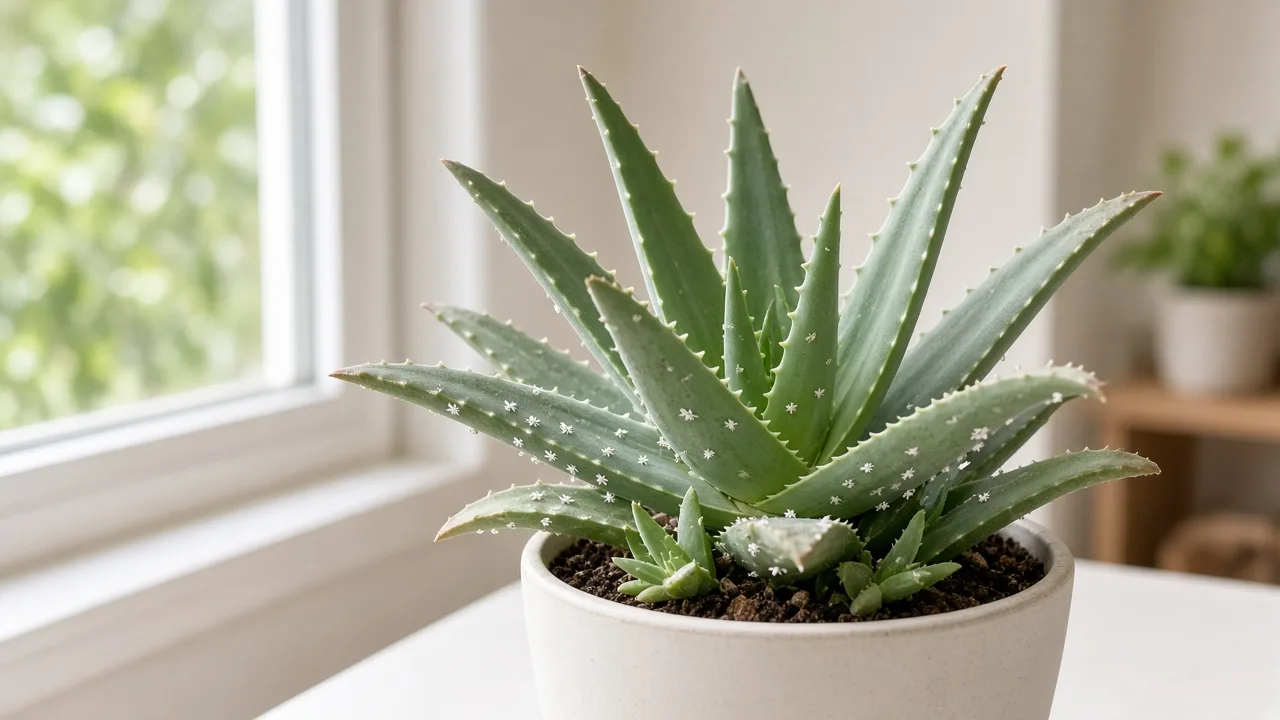
Whiteflies on Aloe Vera: Causes, Checks & Fixes
This guide covers whiteflies on Aloe Vera. See also the general Whiteflies guide, watering, and light pages for this plant.
Whiteflies on Aloe Vera: Causes, Checks & Fixes
Quick answer
Whiteflies are tiny, sap-sucking insects that feed on leaf undersides. On Aloe Vera (Aloe vera), adults look like miniature white moths tucked under thick, smooth leaves and along soft pup offsets at the rosette base. Disturb the foliage and a white cloud of insects rises before they resettle. Immobile nymphs look like flat pale disks glued to the same surfaces.
For general whitefly biology and life cycle, see our whiteflies guide. On Aloe Vera, pests concentrate on the undersides of thick fleshy leaves, inside the overlap where pups meet the mother rosette, and on flower stalks during bloom—places a quick watering glance at firm outer leaves will miss.
First step: isolate the pot the same day you see flying white insects, then wash every reachable leaf underside and pup base with lukewarm water.
Pet note: Aloe vera is toxic to cats and dogs if chewed. Keep treated plants out of reach during recovery. For baseline care while you treat, see the Aloe Vera watering guide.
What whiteflies look like on Aloe Vera
Healthy aloe carries a tight rosette of thick, serrated, gray-green leaves that store water and feel firm when you squeeze them. Whiteflies exploit the flat undersides of those leaves and the softer tissue on new pups—often before you notice anything wrong with mature foliage.
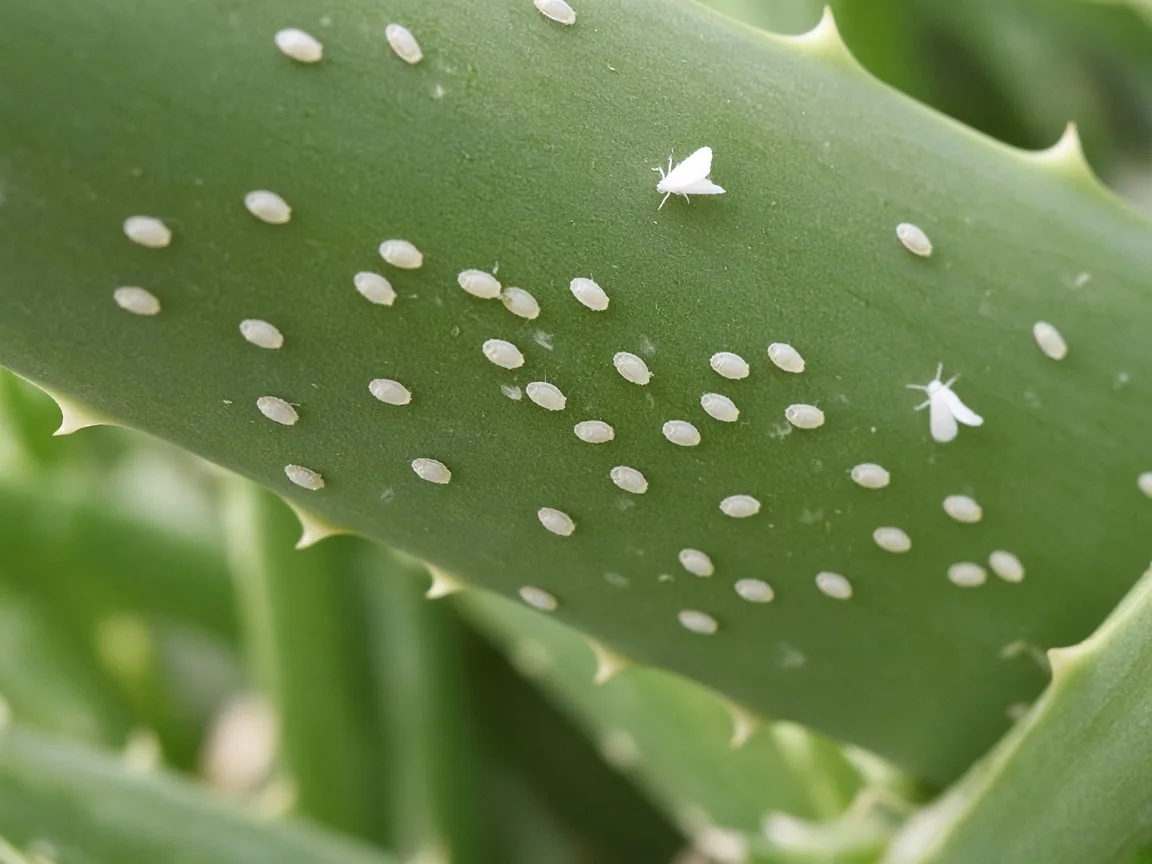
Whitefly nymph disks on an aloe leaf underside—flat pale ovals distinct from the smooth green tissue above.
Typical signs:
- A sudden white cloud when you water, move, or brush leaves and pups
- Tiny moth-like adults, about 1/16 inch long, resting on leaf undersides and pup bases
- Flat, oval, pale nymphs glued to the same surfaces after crawlers settle
- Sticky, shiny honeydew on leaves, pot rims, or shelves below
- Black sooty mold growing on honeydew-coated foliage
- Yellowing or mottling on leaves that have active nymphs underneath
Whiteflies differ from aphids on Aloe Vera, which form soft green or black clusters on tender shoots without a flying cloud. They differ from mealybugs, which leave cottony wax in crown crevices rather than flat disks across smooth leaf backs. Spider mites leave fine stippling and webbing on leaf faces, not a white flying cloud.
Unlike natural pale spots on young aloe leaves, whitefly damage comes with live insects, stickiness, or sooty mold—not static chalky patches that stay in the same place as the leaf grows.
Diagnostic vignette: Tilt the pot and sight along pup bases at bench height with a phone flashlight. Powdery white adults catch sidelight against smooth green tissue; mineral crust on the pot rim stays flat and chalky, and sun-scorch patches sit on outer leaf faces, not clustered on undersides with sticky residue.
Why Aloe Vera gets whiteflies
Aloe is not whitefly-proof—it is slow-growing and tough, which means small colonies on pup undersides can persist unnoticed until honeydew or a flying cloud gives them away.
Outdoor summer entry is the main route. Patio aloes thrive in warm weather. Whiteflies colonize tender summer growth outdoors, then hitchhike indoors when temperatures drop—exactly when you want the plant to slow down for winter dormancy.
Pups and flower stalks are pest magnets. Aloe channels sap into new offsets and soft bloom spikes during active growth. Whiteflies, like aphids and scale, gather where sap flow is highest—often tucked under pups where thick leaves overlap.
Smooth leaf undersides hide colonies. Mature aloe leaves look clean from above while nymphs feed underneath. Honeydew on glossy blades can look like dew until you touch it and it stays tacky.
Nursery imports and crowded shelves. Inspect new plants before mixing them with healthy ones; eggs on leaf undersides are the usual hitchhiker on nursery aloes and offsets sold in tight trays.
Indoor warmth with no predators. Homes stay warm enough for whiteflies to reproduce year-round. Outdoor lacewings and parasitic wasps do not reach indoor windowsill specimens, so populations can build up quickly when natural enemies are absent.
Do not overwater in response. Honeydew and sticky leaves are not cured by soggy soil. Increasing water invites overwatering and crown stress while whiteflies persist on dry upper leaves. Keep the usual dry-between-waterings rhythm from the watering guide.
How to confirm the cause
Work through these checks in order:
- Disturbance test — Brush a thick leaf or pup base over white paper. Adults fly up and resettle on undersides. That cloud is the fastest whitefly confirmation on aloe.
- Underside inspection — Tilt each leaf with bright sidelight. Look for flat pale nymph disks and powdery white adults along the midrib and pup bases.
- Pup and crown check — Inspect new offsets emerging from the mother rosette and any flower stalk during bloom. Colonies often start on tender tissue before spreading to mature leaves.
- Honeydew and ants — Sticky residue on leaves or ant trails on the pot rim strongly support sap-feeder diagnosis.
- Neighbor scan — Check pots on the same shelf. Whiteflies spread by flight and contact between touching leaves on crowded succulent collections.
- Root cross-check — Press outer leaves—they should stay firm. A soft mushy base on wet mix points to root rot even if leaves also look damaged.
If you see flying white adults plus nymphs on undersides with honeydew, whiteflies are confirmed. Treat before populations overlap multiple life stages across pup clusters and new shoots.
Symptom lookalike comparison
| What you see | Likely cause | How to tell apart |
|---|---|---|
| White cloud when leaves are brushed | Whiteflies | Moth-like adults fly up; flat nymph disks on undersides |
| Green clusters on new pups | Aphids | Pear-shaped, slow-moving, no flying cloud |
| White cottony patches in crown | Mealybugs | Waxy threads, no flat disks across leaf backs |
| Fine stippling + webbing | Spider mites | Tap test over white paper; dry indoor air context |
| Static pale spots on young leaves | Natural variegation or mineral deposits | No insects, no stickiness, pattern stays with leaf growth |
| Chalky dry spots on mature leaves | Sunburn or water deposits | Wipes off dry; no insects under lens |
First fix for Aloe Vera
Isolate the pot the same day you see flying white insects, then wash every reachable leaf underside and pup base with lukewarm water.
Isolate infested plants away from others immediately—whiteflies fly short distances and hitchhike on hands, tools, and touching leaves.
Wash undersides systematically:
- Support the rosette with one hand so you do not snap thick leaves
- Rinse with lukewarm water strong enough to knock off crawlers and soft-bodied nymphs—not so hard that you tear soft pup tissue
- Work from outer leaves inward, including pup bases and any flower stalk
- Tilt the pot so water runs down outer leaves and out of drainage holes rather than pooling in the crown for hours
Let leaves dry in bright indirect light before returning the plant to its spot. Aloe’s thick cuticle recovers quickly from rinsing when the room is warm and airflow is decent.
Make this one correction first. Do not repot, fertilize, and spray on the same day—you need to see whether rinsing alone knocked the colony down before adding products.
When rinsing is not enough
If live whiteflies remain after two rinses spaced three to four days apart, add targeted follow-up:
- Yellow sticky traps — Hang one near the pot to catch flying adults while you treat nymphs on undersides. Sticky-coated yellow traps help reduce adult numbers during active infestations.
- Insecticidal soap — Coat insects directly on pup bases and leaf undersides where you see colonies. Mature leaf surfaces need coverage only where insects are present.
- Neem oil or horticultural oil — useful when honeydew has built up, but test one outer leaf first and avoid temperatures above 90°F or hot direct sun for 48 hours after application.
Repeat contact sprays every five to seven days for two to three cycles. Soaps and oils kill only insects wet at application—they do not linger on aloe leaves the way systemic products might.
Step-by-step recovery
Once the first rinse or spray is done, follow this sequence:
- Keep the plant isolated until you see no new honeydew and no flying insects for at least two weeks.
- Inspect pup bases and leaf undersides every three to four days with a hand lens—whiteflies hide in the overlap between offset leaves and the mother rosette.
- Second rinse or soap pass at day five to seven if you spot even a few survivors or fresh nymph disks.
- Wipe honeydew from mature leaves with a damp cloth so sooty mold does not spread; discard the cloth after one plant.
- Hold fertilizer until new growth looks normal and the pest is clearly gone—feeding a stressed aloe pushes soft tissue whiteflies prefer per the fertilizer guide.
- Check neighbors at each inspection; treat any new hotspot before returning the aloe to the group.
If ants trail to the pot, they are farming honeydew. Ants protect whiteflies from predators—sticky ant barriers on pot feet or removing the whitefly source breaks that cycle faster than chasing ants alone.
Recovery timeline
Expect visible flying insect counts to drop within 48 hours of a thorough rinse. Contact sprays show results within a day when coverage reaches hidden pup axils.
One to two weeks: honeydew stops appearing; yellowing on affected leaves stops spreading.
Two to four weeks: after two or three spray cycles, new pups should emerge without insects attached.
Distorted or yellowed leaves: tissue that yellowed under heavy feeding may stay discolored—that is cosmetic, not a sign of active pest. Judge success by clean new offsets, not perfect old tissue.
Flower stalks: if you removed an infested stalk, the plant redirects energy to pups; blooming may wait until the next season.
Call recovery stalled if flying adults reappear daily, sooty mold covers more than a few leaves, or new pups open already coated in insects after three treatment rounds.
What not to do
- Using dish soap — Do not mix homemade soap products as this can burn plants. Use labeled insecticidal soap only.
- Spraying in hot direct sun — oils and soaps on sun-heated aloe foliage cause patchy scorch. Treat in morning or evening light per the light guide.
- One rinse and done — eggs and nymphs hatch within days; plan for repeat passes across multiple life stages.
- Ignoring pup bases — leaving colonies under offsets treats outer leaves while pups reseed whiteflies into the rosette.
- Returning to the shelf too soon — two whitefly-free days is not enough; hold isolation for two weeks minimum.
- Overwatering during recovery — soggy soil stresses aloe on top of pest damage; keep the usual dry-between-waterings rhythm.
- Broad indoor pesticides — avoid broad-spectrum products that kill natural enemies; rinsing and labeled soaps solve most aloe whitefly cases.
How to prevent whiteflies next time
- Quarantine new aloes and offsets for two to three weeks before placing them beside established plants—inspect new plants before bringing them indoors.
- Inspect patio aloes before winter move-in — summer outdoor pots are a common whitefly source when brought back to a windowsill collection.
- Inspect pup bases weekly during spring and summer active growth—the same moment you check whether soil is dry.
- Fertilize lightly with low-nitrogen succulent formula once in spring per the fertilizer guide, not on a heavy houseplant schedule that pushes soft, pest-friendly tissue.
- Keep bright light and sharp drainage per the light and soil guides so growth is steady rather than a flush of soft shoots after a dark winter.
- Remove spent flower stalks promptly if you do not need seed—fewer soft feeding sites during bloom.
Pet safety and gel harvest after treatment
Pets: Aloe vera contains saponins and anthraquinones toxic to cats and dogs. Clinical signs include vomiting, lethargy, and diarrhea if leaves are chewed. Keep treated plants and trimmed debris out of reach until sprays dry. If a pet ingests aloe leaves or treated foliage, contact your veterinarian or the ASPCA Animal Poison Control Center (888-426-4435)—do not wait for symptoms.
Gel harvest: Many growers keep aloe for the inner gel, separate from the pest issue. After insecticidal soap treatment, many labeled soaps can be used up to the day of harvest on food crops—but always check your product label for pre-harvest interval and re-entry timing. Rinse the outer leaf skin thoroughly, peel away the yellow latex layer beneath the skin, and harvest only from leaves that were not recently sprayed with neem or horticultural oil. When in doubt, wait one full treatment cycle plus a thorough rinse before extracting gel from treated leaves.
Related Aloe Vera problems
- Aloe Vera overview - species hub and baseline care
- Mealybugs - cottony wax in crown axils; alcohol dab protocol
- Aphids - soft clusters on pups and flower stalks
- Spider mites - stippling and webbing on smooth leaf faces
- Fungus gnats - often overlaps when soil stays wet during treatment
- Root rot - crown moisture risk if rinse water pools
- Watering · Light · Fertilizer · Soil - keep baseline care steady while treating
Conclusion
Whiteflies on Aloe Vera concentrate where this succulent is easiest to miss during a quick watering glance—smooth leaf undersides, soft pup offsets, and flower stalks, not the thick mature leaves you notice first. Confirm flying adults with nymph disks and honeydew, isolate the pot, rinse firmly before spraying, and judge recovery by clean new pups—not perfect older tissue that already yellowed under feeding.
When to use this page vs other Aloe Vera guides
- Aloe Vera watering guide - Use for routine moisture checks before assuming whiteflies is the main issue.
- Aloe Vera problems hub - Browse all common issues on this species.
- Mealybugs on Aloe Vera - Different entry point when symptoms overlap with whiteflies.
- Aphids on Aloe Vera - Different entry point when symptoms overlap with whiteflies.
- Yellow Leaves on Aloe Vera - Different entry point when yellowing has no insects or stickiness.