Brown Leaves on Aluminum Plant: Causes, Checks & Fixes
Quick answer
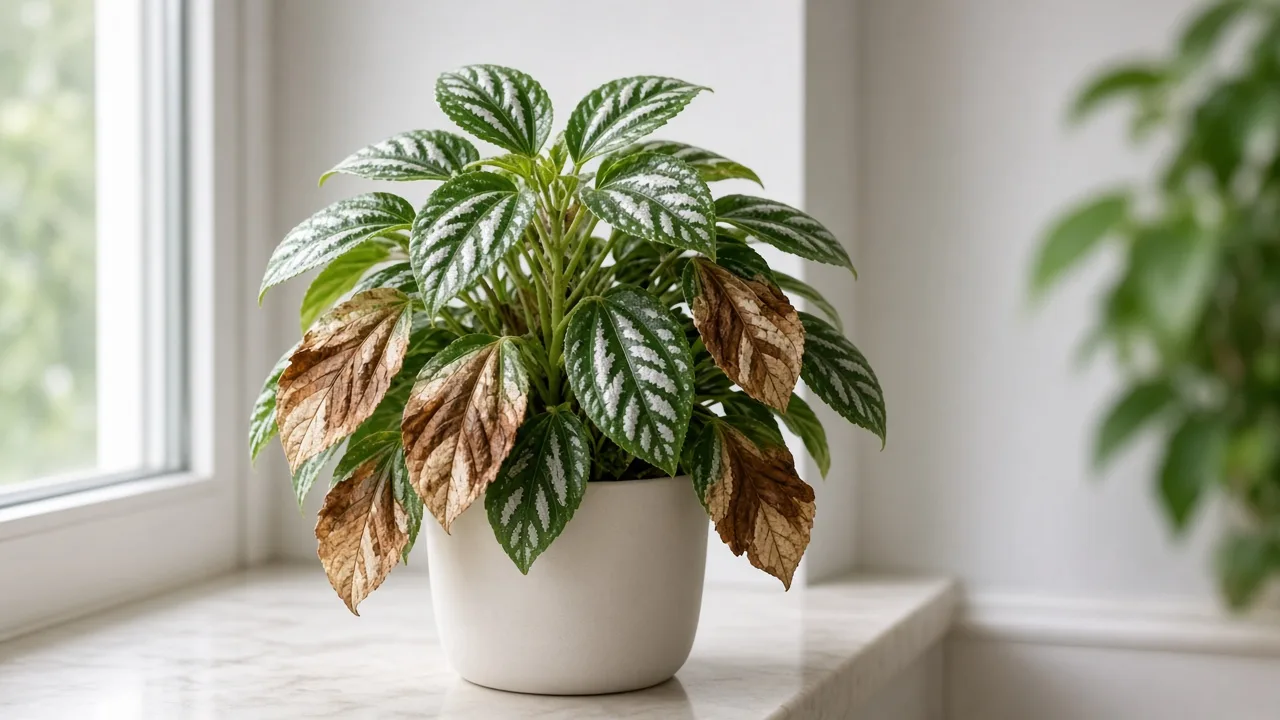
Brown leaves on aluminum plant (Pilea cadierei) are dead tissue on silver-banded foliage—usually underwatering after a long dry spell, overwatering root failure in a heavy wet pot, direct sun on variegated leaves, or normal aging of the lowest opposite leaf pairs. First step: probe the top inch of mix, lift the pot for weight, and note whether brown tissue is crispy-dry or soft and limp.
Brown Leaves on Aluminum Plant: Causes, Checks & Fixes
This guide covers brown leaves on Aluminum Plant. See also the general Brown Leaves guide, watering, and light pages for this plant.
Brown Leaves on Aluminum Plant: Causes, Checks & Fixes
Quick answer
Brown leaves on aluminum plant — Pilea cadierei, also sold as watermelon pilea — mean tissue has died on the plant’s distinctive silver-banded foliage. That can follow drought, root failure, sun scorch, cold drafts, pest damage, or the slow aging of the lowest opposite leaf pairs. For general whole-leaf browning mechanics, see our brown leaves guide. On aluminum plant, the top-inch moisture probe and crispy-vs-soft texture separate thirst from root stress faster than any fertilizer fix.
First step: stick a finger into the top inch of mix, lift the pot to feel weight, and note whether brown tissue feels papery-crisp or soft and limp.
When to use this page vs other Aluminum Plant guides
| Pattern | Read next |
|---|---|
| Tips and margins only, papery edges | Brown tips |
| Wet heavy pot, yellow lower pairs | Overwatering |
| Dry light pot, limp stems | Underwatering |
| Tan patches on the window side | Direct sun scorch — move back from glass; see light guide |
| Webbing or stippling on new growth | Spider mites |
| Whole plant collapses with sour soil | Root rot |
This page is the symptom-first entry when whole leaves or large sections turn brown. Use brown tips when damage stays confined to margins and points.
What brown leaves look like on aluminum plant
Pilea cadierei carries opposite, elliptic leaves with four rows of raised silver patches on short upright stems. Brown leaves are permanent necrosis — dead cells that will not re-green on that blade.
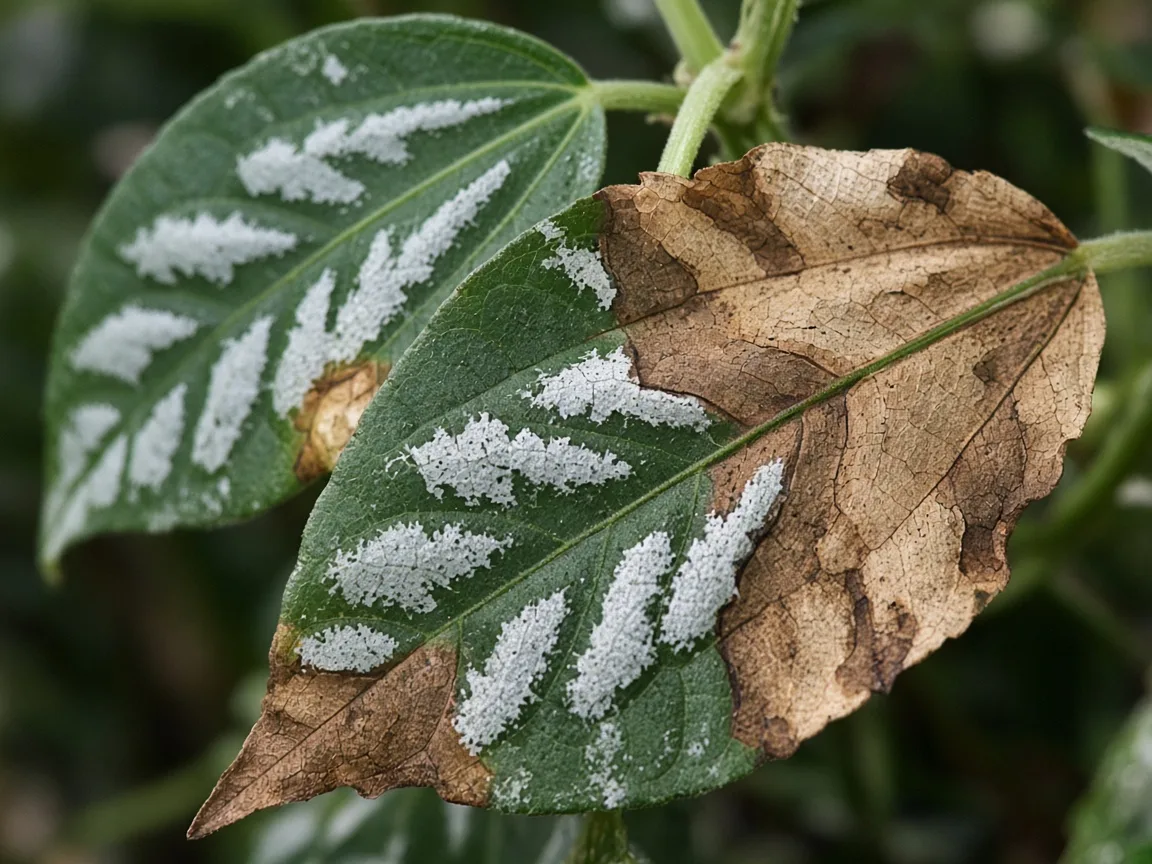
Whole-leaf brown necrosis on aluminum plant — compare texture with firm green tissue on the same stem.
Thirst brown (underwatering):
- Crispy brown whole leaves or large dry sections on a light, dry pot
- Stems go limp; silver patches look dull and flat
- Often hits outer and lower leaf pairs while the crown still feels firm
- Mix has pulled away from pot walls after long dry cycles
Root-stress brown (overwatering):
- Soft brown lower leaves on a heavy, wet pot that never dries on schedule
- Yellowing may precede brown on oldest opposite pairs
- Soil smells sour or stays cool and damp for days after watering
- Roots lose oxygen in saturated mix before upper stems show obvious wilt
Sun scorch brown:
- Tan-to-brown patches on the window-facing side of silver-variegated blades
- Aluminum plant wants bright indirect light, not direct rays — NC State Extension lists aluminum plant for bright indirect light, avoiding full sun
- Affected silver bands bleach or flatten before tissue dies
Cold and draft brown:
- Brown or blackened leaves near cold winter glass or AC vents
- Often hits leaves touching the pane overnight while inner foliage stays green
- Pairs with sudden leaf drop on exposed stems
Pest-related brown:
- Fine stippling with bronzed patches — often spider mites after a dry spell
- Sticky residue with distorted new growth points to aphids or mealybugs, not drought alone
Normal senescence:
- One or two oldest bottom leaf pairs turn fully brown over months on an otherwise bushy plant
- New growth above stays clean with bright silver banding
- Low priority if watering rhythm and placement are sound
Check newest opposite leaf pairs at the stem tips first. Brown on fresh crown growth is urgent; a single fully brown lower leaf may be normal aging if the crown is clean.
Reading silver patches when leaves brown
Aluminum plant is easier to diagnose than many houseplants because silver patch brightness tracks stress before whole leaves die. On healthy Pilea cadierei, the four raised silver bands look crisp and slightly metallic. When the plant is stressed:
- Dull, flat silver on leaves that later brown often points to dry air, underwatering, or root failure — the plant is not moving water normally through the blade.
- Bleached silver with tan patches on the sun-facing side points to direct light scorch before full necrosis spreads.
- Bright silver on new pairs while lowers brown suggests aging or localized draft damage, not a whole-plant collapse.
This silver-patch read is specific to aluminum plant’s variegation pattern. A plain green pothos does not give you the same early warning.
Why aluminum plant gets brown leaves
Underwatering after wide dry cycles
Aluminum plant likes consistently moist soil, not bone-dry swings. Missouri Botanical Garden recommends watering moderately in the growing season and reducing watering from fall to late winter. Letting the mix go completely dry repeatedly produces whole-leaf crisp brown, limp stems, and dull silver patches — not just tip burn.
The practical home rule from our watering guide is to water when the top inch of mix is dry, then water thoroughly until a small amount drains. Repeated long dry-downs brown multiple leaf pairs at once.
Overwatering and root oxygen loss
When mix stays saturated, roots cannot deliver water to leaf tissue even though the pot is wet — so margins and whole blades brown while soil is damp. This overlaps with yellow leaves on lower pairs and a pot that feels heavy days after watering. Owners who see brown leaves and water more deepen the exact problem.
Direct sun on silver-variegated foliage
Pilea cadierei evolved in shaded, humid forest understory in Vietnam and southern China. Afternoon sun through glass scorches silver patches and can kill entire exposed blades while shaded leaves stay green.
Dry winter air and harsh airflow
Missouri Botanical Garden and NC State both describe aluminum plant as a high-humidity houseplant that appreciates humidified rooms or placement on a bed of wet pebbles. Winter heating commonly drops indoor relative humidity below 30%. Pots on radiators or in AC streams lose moisture from whole leaves faster than roots replace it — especially when paired with underwatering. See low humidity when crisp brown spreads on multiple leaves in heated rooms.
Salt and fertilizer injury
Hard tap water and heavy feeding without flushes let salts concentrate in peat-based mix. Excess fertilizer salts can burn leaf edges and tips — damage that can advance into whole-leaf brown on sensitive new growth. White crust on the soil surface is a common clue.
Lookalike symptoms to rule out
Before repotting or flushing on every leaf, rule out these common misreads:
- Brown tips only, green leaf centers — Use brown tips, not this page.
- Yellow whole lowers with wet soil — Early overwatering or root rot, not drought crisp.
- Soft brown patches with wet feel — Bacterial or fungal leaf spots; not dry papery thirst brown.
- Webbing or stippling — Spider mites after dry spells, not calendar underwatering alone.
- Wilting with dry mix throughout — Acute underwatering may need water today; wilting with wet mix needs dry-down instead.
If brown tissue is dry and papery on a light pot, thirst is likely. If brown tissue is soft on a heavy wet pot, root stress is likely.
How to confirm the cause
Work through this inspection in order:
- Which leaves are affected — Lowest pairs only with clean new growth suggests aging or localized draft. Most leaves, wet soil suggests root stress. Window-side patches suggest sun scorch.
- Moisture at the top inch — Cool and damp means pause watering. Dry through that zone with a lightweight pot suggests drought. Heavy pot days after watering confirms slow dry-down.
- Texture of brown tissue — Crispy and papery supports thirst or scorch. Soft and limp supports root failure or disease.
- Silver patch appearance — Dull bands alongside browning support moisture or airflow stress; bleached patches on one side support sun scorch.
- Placement — Radiator, vent, cold glass, or direct sun on variegated leaves?
- Pest check — Webbing, stippling, or sticky residue on leaf undersides and stem joints?
- Root spot-check (if wet soil + spreading soft brown) — Gently slide the plant partway out. Firm pale roots support dry-down. Mushy brown roots confirm rot — see root rot.
First fix for aluminum plant
Probe the top inch of mix and move the pot off heating vents, AC drafts, and direct sun before you add water or fertilizer.
That single step addresses the two most common mistakes — watering a already-wet root ball because leaves look dry, and leaving scorched or desiccating foliage in the same harsh spot.
- If the top inch is dry and the pot is light with crispy brown leaves, water thoroughly until runoff exits drainage holes, then empty the saucer.
- If the top inch is still damp and the pot is heavy with soft brown lowers, do not water — let the mix dry on schedule per our watering guide.
- If sun-facing blades browned while inner leaves stayed green, shift to bright indirect light only.
Do not stack repotting, heavy pruning, and fertilizer on the same day unless roots are mushy or salt crust is severe.
When lower stems go bare
Aluminum plant naturally becomes leggy as lower leaf pairs age and drop. If several lower leaves browned and fell but the crown is firm with clean new pairs, pinch stem tips once conditions stabilize to encourage bushier opposite growth — this species roots readily from cuttings and often looks better refreshed than left as a bare-legged specimen.
Step-by-step recovery
Match follow-up to what you confirmed:
Underwatering (light pot, dry mix, crispy brown leaves):
- Water thoroughly until runoff, then drain fully.
- Resume top-inch dry-down rhythm — do not wait for dramatic collapse before each drink.
- Remove fully brown leaves; they will not re-green.
Overwatering (wet soil, heavy pot, soft brown lowers):
- Let the top inch dry fully between waterings.
- Reduce winter frequency when growth slows — fall and winter often need longer intervals.
- Ensure drainage holes are open and saucers stay empty.
Sun scorch:
- Move to bright indirect light with no direct rays on silver foliage.
- Remove severely scorched blades; new pairs should show stronger silver banding.
Dry air and drafts:
- Keep the pot off radiators and out of AC streams.
- Add a humidifier or pebble tray if room RH stays below about 40% in winter — target 50–60% near the canopy.
Salt buildup (white crust, new leaves browning):
- Switch to filtered or rested tap water for four to six weeks.
- Skip fertilizer until new growth stays clean.
- Flush salts with plain water at two to three times pot volume in one session — leach accumulated salts through the drainage holes — then drain fully.
Confirmed root rot:
Escalate to root rot recovery: unpot, trim dead roots, repot into fresh well-draining mix, and hold water briefly after repotting.
Recovery timeline
Brown leaf tissue does not turn green again. Recovery is measured by new opposite leaf pairs from the stem tips:
- Thirst brown — New clean pairs often appear within one to two weeks after a proper watering rhythm returns.
- Overwatering brown — Soft lowers stop spreading once soil oxygen returns, often within one to two dry-down cycles; new leaves emerge clean within two to four weeks if roots are firm.
- Sun scorch — New growth in indirect light shows bright silver banding within two to three weeks; scorched blades stay brown until removed.
- Advanced root rot — Recovery may be partial. If the crown softens or new pairs keep browning after dry-down and root trim, the plant may not be saveable.
Signs of improvement: new leaves with bright silver patches, pot weight dropping on a normal schedule, and browning that does not spread to fresh crown pairs. Signs of worsening: sour smell, soft stems at the soil line, or every new leaf pair browning within days.
What not to do
Do not water more because leaves look dry when soil is already wet — that deepens root stress and is a common winter misread.
Do not fertilize a browning, stressed plant to force new growth. Salt buildup from overfeeding causes the same necrosis you are trying to fix.
Do not repot on day one unless roots are mushy, salt crust is severe, or drainage has failed.
Do not mist as the only humidity fix when whole leaves are crisp from dry forced-air heat — move the pot or add a humidifier or pebble tray instead.
Do not confuse this page with brown tips — margin-only damage belongs on brown tips.
How to prevent brown leaves on aluminum plant
- Water on dryness, not calendar — Check the top inch every time; summer may mean every five to seven days, winter often stretches longer.
- Bright indirect light only — No direct sun on silver-variegated foliage.
- Stable humidity in heated rooms — Target 50–60% RH at canopy height; see low humidity.
- Empty saucers within 30 minutes after watering.
- Feed lightly in active growth only — Skip fertilizer in fall and winter when growth slows.
- Remove spent lower leaf pairs promptly — Makes new whole-leaf problems easier to spot on this compact bushy grower.
- Refresh leggy plants with cuttings — Pinch and propagate before bare lower stems accumulate dead brown foliage.
When to worry
Treat brown leaves as urgent when:
- Most leaf pairs brown at once while soil stays wet and smells sour.
- New crown pairs brown within days of opening despite good placement.
- Stems soften at the soil line while mix remains damp.
- The plant collapses despite moist soil — roots may be failing to absorb water.
One or two fully brown lowest leaves on an otherwise stable aluminum plant is often cosmetic senescence, not an emergency.
Aluminum plant care cross-check
If brown leaves keep returning, compare your routine to what Pilea cadierei needs:
| Checkpoint | Healthy target | Brown-leaf risk when wrong |
|---|---|---|
| Soil moisture | Top inch dry before watering | Wet mix for days; soft brown lowers |
| Pot weight | Lightens on schedule after watering | Heavy pot days later; root stress |
| Light | Bright indirect; no direct sun | Scorch on window-facing blades |
| Humidity | 50–60% near canopy in dry winters | Crisp whole leaves in forced-air heat |
| Airflow | Stable room air; no vent drafts | Cold glass and radiator damage |
| New growth | Clean silver-banded pairs | Browning on fresh crown flush |
Fix the failing checkpoint before repotting for size, adding fertilizer, or treating pests you have not confirmed.
Related aluminum plant problems
- Brown tips — margin-only crisping, not whole-leaf necrosis
- Yellow leaves — often precedes soft brown on wet-soil stress
- Wilting — acute limp stems when drought or root failure compounds
- Drooping leaves — limp blades before full browning on moisture stress
- Not enough light — leggy growth and dull silver, usually not whole-leaf brown alone
- Aluminum Plant overview — Pilea cadierei baseline care
Related Aluminum Plant guides
- Aluminum Plant overview
- Aluminum Plant watering
- Aluminum Plant light
- Aluminum Plant soil
- Overwatering on Aluminum Plant
- Underwatering on Aluminum Plant
- Aluminum Plant problems
Related tool
Use the Plant Problem Diagnosis Tool to narrow causes for brown leaves on this plant before changing multiple variables at once.