Iron Deficiency on Aluminum Plant: Yellow New Leaves &
Quick answer
Iron deficiency on aluminum plant shows as pale or yellow new opposite leaf pairs with dark green veins (interveinal chlorosis) at active stem tips, while older lower pairs may stay green with bright silver patches. First step: confirm the vein pattern is on the newest tip growth—not dull silver from low light or uniform pale lower leaves—and check whether wet mix, alkaline tap water, or skipped micronutrient feeds are blocking uptake.
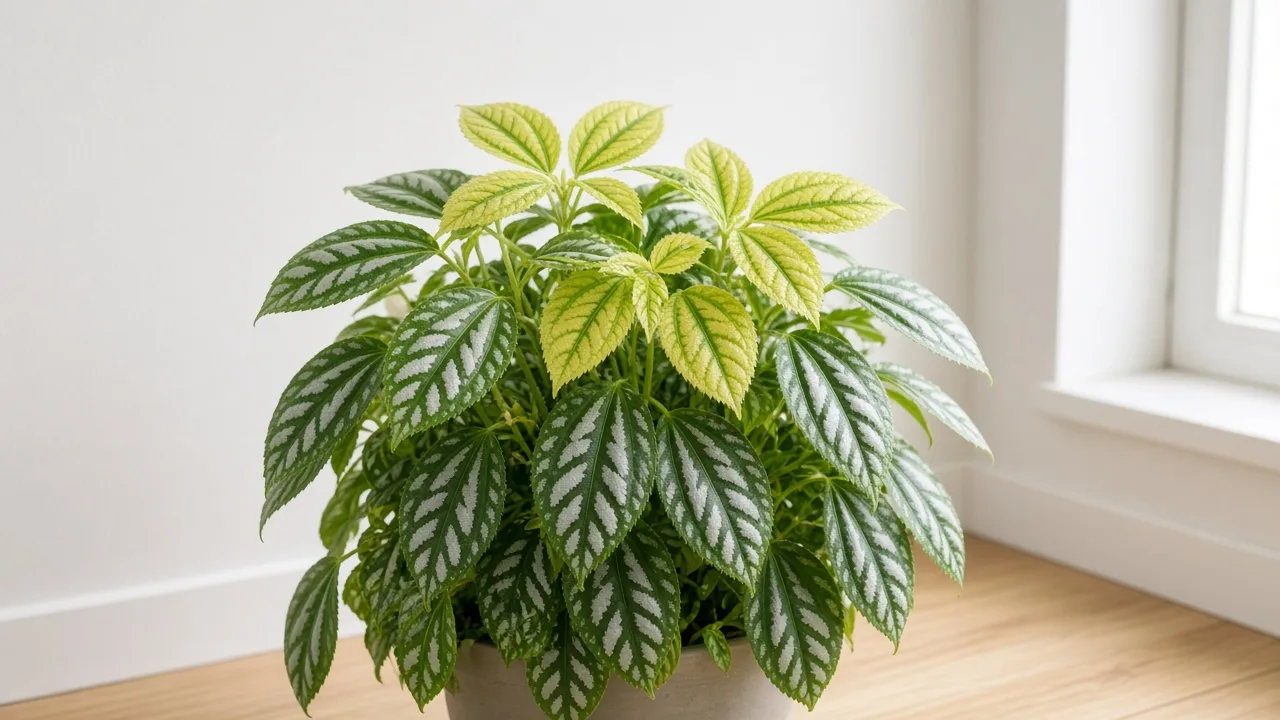
Iron Deficiency on Aluminum Plant: Causes, Checks & Fixes
This guide covers iron deficiency on Aluminum Plant. See also the general Iron Deficiency guide, watering, and light pages for this plant.
Iron Deficiency on Aluminum Plant: Causes, Checks & Fixes
Quick answer
Iron deficiency on aluminum plant (Pilea cadierei, also sold as watermelon pilea) shows as pale or yellow new opposite leaf pairs with dark green veins (interveinal chlorosis) at active stem tips, while older lower pairs may stay green with bright silver patches. Iron is immobile in plants, so chlorosis appears on young expanding tissue first—not on the lowest old pairs the way nitrogen deficiency does.
See our iron deficiency guide for general chlorosis mechanics. On aluminum plant, inspect the newest opposite leaf pair still unfurling at each bushy stem tip—veins stay green while tissue between them yellows, and the four raised silver bands may look dull or washed out on the chlorotic blade.
First step: confirm new tip-growth interveinal chlorosis with green veins, then check whether wet mix, alkaline tap water, or depleted peat is blocking uptake before applying chelated iron.
When to use this page vs other Aluminum Plant guides
| Pattern | Read next |
|---|---|
| New tip pairs yellow with green veins | Iron deficiency (this page) |
| Oldest lower pairs pale first; no vein pattern | Nitrogen deficiency |
| Whole plant washed-out in a dim window | Pale leaves or not enough light |
| Interveinal yellowing on older mid-stem pairs | Magnesium deficiency |
| Yellow lower pairs, wet heavy pot | Overwatering or root rot |
| Brown crispy margins, no interveinal pattern | Brown tips |
| General yellowing, mixed causes | Yellow leaves |
What iron deficiency looks like on aluminum plant
Healthy aluminum plant pushes opposite, elliptic leaves with four rows of raised silver patches from short upright stems during warm bright growth. Iron stress breaks that pattern at each active growing tip, not across every leaf on the plant at once.
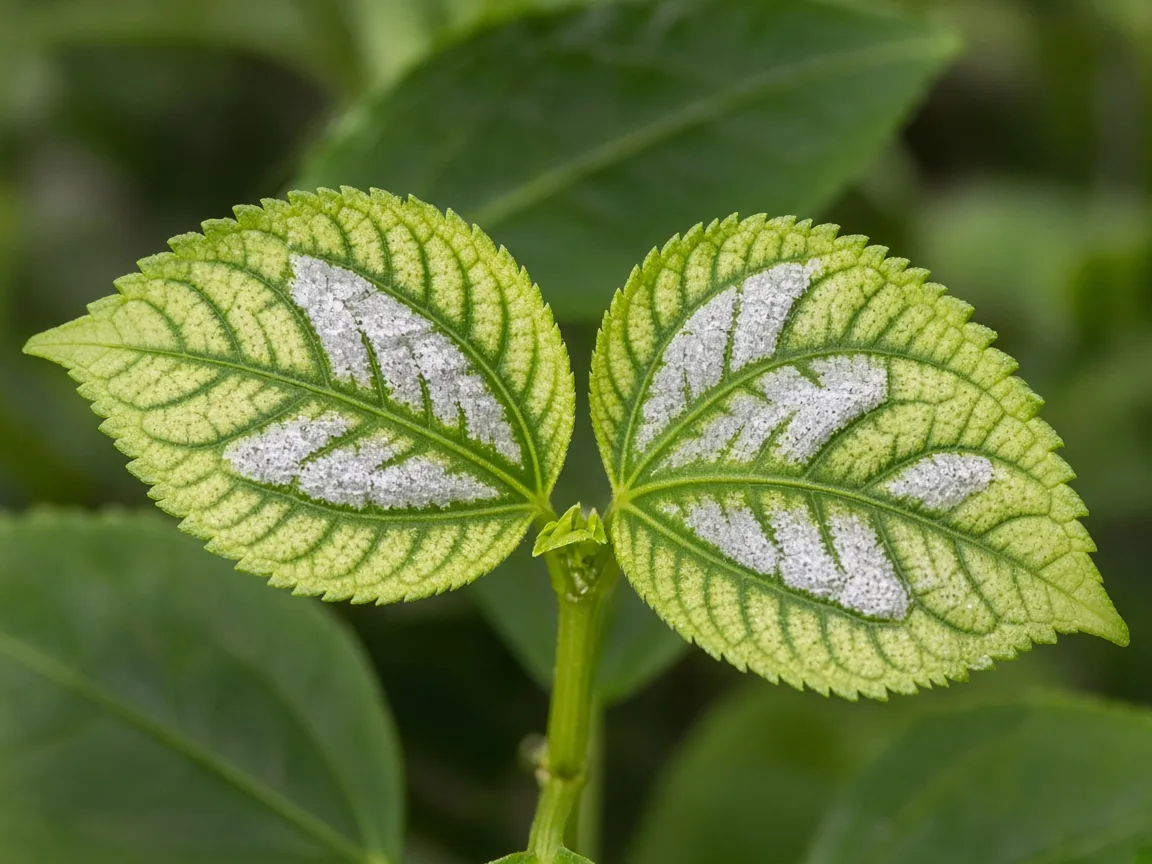
Interveinal chlorosis on a new aluminum plant leaf pair—veins stay dark green while tissue between them yellows; silver banding looks dull on the chlorotic blade.
Typical signs:
- Pale or yellow new opposite leaf pairs at stem tips with veins remaining darker green (interveinal chlorosis)
- Successively paler new tip pairs on the same stem if untreated—two or three pale openers in a row during summer flush
- Older lower opposite pairs may stay deep green with crisp metallic silver banding while only the newest tip pair looks chlorotic
- Dull, flat silver patches on chlorotic new blades—the raised bands lose their crisp look before the whole leaf yellows
- Smaller or thinner new leaves when chlorosis is severe on a fast-growing bushy plant in strong indirect light
- Firm fleshy stems if roots are functional—soft mushy stems at soil line on wet mix point to overwatering instead
Not iron deficiency:
- Uniform pale lower pairs first — nitrogen deficiency
- Washed-out green and dull silver across many stems with long bare internodes — pale leaves or not enough light
- Interveinal yellowing on oldest mid-stem pairs — magnesium deficiency
- All leaves yellow on persistently wet soil — root rot overlap
- Brown crispy margins only — brown tips or salt stress from hard tap water
The classic symptom of iron deficiency is interveinal chlorosis where leaf tissue yellows while veins stay green. RHS notes iron deficiency affects the youngest leaves first, unlike magnesium problems that tend to start on older foliage. On a bushy Pilea cadierei, that pattern is easiest to read on the opposite pair still opening at each stem tip—not on mature lower pairs that may simply age out.
Reading silver patches when new growth chloroses
Aluminum plant is easier to diagnose than many plain-green houseplants because silver patch brightness tracks stress before whole leaves fail. On healthy Pilea cadierei, the four raised silver bands look crisp and slightly metallic between the veins. When iron uptake fails on new growth:
- Dull, flat silver on a yellowing new pair while veins stay green strongly points to iron chlorosis at the tip—not generic thirst.
- Bright silver on new pairs while only lowers look pale suggests aging or localized stress, not whole-plant iron failure.
- Bleached silver with tan patches on the window side points to direct sun scorch—see the light guide—not interveinal chlorosis.
This silver-band read is specific to aluminum plant’s variegation pattern. A plain green pothos tip does not give you the same early warning, and confusing dull silver from dim corners with iron chlorosis is a common mistake on this species.
Opposite tip pairs vs lower stem: iron on Pilea cadierei
Aluminum plant grows opposite leaf pairs along fleshy upright stems—iron deficiency appears on the newest pair at each stem tip, the opposite pattern from nitrogen deficiency, which starts on oldest lower pairs. That tip-vs-base distinction is plant-specific; it would not apply to a peace lily basal rosette or a trailing pothos vine node the same way.
If you see yellow new tip pairs with green veins plus chronic wet mix, fix watering before repeated iron drenches. An aluminum plant in a heavy wet pot that still pushes pale new pairs is telling you uptake failed—not that it needs more water to green up.
Why aluminum plant gets iron deficiency
Aluminum plant is a moderate-to-fast growing tropical understory herb that wants bright indirect light and evenly moist but not soggy soil. That combination makes iron uptake failures common indoors—not because Pilea cadierei needs unusual iron levels, but because roots that stay waterlogged, sit in alkaline salty mix, or go unfed through rapid summer flush cannot absorb iron even when it is present in fertilizer.
Aluminum plant-specific causes:
- Chronic overwatering in moisture-retentive peat mix — Owners sometimes keep mix too wet fearing dry leaf edges; anaerobic roots block micronutrient uptake. Iron chlorosis worsens in heavy, poorly drained soils. See overwatering when lower pairs yellow on a heavy pot.
- Alkaline tap water and rising pH — Repeated municipal watering and lime-heavy old mix push pH above the 6.0–7.0 range aluminum plant tolerates best; high pH makes iron unavailable to plants even when you feed occasionally.
- Salt crust and skipped micronutrient feeds — Fast summer growth on a small bushy plant depletes iron from peat faster than two light feeds replace it. Months without complete fertilizer—or nitrogen-only feeds—show up as tip chlorosis during active flush per the fertilizer guide.
- Compacted old peat mix — Holds water without oxygen in the root core while salts concentrate at the rim. See soil guide for airy perlite-rich refresh.
- Cold root zone in winter — Cool concrete shelves or drafty windows slow uptake; chlorosis on new tip pairs may clear when warmth returns and growth resumes.
- Misread nitrogen deficiency — Lower old pairs pale first with nitrogen; iron hits new tip pairs with green veins.
Moisture-loving roots and the overwatering trap
Aluminum plant prefers consistent moisture but not soggy soil and wilts when dry— which trains owners to water on a calendar. Iron chlorosis often follows when that moisture crosses into soggy, oxygen-poor roots in an unchanged rhythm, especially in dim winter corners.
Check whether the top inch of mix dries between drinks. A pot that stays wet for days after a single drink in moderate light points to compacted mix or poor drainage—not an iron shortage you can fix with more chelated iron on waterlogged roots. USU Extension notes excessive soil moisture makes iron unavailable.
Lookalike symptoms
| Pattern | Check | Likely cause |
|---|---|---|
| New tip yellow, green veins | Leaf age at stem tip | Iron deficiency (this page) |
| Old lower pairs pale first | Leaf position | Nitrogen deficiency |
| Lower pairs, margin chlorosis | Old vs new | Magnesium deficiency |
| Dull silver, long bare stems | Light level | Not enough light |
| Brown tips, no interveinal pattern | Water source | Brown tips |
| All yellow, wet soil, soft stems | Root smell | Overwatering |
How to confirm
- Leaf age pattern — Chlorosis on newest opposite tip pair with green veins; lower pairs green with bright silver.
- Silver band read — Dull flat silver on chlorotic new blade vs crisp banding on healthy tips.
- Root inspection — White firm roots support micronutrient fixes; brown mushy roots need drainage first.
- Soil moisture rhythm — Does the top inch stay wet for days? Probe dry-down per watering guide.
- Salt crust and tap water — White rim deposits or heavy municipal water suggest flush before iron.
- Recent complete fertilizer — Chlorosis despite feeding points to uptake block, not simple starvation.
- Temperature — Cold shelf or draft near winter glass can slow uptake; warm the pot before supplementing.
First fix for aluminum plant
Correct watering so the top inch of mix dries between drinks, then apply one chelated iron drench at label rate only if roots are healthy.
Do not iron-feed waterlogged aluminum plant—fix drainage and let the root zone breathe first per aluminum plant watering. On alkaline tap water, switch to filtered, rainwater, or reverse-osmosis water for a few cycles while roots recover; chelated iron (FeEDDHA form for high-pH mix) absorbs more readily than non-chelated iron in pot culture.
One corrected watering rhythm plus one iron application is the first fix—not repotting, heavy pinching, and triple fertilizer the same day.
Mistakes to avoid
- Do not keep watering on a calendar when mix stays soggy—anaerobic roots block iron regardless of what you pour on.
- Do not confuse tip chlorosis with normal dull silver from a dim corner—move to brighter indirect light first if internodes stretch.
- Do not heavy-feed a chlorotic plant before fixing roots and salts—see aluminum plant fertilizer for light half-strength rates.
- Do not expect the current chlorotic tip pair to re-green—judge the next opposite flush.
- Do not use non-chelated iron sulfate on alkaline indoor mix when FeEDDHA chelate is available.
Step-by-step recovery
- Adjust watering to the top-inch dry-down check; empty cachepot standing water.
- Flush salts if white crust rings the pot rim; consider filtered water if tap water is hard.
- Apply chelated iron once at houseplant label rate; repeat only per label if new tip pairs stay chlorotic after three weeks.
- Repot into fresh airy mix if roots are congested and peat has collapsed—see aluminum plant soil.
- Resume complete balanced fertilizer with micronutrients during growth—not nitrogen-only feeds.
- Monitor the next two opposite tip pairs for greener tissue and brighter silver banding.
Recovery timeline
The opposite pair currently chlorotic at a stem tip rarely re-greens fully. The next one or two new tip pairs after corrected care usually show improvement within two to four weeks during active growth. Severe root damage from chronic overwatering may take a full growing season—see root rot if stems soften.
Prevention
- Water when the top inch dries—see watering guide.
- Flush mix occasionally with plain water during the active season to limit salt buildup from tap water and fertilizer.
- Feed lightly with complete houseplant fertilizer including micronutrients per fertilizer guide.
- Keep roots warm in winter—avoid cold concrete floors and drafty window sills.
- Refresh compacted peat mix at repotting before roots circle a soggy core.
- Maintain bright indirect light so summer flush growth can use the iron you supply.
Related Aluminum Plant guides
Conclusion
Pale new aluminum plant leaf pairs with dark green veins are an uptake problem on new tip growth—confirm the tip-vs-lower pair pattern, fix wet roots and alkaline tap water, then use one chelated iron drench on healthy roots.
Related tool
Use the Fertilizer Dilution Calculator to narrow causes for iron deficiency on this plant before changing multiple variables at once.