Brown Leaves on Anthurium: Causes, Checks & Fixes
Quick answer
Brown leaves on Anthurium (Anthurium andraeanum, flamingo flower) mean dead tissue on glossy cordate foliage or waxy spathes—usually underwatering in bright dry rooms, overwatering root stress on semi-epiphytic roots, low humidity, or direct sun scorch. First step: feel whether brown tissue is crispy or soft, then check whether the top inch of chunky aroid mix is dry or wet.
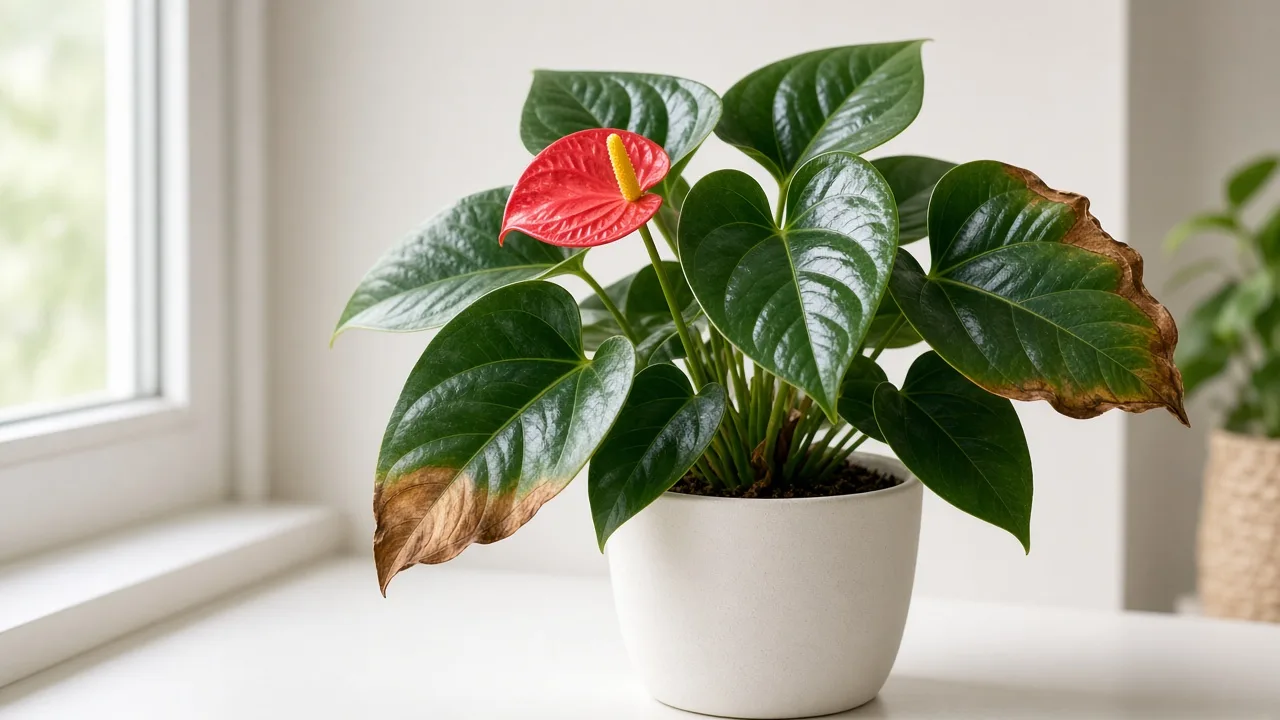
Brown Leaves on Anthurium: Causes, Checks & Fixes
This guide covers brown leaves on Anthurium. See also the general Brown Leaves guide, watering, and light pages for this plant.
Brown Leaves on Anthurium: Causes, Checks & Fixes
Quick answer
Brown leaves on Anthurium (Anthurium andraeanum and hybrids, flamingo flower) mean dead tissue on glossy heart-shaped cordate leaves, waxy spathes, or both. For how whole-leaf necrosis works in general, see our brown leaves guide. On Anthurium, the crispy-versus-soft texture test routes you faster than any calendar: crispy brown on a light dry pot usually means drought or dry-air burn; soft brown on a heavy wet pot usually means semi-epiphytic roots lost oxygen—not thirst.
First step: pinch the browned tissue between your fingers and stick a finger into the top inch of chunky aroid mix. Crispy and dry means correct watering once and check humidity. Soft and wet means stop watering until the top inch dries and empty the saucer. Do not fertilize or repot until that single check points you to the right path.
When to use this page vs other Anthurium guides
| Pattern you see | Read next |
|---|---|
| Brown limited to tips and margins only | Brown tips |
| Yellow-green soft lowers before brown | Yellow leaves or overwatering |
| Light dry pot, wilting between soaks | Underwatering |
| Tan patches on window-facing spathe or leaf | Direct sun scorch—see light guide |
| Dry speckles with webbing on new growth | Spider mites |
| Brown with sour smell and mushy stems | Root rot |
This page covers whole-leaf or large-section browning on cordate foliage and waxy spathes. Tip-only damage follows a different water-chemistry path on brown tips.
What brown leaves look like on Anthurium
Flamingo flower carries glossy cordate leaves 8 to 12 inches long and waxy red, pink, or white spathes when mature. Brown damage reads differently on each organ:
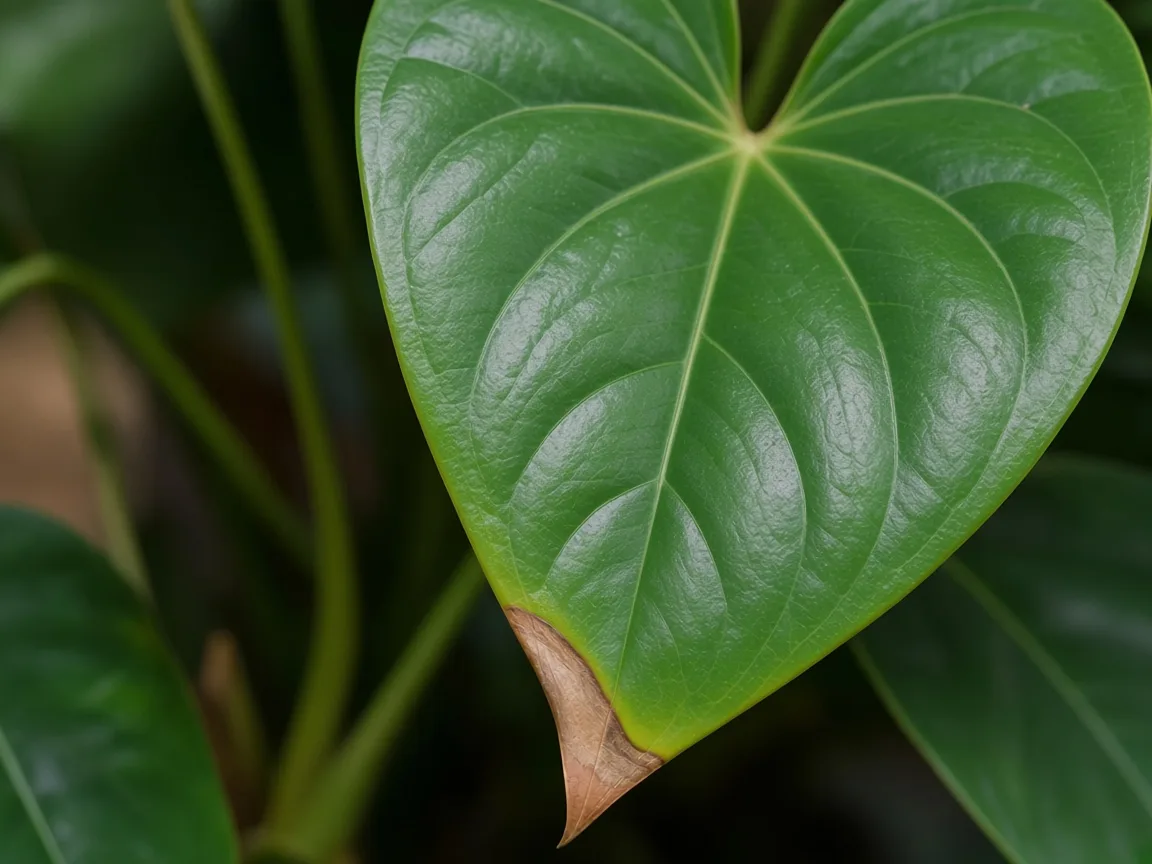
Soft brown necrosis on a cordate leaf margin—compare texture and top-inch soil moisture to separate wet-root browning from drought crisping.
Crispy brown whole leaf or margins on a light, dry pot
- Tissue feels papery when you bend the blade; petiole may still feel firm
- Pot lifts easily; top inch of mix is dusty dry; mix may pull from the pot rim
- Often hits outer leaves near a heating vent, bright south window, or after a missed watering cycle
- Spathes may also crisp at the apex in the same dry spell
Soft brown lower cordate leaves on wet, heavy mix
- Tissue feels limp, not crunchy; petiole weakens at the base
- Pot stays cool and heavy days after watering; top inch may feel damp while lower mix is saturated
- Overwatering can cause root rot on this semi-epiphytic aroid whose roots need air between soaks
- Often pairs with yellow leaves on lowers before full necrosis
Brown spreading inward from tips after tap water
- Margins and tips brown first, then necrosis moves down the cordate blade
- White crust may ring the pot from salt buildup
- Fluoride in municipal tap water damages sensitive foliage plants—anthuriums are among the more sensitive indoor aroids
- Distinct from whole soft rot: tissue is crispy at the dead margin even when soil moisture is appropriate
Tan papery patches on the window-facing side of one leaf or spathe
- Only tissue touching hot afternoon glass shows damage
- Direct sun can scorch anthurium leaves; shaded tissue on the same plant stays glossy green
- Spathe scorch often hits the exposed waxy edge while cordate leaves on the shaded side look fine
Single fully brown lowest cordate leaf with clean new center growth
- Often normal senescence on an older leaf in a mature rosette
- Not urgent if newest leaves and spathes are firm and glossy
Reddish-bronze new leaf unfurling that hardens to green
- New cordate leaves often emerge coppery or reddish before maturing—normal on many cultivars
- Pathological browning stays dead and papery or soft; it does not green up as the leaf expands
Always inspect newest leaves emerging from the crown and the current spathe. Brown on fresh flush or a new bloom bract is urgent; one aging lowest leaf is not.
Crispy vs soft: the top-inch texture test
Anthurium stores little reserve compared with rhizome plants, but its semi-epiphytic roots still need oxygen in chunky bark-perlite mix. The texture of brown tissue plus top-inch moisture tells you which stress won:
| Brown texture | Top inch moisture | Pot weight | Most likely cause |
|---|---|---|---|
| Crispy, papery | Dry | Light | Underwatering or low humidity |
| Soft, limp | Wet | Heavy | Overwatering / early root stress |
| Crispy at tips, green base | Surface dry, core wet | Medium-heavy | Fluoride or salt burn on a pot that never fully dries |
| Tan papery, one-sided | Any | Any | Direct sun scorch on window-facing leaf or spathe |
| Dry speckles with webbing | Any | Any | Spider mites in heated dry air |
Push your finger to the top inch only for the first routing decision—Anthurium is watered when that layer dries, not when the whole root ball is bone dry. If the top inch is wet but you watered more than ten days ago in a cool dim room, suspect slow dry-down and root stress rather than thirst.
Spathe browning vs cordate leaf browning
No other common flowering houseplant asks you to diagnose two showy organs at once. On mature Anthurium, the waxy spathe is a modified leaf held above the foliage, and browning patterns split cleanly:
- Spathe edge crisp, cordate leaves green — Often direct sun on the bract, fluoride accumulating on the waxy surface, or natural decline of an old spathe after weeks of display. Move off hot glass or switch to filtered water before assuming root failure.
- Cordate leaves soft brown, spathe still glossy — Root-zone stress from wet chunky mix; the plant sacrifices older foliage before the bloom bract. Hold water and see overwatering.
- Both organs brown together on a light dry pot — Severe drought or a heating vent drying the whole rosette; soak once and raise humidity per the watering guide.
- Spathe browning while spadix blackens on a spent bloom — Normal post-bloom senescence if new cordate leaves are clean; trim the old inflorescence at the base rather than repotting.
Inspect the spadix separately: a healthy yellow or cream spadix with a slightly faded spathe is aging bloom tissue, not a moisture emergency.
Why Anthurium gets brown leaves
Underwatering and dry-air burn in bright rooms. Anthurium wants water when the top inch of soil feels dry and 60 to 80% relative humidity. In heated winter air, cordate margins desiccate and whole blades can crisp if the root ball goes too dry between soaks. RHS notes anthurium leaves may brown at the edges when air is too dry—often in centrally heated homes far below rainforest humidity.
Overwatering on semi-epiphytic roots. Calendar watering in winter, blocked drainage, and dense peat without bark keep the mix saturated. Chronic wet conditions reduce oxygen at roots, and lower cordate leaves turn soft brown before the crown collapses. Owners who see brown and add more water deepen the failure. See root rot if stems soften or mix smells sour.
Direct sun scorch on leaves and spathes. Anthurium needs bright indirect light. Afternoon sun through glass cooks the waxy spathe and cordate tissue facing the window, leaving tan papery patches while shaded leaves stay green.
Fluoride and fertilizer salt burn spreading beyond tips. Municipal tap water and heavy feeding without flushing accumulate at leaf margins. Overfertilization causes soluble salt buildup that burns tissue; on Anthurium, necrosis can move inward from tips into whole margin sections. Rainwater or filtered water at room temperature avoids much of this injury.
Cold drafts and sudden temperature drops. Anthurium prefers warm stable rooms; temperature below about 15°C (59°F) stresses foliage and can brown margins after a cold window night or AC blast. Keep the pot off cold sills in winter.
Spider mite stippling that bronzes out. Spider mites thrive in dry heated air and stipple tender new cordate leaves until tissue bronzes. Check for fine webbing on undersides before assuming moisture failure.
Natural lower-leaf senescence. One oldest cordate leaf browning at the base while new glossy growth and spathes stay clean is normal on a maturing plant. Do not repot or fertilize for a single aging leaf.
How to confirm the cause
Work through these checks in order—each takes under two minutes:
- Crispy-vs-soft pinch test on the browned tissue.
- Top-inch moisture — dry with crispy brown = drought path; wet with soft brown = hold water.
- Pot weight — lift after watering once to learn “heavy”; a heavy pot two weeks later in a cool room means slow dry-down.
- New growth inspection — firm emerging cordate leaf and healthy spathe = plant still functioning; brown on the newest leaf = act today.
- Window and vent placement — tan one-sided patches on glass-facing tissue = scorch, not rot.
- Water history — recent switch to hard tap after months on filtered? Fluoride path. Weekly calendar watering in winter? Overwatering path.
- Underside scan — stippling or webbing on new leaves = mites before you assume moisture failure.
If more than one cause fits, fix moisture first—wrong watering is the most common and the most damaging when misread.
First fix for Anthurium
Match one correction to what the texture test and top inch tell you:
- Top inch dry + crispy brown: Water thoroughly until drainage runs free, then empty the saucer within 30 minutes. Do not mist foliage as a substitute for root-zone water.
- Top inch wet + soft brown: Stop watering. Let the top inch dry completely before the next drink. Do not fertilize, repot, or prune heavily on the same day.
Only after that first correction:
- If humidity reads below 50% at foliage height, add a humidifier or move the pot to a steamier room—see low humidity.
- If tips browned after tap water, switch to filtered or rainwater for the next four weeks per the watering guide.
- If tan patches face the window, move back from glass or add sheer curtain per the light guide.
- If webbing is present, rinse leaf undersides and see spider mites.
Step-by-step recovery
For drought brown (dry top inch, crispy tissue)
- Soak until water runs from drainage holes; discard saucer water.
- Wait for the top inch to dry before the next drink—track with a finger, not a calendar.
- If HVAC is near the plant, move the pot or redirect the vent; target 60–80% RH when possible.
- Remove fully brown cordate leaves once new growth looks stable.
For overwatering brown (wet top inch, soft lowers)
- Stop all irrigation until the top inch reads dry on your finger.
- Confirm drainage holes are open; remove standing water from cachepots.
- If lowers keep browning after two dry weeks, gently slide the root ball out—trim only mushy roots, repot into fresh airy mix per the soil guide. Full protocol: root rot.
- Resume watering only when the top inch dries—often less often in cool winter rooms.
For fluoride or salt brown (tips first, spreading inward)
- Switch to filtered, distilled, or rainwater at room temperature.
- Flush the pot once with clean water to dilute surface salts if white crust is visible.
- Trim only fully necrotic tissue if it harbors mold; leave partial green blade.
For sun scorch (tan window-facing patches)
- Move back from glass or add sheer curtain.
- Remove scorched leaves or spent spathes if more than half the organ is dead.
- Do not compensate with extra water.
Recovery timeline
| Severity | What improvement looks like | Typical timeframe |
|---|---|---|
| Mild drought crisping | New cordate leaves unfurl glossy green; spathe color stable | 1–2 weeks after proper soak cycle |
| Fluoride margin burn | Browning stops spreading; new leaves stay clean longer | 2–4 weeks on filtered water |
| Early overwatering | Soft brown stops spreading; lowers may drop but crown stays firm | 2–4 weeks after dry-down |
| Advanced root stress | New growth returns after trim-and-repot rescue | 4–8 weeks; some lowers lost permanently |
Brown tissue never re-greens. Judge success by new growth, not old leaf color—clean cordate leaves from the crown and stable pot weight between waterings.
Lookalike symptoms
| What you might think | What it actually is | Quick tell |
|---|---|---|
| Whole plant dying | One senescent lower cordate leaf | New center growth and spathes are firm |
| Fungal leaf spot | Fluoride or salt burn | Starts at tips/margins symmetrically, no water-soaked halos |
| Yellow leaves turning brown | Overwatering progression | Yellow-green soft lowers precede brown on wet mix |
| Wilting with wet soil | Root uptake failure | Limp blades on heavy pot—not thirst |
| Black spots | Leaf spot disease | Dark spots with yellow halos, not uniform margin necrosis |
| New coppery leaf | Normal unfurling color | Hardens to green as leaf expands; not dead papery tissue |
Mistakes to avoid
- Watering on a calendar in winter. Anthurium uses less water in cool dim months; the top inch may stay wet for two weeks.
- Misting brown leaves. Wet cordate foliage in stagnant air invites fungal issues; fix moisture at the root zone and room humidity instead.
- Fertilizing to “green up” brown leaves. Feed only after moisture and light are stable during active warm-season growth.
- Repotting on day one. Unnecessary repotting shocks semi-epiphytic roots unless you confirm mush, sour smell, or failed dry-down.
- Treating spathe decline as root rot. A spent spathe browning after weeks of bloom while new leaves stay green is normal—trim the inflorescence instead of soaking the pot.
- Placing Anthurium in direct afternoon sun to “fix” low light. Filtered brightness helps; hot glass causes tan scorch on leaves and spathes alike.
How to prevent brown leaves next time
- Water when the top inch of chunky aroid mix dries—see the watering guide for finger and weight technique.
- Keep humidity toward 60–80% RH at foliage height in heated rooms.
- Use filtered or rainwater if margins ever browned on new growth.
- Place in bright indirect light—east or west window, or sheer-filtered south glass per the light guide.
- Empty saucers within 30 minutes after every soak.
- Avoid cold drafts below 15°C (59°F) and sudden AC blasts on the foliage.
- Inspect new cordate flush weekly in dry winter air for early mite stippling.
When to worry
Treat as urgent when:
- Brown appears on the newest center leaves within days
- Stem base softens at soil line or crown collapses
- Sour smell rises when you lift the pot
- Multiple cordate leaves brown in one week after a single overwater
- Mushy roots are visible on a gentle probe
Those signs point to advancing root rot—dry-down alone may not be enough. A single aging lower leaf browning while new growth and spathes stay clean is not urgent.
Related Anthurium guides
- Overview — placement, toxicity, and first-month rhythm
- Watering — top-inch dry-down technique
- Light — bright indirect exposure without scorch
- Soil — chunky aroid mix for semi-epiphytic roots
- Brown tips — tip-only fluoride and salt damage
- Yellow leaves — chlorosis before necrosis on wet mix
- Overwatering — full dry-down protocol for heavy wet pots
- Problems hub — all Anthurium symptom guides
Conclusion
Brown Anthurium leaves are moisture, humidity, light, and water-quality signals on cordate foliage and waxy spathes, not a single mystery disease. The crispy-versus-soft pinch test and top-inch moisture check route you to the right first fix faster than repotting or fertilizing on guesswork. Necrotic tissue will not re-green—watch for clean new cordate leaves and stable spathe color, and align watering with how fast your home actually dries the top inch of chunky mix.