Caterpillars on Anthurium: Causes, Checks & Fixes
Quick answer
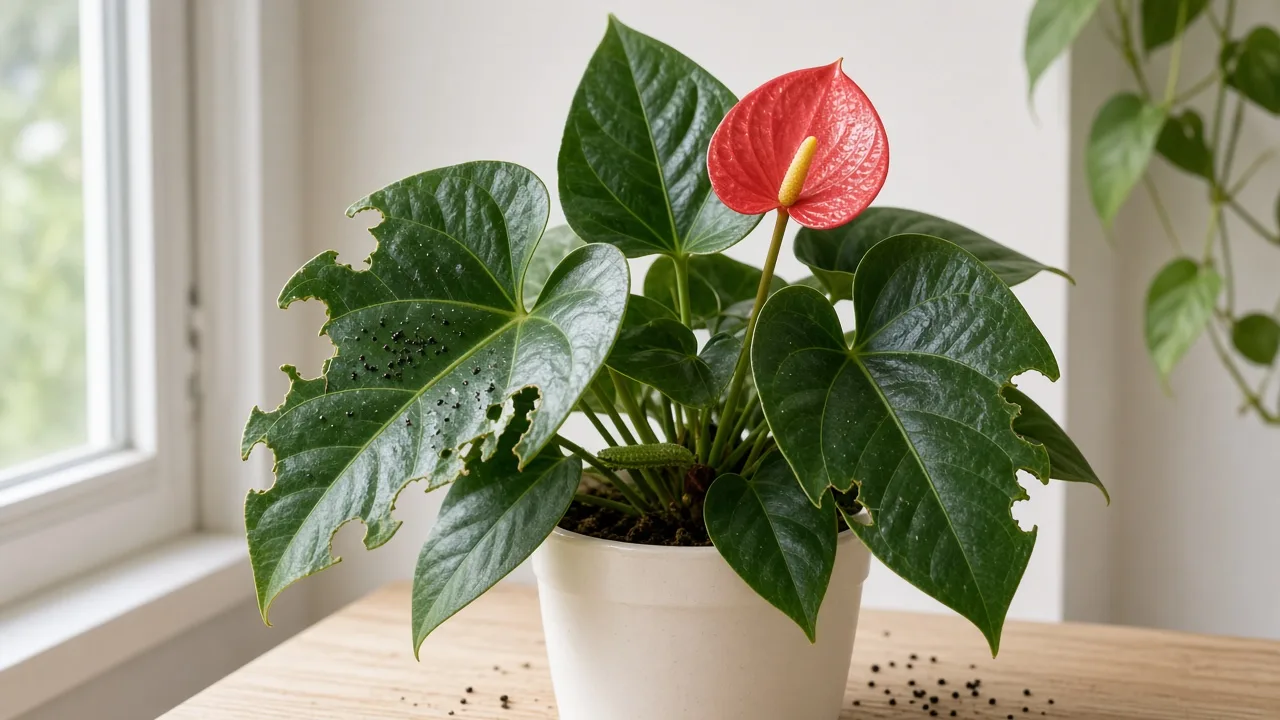
Caterpillars on Anthurium chew irregular holes in glossy heart-shaped leaves and can notch open spathes, usually after outdoor summer placement, nursery hitchhikers, or moth eggs near open windows. First step: isolate the plant and inspect crown shoots, petiole bases, and spathe stalks at night with a flashlight, then hand-pick every larva before treating foliage.
Caterpillars on Anthurium: Causes, Checks & Fixes
This guide covers caterpillars on Anthurium. See also the general Caterpillars guide, watering, and light pages for this plant.
Caterpillars on Anthurium: Causes, Checks & Fixes
Quick answer
Caterpillars on Anthurium (Anthurium andraeanum, flamingo flower) chew irregular notches from glossy heart-shaped leaves and can gouge open spathes on display plants, leaving dark pellet-like frass on foliage, petioles, or the shelf below. Indoor cases are uncommon compared with aphids, mealybugs, and thrips on tender new growth, and usually trace to hitchhiking larvae after patio season, nursery stock, open windows, or moth eggs on outdoor plants.
For general caterpillar biology and control options, see our caterpillars guide. On Anthurium, larvae often hide where new leaves are still folded at the crown and along spathe peduncles—places a generic “check the soil moisture” pass never reaches.
First step: isolate the plant and inspect crown shoots, petiole bases, and spathe stalks at night with a flashlight, then hand-pick every caterpillar into soapy water before treating foliage.
When to use this page vs other Anthurium guides
| Pattern | Read next |
|---|---|
| Ragged chew + frass pellets + visible larvae | This page |
| Clean tear, no frass, no spread after moving pot | Holes in leaves (mechanical) |
| Serpentine tunnels inside leaf, no through-holes | Leaf miners |
| Silvery scrape marks, no pellet frass | Thrips |
| Sticky honeydew on new shoots | Aphids |
| White cottony clusters at petiole bases | Mealybugs |
| Yellow leaves + soggy mix smell | Overwatering or root rot |
What caterpillars look like on Anthurium
Caterpillar damage is easy to overlook on Anthurium because thick waxy leaves look healthy from across the room until a spathe edge is notched. When larvae are active, the signature is ragged missing tissue with pellet frass—not the clean snap of a bumped pot or the stippling of sap feeders.
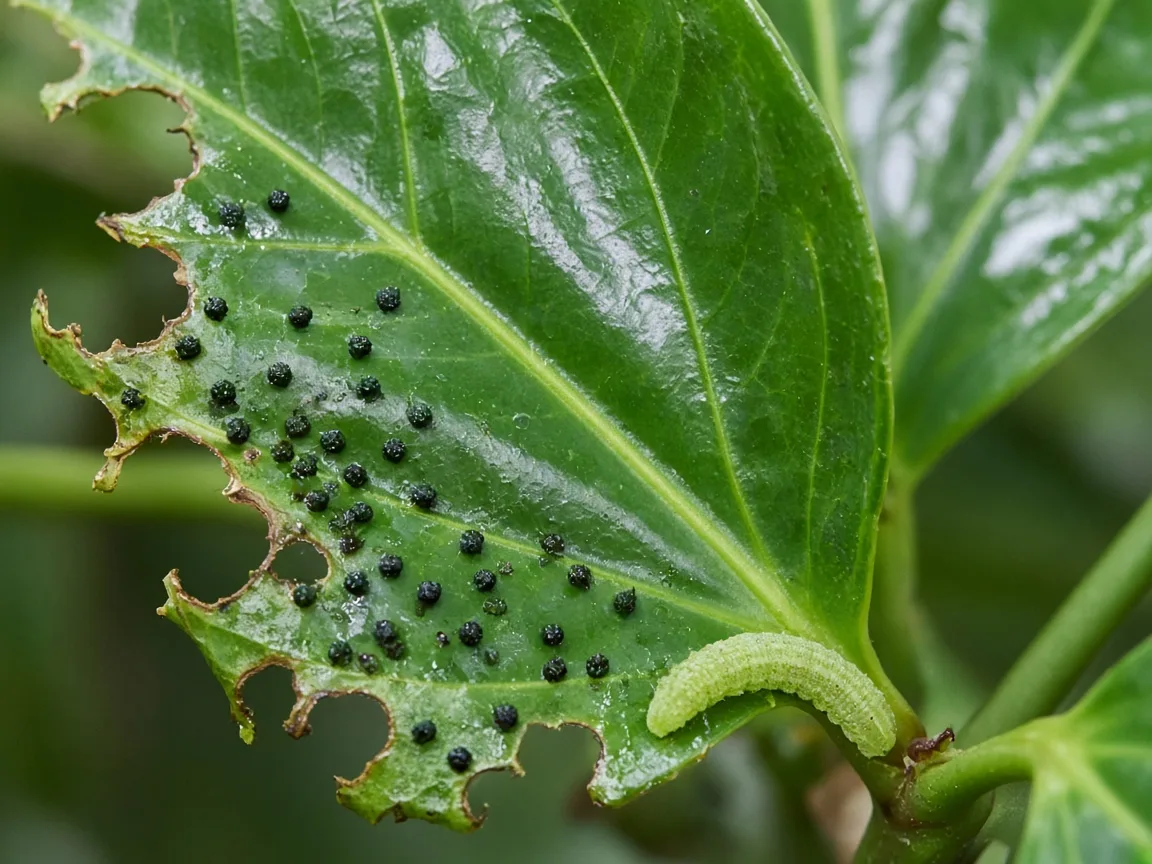
Irregular chew notches on glossy foliage with dark pellet-like frass—compare with an intact neighbor leaf on the same petiole.
Chewed notches and holes:
- Irregular sections missing from heart-shaped glossy leaves along margins or through the blade
- Ragged edges that look torn inward, not the straight crease of mechanical bending
- Dark green or black pellet-like frass on leaf surfaces, petioles, the pot rim, or the floor below
Larva signs (when you can see them):
- Green, brown, or patterned caterpillars curled along a petiole, inside a partially unfurled crown leaf, or at the base of a spathe stalk
- Visible chewing on the newest crown leaves before damage spreads to older foliage
- Unlike leaf miners, damage goes through the leaf—not inside a bordered tunnel visible when backlit
Growth impact on Anthurium:
- A few notches on mature leaves are usually cosmetic on a firm crown
- A single larva can notch an open red or pink spathe overnight because the waxy bract is softer than older foliage
- Crown damage that stops new leaf unfurling is more serious than edge chew on one display bloom
Unlike thrips, caterpillars do not produce silvery scrape marks. Unlike aphids, no sticky honeydew appears—only open chewing wounds and frass.
Why Anthurium gets caterpillars
Caterpillars are far less common indoors than sap-sucking pests like spider mites or mealybugs. On Anthurium andraeanum, when you see chew damage, suspect a recent introduction rather than chronic indoor pressure.
Outdoor patio hitchhikers. Anthuriums summered on a porch or near open windows can pick up moth or butterfly eggs on leaf undersides and spathe stalks. Pests arrive on nursery stock and outdoor plants and continue feeding indoors where predators are absent.
Eggs in potting media. Ask Extension notes that caterpillar eggs can be present in soil or potting media used to pot the plant—hand-picking visible larvae may not finish the job if unhatched eggs remain at the crown.
Sheltered crown and petiole bases. Anthurium grows as a compact rosette with new leaves emerging from a central crown. Larvae hide in the narrow gap where a petiole meets the stem and inside folded new leaves where spray coverage and daytime inspection both fail.
Open windows at night. A moth flying in during warm months can lay eggs on any glossy foliage it reaches—including spathe stalks near a windowsill display.
Indoor warmth without predators. Indoor plants lack natural enemies that control caterpillars outdoors. A single egg mass can hatch into larvae feeding along the same crown for weeks before you notice frass on the shelf.
Spathe chew vs leaf chew on flamingo flower
This is the Anthurium pattern generic caterpillar pages miss. Before you spray, confirm you are not treating mechanical damage or a lookalike pest:
| Feature | Leaf chew (this page) | Spathe notch on display plant |
|---|---|---|
| Location | Heart-shaped foliage blade or margin | Waxy bract edge or peduncle base |
| Frass | Dark pellets on leaf or below plant | Pellets on spathe surface or shelf |
| Cosmetic impact | Old leaf stays marked | Open bloom looks ruined for weeks |
| Plant response | Firm crown; leaf may yellow slowly | Spathe may brown at notch; crown stays firm |
| Recovery | New leaves emerge clean | Next bloom cycle on a new stalk |
If the hole is only in foliage with pellets and a visible larva, you are on the right page. If a clean tear has no frass and no larva after a night check, read the holes in leaves guide for mechanical damage.
Crown folds: where Anthurium hides caterpillars
Damage follows the central rosette and spathe stalks, not the thin tips of vining houseplants:
- Larvae curl inside partially unfurled crown leaves—spray from across the room misses them
- The newest heart-shaped leaf is often chewed first because tissue is slightly softer than mature blades
- For plants on a windowsill display, inspect the face toward the glass where larvae shelter during daylight
- Night feeding means daytime checks of leaf tops miss active larvae—plan repeated dusk or night passes
Unlike thrips scrape marks, caterpillar damage is sudden and localized—fresh notches and frass appear within days of a larva establishing at the crown.
How to confirm the cause
Work through these checks before you spray:
- Edge test — Ragged chew with pellets means caterpillars. A clean snap with no frass means mechanical damage on the holes in leaves page.
- Isolate first — Move the plant away from other pots. Caterpillars walk between containers and eggs can be on neighboring foliage.
- Night inspection — Inspect plants at night with a flashlight; larvae feed actively and are easier to spot in crown folds and at spathe bases.
- Frass check — Hold a damaged leaf over white paper and tap lightly. Pellets rolling off suggest caterpillars—not sticky honeydew from aphids or silvery scrape marks from thrips.
- Backlight test — Hold a suspect leaf to light. Internal bordered tunnels confirm leaf miners, not caterpillars.
- Crown priority — Examine the newest unfurling leaves and every spathe peduncle where larvae hide first.
- Neighbor scan — Inspect other plants from the same nursery batch or patio group on the same shelf.
- Recent history — Note outdoor time, new purchases, open windows, or winter bring-ins in the past month.
If you find a larva with ragged chew and pellet frass, caterpillars are confirmed. If only internal tunnels appear, switch to the leaf miners guide.
First fix for Anthurium
Isolate the plant and inspect crown shoots, petiole bases, and spathe stalks at night with a flashlight, then hand-pick every caterpillar into soapy water.
Work from the crown outward, checking each petiole base and every spathe stalk. Hand-picking is effective when you reach hidden folds sprays miss. Check where each heart-shaped leaf meets the stem and along the pot rim on the wall-facing side.
Wear gloves when handling chewed leaves—anthurium sap can irritate skin and the plant is toxic to pets if ingested. Keep the plant out of pet reach during treatment.
After hand-picking, shake stems over white paper to dislodge larvae you missed. Wipe frass from glossy leaves with a damp cloth so you can spot new pellets if feeding continues.
This single physical pass knocks down the active colony and gives you a clean baseline before any spray. Do not stack Bt application, heavy pruning, and repotting on the same day.
Step-by-step recovery
After the initial hand-pick, follow severity:
Days 1–7: Physical control (a few notches on one leaf or spathe)
- Repeat night inspections every two to three days; catch newly hatched larvae before they reach the crown
- Remove only leaves that are more than half chewed once insects are gone—snip at the petiole base with clean shears
- Rinse accessible foliage in the sink with lukewarm water to dislodge small larvae—avoid soaking the crown or leaving the pot wet overnight; follow the watering guide dry-down rhythm after rinsing
Days 7–21: Targeted sprays if chew marks spread (moderate infestation)
- Apply Bacillus thuringiensis kurstaki (Bt-k) labeled for caterpillars on houseplants, coating leaf undersides, petiole bases, and crown shoots until runoff
- Bt must be eaten—spray at dusk when larvae feed; repeat on label intervals through at least two hatch cycles
- Clemson HGIC notes spinosad as an option for caterpillars on outdoor houseplants; test one leaf first and treat in indirect light to protect waxy spathes
Heavy infestation (multiple larvae, frass across several leaves and spathes)
- Trim and bag only leaves or spathe stalks too damaged to function
- Treat every plant on the same shelf or patio group, not just the worst-looking pot
- If hand-picking and Bt fail after two cycles, repot into fresh mix to remove eggs in potting media—follow the repotting guide rhythm, not an emergency soak
- Hold fertilizer until new leaves emerge without fresh chew marks
Recovery timeline
Judge recovery on clean new crown leaves and frass-free spathe stalks, not old notched foliage:
- 3–7 days after first hand-pick: No fresh frass on crown leaves; night inspection finds zero larvae
- 2–4 weeks: New heart-shaped leaves unfurl without chew marks—normal pace for anthurium in bright indirect light
- Next bloom cycle: A new spathe stalk emerges clean; old notched bracts may stay on the plant until you trim them
Chewed leaves and notched spathes do not heal—the tissue stays marked or browns at the wound. Success means clean new foliage and flower stalks on a firm crown, not a cosmetic reset of every old hole on a display plant.
Lookalike symptoms
| What you see | Likely cause | Key difference on Anthurium |
|---|---|---|
| Ragged chew + frass + visible larva | Caterpillars (this page) | Night inspection reveals larvae in crown folds |
| Clean straight tear, no frass | Mechanical damage | Holes in leaves — no larvae, no spread |
| Bordered pale tunnel inside leaf | Leaf miners | Tunnel visible when backlit; no pellet frass outside |
| Silvery scrape, no chew holes | Thrips | Stippling; no frass pellets |
| Sticky leaves + pear-shaped insects | Aphids | Honeydew; no chewing holes with pellets |
| White cottony clusters at petioles | Mealybugs | Wax clusters, not ragged chew |
| Yellow leaves + wet mix | Overwatering | Mushy roots—not ragged edge chew with pellets |
Mistakes to avoid
- Treating mechanical snaps as caterpillars. Clean straight breaks with no frass mean holes in leaves routing—not pesticide.
- Inspecting only during the day. Caterpillars feed at night and hide along stems and leaf bases—daytime glances miss larvae in crown folds.
- Assuming thick waxy leaves block all chewing. Sap-sucking pests are the usual indoor suspects, but caterpillars still damage new crown leaves and open spathes.
- Confusing leaf miners with caterpillars. Miners leave internal tunnels visible when backlit; caterpillars chew through leaves with pellet frass outside.
- Spraying Bt during the day. Bt must be eaten; apply at dusk when larvae are actively feeding on crown shoots.
- Increasing watering because leaves look damaged. Anthurium roots rot in soggy mix—follow the watering guide dry-down rhythm instead.
- Soaking the crown after rinsing. Semi-epiphytic roots need air; let the crown dry and keep the plant in bright indirect light with good airflow.
Prevention
- Quarantine new plants two to three weeks before placing them beside an established display specimen
- Rinse and inspect leaf undersides and spathe stalks after outdoor patio season or near open windows
- Screen windows and doors that stay open at night, especially near plant shelves
- Scout crown and spathe bases during each watering check in warm months when moths are active
- Give bright indirect light and chunky soil so healthy new leaves emerge predictably—then any ragged chew stands out immediately
- Keep plants on elevated shelves away from pets—anthurium is toxic if chewed, which can mimic pest holes on lower foliage
When to worry
Escalate treatment when fresh chew marks appear daily despite hand-picking, when frass accumulates across several leaves and spathes during warm months, or when larvae appear on multiple houseplants from the same nursery batch. Chronic feeding can notch several display spathes even when the crown stays firm.
A single caterpillar on one leaf after a patio summer is not a lost cause—prompt isolation and hand removal usually resolves it. Reassess for overwatering or root rot if the crown softens and new shoots collapse despite moist—not dry—soil rather than showing clean chewed edges with frass.
Conclusion
Caterpillars on Anthurium are a night-feeding, crown-and-spathe pest—ragged chew with pellet frass on heart-shaped leaves or open blooms means inspect after dark at petiole bases and crown folds, hand-pick larvae with gloves, and tell chew damage from mechanical snaps or leaf miners before you spray. Judge recovery by clean new crown leaves and flower stalks on a firm plant, not perfect older spathes.
Related Anthurium guides
Related tool
Use the Plant Problem Diagnosis Tool to narrow causes for caterpillars on this plant before changing multiple variables at once.