Brown Leaves on Asparagus Fern: Causes, Checks & Fixes
Quick answer
Brown leaves on asparagus fern mean dead tissue on fine cladodes—the needle-like stems that do the plant's photosynthetic work. First step: pinch the browned tissue to feel whether it is crispy or soft, then check top-inch soil moisture and pot weight. Crispy brown on a light dry pot usually means drought or sun scorch; soft brown on a heavy wet pot usually means tuber stress from overwatering.
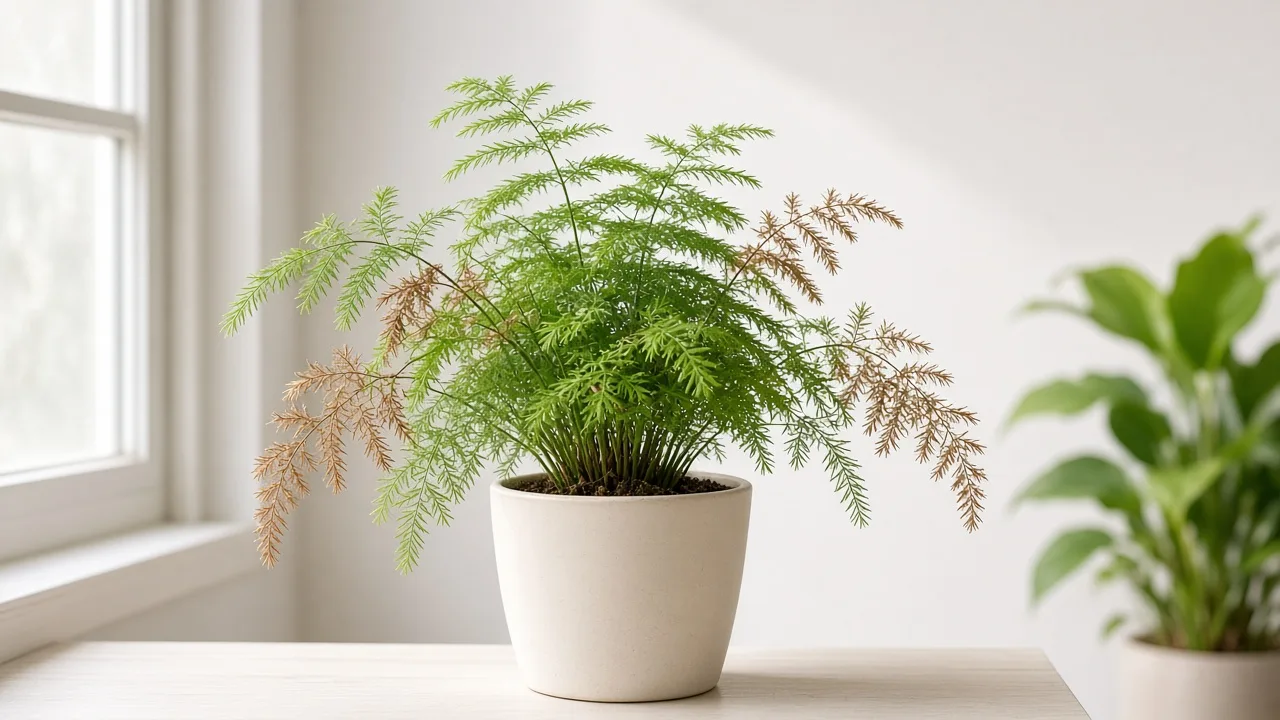
Brown Leaves on Asparagus Fern: Causes, Checks & Fixes
This guide covers brown leaves on Asparagus Fern. See also the general Brown Leaves guide, watering, and light pages for this plant.
Brown Leaves on Asparagus Fern: Causes, Checks & Fixes
Quick answer
Brown leaves on asparagus fern (Asparagus setaceus, lace fern) mean dead tissue on fine cladodes—the soft, needle-like flattened stems along wiry arching fronds. For how whole-leaf necrosis works in general, see our brown leaves guide. On asparagus fern, the crispy-versus-soft texture test routes you faster than any calendar: crispy brown on a light dry pot usually means drought or sun scorch; soft brown on a heavy wet pot usually means tuberous roots lost oxygen—not thirst.
First step: pinch the browned tissue between your fingers and push a finger into the top inch of mix. Crispy and dry means correct watering once and check placement for sun or dry air. Soft and wet means stop watering until the top inch dries and empty the saucer. Do not fertilize or repot until that single check points you to the right path. Full species context: asparagus fern overview.
When to use this page vs other Asparagus Fern guides
| Pattern you see | Read next |
|---|---|
| Brown limited to tips and margins only | Brown tips |
| Yellow-green soft lowers before brown | Yellow leaves or overwatering |
| Light dry pot, wilting between soaks | Underwatering |
| Tan patches on window-facing sprays only | Direct sun scorch—see light guide |
| Dry speckles with webbing at stem joints | Spider mites |
| Brown with sour smell and mushy tubers | Root rot |
This page covers whole-cladode or large-section browning on arching fronds. Tip-only damage follows a different water-chemistry path on brown tips.
What brown cladodes look like on asparagus fern
Asparagus fern is not a true fern. Its feathery foliage is made of cladodes—modified stems with a large surface area that lose moisture quickly. Brown damage reads differently depending on the cause:
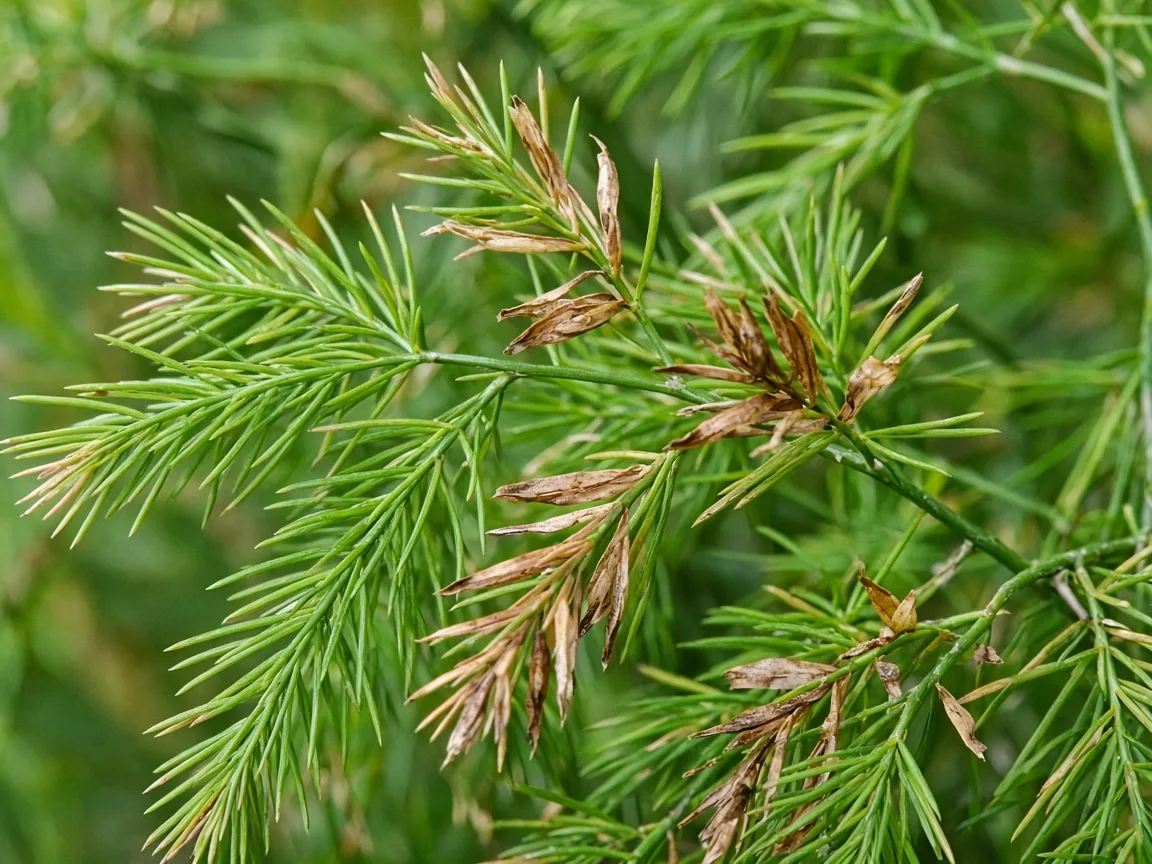
Brown cladode necrosis on asparagus fern—compare crispy versus soft texture and top-inch soil moisture to separate drought from wet-tuber stress.
Crispy brown whole cladode clusters on a light, dry pot
- Tissue feels papery when you bend the spray; entire side branches turn straw-brown and shed when brushed
- Pot lifts easily; top inch of mix is dry and crumbly
- Often hits outer arching fronds first after prolonged drought or a missed watering cycle
- Tuberous roots buffer short dry spells, but weeks of bone-dry mix still browns whole sprays before mass needle drop
Soft brown lower cladodes on wet, heavy mix
- Tissue feels limp, not crunchy; stems at the crown may feel thin even while upper growth looks green briefly
- Pot stays cool and heavy days after watering; top inch may feel damp while lower mix is saturated
- Root rot can occur from overwatering on this species whose tubers need air between soaks
- Often pairs with yellow leaves on lowers before full necrosis
Tan papery brown on the window-facing side of one spray
- Only tissue touching hot afternoon glass shows damage within 48 hours of a placement change
- Asparagus setaceus is intolerant of high light intensity and direct sunlight should be avoided
- Direct hot afternoon sun may also cause leaves to yellow before they crisp brown on the exposed side
Dry-air brown on outer sprays with moist soil
- Whole cladode sections turn papery brown while the top inch of mix still feels cool and slightly damp
- Damage concentrates near heating vents, sunny glass, or the top of a hanging basket
- If humidity is too low, browning of the leaf tips can occur—on fine cladodes, tip browning often progresses to whole brown sprays in furnace-season air
Normal outer-frond senescence
- One or two oldest arching stems at the pot perimeter fade brown over weeks or months
- Crown where new spears emerge stays green and firm; soil moisture follows your normal rhythm
- Cut old or yellowed stems out at the base rather than shortening them mid-stem
Fully brown cladodes on existing fronds do not re-green. Damaged yellow or brown needles will not rejuvenate; recovery shows up as fresh green spears from the crown or soil line once conditions stabilize.
Why asparagus fern gets brown leaves
Brown cladodes mean tissue has died—whether from drought, root failure, sun scorch, dry air, pest stress, or normal aging before drop. On this species, the usual drivers tie directly to tuberous roots, fine foliage, and indoor humidity swings.
Underwatering and inconsistent moisture deplete fine root hairs before tubers empty. Insufficient water will result in yellow needles that drop—prolonged drought browns whole cladode clusters on outer sprays. The foliage will yellow and drop if the soil is too dry for too long before turning fully brown.
Overwatering and poor drainage keep tuberous roots in oxygen-poor mix. Root rot can occur from overwatering. Damaged storage roots cannot move water or nutrients; lower cladodes brown first while the pot stays wet. Calendar watering in cool winter rooms, cachepots without drainage, and heavy peat that never dries all prolong saturation.
Direct sun through glass scorches fine cladodes that evolved for filtered understory light. Hot afternoon rays on south or west windows exceed what this plant tolerates indoors; whole sprays on the exposed side crisp within days.
Low winter humidity pulls moisture from fine cladodes faster than tuberous roots replace it. Indoor relative humidity often drops to 10–20% during winter heating. Soil can read moist while outer sprays brown from desiccation alone.
Spider mites and aphids stress cladodes in dry air; stippling and webbing may appear before widespread brown. Check stem joints before assuming a watering mistake—see spider mites if you find silk or dusty undersides.
Normal outer cascade aging on Sprengeri-type arching stems is harmless when only the oldest perimeter sprays brown slowly with a firm crown. Do not add water to a wet plant because one outer stem faded.
Lookalike symptoms to rule out
| Pattern | Pot weight | Top inch of mix | Where brown starts | Likely cause |
|---|---|---|---|---|
| Drought clump brown | Light | Dry, crumbly | Outer frond tips, sheds in clumps | Underwatering |
| Wet-base brown | Heavy | Wet for days | Stem bases near soil, spreads up | Overwatering / root rot |
| One-sided tan crisp | Normal | Per rhythm | Window-facing sprays only | Sun scorch—light guide |
| Papery brown, moist soil | Normal | Cool, not bone dry | Outer tips near heat vents | Low humidity |
| Stippling before brown | Normal | Per rhythm | Speckled patches on cladodes | Spider mites |
| Slow outer fade | Normal | Per rhythm | Oldest arching stems only | Normal aging |
One reading alone misleads. A pale plant in shade can sit in wet soil while outer sprays look drought-stressed. Pair moisture depth, pot weight, texture (crispy vs soft), and where browning started.
How to confirm the cause
Work through these six checks in order before repotting, fertilizing, or heavy pruning.
- Texture test — Pinch browned tissue. Crispy and papery favors drought, sun, or dry air. Soft and limp on a heavy pot favors wet-root stress.
- Top-inch soil moisture — Push a finger about 1 inch into the mix near the pot edge. Wet with base-up browning favors overwatering; dry with papery outer fronds favors drought. See the watering guide for the top-inch target.
- Pot weight — Lift the pot after you learn its wet and dry feel. A pot that stays heavy for a week with spreading brown at the crown signals chronic saturation, not thirst.
- Browning pattern — Note whether one or two outer arching stems fade slowly (often aging) or many fronds brown from the soil line upward on damp mix (tuber stress).
- Stem base and tuber firmness — Gently press stems where they emerge from soil and any visible tubers. Firm pale tubers support recovery; soft, dark, or sour-smelling tissue means inspect for root rot.
- Light and pest check — Run a hand-shadow test at the crown. One-sided damage after a window move fits sun scorch. Stippling and webbing at stem joints fit pests in dry air.
Confirmed drought brown: light pot, dry top inch, crispy clumps shedding from outer fronds, firm tubers. Confirmed wet-soil brown: heavy pot, damp mix, brown from base up, possible sour smell. Confirmed sun scorch: directional damage after placement change, firm tubers, normal moisture. Likely normal aging: one or two oldest outer stems fading over months with firm crown growth and stable moisture.
First fix for asparagus fern
Pinch the browned tissue and check top-inch soil moisture before any other action. That pair prevents watering a wet plant or withholding water from a dry one—both mistakes worsen browning on tuberous-root asparagus fern.
If tissue is crispy and the top inch is dry: water thoroughly until a small amount drains from the holes, then discard all runoff within 30 minutes. Keep soil moist but well-drained—one measured drink when dry, not repeated shallow splashes. Full dry-soil protocol: underwatering on asparagus fern.
If tissue is soft and the mix is wet: stop watering immediately. Empty saucers and cachepots. Move to brighter indirect light if the plant sits in deep shade—slow evaporation worsens wet soil. If tubers feel soft or the mix smells sour, unpot and trim damaged tissue per the root rot guide. Wet-soil branch: overwatering.
If damage is one-sided and crispy after a recent window move: pull the pot back from hot afternoon glass or add a sheer curtain. Hold watering steady until you relearn dry-down in the new spot.
If soil moisture is normal but outer sprays brown papery near heat sources: relocate away from vents and raise ambient humidity with a pebble tray or humidifier—not misting alone. See low humidity.
If only one or two oldest outer stems are fully brown with firm tubers: snip those stems back to the soil line and continue your normal check-based watering rhythm. No emergency repot needed.
Make one correction, then wait five to seven days before stacking repotting, fertilizer, and pesticide.
Recovery timeline
Mild drought brown often stops spreading within two to four days after a proper soak-and-drain when tubers remain firm. New green spears may appear at the soil line within one to two weeks.
Sun scorch recovery takes two to four weeks after you move the plant out of direct rays. Brown cladodes on scorched sprays stay brown; watch for green new spears from the crown.
Chronic overwatering recovery spans one to three weeks when firm tubers survive and you keep the mix on the dry side of moist. New growth will appear at the soil line once conditions improve—that new growth is your benchmark.
Low-humidity browning may take one to two weeks after you raise RH and move off heat vents. Brown crisp sprays on old stems stay brown; watch for green new spears.
Post-trim aging stems show no timeline beyond normal crown push—remove brown fronds at the base and wait for fresh shoots.
Judge success by new firm green spears, stable pot weight, and stopped upward spread of browning—not by old cladodes coloring green again.
What not to do
Do not fertilize brown asparagus fern before you confirm soil moisture, light, and tuber health. Salt buildup and forced growth stress roots that are already failing.
Do not increase watering when the mix is wet and stems at the base are soft—that accelerates tuber rot on this species.
Do not repot proactively when only outer arching stems brown on an otherwise firm plant with normal moisture. Repot when tubers are rotting, the plant is severely root-bound and drying out in hours, or you must trim mushy roots—not as a default brown-leaf fix.
Do not mist heavily to fix browning—brief surface moisture does not hydrate tuberous roots and can keep fine cladodes wet in stagnant air.
Do not confuse healthy Sprengeri outer cascade aging with crown collapse. Adding water to a wet, browning crown makes rot worse.
How to prevent brown leaves next time
Match everyday care to how asparagus fern stores water and sheds old fronds:
- Watering rhythm — Check the top inch with your finger; typical active-season interval is every 5–7 days, slower in winter. Water regularly spring through autumn and sparingly in winter. Resume from the watering guide rather than a fixed calendar.
- Drainage — Use well-drained mix with perlite in a pot with drain holes; empty saucers within 30 minutes of watering. See soil guide for mix ratios.
- Light — Bright indirect exposure; avoid direct hot afternoon sun that scorches fine cladodes.
- Humidity — Target roughly 40–60% RH in heated winter rooms; use a humidifier or pebble tray when furnace air runs dry.
- Prune spent fronds — Remove brown stems at the soil line promptly to reduce pest hiding spots and keep energy directed to new spears.
- Flush salts — If you fertilize monthly in growth season, flush the mix with plain water every few months to limit salt buildup on fine foliage.
When to worry
Treat browning as urgent when:
- Many fronds brown from the base up while mix stays wet—possible advancing root rot
- Sour smell from drain holes or mushy tubers on inspection
- Sudden widespread brown within days on a previously healthy plant—check for wilting overlap and pests
- Soft crown stems with saturated soil despite stopping water
Lower urgency: one or two oldest outer stems fading over months, mild winter drop with firm tubers and appropriate winter dry-down, or brown only on fronds you already knew were spent.
Related Asparagus Fern guides
- Asparagus fern overview — cladode biology and full care hub
- Watering — moisture rhythm for tuberous roots
- Overwatering — wet-soil brown from the base
- Underwatering — dry clump brown
- Root rot — soft tubers and sour mix
- Low humidity — papery brown on moist soil
- Not enough light — pale stretched growth
- Spider mites — stippling before brown
- Brown tips — overlap with dry air damage
- Asparagus fern problems — browse all common issues
When to use this page vs other Asparagus Fern guides
- Asparagus Fern watering guide — Use for routine moisture checks before assuming brown leaves is the main issue.
- Asparagus Fern problems hub — Browse all common issues on this species.
- Overwatering on Asparagus Fern — Different entry point when symptoms overlap with brown leaves.
- Underwatering on Asparagus Fern — Different entry point when symptoms overlap with brown leaves.
- Brown tips on Asparagus Fern — Use when damage is limited to needle tips, not whole cladode clusters.
Related tool
Use the Plant Problem Diagnosis Tool to narrow causes for brown leaves on this plant before changing multiple variables at once.