Brown Leaves on Baby Rubber Plant: Causes, Checks & Fixes
Quick answer
Brown leaves on baby rubber plant (Peperomia obtusifolia) mean tissue has died—usually from overwatering, low humidity, or direct sun, not a nutrient shortage. First step: stop watering and probe the top 1 to 2 inches of mix before changing anything else.
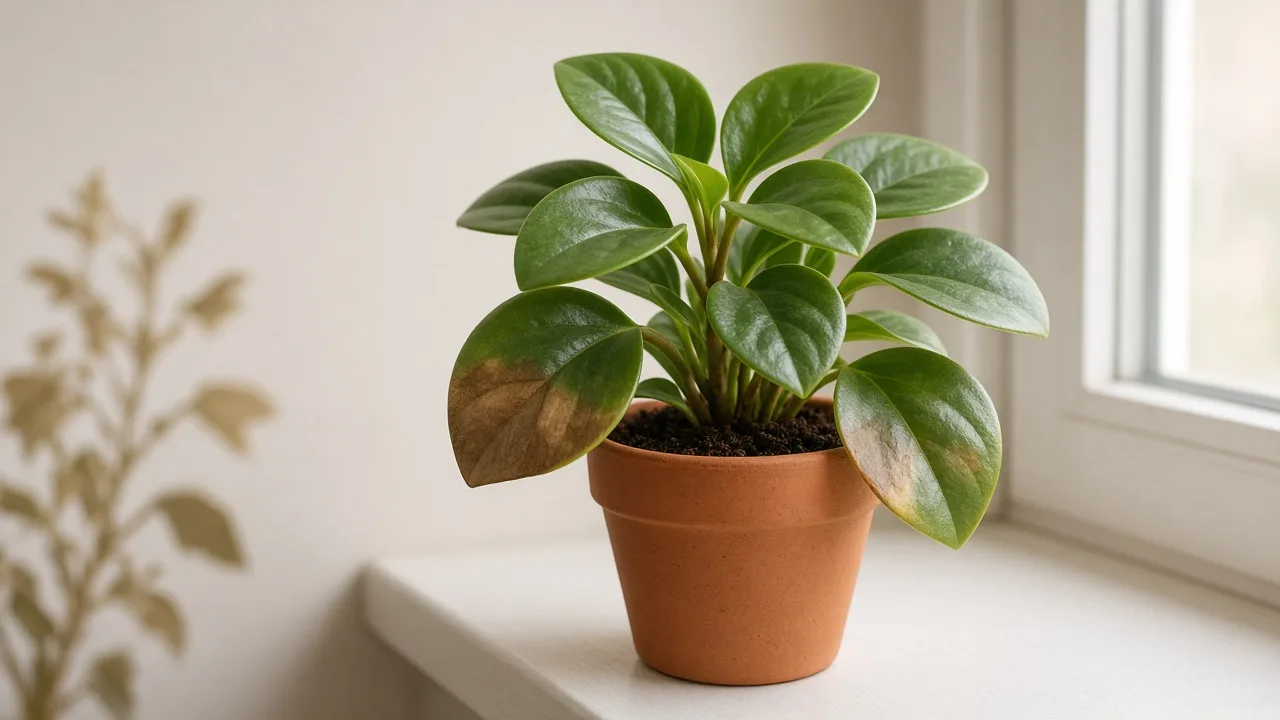
Brown Leaves on Baby Rubber Plant: Causes, Checks & Fixes
This guide covers brown leaves on Baby Rubber Plant. See also the general Brown Leaves guide, watering, and light pages for this plant.
Brown Leaves on Baby Rubber Plant: Causes, Checks & Fixes
Quick answer
Brown leaves on baby rubber plant (Peperomia obtusifolia) mean tissue has died—usually from a care mismatch, not a mysterious disease. This compact Piperaceae species carries thick, rounded, succulent-like leaves on a small root system that cannot sit in wet soil for days. When roots fail from overwatering, leaves brown from the bottom up while the pot stays heavy. When air is too dry or the plant sits in direct sun, margins or patches brown while stems may still feel firm.
For how whole-leaf browning works across houseplants, see our brown leaves guide. On obtusifolia, the pinch test separates opposite fixes in under a minute: mushy brown tissue on wet mix is rot risk; crispy brown on a light dry pot is drought or humidity stress; one-sided tan patches after a window move is scorch on glossy oval blades.
First step: stop watering and probe the top 1 to 2 inches of mix before you change anything else. Wet mix with soft stem bases means dry-down—not another drink. A very light pot with crispy brown leaves means slow rehydration after a full dry-down cycle, not a heavy soak on autopilot.
What brown leaves look like on Peperomia obtusifolia
Healthy baby rubber plant leaves are thick, springy, and glossy green—solid green or variegated—with a blunt oval shape that stores water like a small reservoir. Browning breaks that pattern in distinct ways:
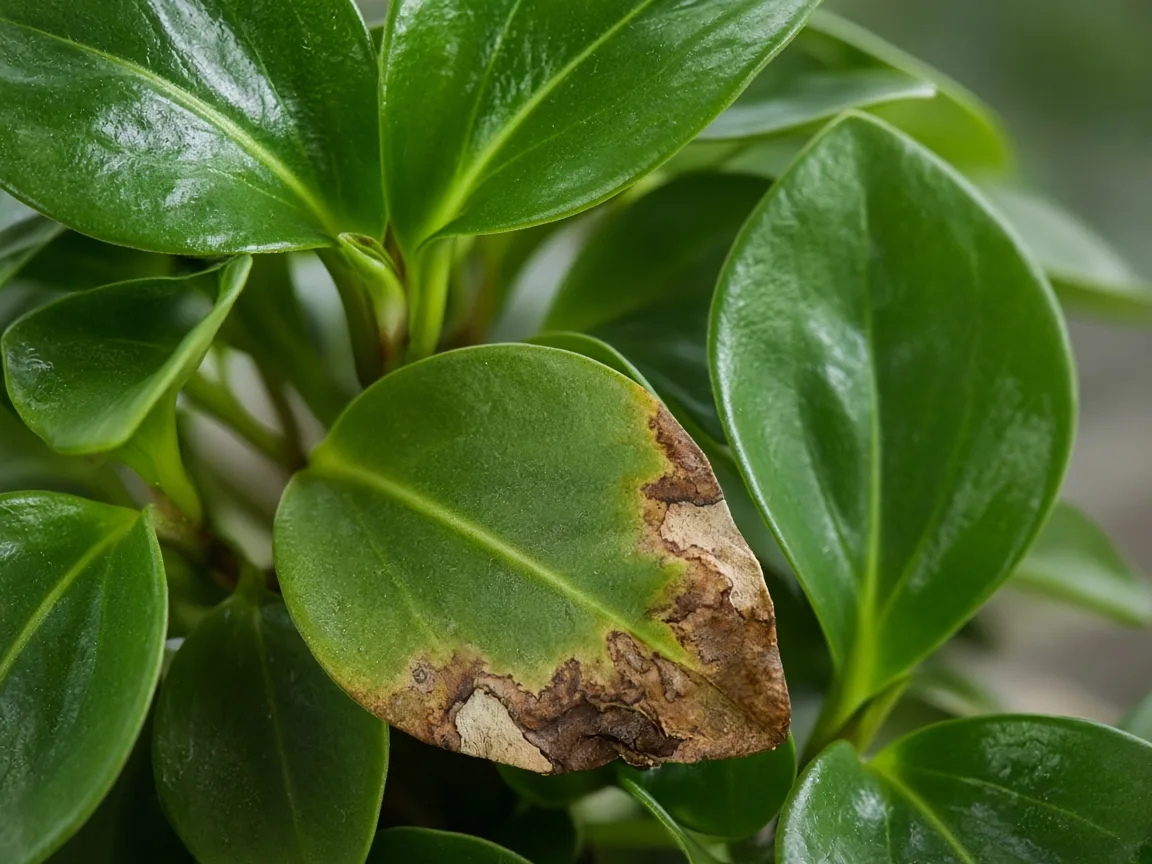
Brown leaves symptoms on Baby Rubber Plant - compare with healthy tissue on the same plant.
- Overwatering browning — Lower oval leaves turn dull, then tan or brown, often while petioles go limp. The pot feels heavy days after watering. Yellow leaves may drop before full browning. Stem bases at the soil line may soften.
- Low-humidity browning — Dry tan-to-brown edges or patches on otherwise firm leaves, often in winter when heating runs. Newer upper leaves may look fine while older ones crisp first—see low humidity when margins alone are affected.
- Sun scorch — Bleached or brown patches on the leaf surface facing the window, not always starting at the tip. Sunlight that is too strong or direct will burn the leaves on this bright-indirect species.
- Underwatering browning — Whole leaves turn crispy brown and may feel thinner when pinched. The pot is very light and mix pulls away from the pot edge.
- Leaf spot progression — Dark brown or black wet-looking patches, sometimes with yellow halos, often after foliage was repeatedly wet during watering.
Fully brown leaves feel papery or mushy depending on cause. Partially brown leaves may still photosynthesize if green tissue remains—do not strip them all at once unless disease is confirmed.
Why baby rubber plant gets brown leaves
Overwatering is the most common driver. NC State notes that overwatering causes leaves to yellow and can lead to root rot on obtusifolia, which is intolerant of wet soil. Clemson HGIC warns that peperomia will drop leaves if overwatered and recommends letting the soil dry out between waterings. Baby rubber plant has low water needs and stores moisture in its thick leaves—an oversized decorative pot holds a large volume of wet mix around a tiny root ball. Calendar watering in dim winter light adds water the plant cannot use, and damaged roots cannot deliver moisture evenly—so leaves brown even when soil feels damp.
Common name confusion makes this worse. Baby rubber plant is not a rubber tree. Ficus elastica wants steadier moisture and a larger root system; obtusifolia wants a deeper dry-down and a smaller, airier root zone. Following Ficus-style advice on Peperomia is a reliable route to rot and brown lower leaves.
Low humidity and dry air stress the farthest leaf tissue first. Missouri Botanical Garden notes that obtusifolia likes high humidity in summer and prefers medium relative humidity indoors. RHS guidance on peperomias notes that leaves turning brown may respond to raising humidity—for example by standing the pot on a tray of damp gravel. Winter heating and AC drafts both pull moisture from thick oval leaves faster than roots can replace it.
Direct sun scorch burns the glossy surface. This plant wants bright indirect light—not harsh midday rays through a south window. A sudden move from shade to strong sun often produces one-sided brown or tan patches within days, especially on pale ‘Variegata’ sections that photosynthesize less efficiently.
Severe underwatering causes leaf scorch and browning when roots cannot supply moisture during extended dry spells. Obtusifolia stores some water in its leaves, so drought browning is less common than rot—but alternating heavy soak and long drought still damages margins.
Tap-water fluoride can brown leaf edges on stressed peperomia. RHS notes peperomias are sensitive to fluoride in tap water—filtered or rainwater at room temperature is safer during recovery if margins crisp repeatedly despite correct watering.
Thick-leaf pinch test on obtusifolia
This species is grouped with the succulent-type peperomias because its leaves act as small water reservoirs. Healthy foliage feels firm when you pinch it gently; the plant survives short dry spells by drawing on stored leaf moisture. That biology makes obtusifolia far more tolerant of drought than overwatering—missing one watering cycle rarely kills a mature plant, but watering while the root zone is still saturated drives out oxygen and kills fine roots within weeks.
Use the pinch test before you repot or trim heavily:
- Firm leaf + heavy wet pot — Overwatering or early root damage. Dry-down first; see overwatering.
- Soft wrinkled leaf + light dry pot — Underwatering. One thorough drink after confirming dryness; see underwatering.
- Firm leaf + crispy brown margins only — Humidity, fluoride, or uneven watering—not whole-leaf rot. See brown tips if only edges are affected.
- Soft stem base + sour smell — Advancing root rot. Unpot the same week.
How to confirm the cause
Work through these checks before Baby Rubber Plant repotting guide or trimming heavily:
- Pot weight — Heavy days after watering confirms excess moisture. Very light with crispy brown leaves points to drought.
- Moisture probe — Press a finger or dry chopstick 1 to 2 inches into the mix. Cool, clinging soil means wait—not water.
- Stem firmness — Pinch bases where petioles meet soil. Soft tissue with wet mix means root or stem rot inspection is urgent.
- Browning pattern — Bottom-up with wet soil fits overwatering. Window-facing patches fit scorch. Even crispy margins on firm stems fit humidity or water quality stress.
- Smell test — Sour or rotten odor from mix strongly suggests root damage from prolonged saturation.
- Recent changes — New window placement, repot into a larger pot, or winter watering on summer autopilot often explain sudden browning.
- Leaf texture — Crispy and dry versus soft and dark narrows drought or humidity stress versus rot.
If the pot is heavy, mix is damp deep down, and stems are still firm, you have likely confirmed overwatering without advanced rot. Proceed to dry-down first.
First fix for baby rubber plant
Stop watering immediately and move the plant to bright, indirect light with good airflow.
This halts further saturation while you confirm whether roots are failing. Do not pour “just a little” because leaves look sad. Do not repot on day one unless stems are soft or soil smells sour. Do not fertilize brown leaves on wet soil.
Empty saucer water and remove cachepots so air reaches the drainage hole. The baby rubber plant light guide helps the plant use remaining moisture without scorching glossy foliage. If stems are firm and only lower leaves are brown, wait until the mix is completely dry before the next thorough watering—then discard runoff.
If stems feel soft or soil smells sour, unpot, trim mushy brown roots with clean scissors, and repot into fresh airy mix in a pot sized to the root ball—not the leaf spread.
Step-by-step recovery
After the first dry-down or root trim:
- Raise humidity modestly if margins crisped in dry winter air. A pebble tray or small humidifier near the plant beats misting, which dries quickly and can wet foliage.
- Move off harsh direct sun if scorch patches appeared after a window change. An east window or filtered light suits this species.
- Rehydrate slowly if the pot was bone dry and leaves are crispy. Water thoroughly once, let it drain, and wait for full dry-down before repeating—do not keep soil soggy to “catch up.”
- Remove fully dead leaves with clean snips once the cause is controlled. Leave partially green leaves unless they show wet rot patches.
- Hold fertilizer until new growth looks healthy. Feeding stressed peperomia adds salt without fixing root or moisture problems.
- Inspect for pests if browning is spotty with sticky residue or webbing—mealybugs and spider mites can weaken foliage, though full-leaf browning more often traces to roots or environment.
Change one variable at a time. Obtusifolia reacts poorly when water, pot, light, and food all shift in the same week.
Recovery timeline
Mild browning from one overwatering episode may stabilize within one to two weeks after the root zone dries. Humidity or sun scorch fixes often show on new leaves within two to four weeks during active growth. Stem rot can take several weeks to produce firm new oval leaves—or may not recover if tissue is mushy throughout.
Existing brown tissue never re-greens. Judge success by the newest glossy leaves standing upright on stiff green stems, not by old damaged blades.
Lookalike symptoms to rule out
| What you see | Likely cause | Where to go next |
|---|---|---|
| Yellow lower leaves with wet soil | Early overwatering before full browning | Yellow leaves |
| Brown tips only on firm leaves | Water quality, humidity, or uneven watering | Brown tips |
| Limp leaves with wet soil | Root failure from saturation | Wilting or root rot |
| One dull lower leaf, firm upper growth | Normal old-leaf aging on woody lower nodes | Remove spent leaf once plant is stable |
| Spotty patches with webbing | Pest stress | Spider mites |
Mistakes to avoid
Do not increase watering to fix brown leaves—soggy roots make the problem worse on this slow-drinking species.
Do not repot into a much larger container hoping for recovery. Extra wet soil around small roots prolongs rot.
Do not place a stressed plant in direct sun to “help” it—scorch adds new brown patches on recovering foliage.
Do not strip every leaf at once. Partially green leaves still support recovery until new growth emerges.
Do not apply full-strength fertilizer on wet soil.
How to prevent brown leaves next time
Pair bright indirect light with dry soil between drinks in a container only slightly larger than roots—the baby rubber plant soil guide covers perlite-heavy mixes that dry predictably. Let compost partially dry between waterings and empty saucers after every drink. Keep temperatures roughly 65–80°F indoors and away from cold drafts and hot vents.
Water at the soil surface without wetting leaves. Raise humidity in dry months if margins brown repeatedly. Reduce watering from fall to late winter when growth slows. Follow the baby rubber plant watering guide for seasonal dry-down rhythm—not a fixed calendar.
Baby rubber plant is listed as non-toxic to cats and dogs—still handle gently when inspecting roots near curious pets.
When to use this page vs other Baby Rubber Plant guides
- Baby Rubber Plant watering guide — Use for routine moisture checks before assuming brown leaves is the main issue.
- Baby Rubber Plant problems hub — Browse all common issues on this species.
- Yellow Leaves on Baby Rubber Plant — Different entry point when symptoms overlap with brown leaves.
- Overwatering on Baby Rubber Plant — Deep dive when wet soil and limp leaves are the primary pattern.