Calcium Deficiency on Begonia Maculata: Causes, Checks &
Quick answer
Calcium deficiency on begonia maculata shows as distorted, crinkled, or tip-burned new angel-wing leaves at the top while older lower spotted leaves may look normal. First step: confirm damage is on the newest expanding top leaves—not wet-foliage edge burn on mature wings.
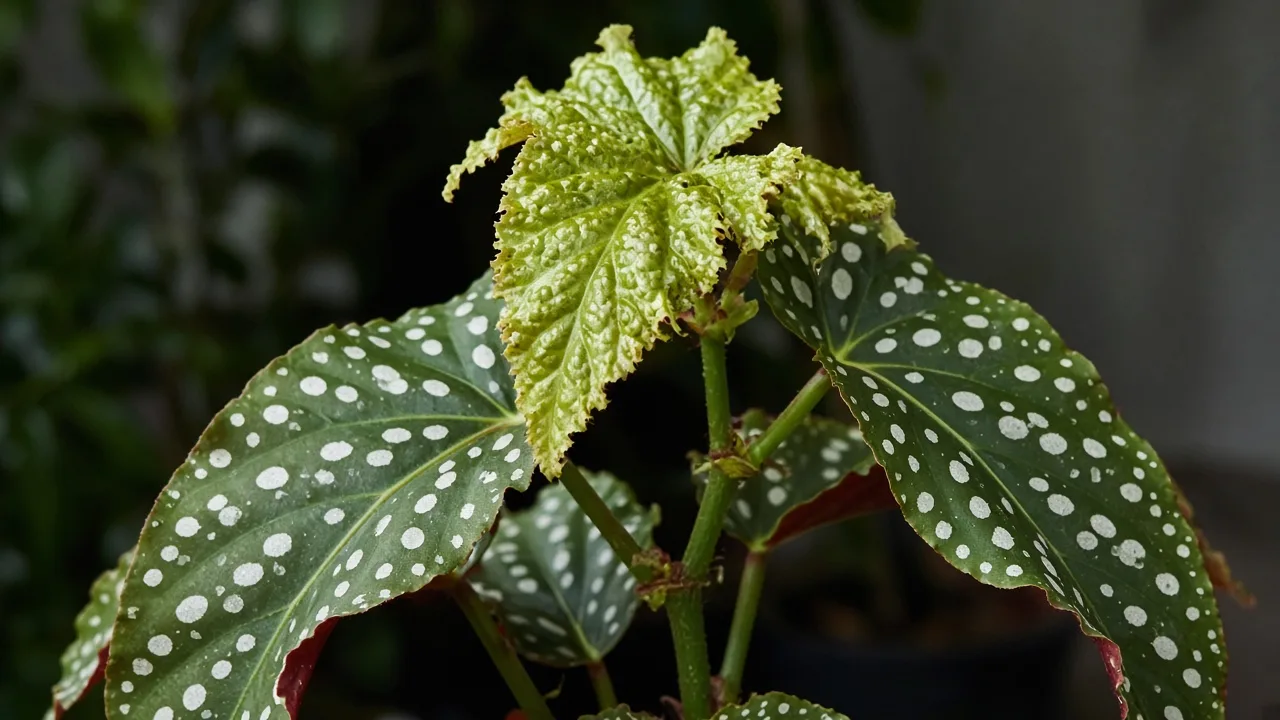
Calcium Deficiency on Begonia Maculata: Causes, Checks & Fixes
This guide covers calcium deficiency on Begonia Maculata. See also the general Calcium Deficiency guide, watering, and light pages for this plant.
Calcium Deficiency on Begonia Maculata: Causes, Checks & Fixes
Quick answer
Calcium deficiency on begonia maculata (Begonia maculata) shows as distorted, crinkled, or tip-burned new angel-wing leaves at the top while older lower spotted leaves may remain normal. Calcium is immobile in plants, so deficiency appears on young expanding tissue first.
See our calcium deficiency guide. On polka dot begonia, inspect the newest angel-wing leaf at the top—distortion there points to calcium before nitrogen on lower leaves.
First step: confirm distorted new top leaves, not mature leaf edge burn from wet foliage.
When to use this page vs other Begonia Maculata guides
| Pattern | Read next |
|---|---|
| New top angel-wing distorted | Calcium deficiency (this page) |
| Lower leaves pale, spots faded | Nitrogen deficiency |
| Mature leaf edges burned | Water on spotted foliage |
| Mushy stem, wet soil | Overwatering |
| Old leaf margin scorch | Potassium deficiency |
| Random mature leaf distortion | Distorted leaves from pests |
What calcium deficiency looks like on begonia maculata
Begonia maculata extends fast from the top in summer—calcium deficiency distorts the newest angel-wing leaf while lower polka-dot foliage looks fine. The immobile calcium pattern targets expanding top tissue only.
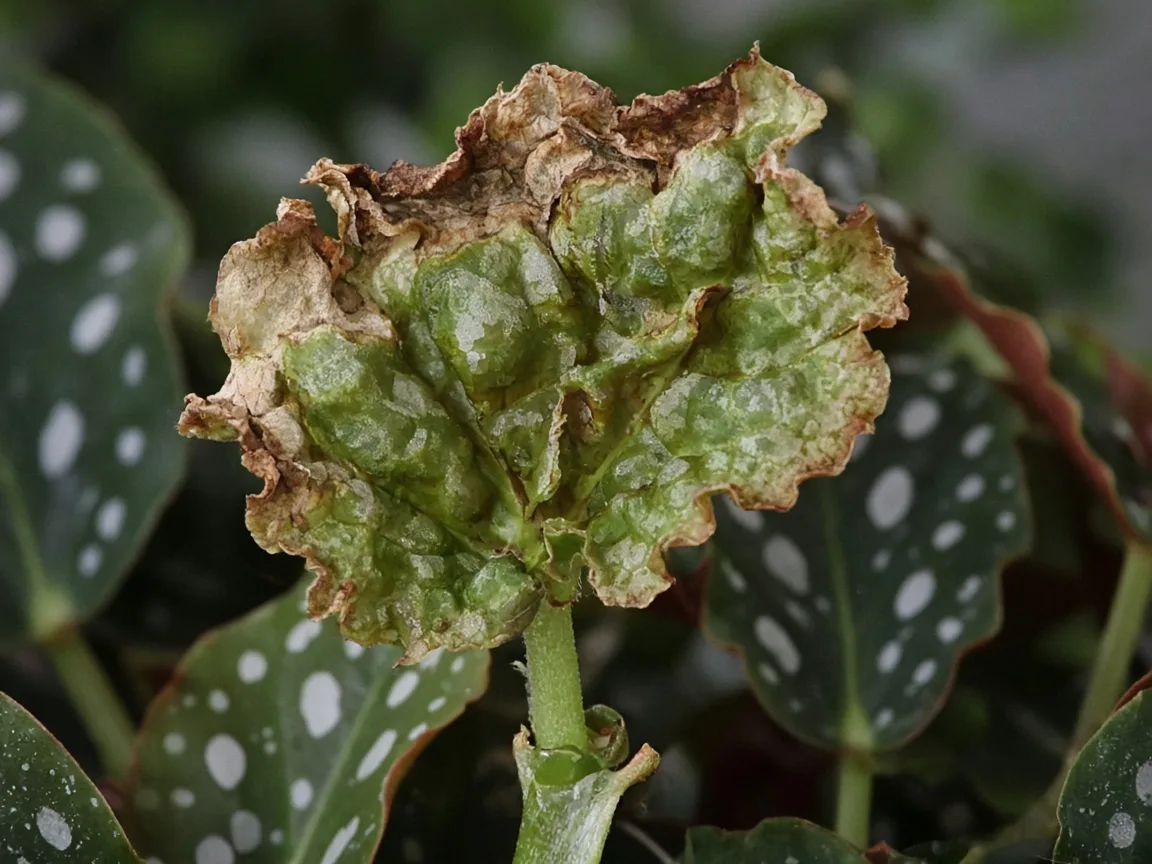
Distorted new angel-wing leaf at the top—crinkled margins and tip necrosis on expanding tissue while lower spotted leaves may look normal.
Typical signs:
- Distorted, crinkled, or uneven new angel-wing leaves at top
- Brown or necrotic tips on newest expanding leaf
- Stunted new leaf size vs prior summer growth
- Older lower spotted leaves may look normal
- Firm stem base if not overwatered
- Sequential distortion on successive top flushes during peak growth
Not calcium deficiency:
- Edge burn on mature leaves from wet foliage — watering technique issue
- Pale lower old leaves — nitrogen deficiency
- Mushy stem on wet soil — overwatering
- Holes or chewing on mature wings — pests
- Old leaf margin scorch only — potassium deficiency
Why begonia maculata gets calcium deficiency
Fast-growing begonias push new angel-wing leaves from the top during summer extension. Calcium supports cell walls in expanding tissue. Alternating dry spells and heavy watering in fast-draining mix interrupts calcium transport. Incomplete fertilizer compounds the issue.
Begonia-maculata-specific causes:
- Moisture swings in summer — Dry-then-flood per inconsistent watering rhythm.
- Incomplete micronutrient fertilizer — Fast growth without calcium in feed. Container plants need complete micronutrients during rapid extension.
- Leached light container mix — Mid-season depletion in same pot.
- Confusion with wet-leaf damage — Never wet spotted foliage; edge burn on mature leaves differs from new-top crinkle.
- Confusion with distorted leaves — Pests on random mature leaves vs sequential top distortion.
- Blocked uptake from overwatering — Soggy mix limits calcium transport.
New angel-wing distortion at the top
Begonia maculata extends fast from the top in summer—calcium deficiency distorts the newest angel-wing leaf while lower polka-dot foliage looks fine. That differs from nitrogen deficiency on oldest lower leaves and from mature leaf edge burn when water sits on spotted foliage—a begonia-specific mistake that does not crinkle only the top bud leaf.
Fast summer growth in small leached containers creates high calcium demand at the exact moment owners let pots dry out between busy watering schedules. Water at soil level only per watering guide—wet spotted leaves cause edge burn that mimics but does not match new-top-only distortion.
Wet foliage vs calcium tip burn
Begonia maculata is sensitive to water on spotted foliage—overhead watering or splashing causes edge burn and spotting on mature angel-wing leaves. That damage affects leaves that were wet, not necessarily the newest top bud leaf. Calcium deficiency produces sequential distortion on each new top flush regardless of watering technique.
If only mature wings show edge burn after overhead water, fix watering technique first. If the newest unopened top leaf emerges crinkled while lower leaves look normal, suspect calcium transport failure from moisture swings or incomplete feed.
Lookalike symptoms
| Pattern | Likely cause | Key difference on Begonia Maculata |
|---|---|---|
| New top angel-wing distorted | Calcium deficiency (this page) | Sequential top-flush distortion; lower leaves normal |
| Lower leaves pale, spots faded | Nitrogen deficiency | Old tissue first |
| Mature leaf edges burned | Water on spotted foliage | Affects wetted mature leaves |
| Mushy stem, wet soil | Overwatering | Soft stem base |
| Old leaf margin scorch | Potassium deficiency | Lower wing margins |
How to confirm
- New top leaves only — Distortion on newest angel-wing at crown.
- Watering consistency — Dry spells vs even moisture.
- Fertilizer completeness — Calcium on label.
- Wet foliage ruled out — Mature edge burn vs new-top distortion.
- Stem firmness — Firm vs soft rot.
- Peak growth timing — Summer fast extension demand.
- Sequential flushes — Multiple distorted top leaves support calcium lack.
First fix for Begonia Maculata
One half-strength dose of complete balanced fertilizer containing calcium, after stabilizing even moisture—not alternating bone-dry and saturated cycles.
Per the begonia maculata fertilizer guide. Water at soil level only. Top 3 cm dry-down, not full wilting between drinks.
Step-by-step recovery
- Maintain consistent moisture—top 3 cm dry-down per watering guide.
- Use complete fertilizer every two to four weeks through active growth per fertilizer guide.
- Never wet spotted angel-wing foliage during recovery.
- Repot into fresh mix if roots fill the pot and distortion persists after two feeds.
- Correct overwatering if stem base is soft.
- Monitor the next top angel-wing leaf after the distorted one.
Recovery timeline
Judge recovery on the next top angel-wing leaf:
- 1–2 weeks: Moisture should stabilize; no new distortion on expanding top bud
- 2–4 weeks: Next top leaf emerges cleaner—main success signal
- 4+ weeks: Two clean top flushes confirm calcium is adequate
The currently distorted angel-wing rarely straightens. Success means normal new top leaves with sharp silver dots.
Mistakes to avoid
- Wetting spotted foliage when watering or feeding. Edge burn on mature wings mimics but differs from top-only crinkle.
- Letting pots dry completely between summer drinks. Moisture swings interrupt calcium transport to new top tissue.
- Confusing nitrogen lower-leaf pale with calcium top distortion. Opposite tissue age patterns.
- Heavy feeding on waterlogged mix. Fix drainage first.
- Expecting distorted top leaf to straighten. Judge the next angel-wing flush.
- Ignoring incomplete fertilizer during fast summer growth. Calcium demand peaks with extension rate.
Prevention
- Maintain even moisture in fast-draining soil per watering guide
- Water at soil level only—never wet spotted angel-wing foliage
- Use complete fertilizer with calcium through growing season
- Top 3 cm dry-down—not full wilting between drinks
- Refresh leached mix mid-season in heavily watered containers
- Track watering and feeding through peak summer extension
Related Begonia Maculata guides
- Begonia maculata overview
- Begonia maculata fertilizer
- Begonia maculata watering
- Nitrogen deficiency
- Potassium deficiency
- Distorted leaves
- Begonia maculata problems hub
Conclusion
Distorted new angel-wing leaves at the top while lower spotted foliage stays normal signal calcium transport failure during fast summer growth—stabilize even moisture, water at soil level only, apply one complete feed at half strength, and monitor the next top leaf for clean expansion over two to four weeks.
Related tool
Use the Fertilizer Dilution Calculator to narrow causes for calcium deficiency on this plant before changing multiple variables at once.