Brown Leaves on Begonia Rex: Causes, Checks & Fixes
Quick answer
Brown leaves on Begonia Rex usually mean tissue died after humidity loss, root-zone stress, sun on patterned blades, or normal aging along the rhizome—not a single disease. First step: feel whether the brown tissue is crispy or soft, then probe the top 2–3 cm of mix to separate a light dry pot from a heavy wet one.
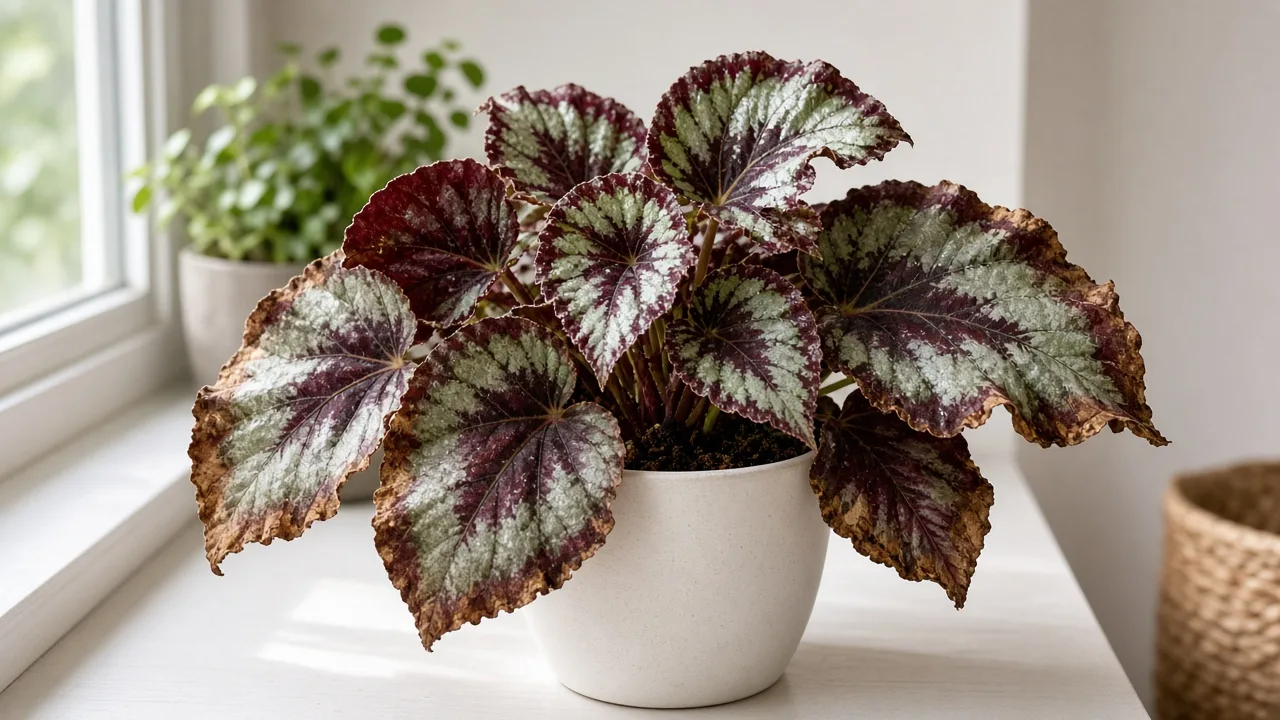
Brown Leaves on Begonia Rex: Causes, Checks & Fixes
This guide covers brown leaves on Begonia Rex. See also the general Brown Leaves guide, watering, and light pages for this plant.
Brown Leaves on Begonia Rex: Causes, Checks & Fixes
Quick answer
Brown leaves on Begonia Rex (Begonia rex-cultorum) are a late-stage stress signal on thin, patterned foliage—not one diagnosis. Rex begonias grow from a shallow rhizome with new leaves emerging along a low rosette; whole-blade browning usually traces to low humidity below about 50% RH, soil that stayed wet too long, direct sun on metallic or burgundy patterns, repeated drought, normal outer-leaf aging along the rhizome, or fungal disease after wet foliage—sometimes two causes at once in a dry winter window. For how chronic stress kills leaf tissue in general, see our brown leaves guide. On rex begonias, the crispy-versus-soft texture test and rhizome firmness at the soil line route you faster than color alone.
First step: feel the brown tissue and probe the top 2–3 cm of potting mix. Crispy, papery brown on a light dry pot points toward underwatering or low humidity. Soft, limp brown on a heavy wet pot means stop watering—not another drink because painted leaves look dry. Localized tan or bleached patches on the sun-facing side of each patterned blade suggest scorch from harsh glass. For baseline care rhythm, see the Begonia Rex overview.
What brown leaves look like on Begonia Rex
Rex begonias are grown for bold metallic, silver, and burgundy leaf patterns on relatively thin blades rising from short petioles along a horizontal rhizome. Brown foliage shows up in distinct patterns:
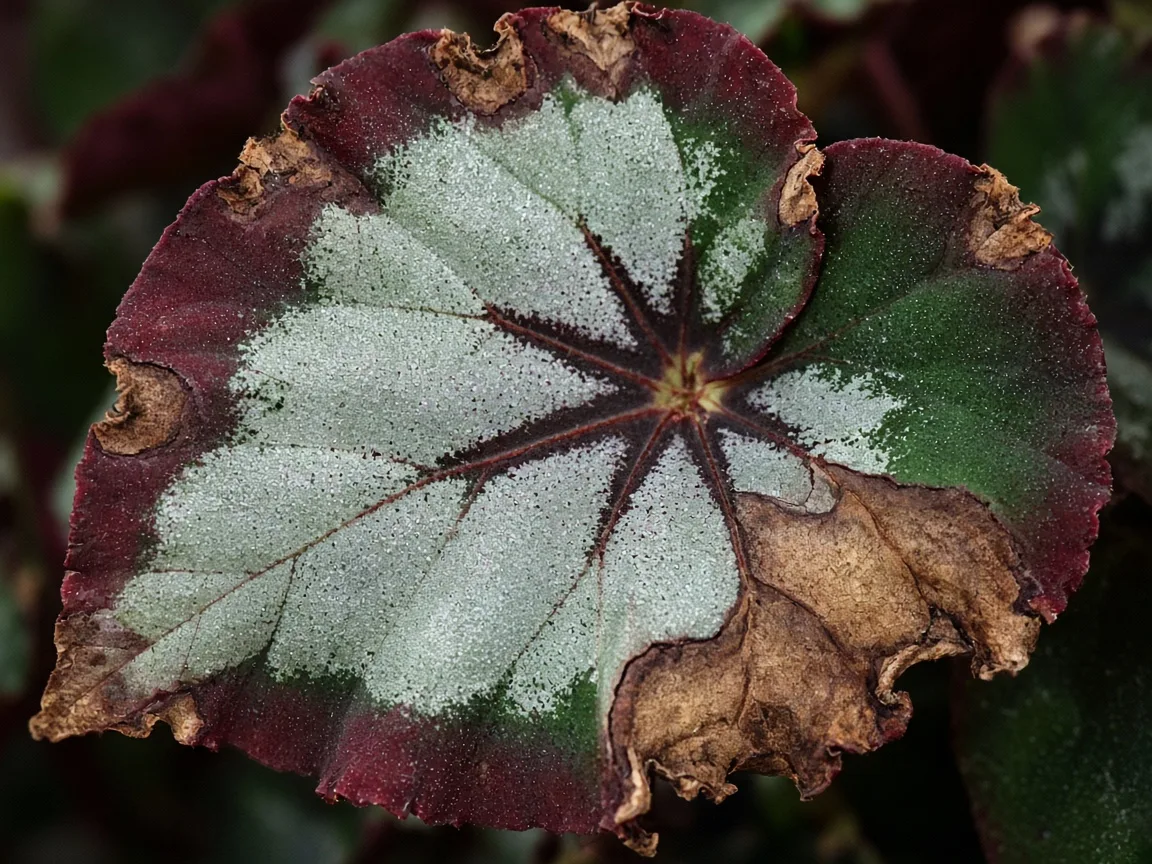
Brown Leaves symptoms on Begonia Rex - compare with healthy tissue on the same plant.
- Low-humidity whole-leaf crisping - Oldest outer rosette leaves turn dull yellow-green, then tan-to-brown across most of the blade while new center growth may still hold pattern. Heated winter rooms, AC airflow, and spots near radiators are common triggers. Often starts as brown tips before margins consume the whole leaf.
- Overwatering and rhizome stress - Multiple lower leaves brown while mix stays damp, the pot feels heavy days after watering, and petioles go soft. Rex rhizomes rot quickly in persistently wet conditions. Brown may begin as yellow leaves on lower blades first. Sour smell or a mushy crown means escalate to root rot.
- Direct sun scorch on painted foliage - Patchy brown, bleached, or chalky zones on the sun-facing side of each leaf; shaded portions keep stronger burgundy or silver patterning. Rex cultivars need bright indirect light, not harsh rays through south or west glass.
- Underwatering dry-down - Lower leaves first turn crispy brown while the pot feels lightweight and mix pulls from pot sides. Less common than humidity or wet-root stress on rex begonias but real after repeated long dry cycles.
- Normal outer-leaf aging along the rhizome - One or two oldest outer leaves fade and brown slowly over weeks while the rhizome stays firm and new patterned growth from the center looks healthy. Expected turnover on a spreading rhizome—not emergency.
- Winter dormancy brown-out - In late fall and winter, rex cultivars often slow growth and shed outer leaves in dim, cool rooms. Leaves brown and drop while the rhizome remains firm and mix dries slowly because the plant is barely drinking.
- Disease blotches - Water-soaked brown patches that spread into tan necrosis, sometimes with grey mould on wet leaf surfaces. NC State Extension notes that overwatering, misting, and poor circulation invite botrytis and powdery mildew on rex begonias.
- Salt and tap-water burn - Brown margins or whole-blade crisping with white crust on soil after heavy feeding or hard tap water. NYBG links high mineral content in water to cosmetic rex leaf damage.
Worry when browning reaches new crown leaves, pairs with wet soil and a soft rhizome, or hits many blades within a week—not when one oldest outer leaf crisps slowly in a 32% RH winter room with firm rhizome tissue.
How brown travels on painted rex leaf blades
Rex begonia leaves are thin and patterned—metallic silver bands, burgundy hearts, and green outer rings show stress before a generic green houseplant would. Margins and tips brown first when air is harsh or roots cannot deliver water to the farthest tissue; prolonged dry heat can progress from brown tips to whole-blade necrosis even when soil moisture looks moderate.
Sun scorch hits the exposed painted surface while the shaded side of the same leaf keeps color—a side-specific pattern impossible to confuse with uniform bottom-leaf aging. Wet-root failure browns multiple lower leaves from the petiole upward while the pot stays heavy; the shallow rhizome cannot tolerate saturated mix the way deeper-rooted plants sometimes do.
Which leaves brown matters as much as color: outer-only, slow turnover along the rhizome fits aging or dormancy; new crown growth plus wet soil does not. Rex pots are often shallow and wide—the rhizome spreads horizontally, so lower outer leaves die back as the plant invests in center flush. That bottom-outside pattern on a firm rhizome is normal rex architecture, not generic houseplant decline.
Why Begonia Rex gets brown leaves
Low humidity and winter heating
This is the leading cause of brown foliage on rex begonias indoors—often after margins crisp first. Rex Cultorum Group plants need relative humidity above 50%, and thin-leaf cultivars may need 60–80%. UConn notes that brown leaf tips are typically an indicator of low humidity on rex begonias; when dry air persists, whole blades can follow. Typical heated homes drop to 25–40% RH in winter.
Rex begonias are rhizomatous foliage plants in often-small shallow pots—soil can stay appropriately moist while air still strips moisture from thin painted blades. That split is why brown leaves persist even when you water on schedule. See low humidity for RH targets and humidifier setup.
Overwatering and rhizome rot
Rex rhizomes sit shallow at or just above the soil line and rot quickly when mix stays saturated. UConn advises it is better to underwater slightly than overwater rex begonias. Damaged roots cannot move water evenly, so lower leaves brown and soften while soil feels wet—a paradox that drives owners to water more. NC State Extension warns that overwatering can cause root rot on rex types.
Cool dim winter rooms compound the problem: the same pot dries half as fast as in summer, so a July watering rhythm leaves soil soggy through February. Overwatering on Begonia Rex covers wet-soil confirmation; brown leaves are often a late sign before the crown turns mushy.
Direct sun on patterned foliage
Rex leaves evolved under forest canopy. Direct sunlight bleaches and scorches patterned foliage within days. Scorched tissue turns brown and papery on exposed surfaces while shaded portions retain metallic or burgundy patterning—a different pattern from uniform humidity crisping on all outer leaves.
Underwatering and rhizome shrink
Rex begonias recover from brief dryness better than from chronic wet crowns, but repeated drought still crisps and browns lower leaves. A rhizome that dries and shrinks pulls moisture from older foliage first. Underwatering browning pairs with lightweight pots, dust-dry mix below the surface, and crispy brown tissue—not limp leaves on wet soil.
Normal aging and winter dormancy along the rhizome
New rex leaves emerge from the center of the rosette along the rhizome, so oldest outer leaves brown and drop eventually. On a healthy plant this is gradual—one leaf at a time—with firm rhizome tissue and stable new growth.
Many rex cultivars also slow or partially defoliate in fall and winter unless grown under lights. Outer leaves brown and fall while the rhizome rests. If the rhizome stays firm and soil is only barely moist—not waterlogged—reduce watering and wait for spring flush rather than treating dormancy like rot.
Fungal disease after wet foliage
NC State Extension recommends avoiding misting and overwatering on rex begonias. Wet leaf surfaces in stagnant air invite botrytis grey mould and powdery mildew, which can brown or necrose painted blades. Brown soggy blotches on leaves touching damp soil differ from crispy drought browning. Provide good circulation and remove dead leaves promptly.
Hard water, salts, and fertilizer stress
Minerals in tap water and repeated fertilizer leave salts in shallow rex pots. As moisture moves through leaves and evaporates, salts concentrate at margins and can progress into broader brown zones. NYBG specifically links high mineral content in water to cosmetic rex leaf damage.
Lookalike symptoms to rule out
Before repotting or feeding, rule out these common misreads:
| What you see | Likely cause | Key differentiator |
|---|---|---|
| Brown tips only, center still patterned | Low humidity or hard water | Margins only; see brown tips |
| Whole lower leaves, wet heavy pot | Overwatering / root rot | Soft tissue, sour mix, mushy rhizome |
| Sun-facing patches, shaded side colored | Direct scorch | Side-specific on each blade |
| One outer leaf, slow, firm rhizome | Normal aging or dormancy | Weeks-long fade; firm crown |
| Yellow lower leaves first | Early overwatering stress | See yellow leaves |
| Wilting without full brown yet | Root or moisture stress | See wilting and drooping leaves |
| Stippling, webbing, cottony clusters | Spider mites or mealybugs | Inspect undersides before watering fixes |
If wet soil and multiple brown lower leaves appear together, treat watering, drainage, and rhizome moisture before anything else.
How to confirm the cause
Work through this rex-specific inspection in order:
- Texture of brown tissue - Crispy and papery suggests drought, low humidity, sun scorch, or salt burn. Soft and limp on wet mix suggests overwatering or rot. Water-soaked then tan blotches suggest disease.
- Moisture at 2–3 cm depth - Cool clinging mix means pause watering. Dry crumbly surface plus lightweight pot suggests underwatering. Surface dry with heavy pot means check deeper—the rhizome zone may still be wet.
- Which leaves are affected - Outer only, slowly = aging or dormancy likely. Multiple lower leaves quickly + wet soil = overwatering likely. Sun-facing patches = light scorch. Uniform outer crisping in dry air = humidity stress.
- Rhizome and crown firmness - Gently press the rhizome where petioles meet soil. Firm tissue supports dry-down or humidity/light fixes. Soft, collapsing, or black tissue with wet mix points to root rot—stop watering and inspect immediately.
- Season and room conditions - Late fall or winter in a cool dim room? Reduced transpiration and normal outer leaf shed are common. Measure humidity at plant height beside the canopy, not on a distant wall.
- Light at plant height - Direct sun on patterned leaves, or deep interior shade more than six feet from glass, both produce distinct browning patterns with different fixes.
Confirmed overwatering shows at least two signs: wet mix at depth, browning lower leaves, and a heavy pot that is not drying on schedule—especially if the rhizome is still firm enough to recover with a dry-down.
First fix for Begonia Rex
Feel the brown tissue, then probe the top 2–3 cm of mix—and match your next action to crispy-dry versus soft-wet.
That single split prevents the two most common rex mistakes: watering a already-saturated rhizome because leaves look dry, or running a humidifier on a plant that actually needs a dry-down pause.
If brown is crispy on a light dry pot: Water thoroughly when the top 2–3 cm dries, drain fully, and start a humidifier targeting 50–70% RH beside the canopy. Use filtered or rainwater if edges browned despite adequate humidity.
If brown is soft on heavy wet mix with a firm rhizome: Stop watering until the top 2–3 cm is dry and keep the crown dry when you eventually water again. Empty saucers and cachepots. Do not compensate with fertilizer or crown misting.
If brown is patchy on sun-facing blade surfaces: Shift out of direct rays; trim fully scorched leaves if they are mostly dead.
Make this one correction first. Wait two weeks before stacking repotting, feeding, or pest treatments unless the rhizome is clearly rotting.
If you confirmed a different cause
Winter dormancy (firm rhizome, slow outer leaf browning, cool dim room): Reduce watering to barely moist—enough that the rhizome does not shrivel, not enough to stay wet for weeks. Skip fertilizer. Do not repot.
Disease blotches (water-soaked brown spreading on wet foliage): Remove affected leaves with clean scissors, improve airflow, keep foliage dry, and avoid misting. Escalate if grey mould spreads.
Mushy rhizome with wet soil: Escalate to root rot recovery—unpot, trim dead tissue, repot into fresh airy mix in a shallow pot.
Step-by-step recovery
Match follow-up steps to what you confirmed:
Low humidity (crispy outer leaves, firm rhizome, moderate soil moisture):
- Run a humidifier at 50–70% RH beside the canopy.
- Move the pot off radiator and vent lines.
- Switch to filtered water for watering and humidifier fill.
- Remove fully brown outer leaves; watch new unfurling patterning.
Overwatering (wet soil, firm rhizome):
- Let the top 2–3 cm dry fully between waterings.
- Adjust winter frequency—many rex pots need water every 10–14 days or longer in cool months versus every 5–10 days in active summer growth.
- Clear drainage holes; never leave standing water in cachepots.
- Watch for new center leaves holding strong color for two consecutive weeks.
Underwatering (dry deep mix, lightweight pot, crispy lower leaves):
- Water thoroughly when the top 2–3 cm dries, then drain fully.
- Check twice weekly through the next dry cycle.
Sun scorch:
- Move to bright indirect light.
- Remove fully scorched blades.
- Judge recovery by new leaf pattern intensity, not old blade color.
Recovery timeline
Fully brown rex leaves do not turn green again. They drop or can be removed. Recovery is measured by firm new patterned growth from the rhizome crown, not old blade color:
- Mild humidity crisping - Browning often stops within one to two weeks once RH stabilizes. New leaves emerge with strong metallic or burgundy patterning within two to three weeks.
- Mild overwatering - Lower-leaf browning often stops within one to two weeks once soil oxygen returns.
- Winter dormancy - Outer leaves may continue browning for weeks; new growth resumes as light improves in late winter or spring if the rhizome stayed firm.
- Advanced rhizome rot - Recovery takes longer and may be partial. If the crown softens or new leaves keep browning after dry-down and trimming, the plant may not be saveable.
Signs of improvement: pot weight drops on a normal schedule, new leaves hold vivid patterning, browning does not climb toward the crown. Signs of worsening: sour smell, soft rhizome, browning on new growth, or soil that never dries.
What not to do
Do not water more because painted leaves look dry when soil is already wet—that deepens rhizome stress on a plant that wilts because roots are failing.
Do not mist leaves or the crown to fix browning—NC State Extension recommends avoiding misting rex begonias because wet foliage invites mildew without solving root-zone moisture.
Do not fertilize a browning, wet-rooted plant. Salt buildup from overfeeding can also brown foliage.
Do not repot on day one unless the rhizome is mushy or drainage has failed. Repotting a waterlogged rex into a bigger deep pot often makes drying slower.
Do not confuse outer-leaf dormancy drop with rot—firm rhizome plus slow outer browning in winter is often watchful waiting, not emergency repotting.
Do not ignore a soft crown while removing brown leaves. Crown collapse with wet soil is urgent—see root rot.
How to prevent brown leaves on Begonia Rex
Prevention comes down to matching humidity, water, and light to how rex rhizomes actually grow:
- Hold humidity at 50% or higher - Humidifier beside the canopy beats misting for rex foliage.
- Water on dryness, not calendar - Check the top 2–3 cm every time. Active summer growth may mean every 5–10 days; winter often means 10–14 days or longer.
- Keep the crown dry - Pour at the soil line or bottom-water with full drainage afterward; never leave the pot in standing water.
- Give bright indirect light - East windows, filtered south or west placement, or supplemental LEDs in winter—no direct scorch on patterned blades.
- Use shallow pots with airy mix - Rex rhizomes spread horizontally; dense wet cores in oversized deep pots brown lower leaves first.
- Use filtered water if hard tap water crisped margins despite good RH.
- Remove spent outer leaves promptly - Keeps the rhizome base clean and makes new stress easier to spot.
- Plan for winter slowdown - Taper watering as growth pauses; resume normal rhythm when spring buds appear.
When to worry
Treat brown leaves as urgent when:
- Many leaves brown within a week, not one outer leaf over months.
- Soil smells sour or the rhizome feels soft at the soil line.
- New crown growth browns while older leaves also decline.
- Water-soaked blotches spread with grey mould on wet foliage.
Treat as normal watchful waiting when:
- The rhizome is firm, only outer leaves brown slowly in late fall or winter, and soil dries on a slowed winter schedule.
- You recently corrected humidity or watering and need two to three weeks to read the next leaf.
Begonia Rex care cross-check
If brown leaves keep returning after you adjust one variable, compare your routine to what rex begonias need:
| Checkpoint | Healthy target | Brown-leaf risk when wrong |
|---|---|---|
| Humidity | 50% RH or higher at canopy | Crispy outer blades in dry heated air |
| Soil moisture | Top 2–3 cm dry before watering | Wet mix for days; soft lower leaves |
| Crown and rhizome | Firm rhizome; dry crown after watering | Water on rhizome; mushy crown tissue |
| Light | Bright indirect; no direct scorch | Bleached sun-facing patches |
| Pot and mix | Shallow pot; airy, draining mix | Oversized deep pot, cachepot water |
| Seasonal rhythm | Less water in cool, dim months | Summer schedule all winter |
Fix the condition that fails this check before adding fertilizer, upsizing the pot, or treating for pests you have not confirmed.
Related Begonia Rex guides
- Begonia Rex overview - rhizome biology, humidity, and baseline care rhythm
- Brown tips - margin crisping that often precedes whole-blade browning
- Low humidity - RH targets and humidifier setup
- Overwatering - wet rhizome confirmation and dry-down fixes
- Root rot - soft crown escalation and shallow-pot repot recovery
- Yellow leaves - early overwatering warning before full browning
- Watering - top 2–3 cm dry-down and winter dormancy rhythm
- Underwatering - dry rhizome and crispy lower leaves