Brown Leaves on Bird of Paradise: Causes, Checks & Fixes
Quick answer
Brown leaves on Bird of Paradise are not one diagnosis. First step: feel whether the browned tissue is dry and papery or soft and limp, check soil moisture at 5 cm depth, and note whether only the outermost fan is affected or several paddles are browning at once—crispy dry brown on a light pot points to underwatering; soft brown with wet heavy soil points to root stress; tan patches after a window move point to sun scorch.
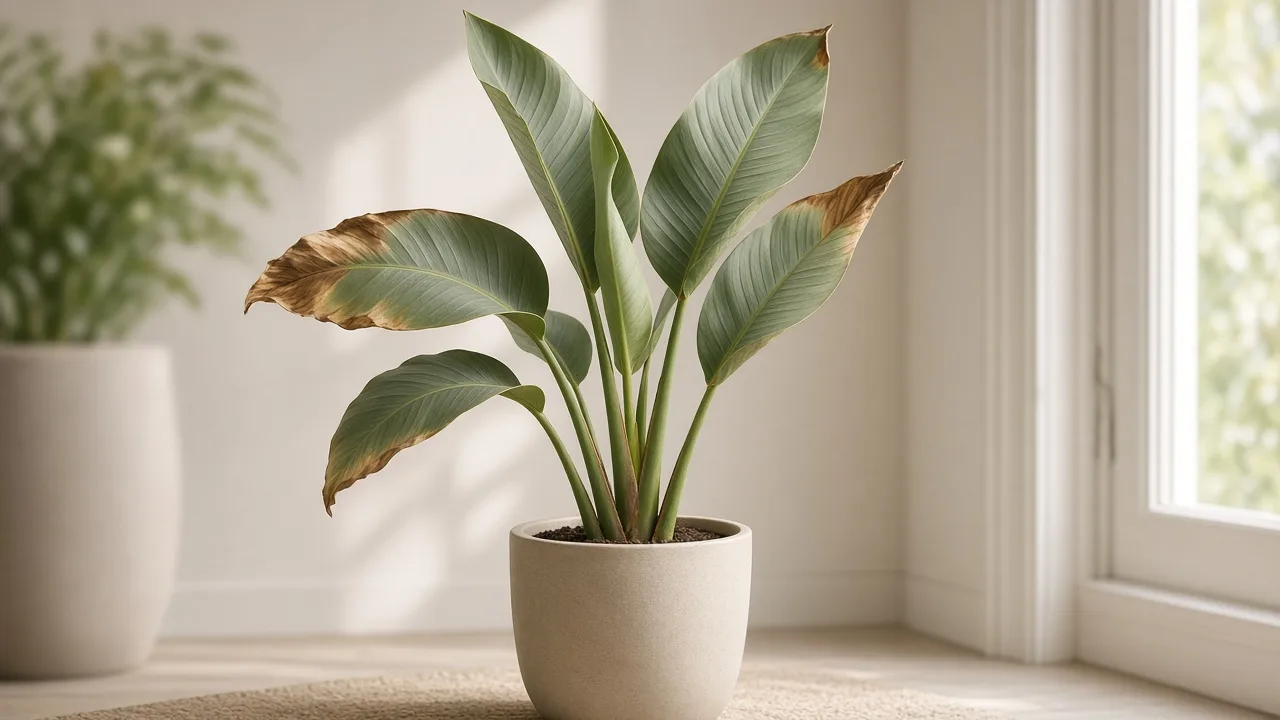
Brown Leaves on Bird of Paradise: Causes, Checks & Fixes
This guide covers brown leaves on Bird of Paradise. See also the general Brown Leaves guide, watering, and light pages for this plant.
Brown Leaves on Bird of Paradise: Causes, Checks & Fixes
Quick answer
Brown leaves on Bird of Paradise (Strelitzia reginae or S. nicolai) mean dead or dying paddle tissue—not a single disease name. This species grows flattened clumps of large gray-green blades on long petioles from underground rhizomes, so browning often starts on the outermost, oldest fans or on the window-facing side after a care change.
First step: touch the brown zone and check soil at 5 cm depth in one pass. Dry, papery brown with a light pot and dusty dry mix fits underwatering. Soft, limp brown with wet, heavy soil fits overwatering or early root rot. Bleached tan-to-brown patches that appeared within days of a brighter window fit sun scorch—acclimate slowly after shade. One outer fan browning slowly while inner spears stay firm often means normal fan dieback, not emergency treatment.
For how broad leaf browning works on houseplants in general, see our brown leaves guide. On Bird of Paradise, the pattern almost always ties to fan aging on rhizome clumps, sun shock on leathery paddles, drought crisping in bright rooms, or wet-soil root decline—not generic “brown leaves” advice alone.
Species hub: Bird of Paradise overview.
What brown leaves look like on Bird of Paradise
Browning on Strelitzia follows the plant’s fan architecture. Leaves are stiff, leathery paddles on stalks up to about 2 feet long, arising alternately so each clump looks flattened—not a tight rosette.
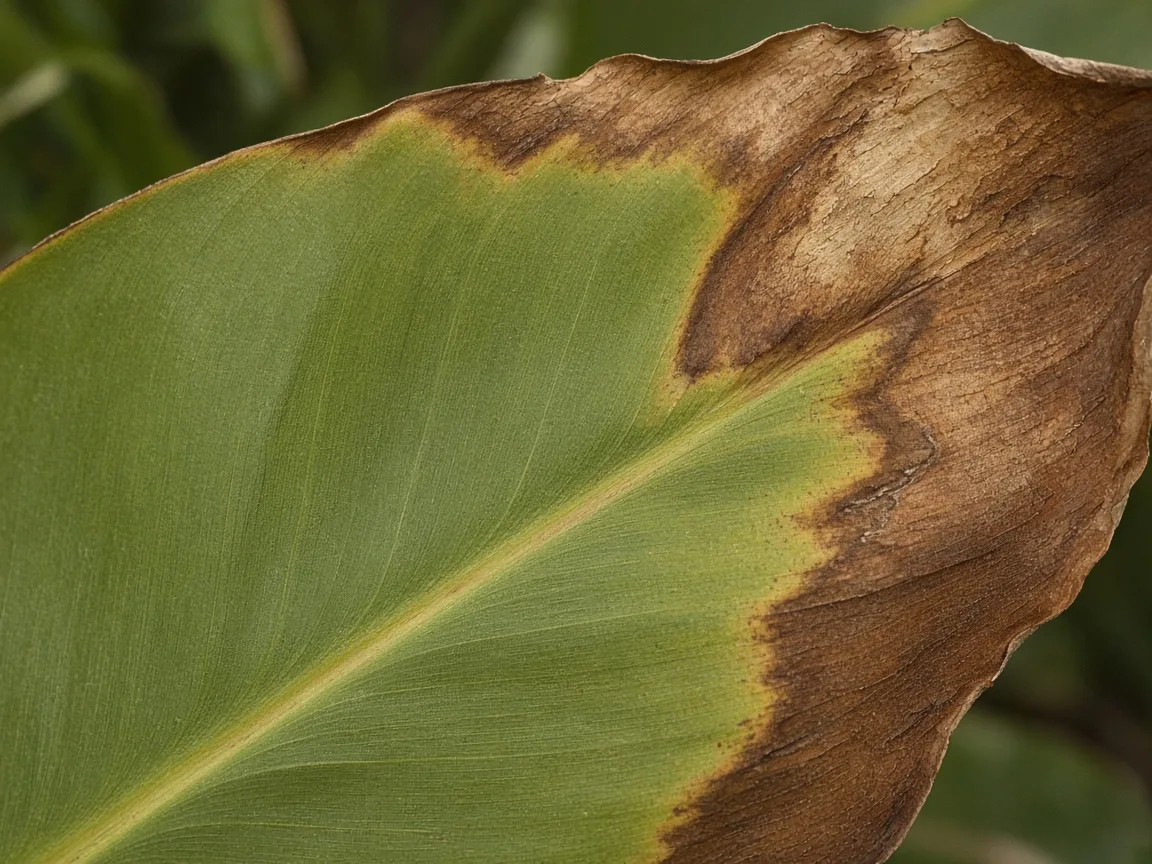
Brown leaf damage on Bird of Paradise—compare browned margins with still-green tissue on the same paddle.
Normal outer-fan senescence:
- One outer paddle turns brown from the tip or margin inward over weeks to months
- Inner spears stay gray-green and firm; new growth continues from the clump center
- Rhizome at the base feels solid; soil moisture looks normal—not sour or constantly wet
Sun scorch / light shock:
- Tan, bleached, or crisp brown patches on the side facing the window, often within days of a placement change
- Wisconsin Horticulture recommends acclimating plants moved to stronger outdoor summer light—the same rule applies indoors when jumping from a dim corner to unfiltered south glass
- Distinct from slow whole-fan fade—this tracks recent light exposure, not months of gradual decline
Underwatering / drought crisping:
- Crispy brown edges or large dry sections; leaf may curl inward and feel less rigid
- Pot feels light; top 5 cm of mix is dry
- Common on bright-window plants in summer when large paddles transpire faster than roots refill tissue
Overwatering and root stress:
- Brown with yellowing, limp paddles, or brown bases while mix stays wet and cool
- Pot stays heavy for days; new spears may stall or rot before unfurling
- Root rot can occur from overwatering or poorly drained soils on Strelitzia; advanced cases include sour smell or soft rhizome tissue—see overwatering on Bird of Paradise
Leaf spot (less common indoors):
- NC State notes leaf spot may cause yellow or brown spots on the leaves—scattered round or irregular lesions with a yellow halo, not uniform whole-blade crisping
- Often follows wet foliage, poor airflow, or splashing water on leaves
Cold or heat drafts:
- Patchy brown after nights near cold winter glass or direct AC / heat vents
- NC State recommends moderate night temperatures around 55–65°F for indoor culture—sustained chill browns margins on tropical paddles
Not the same as brown tips alone: isolated apex or margin necrosis on otherwise green blades is covered on brown tips on Bird of Paradise. This page focuses on whole paddles or large brown sections.
Outer fans, rhizomes, and when brown is normal
Bird of paradise is a slow-growing, clump-forming perennial with fleshy rhizomes. New leaf spears emerge from the center of the clump; the outermost fans are oldest and naturally yellow, brown, and die as the plant replaces them. The RHS advises removing browning or tatty leaves at the base to keep the plant looking its best—that routine trim assumes spent outer tissue, not a sick center.
What is not normal: three or more fans developing brown within two weeks, browning climbing inward toward new spears, or brown fans paired with wet soil and a soft base. Those patterns mean the root zone or environment is failing—not routine leaf turnover.
Split paddles vs true brown damage
Mature Strelitzia paddles often develop clean splits along veins as blades widen—especially in bright light. The RHS notes shredded leaves when plants face strong wind outdoors; indoors, green-edged vein splits on established leaves are structural.
True brown-leaf problems add dry necrosis, uniform tan scorch, or soft wet browning—often on newest spears or many fans at once after a watering, light, or temperature shift. Do not treat stable splits on old paddles as if the whole plant needs a moisture overhaul.
Why Bird of Paradise gets brown leaves
Sun scorch on large leathery paddles
This species is built for bright light—NC State lists full sun as the preferred condition. Indoors that usually means several hours of direct sun on the leaves. Plants that lived in deep shade lack the cuticle toughness for sudden harsh midday glass; paddles bleach and brown on the exposed side. That is not “too much light” forever—it is too fast a jump. Fix by stepping exposure over 7–14 days, not by moving the plant to a dim room long term.
The light–watering trap (brown from wet roots)
In dim rooms the plant uses water slowly. The same calendar watering that worked in a south window keeps soil wet too long. Roots lose oxygen; paddles brown and limp while the pot still feels heavy—easy to misread as thirst. Pair Bird of Paradise light correction with longer dry-down between waterings; see not enough light when soil never dries.
Underwatering in bright, dry rooms
Large paddles lose water quickly in direct sun or above heat vents. The RHS notes strelitzias may need daily watering in warm weather when actively growing—indoor south-window plants in summer can dry out between checks. Crispy brown sections with dry mix fit drought better than disease.
Leaf spot and splashed foliage
Fungal leaf spot shows as discrete lesions rather than uniform scorch. Reduce leaf wetting, improve airflow, and remove badly spotted blades with clean shears. Do not mist heavily onto paddles in cool, stagnant air.
Pests (secondary browning)
NC State lists mealybugs, scale, and spider mites on Strelitzia. Stippling and webbing precede patchy brown on stressed paddles—confirm pests on undersides and along petiole bases before assuming environmental brown alone. See spider mites on Bird of Paradise when fine webbing appears in dry heat.
Lookalike symptoms to rule out
| What you see | More likely cause | Quick check |
|---|---|---|
| Dry brown with light pot, dusty mix | Underwatering | Finger to 5 cm; soak test |
| Limp brown + wet heavy soil | Overwatering / root rot | Pot weight; rhizome firmness |
| Tan patches after window move | Sun scorch | Recent placement change |
| One outer fan browning slowly | Normal senescence | Inner spears green and firm |
| Yellow-brown lower fans, pale overall | Yellow leaves / low light | Shadow test at midday |
| Brown tips only, blade mostly green | Brown tips | Damage limited to apex/margin |
| Round spots with halos | Leaf spot | Lesion pattern vs uniform scorch |
How to confirm the cause
Work in order—one honest reading beats guessing from a photo.
- Texture of brown tissue — Papery and dry supports drought or scorch. Soft, wet-feeling brown with limp blade supports root stress.
- Soil at 5 cm — Dry and light pot vs wet and heavy pot narrows watering mistakes faster than leaf color alone.
- Which fans — Outer only, slowly = aging. Multiple fans quickly = stress. Newest spear brown = urgent.
- Rhizome press — Gently press where petioles emerge. Firm is normal; mush with wet soil warrants unpotting.
- Light history — Sudden brighter window within two weeks? Suspect scorch first. Months in dim room with wet soil? Suspect light–water trap.
- Undersides and bases — Webbing, scale shells, or sticky residue redirect to pest guides.
First fix for Bird of Paradise
Match one action to your top finding—do not repot, fertilize, and move windows on the same day.
- Dry soil + crispy brown + light pot: Water thoroughly until excess drains; discard saucer water after 30 minutes. Recheck dry-down from the watering guide before the next soak.
- Wet soil + limp brown fans: Stop watering until the top 5 cm dry. Empty saucers. Add brighter direct sun if the plant sits in shade—recovery needs both dry roots and usable light. No fertilizer.
- Tan scorch after a bright move: Pull back to bright filtered light for one week, then increase direct sun gradually over 7–14 days.
- One spent outer fan only: Trim at the base when mostly brown; continue normal bright-light care.
- Scattered spot lesions: Remove worst leaves; keep foliage dry and airflow steady; avoid evening misting.
Step-by-step recovery by confirmed cause
Sun scorch
Leave partially green paddles in place if firm—they still photosynthesize. Move to bright indirect temporarily, then re-acclimate to direct sun. Brown scorched tissue will not re-green; the next unfurling spear should show clean color if light increases are gradual.
Overwatering / early root stress
Let top mix dry. Confirm drainage holes are open. If browning continues after two weeks of appropriate dry-down, unpot, trim only mushy roots, and repot into well-draining mix. Withhold feed until new firm spears appear.
Underwatering
One thorough soak, then resume wet–dry rhythm. If peat shrank from the pot wall, bottom-water 30 minutes so the center rewets. Outer brown paddles may stay dead; watch the next spear.
Normal senescence
Remove the outer fan when largely brown. No other treatment. Keep direct sun and seasonal watering—water freely in growth, drier in winter.
Leaf spot
Prune affected blades. Avoid overhead watering. Improve spacing for airflow. Fungicides are rarely needed on a single indoor plant if culture dries out—focus on stopping splashing first.
Recovery timeline
Judge success by new spears, not old paddle color.
- Watering correction: Firm new unfurling leaf within 2–4 weeks after soil rhythm stabilizes
- Light / scorch acclimation: Clean new growth within 3–6 weeks; old scorch remains until trimmed
- Root rot salvage: Months if the rhizome stays firm—stop if the crown is extensively mushy
- Single aging outer fan: Replacement spear often visible within weeks on a healthy clump
Fully brown paddle tissue does not recover. Removing spent fans reduces pest hiding spots and redirects energy.
What not to do
- Do not water on schedule when soil is still wet because brown leaves look “thirsty”—limp brown with wet mix often means damaged roots
- Do not park a shade-grown plant in harsh south midsummer sun in one day—acclimate or you will trade yellowing for scorch
- Do not fertilize stressed brown foliage—salts can worsen margin and tip burn; fix light and moisture first
- Do not confuse vein splits with disease—stable green splits on mature paddles are normal in bright conditions
- Do not strip every partially brown leaf for aesthetics—leave green tissue until you know the cause is controlled
How to prevent brown leaves on Bird of Paradise
- Give meaningful direct sun on the leaves for several hours daily, or supplement with a grow light—this species is not a long-term low-light plant
- Water when the top 5 cm dries, adjusting for season and window intensity—see Bird of Paradise watering
- Acclimate to brighter windows over 7–14 days after winter or a dim room
- Maintain moderate humidity in heated air—the RHS recommends misting or a humidity tray when indoor air is dry, especially beside sunny glass
- Remove spent outer fans before they harbor pests
- Use well-draining mix and pots with drainage—see soil guide
When to worry
Treat browning as urgent if:
- Several fans brown within two weeks with wet, sour soil or soft rhizome
- New center spears brown or rot before opening
- Damage spreads inward while soil stays wet
- The base smells rotten—escalate to root rot immediately
Lower urgency: one outer fan fading over months with firm green inner growth—that is routine on a clumping Strelitzia.
When to use this page vs other Bird of Paradise guides
- Brown tips on Bird of Paradise — Use when damage is mostly at the leaf apex or margins with the blade still largely green.
- Yellow leaves on Bird of Paradise — Use when color change is yellow or pale green before tissue dies.
- Bird of Paradise problems hub — Browse all common issues on this species.
- Overwatering and underwatering — Use when soil checks already point to moisture as the main story.