Scale Insects on Bird of Paradise: Petiole Checks & Fixes
Quick answer
Scale insects on Bird of Paradise show as flat tan, brown, or waxy bumps glued to thick petiole sheaths at the rhizome crown, woody stem bases, and sheltered leaf axils—often with sticky honeydew on broad paddle leaves below. First step: isolate the plant and dab every visible shell with a cotton swab dipped in 70% isopropyl alcohol, pressing directly on each bump.
Scale Insects on Bird of Paradise: Causes, Checks & Fixes
This guide covers scale insects on Bird of Paradise. See also the general Scale Insects guide, watering, and light pages for this plant.
Scale Insects on Bird of Paradise: Causes, Checks & Fixes
Quick answer
Scale insects on Bird of Paradise (Strelitzia reginae, with the same inspection approach on large S. nicolai floor specimens) show up as flat tan, brown, or waxy bumps glued to thick petiole sheaths at the rhizome crown, along woody stem bases, and in tight leaf axils where broad paddle leaves attach. They are immobile sap feeders protected by a waxy or shell-like cover that pierce stem tissue and drain sugars from the large leaves this plant is grown for.
For how scale life cycles, crawler timing, and armored versus soft scale work indoors in general, see our scale insects guide. On Bird of Paradise, the practical pattern is hard disks at petiole bases on a rhizomatous floor plant, sticky shine on leathery paddles below infested sheaths, and colonies that stay hidden until a tall specimen is inspected from the crown upward.
First step: isolate the plant the same day you spot bumps. Move it away from other houseplants—especially when broad leaves bridge between pots—then dab every visible scale shell with a cotton swab dipped in 70% isopropyl alcohol, pressing directly on each bump without flooding the crown or soaking every paddle at once.
Yellow lower leaves on wet, heavy mix point to overwatering on Bird of Paradise—confirm shells and honeydew before you treat pests alone.
When to use this page vs other Bird of Paradise guides
This page is the pest-first entry for immobile shell-like sap feeders on Strelitzia petioles and crowns.
- Bird of Paradise overview — Baseline care, buying checks, and how this rhizome-backed plant grows indoors.
- Mealybugs on Bird of Paradise — Use for white cottony tufts in the same petiole sheaths, not hard tan disks.
- Aphids on Bird of Paradise — Use for soft green colonies on new growth with honeydew.
- Spider mites on Bird of Paradise — Use for fine webbing and stippling in dry air, not glued bumps.
- Bird of Paradise problems hub — Browse all common issues on this species.
Why Bird of Paradise attracts scale at the crown and petiole bases
Rhizome architecture creates permanent hiding spots. Bird of Paradise grows from a thick underground rhizome that pushes large paddle leaves through overlapping petiole sheaths. Scale settles in those crevices and stays immobile once the cover hardens—exactly where casual watering checks skip on tall floor plants whose growing tips sit above eye level.
Large leathery paddles hide stem colonies. Mature Strelitzia leaves are stiff and smooth; bumps on open blade surfaces are uncommon. Instead, scale infestations cause yellowing, honeydew, and sooty mold on the broad foliage below petiole bases you never tilted to inspect. A moderate infestation can span dozens of sheaths on one pot while upper leaves look clean from across the room.
Warm indoor rooms lack natural enemies. Scale crawlers are mobile only briefly before they settle; mild room temperatures let populations build year-round without lady beetles or parasitic wasps present outdoors. Nursery arrivals, summer patio time, and unquarantined floor specimens whose leaves touch neighbors are common entry routes.
Extension guidance matches what you see at home. NC State Extension notes that Bird of Paradise is usually pest-free but should be monitored for mealybugs, scale, and spider mites—the same overlapping pests that share honeydew symptoms across our whiteflies guide and mealybug page.
Stressed crowns are easier targets. Overwatered mix that softens the rhizome collar, dim placement after a move, or chronic low humidity that browns tips weakens new spear emergence without changing the bump pattern. Cross-check soil drainage and watering rhythm before assuming pesticides alone will fix a plant that is already waterlogged or light-starved per the not enough light guide.
What scale insects look like on Bird of Paradise
Early infestations concentrate on stems, not random spots on mature stiff paddles. Check these patterns together:
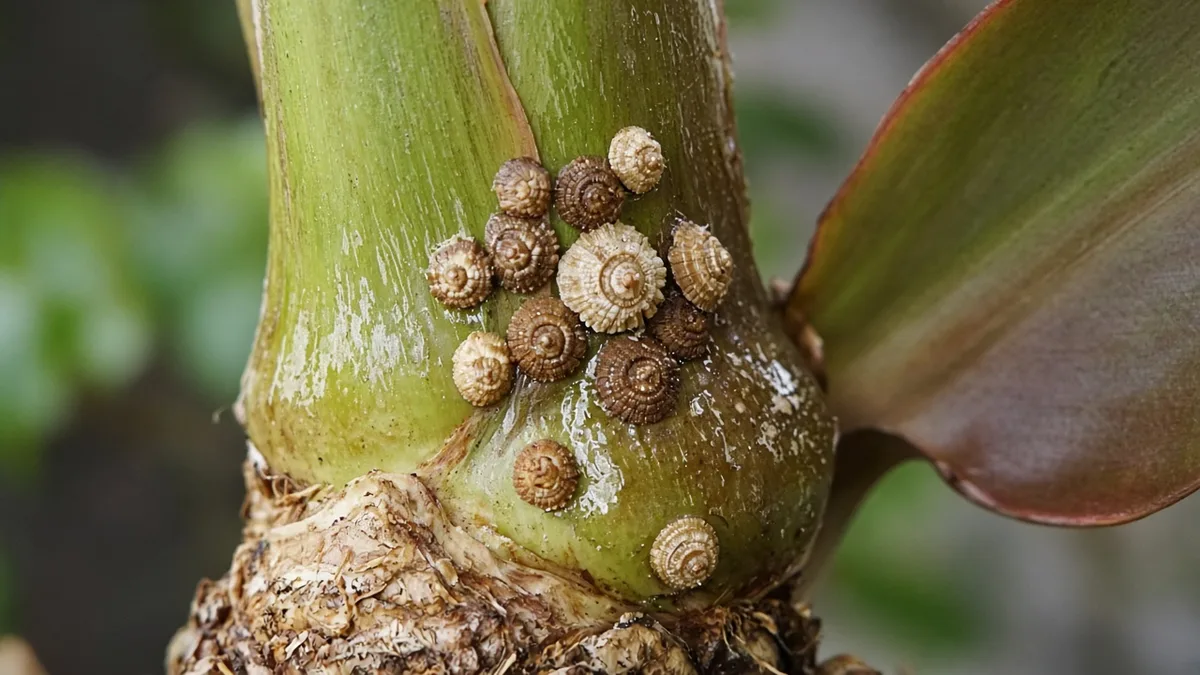
Tan scale shells along a Bird of Paradise petiole base—compare with clean leathery paddle tissue on the same plant.
- Flat or dome-shaped tan, brown, or waxy bumps along petiole sheaths where thick green stalks wrap the rhizome
- Shell-like disks on woody lower stem bases on multi-petiole floor plants
- Bumps in leaf axils where a paddle meets its petiole, especially behind overlapping lower leaves
- Sticky, shiny honeydew on broad paddle surfaces, the pot rim, or the floor beneath a tall specimen
- Black sooty mold on honeydew-coated tissue in humid rooms with weak airflow
- Stunted or distorted new spears on infested crown sections while older lower paddles still look firm
- Ants on the pot stand farming honeydew from stem colonies
- Pale yellow to orangish crawlers before shells harden—tiny until they settle at the next soft petiole base
Do not mistake normal features for pests. Strelitzia petioles are naturally thick and slightly ridged where leaves attach; scale stress shows firm bumps at multiple petiole bases in a row, stickiness, and stalled clean new growth—not one pale lower paddle on an otherwise bump-free plant.
Where scale hides on a rhizomatous Strelitzia floor plant
Scale on Bird of Paradise concentrates where thick architecture overlaps. Work through this order before treating:
- Petiole bases at the rhizome — Run bright light along every sheath from soil line to the lowest accessible crown, including stems hidden behind overlapping lower paddles.
- Emerging spear sheaths — On new spears still rolled tight, inspect the seam where the spear meets the rhizome before bumps spread to open foliage.
- Underside midribs near petioles — Tilt each reachable leaf and check the attachment point—not only the broad flat paddle surface.
- Soil line and cache pots — Lift lower leaves on large containers; scale often crusts where stems enter mix or sit inside decorative outer pots.
- Neighbor plants — Inspect pots whose leaves touched this Bird of Paradise or shared a patio display.
This petiole-by-petiole map is specific to a rhizome-backed Strelitzia with woody stem bases—not a compact rosette succulent checked only at leaf tips.
Confirm scale vs mealybugs, aphids, thrips, mites, and overwatering
| What you see | Likely cause | Key check |
|---|---|---|
| Tan or brown immobile bumps on petiole sheaths | Scale insects | Shell test; honeydew on paddles below |
| White cottony tufts in crown crevices | Mealybugs | Fluffy wax; pink smear when crushed |
| Soft pear-shaped insects on fresh growth | Aphids | Colonies move when disturbed |
| Silver streaks and black specks on young leaves | Thrips | Scraping leaves onto white paper releases slender insects |
| Fine webbing and yellow stippling | Spider mites | Dry air; mites on undersides, not shell bumps |
| Whiteflies puffing off when leaves are shaken | Whiteflies | Flying adults; not glued disks |
| Yellow lower leaves, wet heavy soil, soft collar | Overwatering | No scale shells; mix never dries at top 5 cm |
Confirmed diagnosis — Immobile shells plus honeydew or ants on multiple petiole bases with firm lower stems. Suspected — One tan speck without stickiness may be callus or mineral splash; use the shell test before spraying.
Shell test at the petiole base
Pry one bump with a toothpick or fingernail. Armored scale covers can be lifted separately from the body; soft scales crush with body fluid beneath a waxy dome. Dried hard-water crust on a pot rim does not lift as an insect shell and is not clustered along woody sheaths.
First fix: isolate and alcohol-dab every shell
Isolate the plant away from others, then dab each visible scale shell with 70% isopropyl alcohol on a cotton swab, pressing directly on the bump.
That single action removes adults you can reach and confirms live pests—not dust—before you commit to sprays. UW Extension recommends removing scales with a swab dipped in soapy water or alcohol for lightly infested houseplants—the contact kills the insect under the cover without treating the whole crown on day one.
Work systematically:
- Start at the soil line and move upward petiole by petiole.
- Reach crown clusters with a fine brush dipped in alcohol when a swab cannot fit into tight sheaths.
- Wipe honeydew off paddle leaves below colonies with a damp cloth.
- Drop swabs in a sealed bag so mobile crawlers do not fall onto the bench.
Repeat weekly until you find no new bumps for two consecutive inspections. Epic Gardening stresses that missing even a few adults lets scale return—on a multi-petiole Bird of Paradise, that means every sheath matters, not only the worst cluster.
Do not repot, heavily prune, or fertilize a pest-hit plant on day one hoping to push new spears—that produces tender tissue pests prefer. Test alcohol on a hidden petiole sheath first and wait 24 hours before treating sun-stressed paddles in hot direct light per the light guide.
Pet safety note: Strelitzia reginae is toxic to cats and dogs if chewed. Wear gloves when dabbing and pruning, keep pets away until alcohol dries, and do not leave soaked swabs within reach.
Horticultural oil and soap on Strelitzia foliage
If shells persist after two or three weekly alcohol passes, apply insecticidal soap or horticultural oil labeled for ornamentals. UC IPM notes horticultural oil timed when crawlers are active is effective on many scale species—early morning sprays let broad paddles dry before peak indoor humidity.
Rules for Bird of Paradise:
- Patch-test one paddle section and wait 24–48 hours; oils carry more burn risk on sun-exposed foliage in summer.
- Coat petiole sheaths, crown center, and leaf undersides thoroughly; contact products only kill insects they touch.
- Avoid stacking alcohol dab, soap, and oil on the same day.
- Systemic insecticides are not effective against all scale types—especially armored scales—so contact removal stays the safer first choice on a plant you handle regularly.
Manage ants before they protect scale
Ants harvest honeydew and defend scale from predators. If you see ant trails on the pot stand beneath a floor specimen, treat petiole bases immediately and break ant access to the pot rim before expecting sprays to work.
Recovery timeline and new spear emergence
Manual removal should stop new shell formation within two to four weeks of consistent weekly dabbing. Expect clean new paddles emerging from the crown within four to eight weeks during active warm-season growth under bright light. Yellowed or sooty-coated leaves from heavy feeding will not fully recover cosmetically—judge success by the next firm spear without bumps.
Firm lower petioles and steady new growth are good signs. Softening at the collar on sour wet mix means rot or root rot—not scale—and needs a different response immediately.
How to prevent scale on Bird of Paradise
Quarantine every new nursery purchase for two to three weeks before placing it near other plants. Inspect petiole sheaths weekly during spring and summer active growth—the same rhythm you use for mealybug checks in crown crevices.
Choose stock without woody stems crusted in bumps, as noted in Bird of Paradise buying guidance on the overview page. Manage ants on pot stands before they establish scale “farms” along petiole bases. Keep care aligned with bright light and a watering rhythm that matches how fast the pot dries per the repotting guide when mix structure fails—not when scale alone appears.
When you bring a patio Bird of Paradise indoors for cool nights, scout petiole bases again—temperature shifts can coincide with crawler movement between plants.
When to escalate
Escalate if tan bumps crust most petiole bases on multiple stems, sooty mold covers most paddle surfaces, or the infestation spreads to neighboring plants after isolation. Chronic scale during peak growth can stall spear emergence and weaken the crown even when roots are healthy.
For heavy recurring infestations, a local extension office can help confirm armored versus soft scale and discuss options. Scale alone rarely kills a mature Bird of Paradise with firm lower petioles, but it can ruin a flush of new paddles and invite secondary stress if you respond with extra water or fertilizer instead of pest removal.