Pale Leaves on Boston Fern: Light, Water & Nutrient Checks
Quick answer
Pale leaves on Boston Fern look dull, lime-green, or thin yellow-green across pinnae instead of the medium-green arching fronds a healthy clump shows. First step: compare the color of pinnae on the window-facing side of one frond with pinnae on the shaded back of the same frond, then note whether new croziers at the crown are small and washed-out or still firm green.
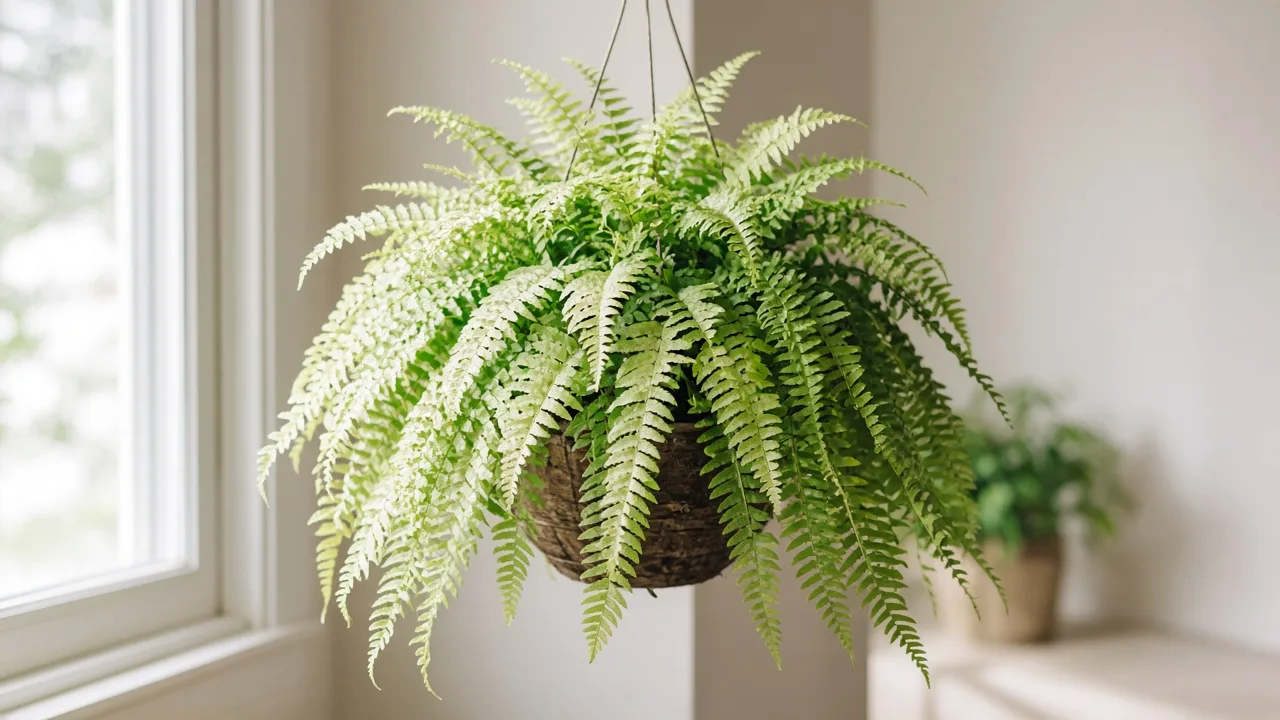
Pale Leaves on Boston Fern: Causes, Checks & Fixes
This guide covers pale leaves on Boston Fern. See also the general Pale Leaves guide, watering, and light pages for this plant.
Pale Leaves on Boston Fern: Causes, Checks & Fixes
Quick answer
Pale leaves on Boston Fern (Nephrolepis exaltata) look dull, lime-green, washed-out, or thin yellow-green on the hundreds of small pinnae along each arching frond—not the pale- to medium-green depth Wisconsin Extension describes on healthy foliage.
First step: compare pinnae color on the window-facing side of one frond with pinnae on the shaded back of the same frond, then look at whether new croziers at the crown are small and washed-out or still firm green. That single comparison separates sun bleach, low-light stall, and crown-wide stress before you change watering or feed.
For how chlorosis and faded foliage work on houseplants in general, see our pale leaves hub. On Boston Fern, pale pinnae usually tie to the light–watering trap in a hanging basket, direct sun on thin leaflets, dry winter air, or selective nutrient loss—not a generic “feed it” fix.
When to use this page vs other Boston Fern guides
| Pattern | Read next |
|---|---|
| Whole clump washed-out in a dim corner; long gaps between new croziers | Pale leaves (this page) or not enough light |
| Bleached or yellow pinnae only on the window side; crisp texture | Too much direct sun—pull back; compare yellow leaves |
| New croziers pale with dark green veins | Iron deficiency |
| Lowest outer fronds dull yellow-green first | Nitrogen deficiency |
| Pale pinnae on mix that stays wet; limp fronds | Overwatering or root rot |
| Dull fronds, light pot, dry top inch for days | Underwatering |
| Washed-out pinnae in a heated room with dry tips | Low humidity |
| Stippled pale dots with webbing | Spider mites |
What pale leaves look like on Boston Fern
Healthy Boston fern holds medium-green, arching fronds with soft divided pinnae cascading from a short rhizome crown. New growth emerges as coiled croziers at the center. Pale leaves break that color depth in patterns you can read on the frond—not on random houseplant leaves.
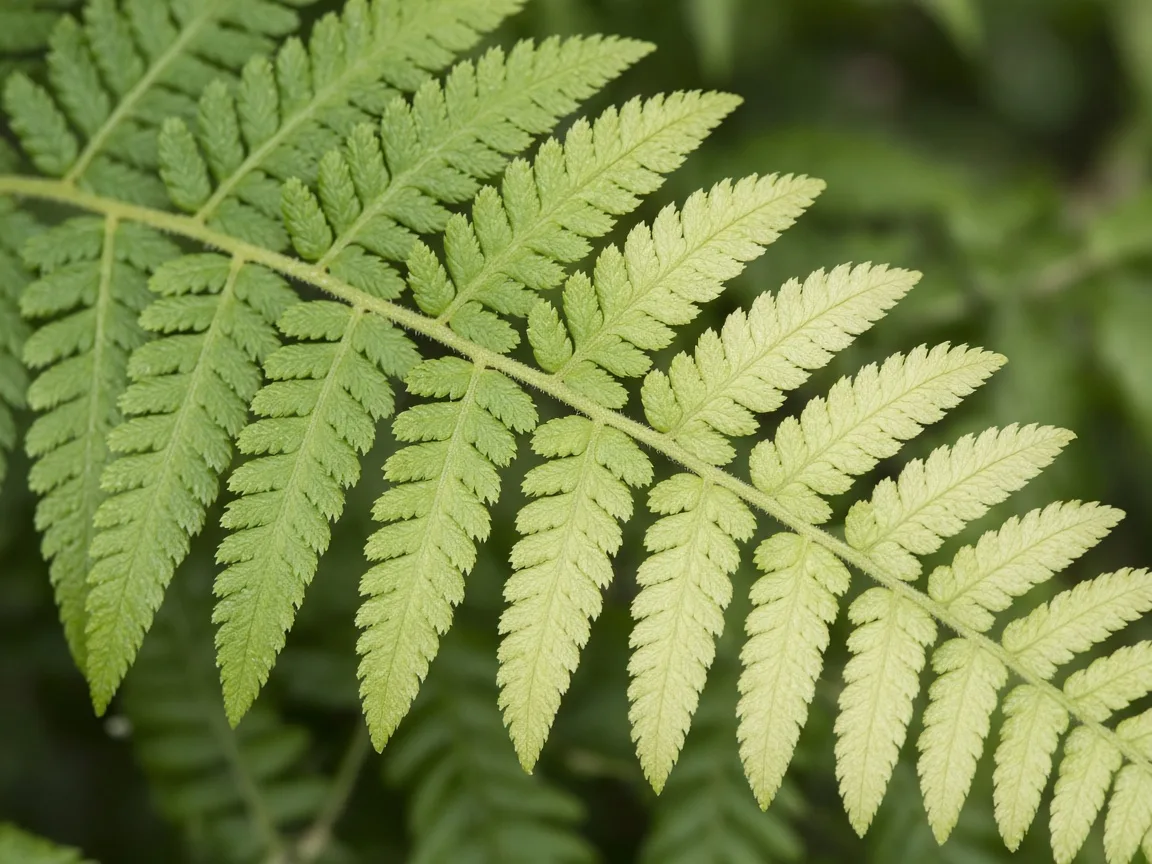
Lime-green, dull pinnae beside deeper green on the same frond—compare window-facing color to the shaded back before you fertilize or repot.
Too much light (common after a move toward glass):
- Yellow-green or bleached wash on pinnae facing the window, sometimes with dry brown scorch at tips
- Stalled or smaller new croziers even though the plant looked lush in the shop greenhouse
- Missouri Botanical Garden lists part shade to shade as the outdoor light preference—indoors that translates to filtered light, not south glass on the fronds
Too little light (common in hanging baskets below the sill):
- Uniform dull pale green on both sides of fronds, with long gaps between new croziers and weak rachis length
- Basket leans toward the brightest direction; soil stays damp longer because transpiration is slow—see not enough light and the light guide
Dry air or underwatering:
- Thin, dull pinnae; pot feels light and the top inch stays dry for many days
- UF/IFAS describes graying foliage as a classic insufficient-water signal on Boston fern—pale wash often precedes obvious yellowing
Nutrient-related wash-out (after light and water are ruled out):
- Green veins on pale new croziers → iron deficiency
- Lowest outer fronds fade first → nitrogen deficiency
- General pale yellowing with poor vigor on exhausted mix → RHS chlorosis guidance and the fertilizer guide
Not the same as stable cultivar color: ‘Golden Boston’ and similar selections carry natural chartreuse sectors that stay fixed—not spreading chlorosis. Wisconsin Extension notes cultivars like ‘Dallas’ and ‘Whitmanii’ tolerate lower humidity than classic ‘Bostoniensis’; winter wash-out on those types may still trace to dry air, but they often hold greener pinnae longer in the same room.
Reading pinnae wash-out along arching fronds
Unlike a rosette houseplant, Boston fern shows stress on divided pinnae along each rachis. The youngest tissue is always the crozier and the pinnae nearest the crown, not the lowest frond touching the pot rim.
Work through this order on one arching frond:
- Window-facing pinnae vs shaded pinnae on the same rachis — one-sided bleach means sun; both sides equally dull means light or roots.
- New crozier color and spacing — small, pale, widely spaced croziers in a dim room differ from firm green croziers with only the outermost frond fading (normal senescence).
- Pinnae texture — crisp and papery suggests dry air or thirst; soft limp pinnae on wet mix suggests overwatering.
- Undersides — stippling and webbing mean spider mites, not chlorosis; NC State notes scales or spider mites when air around the plant is too dry.
Why Boston Fern gets pale fronds
This fern evolved under humid tropical canopy with steady moisture and filtered light. Indoors, pale foliage almost always traces to how light, water, humidity, and root oxygen interact—not a mysterious leaf disease.
Insufficient light at basket height
Boston fern needs bright, indirect light and continuous soft frond growth. Hanging baskets often sit below the window line where your eyes still see “bright room” but pinnae receive far less photosynthetically active light. Chlorophyll thins; fronds look washed-out yellow-green with leggy growth spacing. Dim light also slows water use, so mix stays wet longer and roots weaken—a pattern that deepens pale color even when you water “correctly.”
Direct sun bleach
Thin pinnae scorch quickly in harsh rays. Pale or bleached pinnae on the glass side, with brown tips on the brown tips guide timeline, mean pull the basket back or add sheer curtain—do not add fertilizer to sun-stressed tissue.
Low humidity and winter dry air
Nephrolepis exaltata needs high humidity indoors. Clemson HGIC notes humidity is usually too low in heated homes for fine ferns, which brown and shed leaflets when air stays dry. Pale, thin pinnae in furnace heat often pair with low humidity below 40% RH at frond height—even when the top inch of mix still feels moist.
Overwatering in dim or cool conditions
Saturated mix drives out oxygen; fine roots fail while soil feels wet. Outer fronds turn pale yellow-green and limp on a heavy basket. NC State warns that overwatering can lead to root rot, especially in winter when growth slows but watering frequency stays on a summer schedule.
Underwatering and drought graying
When peat-based mix dries hard, the plant sacrifices outer pinnae first. Pale-gray fronds on a light pot match UF/IFAS graying-from-thirst language—see underwatering before you mist.
Nutrient loss on long-held mix
Pale lowest fronds with weak new croziers on the same pot for years may be nitrogen or micronutrient depletion—confirm light and moisture first, then use RHS chlorosis patterns to decide whether iron or nitrogen guides fit.
How to confirm the cause
Run these checks in order; stop when one pattern clearly matches.
- Side-by-side pinnae test on one frond (window vs back)—sun bleach vs uniform low light.
- Shadow at frond height around midday. A soft fuzzy shadow suggests usable indirect light; no shadow means move toward the light guide placement.
- Top inch moisture and pot weight per the watering guide—heavy wet pale limp fronds vs light dry pale crisp pinnae.
- Humidity at foliage height with a hygrometer—especially in winter.
- Paper tap test on pinnae undersides for mites if stippling appears.
- Cultivar check—stable chartreuse on ‘Golden Boston’ vs new spreading wash on classic green types.
The first fix to try
If pinnae are pale only on the window-facing side: move the basket 12–18 inches back from the glass or add a sheer curtain the same day. Do not fertilize sun-bleached tissue.
If both sides of fronds are uniformly washed-out and croziers are small: move the hanger so fronds sit in the brightest safe indirect band (east window or filtered south/west) without direct sun on pinnae. Wait two weeks for new crozier color before changing water or feed.
If fronds are pale and limp on chronically wet mix: stop watering until the top inch begins to dry, empty cachepots, and confirm drainage holes are open—then reassess before any repot.
Pick one branch above based on the side-by-side pinnae comparison; do not repot, prune heavily, and fertilize the same week.
Step-by-step recovery
Low light (most common uniform wash-out):
- Relocate to brighter filtered light at basket height; rotate weekly.
- Keep the watering rhythm tied to top-inch dryness—faster growth in better light will use more water.
- Run a humidifier if RH stays below 50% near fronds.
- Judge success by color of the next two croziers, not old pale pinnae re-greening.
Sun bleach:
- Pull back from direct rays; trim fully scorched pinnae only if they are mostly brown.
- Maintain even moisture without soaking the crown.
- New unfurling pinnae should emerge medium green within two to three weeks.
Root stress from wet mix:
- Reduce water until top inch dries; improve airflow.
- If pale spread continues on wet soil for seven days, inspect roots per root rot.
- Repot only into fresh airy mix if roots are brown and sour-smelling—not on day one of pale color alone.
Nutrient-related (confirmed after stable light and water):
- Flush the pot if white salt crust rings the rim.
- Apply half-strength balanced fertilizer during active growth only, following the fertilizer guide.
- Escalate to iron or nitrogen specific pages if vein patterns match.
Recovery timeline
- Sun bleach or a single placement fix: clearer new pinnae in 2–3 weeks when croziers unfurl.
- Low light correction: tighter crozier spacing in 3–5 weeks; older pale pinnae may never deepen.
- Root stress: stabilization in 1–2 weeks after drainage correction if the crown stays firm; longer if rot was advanced.
- Humidity recovery: reduced tip crispness in 1–2 weeks once RH stays near 50–70%.
Worry if pale color spreads inward while soil stays soggy, the rhizome crown softens, or entire fronds collapse—treat as urgent and open the problems hub triage path.
Mistakes to avoid
- Feeding a pale fern before fixing light or root-zone moisture.
- Mistaking ‘Golden Boston’ stable chartreuse for fixable chlorosis.
- Hanging the basket so high fronds sit in direct sun while the owner only checks soil at the pot rim.
- Adding water because pinnae look “thirsty” when the mix is already wet and roots are failing.
- Expecting old pale pinnae to darken; recovery is always new crozier green.
How to prevent pale leaves next time
- Place baskets so arching fronds receive bright indirect light at their height, not just the room overall—see overview placement notes.
- Water when the top inch begins to dry; never let a cachepot hold standing water.
- Target 50–70% RH in heated months; Clemson suggests double-potting with moist sphagnum or trays of wet pebbles as humidity buffers.
- Flush salts periodically if you feed; use the soil guide mix when repotting every year or two in active growth.
- Inspect pinnae undersides monthly in dry winter air.
Related Boston Fern guides
Related Boston Fern guides: overview · problems hub · watering · light · not enough light · yellow leaves · low humidity · overwatering · iron deficiency · nitrogen deficiency · pruning
Conclusion
Pale fronds on Boston fern are manageable when you read pinnae pattern, basket-height light, and soil moisture together—not frond color alone. One-sided bleach calls for shade; uniform wash-out in a dim room calls for brighter filtered light before fertilizer. If the rhizome crown softens on chronically wet mix, stop watering and inspect roots the same day. Judge recovery by clean new croziers, not by expecting faded pinnae to re-green.
Related tool
Use the Plant Problem Diagnosis Tool to narrow causes for pale leaves on this plant before changing multiple variables at once.