Scale Insects on Boston Fern: Stipe Checks & Fixes
Quick answer
Scale insects on Boston Fern show as flat tan, brown, or waxy bumps glued to frond stipes, runner nodes, and the rhizome crown—often with sticky honeydew on pinnae or hanging-basket hardware below. First step: isolate the plant and dab every visible shell with a cotton swab dipped in 70% isopropyl alcohol, pressing directly on each bump at stipe bases.
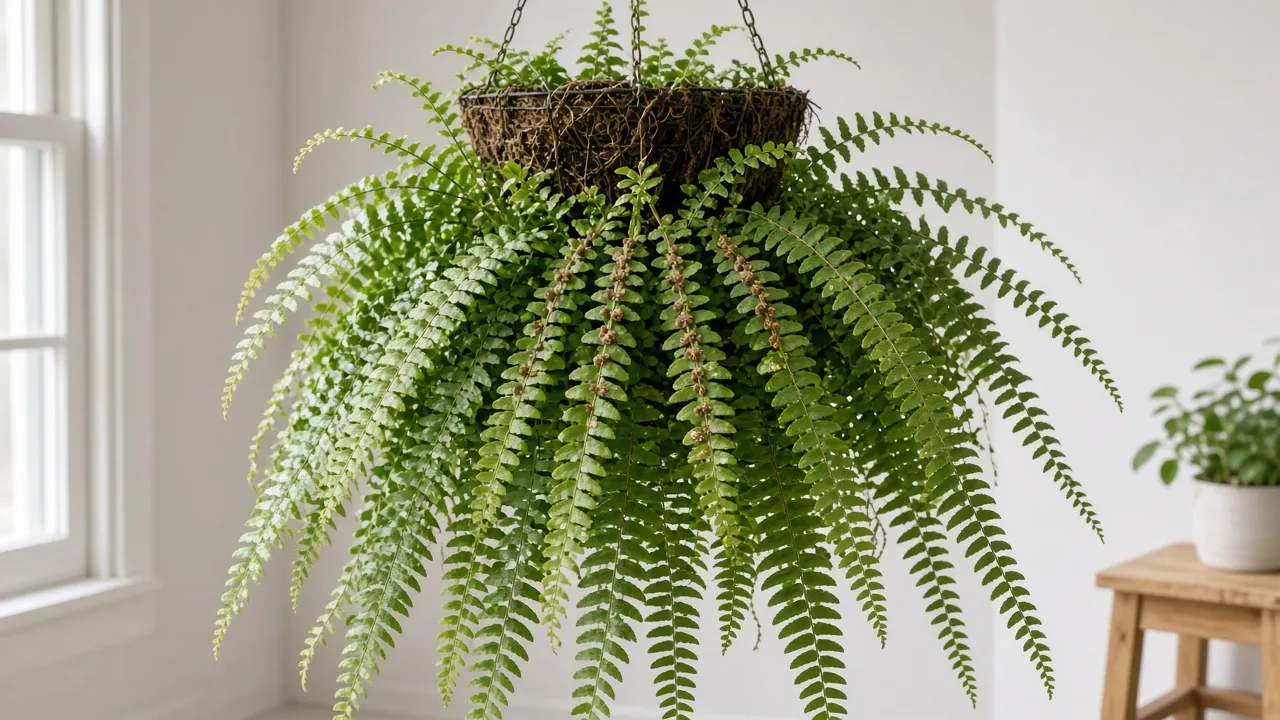
Scale Insects on Boston Fern: Causes, Checks & Fixes
This guide covers scale insects on Boston Fern. See also the general Scale Insects guide, watering, and light pages for this plant.
Scale Insects on Boston Fern: Causes, Checks & Fixes
Quick answer
Scale insects on Boston Fern (Nephrolepis exaltata) show up as flat tan, brown, or waxy bumps glued to frond stipes, runner (stolon) nodes, and the rhizome crown where arching fronds emerge. They are immobile sap feeders protected by a waxy or shell-like cover that pierce pinnae tissue and drain sugars from the delicate foliage this fern is grown for.
For how scale life cycles, crawler timing, and armored versus soft scale work indoors in general, see our scale insects guide. On Boston Fern, the practical pattern is hard disks along crowded stipes on a hanging, pinnate plant, sticky shine on pinnae or basket chains below infested axils, and colonies that stay hidden until you lift arching fronds and inspect the crown.
First step: isolate the pot the same day you spot bumps. Move it away from other houseplants, then dab every visible scale shell with a cotton swab dipped in 70% isopropyl alcohol, pressing directly on each bump at stipe bases—not by flooding the rhizome crown with liquid.
Pale, crispy pinnae on bone-dry mix point to underwatering on Boston Fern—confirm shells and honeydew before you treat pests alone. For species basics, see the Boston Fern overview. Boston Fern is listed as non-toxic to cats and dogs; still keep pets away until alcohol or soap dries on treated fronds.
When to use this page vs other Boston Fern guides
This page is the pest-first entry for immobile shell-like sap feeders on Nephrolepis stipes, runners, and the rhizome crown.
- Boston Fern overview — Baseline care, buying checks, and how arching fronds and stolons grow indoors.
- Mealybugs on Boston Fern — Use for white cottony tufts in the same stipe-base zones, not hard tan disks.
- Aphids on Boston Fern — Use for soft green colonies on tender croziers with honeydew.
- Spider mites on Boston Fern — Use for fine webbing and stippling in dry air, not glued bumps.
- Boston Fern problems hub — Browse all common issues on this species.
What scale insects look like on Boston Fern
Early infestations concentrate on stipe bases and runner nodes, not random spots on exposed pinnae tips. Check these patterns together:
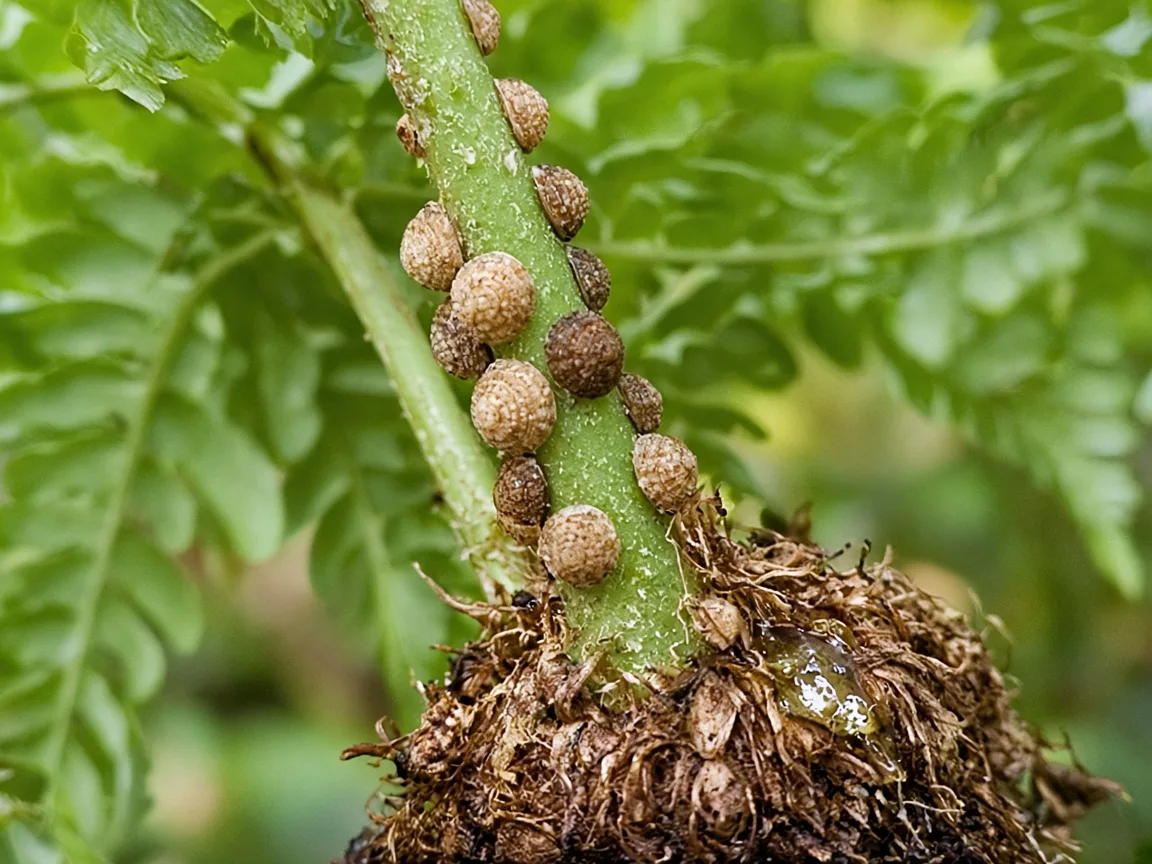
Tan scale shells along a Boston Fern stipe—compare with clean pinnae tissue on the same plant.
- Flat or dome-shaped tan, brown, or waxy bumps along frond stipes where pinnae attach to the rachis
- Shell-like disks on runner nodes touching soil or wrapping neighboring fronds
- Bumps tucked at the rhizome crown where new croziers emerge beneath arching foliage
- Sticky, shiny honeydew on pinnae, stipes, hanging-basket chains, or the shelf below
- Black sooty mold on honeydew-coated tissue in humid rooms with weak airflow
- Yellowing or distorted pinnae on heavily fed fronds while the rest of the plant still looks full
- Ants on the pot rim farming honeydew from hidden crown colonies
- Pale yellow to orangish crawlers before shells harden—tiny until they settle on the next soft stipe
Do not mistake normal fern features for pests. Boston fern carries two rows of round sori (spore clusters) near pinnae margins on frond undersides—stationary, evenly patterned, and not accompanied by honeydew or ants. Scale stress shows firm bumps at multiple stipe bases in a row, stickiness, and stalled clean new croziers—not one pale lower frond on an otherwise bump-free plant.
Where scale hides on arching Boston Fern fronds
Scale on Boston Fern concentrates where pinnate architecture overlaps. Work through this order before treating:
- Rhizome crown and stipe bases — Lift arching fronds from underneath and run bright light along every junction where a stipe meets the crown; this is the same zone mealybugs colonize first.
- Runner (stolon) nodes — Follow thin stolons to points touching mix or wrapping other fronds; scale often crusts nodes before it spreads along open rachises.
- Lower third of stipes — Check both faces near the crown—not only the outer pinnae tips facing the window.
- Hanging-basket hardware — Honeydew drips collect on chains and pot rims; ants often signal colonies you have not seen yet.
- Neighbor plants — Inspect pots whose fronds touched this fern or shared a plant stand.
This stipe-and-runner map is specific to a pinnate fern with stolons checked at the crown—not a broad rosette fern inspected only at strap bases.
Why Boston Fern gets scale at the crown and along stipes
Dense, arching fronds hide stem-zone colonies. Boston fern grows pinnately compound fronds from a short rhizome with slender stolons. Hundreds of overlapping pinnae block sight lines to stipe bases until you lift foliage deliberately—exactly where scale settles and stays immobile once the cover hardens.
Hanging baskets amplify blind spots. Fronds cascade over the crown, so bumps on inner stipes look fine from across the room while honeydew collects on lower pinnae. Technique for lifting fronds without snapping brittle tissue is covered in Boston fern pruning.
Ferns are regular indoor scale hosts. Scales can be a problem on Boston fern indoors alongside mealybugs—often arriving on nursery stock, shared tools, or unquarantined shelf neighbors rather than because the species is uniquely weak.
Warm rooms lack natural enemies. Scale crawlers are mobile only briefly before they settle; stable indoor temperatures let populations rebuild between missed inspection passes.
Stressed crowns recover slowly. Chronic wet mix softens roots per overwatering, dim corners slow new fronds per not enough light, and low humidity browns pinnae margins without changing the bump pattern. Cross-check watering rhythm and soil structure before assuming pesticides alone will fix a plant that is already waterlogged or light-starved.
How to confirm the cause
Work through these checks before treating:
- Isolate first — Move the fern away from other plants before handling so crawlers do not walk to neighboring pots or hanging baskets.
- Lift arching fronds — Support fronds from underneath and inspect stipe bases and the rhizome crown with bright light and a hand lens.
- Follow runners — Trace stolons to nodes touching soil or wrapping other fronds; scale often starts on runner tissue before spreading along rachises.
- Shell test — Scrape gently and examine with magnification: scale shells lift to reveal insects or eggs; plant tissue stays green beneath.
- Honeydew check — Confirm fresh stickiness on stipes or pinnae, not dried mineral crust on the pot rim alone.
- Neighbor check — Inspect houseplants sharing a windowsill, bathroom humidity zone, or plant stand.
Confirmed diagnosis requires live shells plus feeding signs on the plant. Honeydew alone can linger after scale are gone, so look for fresh bumps before repeating harsh treatments.
Lookalike symptoms to rule out
| What you see | Likely cause | Key check |
|---|---|---|
| Tan or brown immobile bumps on stipes | Scale insects | Shell test; honeydew on pinnae below |
| White cottony tufts in crown folds | Mealybugs | Fluffy wax; pink smear when crushed |
| Round brown dots in rows on frond undersides | Normal sori (spores) | Fixed pattern; no stickiness |
| Fine stippling and webbing in dry heat | Spider mites | No glued shells; dry-air pattern |
| Soft green insects on new croziers | Aphids | No armored shells; clusters on tender tissue |
| Uniform yellowing on older fronds only | Yellow leaves | No bumps; care-pattern shift |
First fix for Boston Fern
Isolate the plant and dab every visible scale shell with a cotton swab dipped in 70% isopropyl alcohol.
That single action removes adults you can reach, dissolves waxy covers on soft scales, and confirms the pest is alive—not perlite or sori—before you commit to sprays. Wiping with cotton swabs moistened in rubbing alcohol helps control light infestations, especially crawlers. Press on each bump at stipe bases—do not pool alcohol on the rhizome crown or let it run into saturated soil.
Once isolated and dabbed:
- Work stipe base by stipe base rather than spraying the whole cascading plant on day one
- Place a towel under hanging baskets in a sink or tub to catch drips
- Wipe honeydew from stipes with a cloth lightly moistened with plain water
- Check neighboring ferns you have not yet isolated
Do not apply systemic insecticides, heavy neem oil, or full-plant alcohol rinses on day one. Do not soak the rhizome crown during foliar treatment—Boston fern roots suffocate when the crown sits in pooled moisture; see watering guidance for the normal moist-but-aerated rhythm.
Step-by-step recovery
After the initial alcohol dab:
- Repeat dabs every five to seven days for at least three to four cycles to catch newly hatched crawlers hidden in crown folds. One pass rarely clears a colony when shells protect adults from many sprays.
- Lift and inspect after each pass — Use the frond-lift technique from pruning to expose stipe bases without snapping brittle fronds.
- Remove heavily infested fronds — Cutting off affected fronds is an easy way to deal with scale on Boston fern when bumps cluster on one or two stipes. Sterilize scissors between cuts. Bag and discard prunings; do not compost them indoors.
- Test insecticidal soap on one frond — If colonies persist after several alcohol rounds, use a product labeled for houseplants. Wait 48 hours and check for browning before treating the whole plant because fern pinnae can be sensitive.
- Apply soap to stipe bases and pinnae undersides — Coat insects directly; soap works on contact and has no residual effect once dry. Avoid drenching the rhizome center.
- Optional lukewarm rinse — On tabletop pots only, a gentle shower can dislodge crawlers after alcohol dabs. Tip the pot so water runs through drainage holes; empty the saucer immediately. Skip heavy rinses on hanging baskets if drip control is difficult.
- Hold fertilizer — Skip feed until new croziers emerge clean for two weeks. Scale thrives on plants with higher nitrogen levels; soft new tissue invites reinfestation.
- Recheck the collection — Inspect neighboring plants for the next two weeks. Scale on one Boston fern often means a second hidden host nearby.
Keep the fern isolated until you see no new shells for at least two weeks after the last treatment.
Recovery timeline
Alcohol dabs show results within a few days when colonies are moderate. A full treatment course with weekly repeats may take three to four weeks across one pest generation. Honeydew and sooty mold fade as feeding stops; expect cleaner new croziers within four to six weeks once insects stay gone.
Older yellowed or distorted pinnae rarely reopen perfectly—judge recovery by a firm rhizome crown, new fronds emerging without bumps, and no fresh stickiness at stipe bases. Large hanging specimens may take longer to visually refill gaps after heavy frond loss, but established plants usually outgrow moderate scale damage once feeding stops.
Worsening signs: Spreading shells despite treatment, ants increasing on the plant, fronds collapsing from crown rot after the rhizome sat wet following repeated soaks, or scale appearing on multiple plants mean escalation—consider discarding a severely compromised small fern rather than risking the whole collection.
What not to do
Do not ignore a few tan specks at one stipe base—they multiply into crown-wide crusts within weeks. Do not pour undiluted alcohol over the whole plant or rhizome crown. Do not return an isolated plant to a shared display after one dab round—crawlers hide in pinnae overlap you missed.
Do not scrape armored bumps with fingernails along entire stipes—that damages tissue and spreads infection entry points. Do not compost infested prunings indoors where crawlers can spread. Do not confuse mealybugs with scale and skip alcohol dabs because the bump looked “too hard”—both need direct contact treatment at the colony.
Do not assume slow growth alone means scale; confirm shells first. Do not treat sun-stressed fronds in harsh direct light the same day you apply alcohol—pinnae burn easily when alcohol evaporates slowly in high humidity.
Boston Fern care cross-check
Scale treatment works better when the fern’s baseline care is stable:
- Light: Bright to medium indirect light keeps growth steady without scorching fronds after rinsing—see light.
- Water: Keep soil consistently moist but not waterlogged; empty saucers after watering and after any shower treatment. Never let the rhizome crown sit in pooled runoff.
- Humidity: Target 50–70% RH. Good humidity supports recovery but does not replace pest removal.
- Airflow: Gentle air after rinsing helps fronds dry before returning the plant to a humidifier zone.
- Soil: Peat- or coco-based, well-draining mix per the soil guide. A sour-smelling pot suggests root stress—fix that separately, not with more pesticide.
A fern already weakened by drought, dark corners, or soggy soil will drop more fronds during treatment even if scale are controlled.
How to prevent scale next time
- Quarantine new ferns for two to three weeks before hanging them near other plants.
- Lift arching fronds during weekly watering and inspect stipe bases and the rhizome crown—the same habit that catches mealybugs during pruning cleanup.
- Clear crown debris monthly so fallen leaflets do not hide shells.
- Feed lightly during active growth only; avoid nitrogen pushes that create soft, pest-friendly shoots.
- Inspect gifts, divisions, and runner plantlets the same way you would a nursery purchase.
- Isolate at first sign of honeydew, ants on the pot, or a single tan bump at a stipe base.
Because scale spread quietly through crown crevices, any Boston fern in your home deserves the same stipe-base checks you would give a new arrival.
When to worry
Treat as urgent when shells encircle multiple stipe bases at the crown, ants swarm the pot rim, new croziers stall for more than a week during active growth, or bumps run along most runners on a division. Heavy scale infestations can weaken plants and cause yellowing and decline even on otherwise hardy ferns when sap loss continues.
Replace severely declining plants—with a soft dark rhizome, widespread scale throughout the crown, and frond loss accelerating despite treatment—rather than fighting endless reinfestation on a stressed specimen. A single small cluster on one stipe with a firm crown elsewhere is manageable with isolation and dabs; act within days before crawlers spread to neighboring pots.
Conclusion
Scale on Boston Fern hide on stipes, runners, and the rhizome crown that arching, divided fronds create, so checking outer pinnae tips alone is not enough. Isolate first, dab visible shells with alcohol while keeping the crown dry, repeat on a weekly schedule until crawlers stop hatching, and judge recovery by clean new croziers—not old damaged pinnae. That path respects this humidity-loving fern’s crown sensitivity while protecting neighboring plants from a pest that spreads quietly through overlapping foliage.
Related Boston Fern guides: overview · watering · pruning · mealybugs · spider mites · low humidity · root rot