Pale Leaves on Bougainvillea: Causes, Checks & Fixes
Quick answer
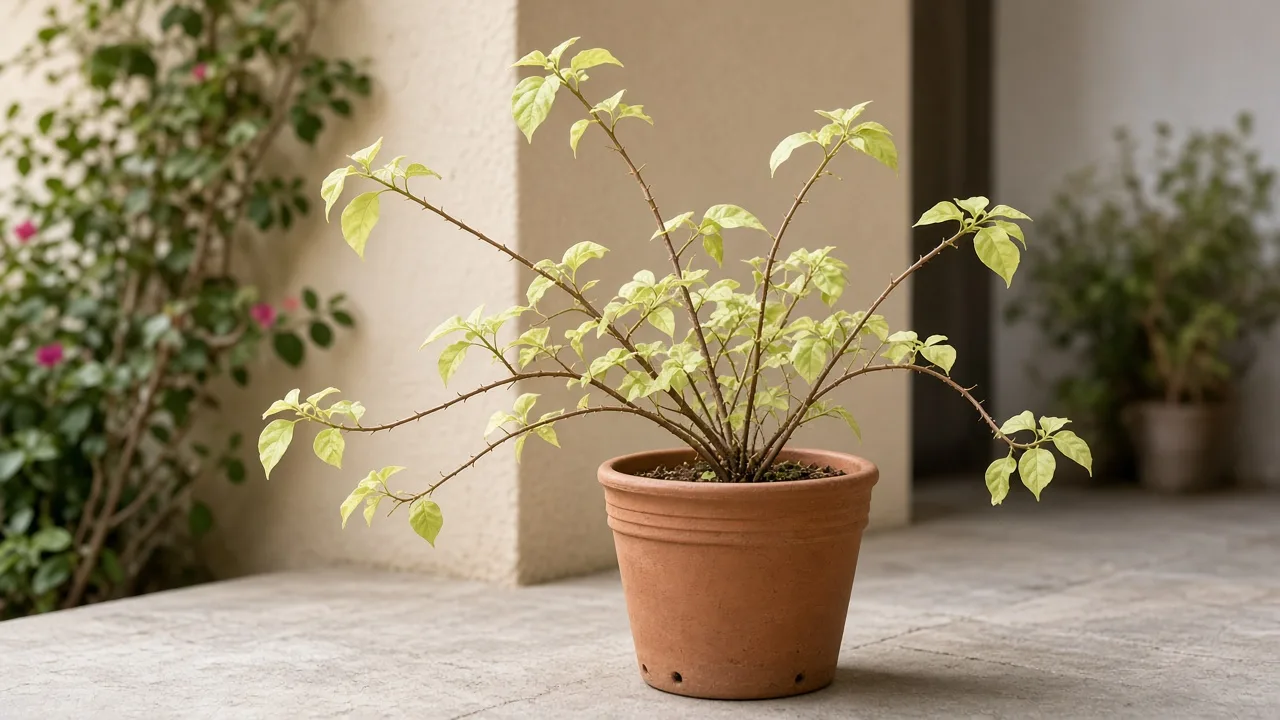
Pale leaves on bougainvillea show as washed-out lime-green true foliage across many stems, often with long weak runners and shy bracts while the plant still looks alive. First step: during warm active growth, count direct sun hours on the leaves—not room brightness—and move the pot to the sunniest spot you can offer before changing fertilizer or repotting.
Pale Leaves on Bougainvillea: Causes, Checks & Fixes
This guide covers pale leaves on Bougainvillea. See also the general Pale Leaves guide, watering, and light pages for this plant.
Pale Leaves on Bougainvillea: Causes, Checks & Fixes
Quick answer
Pale leaves on bougainvillea (Bougainvillea spp., Paper Flower) show as washed-out lime-green or yellow-green true leaves on many thorny stems at once, often with long gaps between leaves, weak stretch toward one bright direction, and few or no papery bracts during warm active growth. The vine can look “alive but tired”—not the crisp deep green you see on sun-grown patio plants.
For how pale foliage develops when chlorophyll production drops across a plant, see our pale leaves guide. On bougainvillea, the decisive clue is often bracts vs true leaves: colorful bracts may be absent or weak while the small oval true leaves along the same runner look uniformly dull—not the green-vein yellowing on one shoot tip that signals iron deficiency.
First step: during warm months, count direct sun hours on the leaves (not how bright the room feels). If the plant gets fewer than six hours of direct sun, move it to the sunniest spot you can—outdoor south or west patio, or the brightest window with gradual acclimation—before repotting, heavy pruning, or fertilizer.
When to use this page vs other Bougainvillea guides
| Pattern | Read next |
|---|---|
| Uniform wash-out on many stems, weak bracts, stretch | Pale leaves (this page) |
| Long bare stems, zero bracts for weeks in shade | Not enough light |
| New tip leaves yellow with dark green veins | Iron deficiency |
| Lowest old leaves pale first, no vein pattern | Nitrogen deficiency |
| Interveinal yellow on older mid-stem leaves | Magnesium deficiency |
| Yellow leaves + wet mix, soft base stems | Overwatering or root rot |
| General yellowing with several causes | Yellow leaves |
What pale leaves look like on Bougainvillea
Healthy bougainvillea in full sun builds compact thorny shoots with deep green true leaves and showy bracts on new wood. Pale-leaf stress breaks that look across the whole visible vine, not on a single nutrient-starved tip.
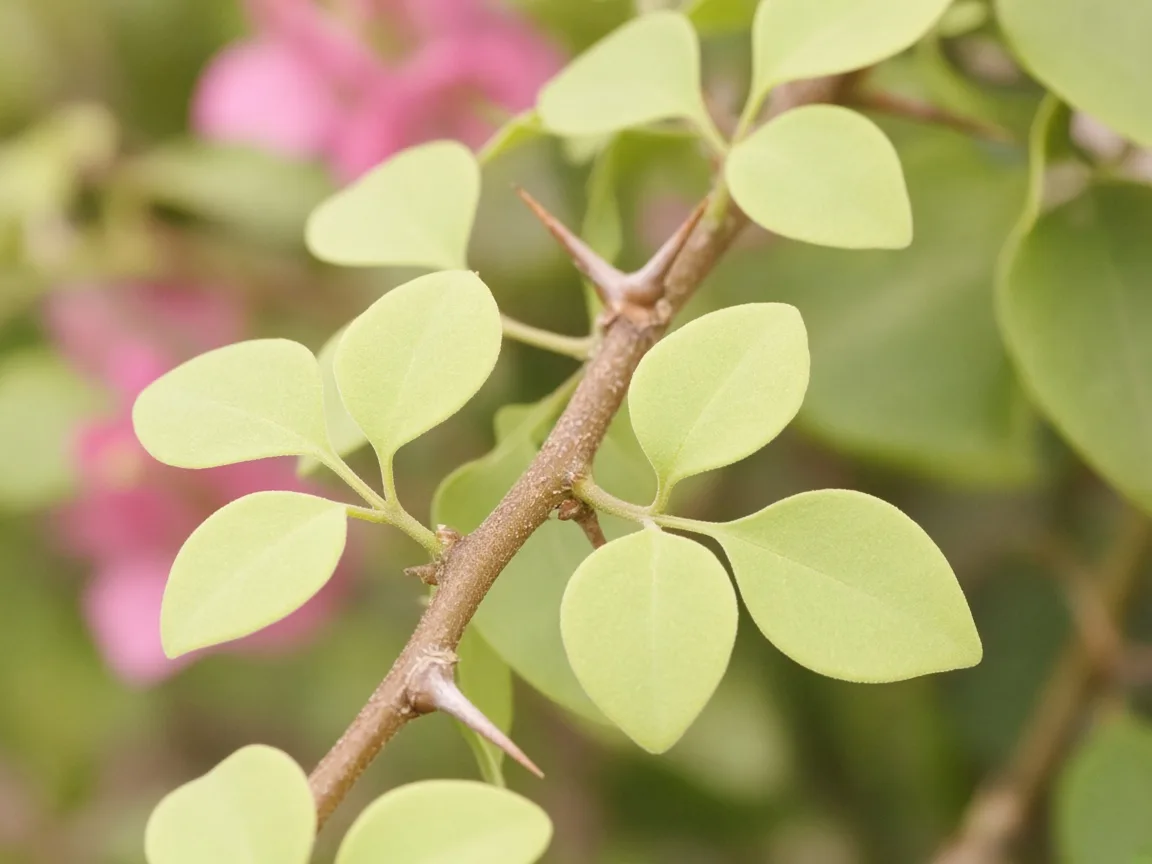
True leaves on a thorny bougainvillea stem: uniform lime-green wash-out without green-vein striping—compare with deeper green on an older sun-grown section if present.
Typical signs during warm growth:
- Light green or yellow-green true leaves on many nodes along the same runner—not one chlorotic tip only
- Long internodes and leaning growth toward the brightest window, door, or gap in afternoon shade
- Small or thin new leaves compared with older sun-hardened foliage on the same branch
- Weak or missing bracts for weeks even when you feed; bougainvillea needs direct sun to flower well
- Slow pot dry-down in dim corners—the mix stays heavy because the plant uses less water when light is low
Bracts vs true leaves (bougainvillea-only read): Owners often judge health by bract color alone. A stem can carry vivid bracts from an earlier sunny flush while newer true leaves above or beside them stay pale after a move indoors or under a pergola. Always inspect the smallest true leaf at the active tip, not last season’s color.
These patterns differ from sunburn (bleached or crispy patches after a sudden jump into harsh afternoon sun) and from cool-season rest, when shorter days naturally slow growth—though pale stretch during warm months still points to light or chronic stress, not dormancy alone.
Why Bougainvillea washes out instead of coloring up
Bougainvillea is a drought-tolerant tropical vining shrub built for open, high-energy sites. It can keep leaves in mediocre light, but chlorophyll density drops—leaves look pale—and the plant prioritizes reach over compact bract-ready wood.
Bougainvillea-specific causes:
- Too little direct sun — NC State lists full sun as six or more hours of direct sunlight daily. Indoor middle-of-room placement, north windows, or shaded patio pockets produce washed-out foliage and shade that resists blooming.
- Low light plus slow dry-down — In shade, the pot stays wet longer; roots sit in cooler, oxygen-poor mix while leaves pale. UF/IFAS Charlotte County links leaf drop to over-watering, not enough sun, and cold—pale wash often precedes yellow drop on the same vine.
- Chronic overwatering in dim sites — Bougainvillea performs better when soil is left a little dry. Constant moisture on a pale, non-flowering vine overlaps overwatering even when you water “gently.”
- Nitrogen loss on old leaves — If lowest leaves fade first while tips stay slightly greener, see nitrogen deficiency. Widespread yellowing can signal nitrogen deficiency in landscape plants; on container bougainvillea, leaching through fast soil and seasons without feed are common.
- Lush pale growth from excess nitrogen — Too much nitrogen encourages leaves instead of blooms. Soft, pale, leggy green growth with zero bracts may follow heavy high-nitrogen feed—not a call to feed more.
Reading pale true leaves vs bract color on thorny runners
This check matters only on bougainvillea’s bract + true leaf architecture:
- Pick one active runner with thorns and follow it from base to tip.
- Note bract clusters—when did color last appear? Old bracts can mislead you if light dropped recently.
- Compare true leaf color at the tip to two nodes below on the same stem. Uniform pale wash along the whole segment = this page. Veins dark green on the tip leaf only = iron deficiency.
- Measure internode length between leaf pairs. Long gaps plus pale color confirm stretch from low energy, overlapping not enough light.
How to confirm the cause
Work through these checks in order:
- Direct sun hours — On a warm day, count hours sunlight hits leaves, not just the pot rim. Under six hours during active growth strongly supports light-related pale leaves on bougainvillea.
- Pot weight and moisture — Lift after a normal watering cycle. A heavy pot that stays damp for many days in a dim spot suggests you need more light and a watering reset per the watering guide—not bloom booster.
- Leaf age pattern — Uniform pale wash on many leaves = this page. Bottom leaves first = nitrogen. Newest tip with green veins = iron. Oldest mid-stem interveinal yellow = magnesium deficiency.
- Stem firmness — Woody base stems should stay firm. Soft stems on wet mix = drainage and root issue regardless of leaf color.
- Feed history — Months of high-nitrogen fertilizer without blooms fits lush pale vines; depleted mix with no feed and reasonable sun fits mild nutrient wash—confirm before feeding.
If many stems look uniformly washed out, internodes stretch, bracts fail in warm weather, and direct sun is clearly low, fix light first.
The first fix to try
Move the container to maximum direct sun during active growth—typically an unobstructed outdoor south or west patio, or the brightest south or west window indoors—with 7–14 days of gradual acclimation if the plant lived in deep shade. Do not repot, hard-prune, or fertilize on the same day you change light.
After light improves:
- Match watering to dry-down at 3–5 cm depth; shady pale vines need less water than the same plant in full sun on a hot terrace.
- Wait two weeks and read new leaf pairs on the sunniest shoots—deeper green and shorter gaps between leaves mean you chose the right lever.
- If sun is already strong (six or more hours), pale lower leaves only, and the pot is light with firm roots, consider a single light feed with complete micronutrients during active growth per the fertilizer guide—not before ruling out wet mix.
Step-by-step recovery
Week 1: Relocate to direct sun; acclimate gradually if needed. Skip fertilizer. Water only when the top 3–5 cm is dry—lighter in shade, slightly more frequent once sun increases and the pot dries faster.
Weeks 2–4: Pinch or shorten the weakest pale runners after you see firmer new growth on sun-exposed tips—bougainvillea blooms on new wood formed in strong light. Remove only clearly dead or soft stems.
Weeks 4–8: Expect old pale leaves to stay pale; judge new true leaves and bract buds on pruned or sun-facing shoots. If tips stay washed out despite verified full sun and appropriate dry-down, branch to iron deficiency or nitrogen deficiency using the lookalike table above—not another generic feed.
Recovery timeline and what improvement looks like
- 3–7 days: Stretch toward light may stop; no visible leaf darkening yet.
- 2–4 weeks: New leaves on sunniest shoots should look slightly deeper green with shorter internodes if light was the main issue.
- 4–8 weeks: First bract color may return on new wood after a sunny flush; timing varies with cultivar and season.
- Old pale blades: Often do not re-green; they may yellow and drop naturally—see yellow leaves if drop accelerates on wet soil.
Worsening signs: Increasing softness at the stem base, spreading yellow on wet mix, or new leaves getting more yellow with green veins during warm growth—escalate to overwatering or iron guides.
Mistakes to avoid
- Fertilizing before sun and moisture are correct — Salts on stressed roots pale leaves further; chlorosis has many causes, and guessing nutrient type without pattern wastes time.
- Assuming bract color means leaves are fine — Last season’s bracts can hide current true-leaf wash-out after a move to shade.
- Watering on a calendar in a dim room — Slow dry-down keeps roots cool and wet while foliage stays pale.
- Treating every pale tip as iron — Whole-vine uniform wash without green-vein striping is usually light, nitrogen on old leaves, or wet shade—not iron on one tip.
- Expecting instant deep green — Recovery shows on new tissue on thorny runners, not on every existing blade.
Prevention
- Site pots where full sun is realistic for your light setup through the warm season.
- Use fast-draining soil and let the top 3–5 cm dry between soaks per watering.
- Feed lightly with complete fertilizer during active growth; avoid season-long high-nitrogen push that trades bracts for pale leggy leaves.
- Flush container mix occasionally during the feeding season if tap water and fertilizer crust the rim.
- Move plants outdoors to full sun after last frost when your climate allows—indoor winter rest naturally pale; distinguish that from warm-month wash-out.
Related Bougainvillea guides
- Overview
- Problems hub
- Light
- Watering
- Not enough light
- Iron deficiency
- Nitrogen deficiency
- Yellow leaves
- No flowers
Scope note: Use this page when many true leaves look uniformly washed out on thorny runners with weak bracts—especially when direct sun is clearly low. Use iron deficiency for green-vein yellowing on the newest tip leaf, nitrogen deficiency when oldest lower leaves pale first, and overwatering when stems soften on wet mix regardless of how pale leaves appear.
Related tool
Use the Plant Problem Diagnosis Tool to narrow causes for pale leaves on this plant before changing light, water, and fertilizer all at once.