Distorted Leaves on Calathea: Causes, Checks & Fixes
Quick answer
Distorted leaves on Calathea—puckered, rippled, undersized, or twisted patterned blades—usually trace to pests inside rolled new spikes, low humidity during unfurl, or stop-start watering while leaves were forming. First step: inspect the newest leaf still emerging from the center spike and shake it over white paper before changing water, fertilizer, or pot size.
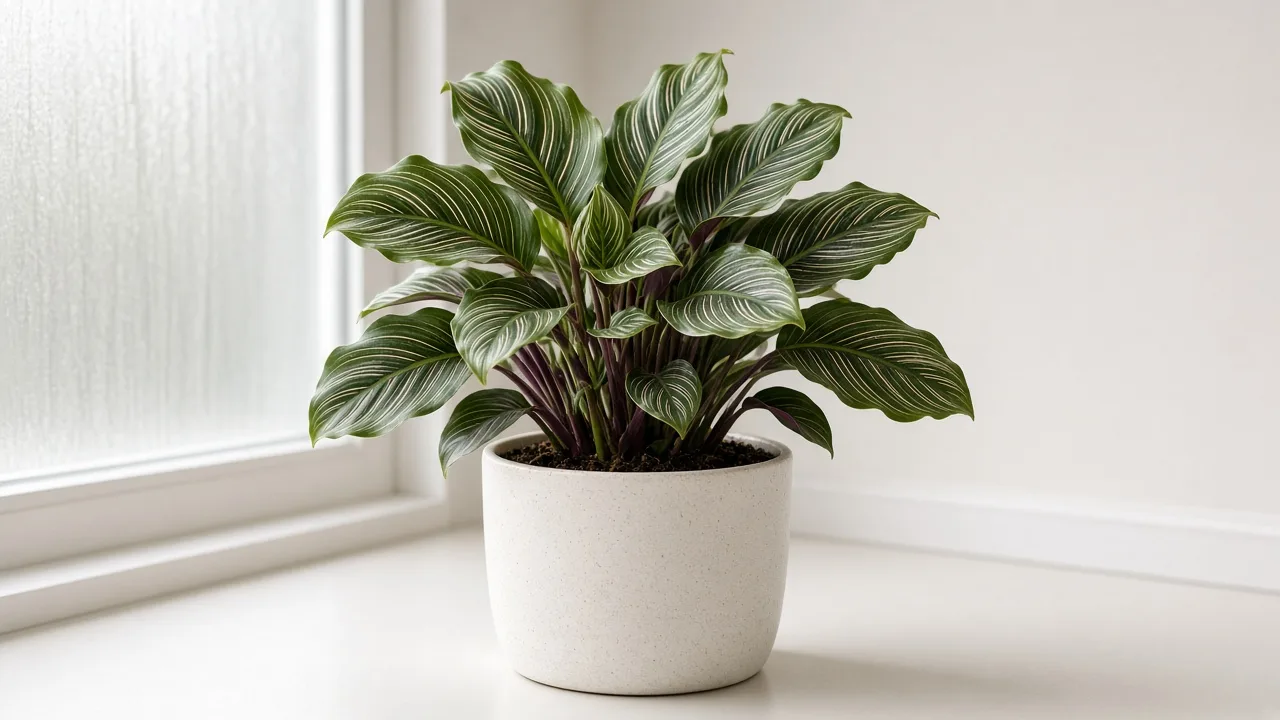
Distorted Leaves on Calathea: Causes, Checks & Fixes
This guide covers distorted leaves on Calathea. See also the general Distorted Leaves guide, watering, and light pages for this plant.
Distorted Leaves on Calathea: Causes, Checks & Fixes
Quick answer
Distorted leaves on Calathea (Calathea / Goeppertia spp.) break the plant’s signature look: flat, boldly patterned blades with painted pinstripes, mosaic netting, or purple undersides. When new foliage emerges puckered, rippled, cupped, twisted, or smaller than neighbors, something interfered while that leaf was forming—or pests scarred soft tissue inside the rolled spike still unfurling.
For how crinkled and misshapen leaves develop on houseplants in general, see our distorted leaves hub. On Calathea, the diagnostic zone is the center rosette—leaves emerge from rolled spikes that unfurl as they mature, and any pest, humidity drop, or watering swing during that slow opening window locks distortion into the blade permanently.
First step: inspect the newest leaf still emerging from the center spike under bright light, then shake it over white paper. Silvery scrape marks with black specks need pest treatment; rippled blades without insects after dry air or hard tap water point to watering and humidity—not repotting on day one.
When to use this page vs other Calathea guides
| Pattern | Start here | Or route to… |
|---|---|---|
| Silvery streaks, black frass, scarred new spikes | Thrips | This page when shape—not pest ID—is the main issue |
| Evening upward fold on established blades | Curling leaves | Normal nyctinastic prayer movement vs permanent warp |
| Crispy brown edges only | Brown tips | Low humidity |
| Yellow lower leaves, wet heavy pot | Overwatering | Root rot if stems soften |
| Fine webbing on purple undersides | Spider mites | — |
| Bumpy water-soaked patches on leaf tops | This page (oedema) | Ease winter watering per watering guide |
What distorted leaves look like on Calathea
Healthy Calathea carries oval to oblong patterned blades on upright petioles from a clumping rosette—often with contrasting veins, purple undersides, and the daily prayer-plant lift at night. Distortion means the blade lost that flat painted symmetry:
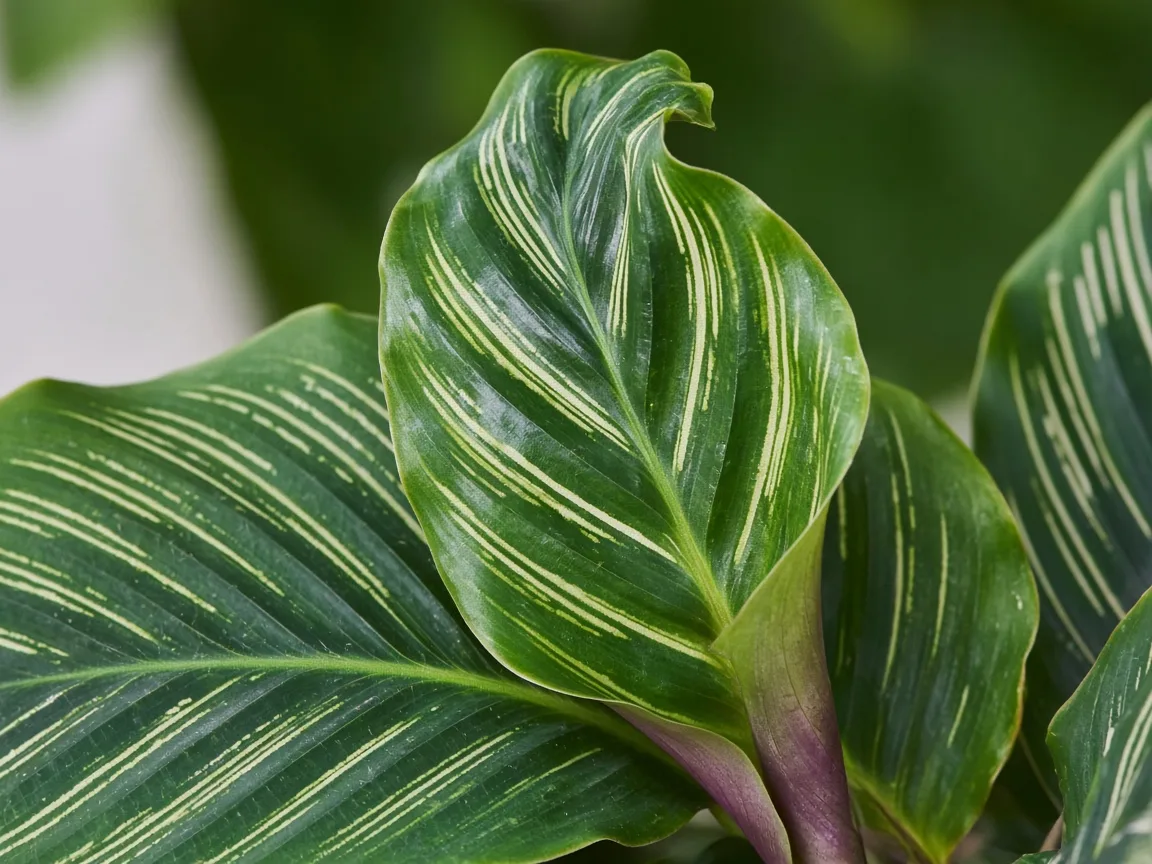
Rippled, undersized patterned leaf at a Calathea center spike—compare with the flatter mature blade below it on the same petiole.
Thrips scarring — Silvery or bronze streaks across pinstripes, tiny black varnish-like frass specks, and small twisted or rippled leaves at center spikes. UC IPM describes thrips feeding as stippling and scar formation that can distort plant parts; damage often shows before you spot the insects. See thrips on Calathea.
Spider mite stippling — Fine pale dots, bronzing, and crinkled or cupped new blades with webbing on purple undersides. RHS notes speckled, silvery leaves and fine webbing as red spider mite signs on indoor foliage plants.
Low-humidity unfurl ripples — New leaves look creased, puckered, or torn along the midrib without silver streaks or insects, often after winter heating or a move away from a humid bathroom. RHS links browning and humidity stress to dry air on calatheas that prefer moist conditions.
Hard tap water crinkle — GrowTropicals notes minerals, chlorine, and fluoride in hard tap water can build up and show as curling, browning edges, and pale marks—new blades may emerge rippled or undersized. RHS recommends rainwater or tap water stood 24 hours for calatheas sensitive to mains water chemistry.
Stop-start watering crease — Leaves look crinkled or puckered without pest signs, often after the pot dried completely and was flooded, or watering paused during active spring growth. RHS guidance on leaf deformation links crinkled leaves to irregular watering while new tissue develops—Maranta and related prayer plants are named examples.
Oedema puckering — Bumpy, water-soaked, corky patches on the upper leaf surface, often in winter when compost stays wet in cool rooms. RHS describes oedema on calatheas as patchy water-soaked areas when plants cannot transpire properly—most common in winter with soggy mix.
Nyctinastic curl vs permanent distortion (Calathea only)
Calathea is a prayer plant: mature blades fold upward at night and lower by day through nyctinastic movement. That reversible evening curl is normal—the petiole joint lifts, but the blade surface stays smooth and fully sized. Distortion is different: the leaf unfurled already puckered, rippled, or twisted, and it stays that way after the plant opens flat in the morning. If you only check foliage at noon, you can miss thrips inside the tight rolled spike that will scar tomorrow’s patterned blade.
Rolled-spike unfurl distortion (Calathea only)
RHS describes calathea leaves emerging from rolled-up spikes that unfurl over days—not the instant pop of a pothos tip. That slow Marantaceae unfurl is the vulnerability window: thrips feed inside the cylinder, dry air tears the midrib, and oedema swells cells before the pinstripe pattern fully expands. Follow the center spike: distortion clustered on the last one or two emerging blades points to spike-level stress, not a whole-pot root failure.
Distilled-water and humidity sensitivity during pattern expansion (Calathea only)
Calathea’s painted markings develop as the leaf expands. Fluoride, chlorine, and dissolved salts in hard tap water can interrupt that expansion—leaving rippled margins or pale washout on the newest blade while older patterned leaves still look fine. Switching to filtered or rainwater for three to four weeks is both a diagnostic test and a fix: if new spikes open flat, water chemistry was the culprit. Pair that with 50–70% humidity during unfurl—dry winter air alone can pucker new tissue even when soil moisture looks adequate.
Why Calathea gets distorted leaves
Sap-feeding pests target soft spike tissue first. Thrips and spider mites scar leaves while they are still expanding inside the rolled center cylinder—leaving permanent ripple on patterned blades. UC IPM notes thrips can distort plant parts through rasping feeding on tender growth.
Clumping rosettes hide infestations. Overlapping Calathea blades create blind spots at the crown. One thrips female on a nursery plant can scar several unfurling spikes before lower leaves show symptoms.
Irregular watering during active growth crinkles new leaves. Calathea prefers evenly moist compost in spring and summer but letting the whole pot go dust-dry and then soaking—or watering on a rigid calendar while growth speeds up—produces stop-start leaf development that looks like distortion rather than simple evening curl.
Winter overwatering triggers oedema. Cool rooms slow transpiration. Wet compost plus reduced airflow swells leaf cells into bumpy patches—distinct from pest silver streaks.
Low humidity tears unfurling midribs. RHS places calatheas among houseplants that need high humidity. New blades expanding in dry heated air often emerge rippled or with torn edges even when roots are moist.
Temperature swings at the window. Cold night air on glass followed by warm daytime sun can warp leaves developing on that exposure—RHS links temperature variation to deformed leaves during development.
How to confirm the cause
Work through these checks in order:
- New vs old — Distortion only on the last one or two spikes → pests, unfurl stress, or recent care change. Warped leaves scattered on mature sections → past event or mechanical damage.
- Shake test — Hold white paper under a suspect new leaf and tap the petiole. UC IPM recommends shaking foliage to dislodge thrips before treating.
- Surface scan — Silvery streaks and black frass → thrips. Fine webbing on purple undersides → spider mites. Bumpy water-soaked upper patches → oedema. No pest signs → watering, water quality, or humidity.
- Pot weight and top 2 cm — Very light pot with limp petioles and crinkled new spikes → drought during growth. Heavy wet pot with yellow lower leaves → wet roots, not primary distortion.
- Water source — Distortion followed weeks of straight hard tap water → switch to filtered or rainwater trial.
- Season and room — Rippled new growth in heated winter with wet soil → oedema. Dry-air ripples in summer AC → low humidity.
- Neighbor check — Inspect Maranta, Ctenanthe, and other prayer plants on the same shelf; shared pests move between Marantaceae clumps.
First fix for Calathea
Photograph the worst distorted patterned leaf, then inspect every rolled center spike and purple leaf underside before you fertilize, repot, or spray.
| Confirmed pattern | First fix |
|---|---|
| Thrips signs (silver streaks, frass, shake test positive) | Isolate and rinse every leaf underside with lukewarm water; see thrips |
| Spider mites (stippling, webbing) | Rinse undersides and raise humidity; see spider mites |
| Rippled new spikes after dry air, no pests | Move to 50–70% humidity and mist the spike zone; see low humidity |
| Rippled blades after hard tap water | Switch to filtered, rainwater, or overnight-stood water for four weeks; see watering guide |
| Crinkled hearts after dry/wet swings, no pests | Water when top 2 cm begins to dry; see watering guide |
| Bumpy water-soaked patches, wet winter soil | Let surface dry before rewetting; ease winter watering per RHS calathea guidance |
Do not repot a Calathea with distorted center spikes on day one unless roots are mushy or soil smells sour. Do not stack repotting, pruning, and pesticide the same afternoon—you need to read which fix worked.
Step-by-step recovery
After the first targeted correction:
- Re-inspect center spikes every three to five days for two weeks—one missed thrips cohort can scar the next unfurling blade.
- Hold isolation until no new distortion appears on emerging patterned leaves.
- Stabilize watering using the top 2 cm dry-down check from the watering guide rather than a fixed calendar.
- Prune only when needed — Remove blades more than half destroyed after pests are gone. Partial ripples on green patterned tissue still photosynthesize.
- Keep humidity steady through the next two unfurls—use a pebble tray, humidifier, or bathroom placement per light and room fit.
- Resume diluted fertilizer only after three weeks of flat new growth during spring or summer active flush.
For a small plant with thrips on every spike, rooting a clean rhizome division in fresh mix may be faster than fighting a dense rosette infestation—see the Calathea overview for division timing.
Recovery timeline
Judge progress by new spikes opening flat with full pinstripe or mosaic pattern—not by old rippled blades flattening.
| Severity | What improvement looks like | Typical timeline |
|---|---|---|
| Mild humidity or water-quality ripples | Next one to two spikes open smooth | 3–6 weeks |
| Thrips on a few center leaves | No fresh silver streaks; clean new blades | 4–8 weeks with repeated rinses |
| Oedema from winter overwatering | New leaves free of bumpy patches; soil dries properly between drinks | 4–6 weeks after watering correction |
| Chronic tap water damage | New growth clears after filtered-water trial | 4–8 weeks (one full unfurl cycle) |
Signs you are winning: firm upright petioles, purple undersides without new stippling, center spikes wider than the last distorted blade, and stable pot weight between waterings.
Signs it is worsening: every new spike opens scarred, webbing spreads, stems soften at the base, or yellow leaves climb the rosette—route to root rot or escalate pest treatment.
Lookalike symptoms
| What you see | Likely misread | Actual issue |
|---|---|---|
| Leaves fold up every evening | Distortion | Normal nyctinastic prayer movement—see curling leaves |
| Brown crispy tips only | Distorted new growth | Edge burn from dry air or salts—brown tips |
| Uniform dull pale blades | Puckered distortion | Light or nutrient stress—pale leaves, not enough light |
| Holes chewed through blades | Rippled unfurl | Mechanical or pest chewing—holes in leaves |
| Wilting with dry soil | Permanent warp | Thirst curl—underwatering or wilting |
Mistakes to avoid
- Misting alone for thrips — Surface moisture does not reach insects inside rolled spikes; rinse undersides systematically.
- Repotting before diagnosis — Root disturbance plus humidity loss often produces one more distorted spike while you still have not confirmed pests.
- Feeding stressed plants — Fertilizer on a Calathea with wet roots or active thrips can burn emerging tissue.
- Removing every rippled leaf at once — Strips photosynthetic area; wait until new growth is clean.
- Treating evening prayer curl — Mature blades that fold at night but opened flat are healthy; do not prune them as “distorted.”
How to prevent distorted leaves next time
- Scout center spikes weekly during spring and summer—lift outer blades gently to see the rolled cylinder.
- Keep humidity in the 50–70% band where new patterned tissue expands; see low humidity prevention.
- Water with filtered or rainwater when possible; match the soil rhythm that keeps top 2 cm beginning to dry between drinks.
- Quarantine new prayer plants two to three weeks before placing them beside existing Calathea.
- Ease winter watering so compost surface dries before rewetting—RHS warns oedema rises in winter with soggy cool mix.
- Place away from heat vents and cold glass so temperature does not swing during unfurl.
Related Calathea guides
Use this page when patterned blades look puckered, rippled, twisted, or undersized—especially on new center spikes. Use sibling guides when the symptom is more specific:
- Thrips on Calathea — confirmed insects, silver streaks, and full rinse-and-monitor schedule
- Curling leaves on Calathea — reversible upward fold on mature blades, drought curl, or evening prayer movement
- Low humidity on Calathea — dry-air prevention beyond a single rippled unfurl
- Watering guide — long-term moisture rhythm after distortion stops
- Problems hub — full symptom index when multiple issues overlap
Use the Plant Problem Diagnosis Tool to narrow causes for distorted leaves on this plant before changing multiple variables at once.