Scale Insects on Dieffenbachia (Dumb Cane): Causes, Checks
Quick answer
Scale insects on Dieffenbachia look like small tan or brown bumps glued to petioles, bare lower cane, and leaf axils—often mistaken for corky stem texture until leaves turn sticky or yellow. First step: isolate the plant and scrape every visible bump with a cotton swab dipped in 70% isopropyl alcohol.
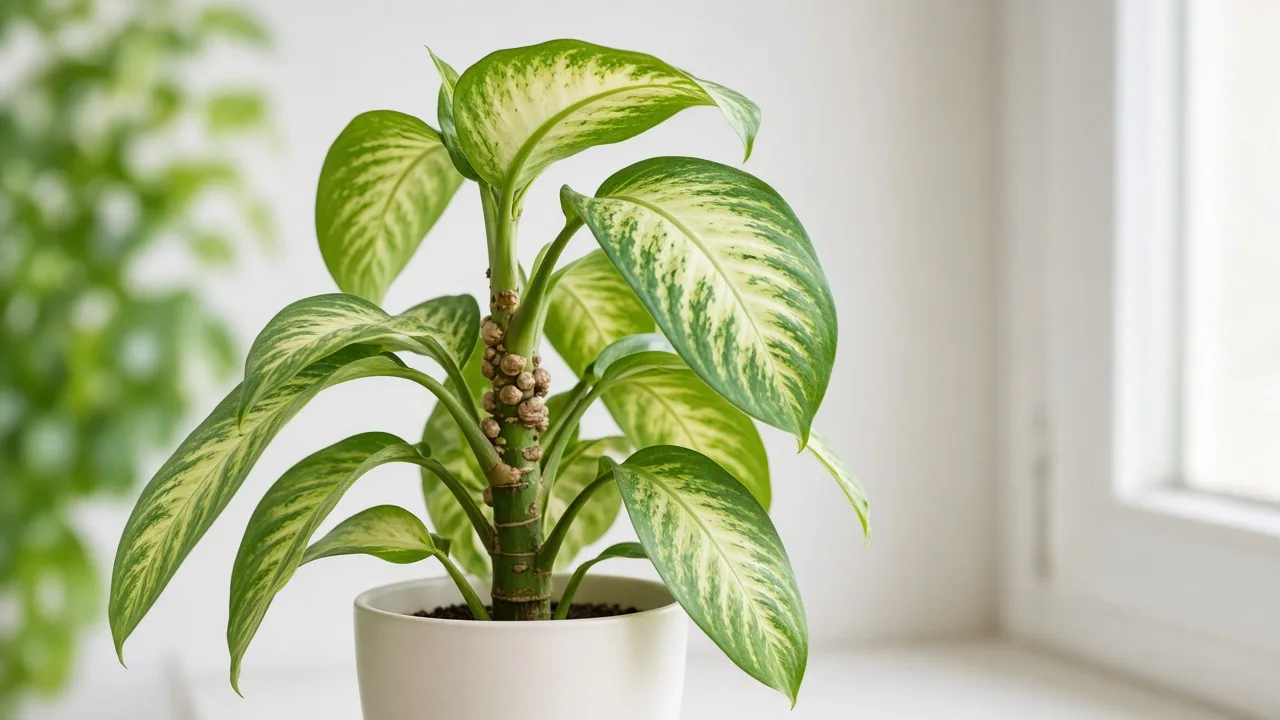
Scale Insects on Dieffenbachia: Causes, Checks & Fixes
This guide covers scale insects on Dieffenbachia. See also the general Scale Insects guide, watering, and light pages for this plant.
Scale Insects on Dieffenbachia: Causes, Checks & Fixes
Quick answer
Scale insects on Dieffenbachia (dumb cane) show up as small, immobile tan, brown, or bark-colored bumps glued to thick petioles, the upright cane, bare lower stem nodes, and the sheltered undersides of large arching leaves. They pierce tissue, drain sap, and—on soft scale species—excrete sticky honeydew that can lead to black sooty mold on broad foliage below.
For general scale biology indoors, see our scale insects guide. On Dieffenbachia, bumps often hide in leaf axils behind overlapping 8–14 inch blades and on corky-looking bare cane below the living crown—places a quick glance at the upper leaf face misses on a tall floor plant.
First step: isolate the plant and scrape every visible scale with a cotton swab dipped in 70% isopropyl alcohol.
Wear gloves when working stem to stem. Dumb cane sap contains calcium oxalate crystals that irritate skin during hands-on scraping.
Why Dieffenbachia gets scale insects
Dieffenbachia is an upright tropical aroid with broad variegated leaves and a thick central cane. Scale are common sap-sucking houseplant pests that arrive on nursery stock, shared tools, or nearby infested plants.
Dieffenbachia-specific risk factors:
- Deep leaf axils - Wide petiole bases create protected joints at every leaf; scale settles where sprays do not reach without lifting each blade.
- Bare lower cane - As older leaves drop, scale colonizes the exposed stem nodes that look like normal corky texture.
- Crown overlap - New leaves unfurl from a dense center; bumps hide under overlapping tissue at the growing tip.
- Floor specimen scale - Tall dumb cane gets watered from above; lower petioles and cane bases stay uninspected.
- Crowded shelves - Arching leaves bridge to mealybug- or aphid-hit neighbors on the same windowsill.
- Indoor warmth - Plants in homes lack natural enemies that control populations outdoors; crawlers keep hatching through winter.
What scale insects look like on Dieffenbachia
Scale insects are protected by a waxy or shell-like cover that makes adults essentially immobile.
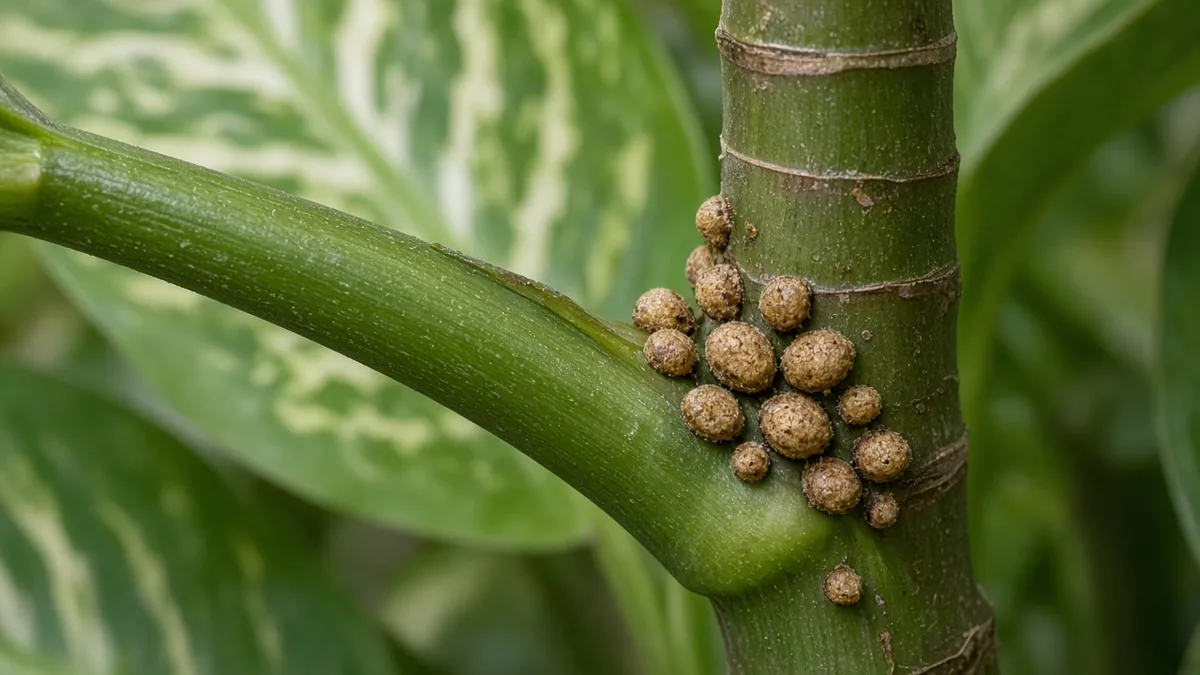
Tan scale bumps along a dieffenbachia petiole base—scrape with alcohol and compare with corky bare cane texture on the same stem.
Typical signs on dumb cane:
- Flat or dome-shaped bumps on green petioles, the main cane, and along leaf veins on undersides
- Bark-colored disks along bare lower stem nodes after lower leaves senesce
- Sticky honeydew shining on broad glossy leaves and pot rims
- Black sooty mold on sticky leaf surfaces
- Ant trails on saucers or cachepots drawn to honeydew
- Yellow leaves and stalled crown growth when feeding is heavy on new tissue
Press a suspect bump—scales flake off; mealybugs smear waxy cotton. Spider mites leave stippling and webbing, not hard bumps. Corky cane callus is smooth and continuous; scale sits as irregular disks on top of tissue.
Soft scale vs. armored scale on dumb cane
Indoor Dieffenbachia most often hosts soft scales that excrete honeydew. Armored scales are flatter, do not produce sticky residue, and their covers often lift separately from the insect body. Both types need physical removal plus repeat treatments because adults under thick covers survive a single spray while crawlers do not.
How to confirm the cause
- Isolate before handling other plants on the same shelf.
- Lift each arching leaf and inspect petiole bases and axils with bright light.
- Run fingers along bare lower cane below the lowest living leaf—bump texture that scrapes off differs from normal cork.
- Scrape test with a toothpick or alcohol swab; live scale leaves a wet smear.
- Neighbor check on shelf aroids and foliage plants touching dumb cane leaves.
- Rule out root rot if stems soften on wet soil without bumps.
Lookalike symptoms to rule out
| Sign | Likely cause |
|---|---|
| Immobile bumps + honeydew | Scale (this page) |
| Cottony wax in axils | Mealybugs |
| Stippling + webbing | Spider mites |
| Uniform yellow, wet soil | Overwatering |
First fix for Dieffenbachia
Isolate the plant and manually remove every visible scale with a cotton swab dipped in 70% isopropyl alcohol.
Work from soil line to crown, lifting each petiole to reach axils. A cotton swab dipped in isopropyl alcohol loosens scale as you rub; alcohol dissolves the waxy cover on contact. Manual removal is effective on manageable houseplant scale when you reach joints sprays miss.
Test alcohol on one leaf and wait 48 hours—Dieffenbachia is among houseplants sensitive to insecticidal soap, and alcohol can mark some blades. Do not fertilize a pest-hit dumb cane hoping to push new leaves—that produces tender tissue crawlers prefer.
Step-by-step recovery
- Scrape and swab all bumps on petioles, cane, and reachable leaf veins every five to seven days for three cycles. Shells must come off, not just get wet.
- Rinse broad leaves the next day to clear alcohol residue—let foliage dry in indirect light.
- Apply horticultural oil after a spot test; coat petioles and both leaf surfaces thoroughly and repeat on label intervals. Prefer oil over soap on this species unless a single-leaf soap test passes.
- Inspect bare lower cane during each round—scale often rebounds on nodes you skipped the first pass.
- Double-sided tape around the cane below the crown catches crawlers between treatments.
- Prune heavily encrusted petioles only when necessary—wear gloves and bag trimmings; do not compost indoors.
- Wash sooty mold once honeydew stops.
Keep isolated until no new scale for two weeks after the last treatment.
Recovery timeline
Manual removal shows results within days when colonies are small. Full treatment takes two to four weeks with repeat rounds spaced for newly hatched crawlers. Mature variegated leaves may stay blemished—judge recovery by clean new crown leaves unfurling without bumps. Dieffenbachia rebounds faster in bright indirect light than in dim corners.
Bare cane and crown axils: where dumb cane hides scale
Mature Dieffenbachia often sheds lower leaves, leaving a bare brown cane that owners treat as decorative stem—not a pest highway. Scale loves those exposed nodes and the tight crown where the next leaf is still rolled.
During treatment, map the cane from soil to tip in one session. Run alcohol swabs along every node scar and peel overlapping crown leaves gently to expose petiole bases. Variegated cultivars like Camille can hide tan scale on cream leaf sectors longer than on solid green tissue—inspect pale zones with a magnifier.
Do not confuse normal corky cane texture with scale—a scrape test distinguishes them. Normal bark is continuous along the stem; scale appears as scattered disks that lift off.
Mistakes to avoid
Do not ignore bumps on one petiole—they multiply along the cane. Do not spray without reaching axils under arching leaves. Do not return the plant to a shared shelf after one treatment round. Do not stack repotting, heavy pruning, and pesticide on the same day.
Heavily crusted houseplants are often better discarded than treated endlessly when scale covers most of the crown and bare cane.
How to prevent scale on Dieffenbachia
Quarantine new dumb cane six weeks before placing beside established plants. Inspect petiole bases and bare cane during weekly watering. Wipe dust from broad leaves so bumps are visible. Separate specimens so arching blades do not bridge between pots.
Sterilize pruning shears between plants. Check plants that summered outdoors before they rejoin indoor collections—scale often rides in on patio season pots.
When to worry
Treat as urgent when bumps encircle multiple petioles, ants swarm saucers, crown growth stalls despite good light, or sticky residue coats floors beneath arching leaves. Severe scale infestations can yellow leaves and cause dieback even on otherwise vigorous dumb cane.
Conclusion
Scale insects on Dieffenbachia hide in leaf axils and on bare lower cane that upright growth creates. Isolate first, scrape visible bumps with alcohol, treat crown and cane systematically, and judge recovery by clean new leaves—not old damaged blades.
When to use this page vs other guides
Use this page for immobile bumps with optional honeydew. Use mealybugs for cottony clusters. Use spider mites for stippling on broad leaves. Use thrips for silvery scraped patches without hard bumps.