Dracaena Marginata Repotting: When, How, and Mistakes
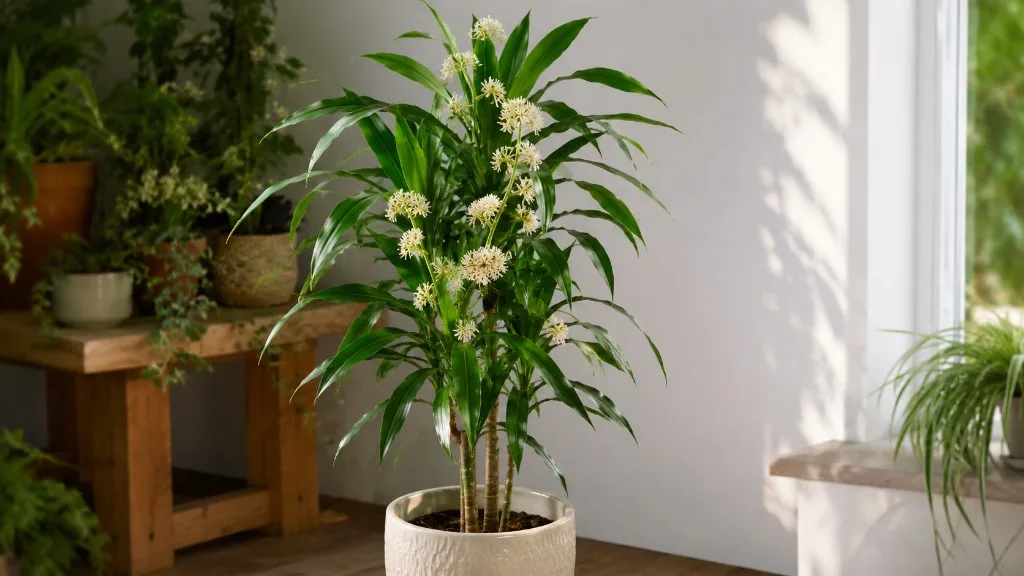
Dracaena Marginata Repotting: When, How, and Mistakes to Avoid
Dracaena Marginata Repotting: When, How, and Mistakes to Avoid
About this guide: Dracaena marginata — the Madagascar dragon tree — is the slim-cane dracaena with narrow, arching leaves edged in red or pink. It tolerates lower light and less frequent watering than corn plant (Dracaena fragrans), but it is also among the most fluoride-sensitive common houseplants. Brown tips on marginata almost always trace back to tap water, soggy soil, or both — not generic “underwatering.”
Dracaena marginata repotting is the moment you refresh depleted mix, give roots modest new room, and — critically for this species — choose a container wide and heavy enough that slim gray canes do not tip every time someone walks past. Dracaena marginata (Madagascar dragon tree) grows as a small indoor tree: slender upright stems topped by tufts of narrow sword-shaped leaves that can reach 2 ft (60 cm) long on mature plants, while the whole specimen commonly tops 6 ft (1.8 m) indoors unless you prune it shorter (Missouri Botanical Garden). The roots sit in a relatively shallow zone at the base, but the visual mass rides high on pencil-thin canes. Repotting rebalances that equation.
Done on a 2–3 year rhythm in spring, with a one-size-up pot and a fluoride-aware soil mix, a marginata repot is usually quiet: careful handling, a week of slight adjustment, then steady new growth. Done in an oversized pot, with fluoridated tap water on fresh roots, or while the plant is still settling in from the shop, the same job can leave you with yellow lower leaves, brown tips, and a wobbly cane that no longer matches your watering rhythm. This guide covers when to repot, how to do it step by step, and the mistakes that turn a routine upgrade into a month-long recovery.
Why Repotting Matters for Dracaena Marginata
Repotting solves three problems that eventually show up as leaf symptoms on dragon trees if you ignore them. First, roots slowly fill the pot and circle the walls, reducing the mix’s ability to hold air and water evenly. Second, even good potting media breaks down — peat and coir compress, perlite crumbles, and the pore spaces that keep dracaena roots breathing disappear over 18–36 months of regular watering. Third, salts from tap water and fertilizer accumulate at the root zone. On marginata, that buildup interacts badly with fluoride sensitivity: brown tips and scorched margins often trace to minerals in the root zone, not to how often you poured water last Tuesday.
Dracaena marginata belongs to Asparagaceae, and like other dracaenas it struggles when roots sit in stagnant, airless wet soil. Clemson HGIC states that root rot usually results from a soil mix that does not drain quickly or from overly frequent watering. Jumping to a pot much too large after repotting creates exactly that environment. Repotting is your chance to rebuild drainage and stability before decline shows in the canopy.
What fresh soil fixes on slim canes
Fresh mix restores structure: the air pockets and drainage speed that compacted old soil lost months ago. Extra root room — modest, not extravagant — lets new white root tips spread outward instead of spiraling against the pot wall. You will notice the difference in how the pot behaves. A root-bound marginata often dries out faster than it used to, then droops slightly between waterings, not because you changed habits but because the root mat is so dense that water runs through channels without wetting the whole mass evenly.
A repot also gives you the only easy moment to inspect roots for root rot — brown, mushy, sour-smelling tissue that needs trimming before it spreads. Catching rot during repotting is far simpler than diagnosing it from yellow lower leaves alone on a plant whose lower foliage naturally senesces as canes age. If roots are mostly pale and firm, you are upgrading space and soil. If they are not, repotting becomes a rescue operation with more aggressive trimming and a lighter watering hand afterward.
Why marginata stays on a 2–3 year rhythm
Dracaena marginata grows at a slow to moderate pace indoors, which is why it does not demand annual repotting the way a fast pothos might. Most healthy indoor dragon trees benefit from a full repot every 2–3 years, as the RHS recommends for dracaena, with a lighter top-dressing — replacing the top few centimeters of mix without disturbing roots — in intervening springs if salts have built up on the surface. That interval is a check-in, not a command. A young plant in a generous nursery pot may sit comfortably for three years, while a tall multi-cane specimen in a 25 cm container that dries within a day may need attention sooner.
Marginata also tolerates being slightly root-bound better than many houseplants. Tight roots can help stabilize slim canes in a appropriately weighted pot. The goal is not to maximize pot volume; it is to refresh soil and add just enough diameter that roots and canopy stay in proportion.
How Marginata Differs From Corn Plant at Repot Time
Generic dracaena repotting advice often assumes Dracaena fragrans — the thick-stemmed corn plant with wide strap leaves. Dracaena marginata is a different architecture. Corn plant carries mass on a stout cane; marginata stacks a full crown of narrow blades on slender gray stems that NC State Extension describes as often bearing interesting natural bends. That makes marginata more top-heavy per pot diameter and more likely to tip in lightweight plastic.
Marginata is also more fluoride-sensitive than corn plant in many homes. NC State notes that this species is sensitive to fluoride like most dracaenas, causing leaf discoloration — so distilled or non-fluoridated water is advised. At repot time, when roots explore fresh mix, using rainwater or filtered water for the first several weeks reduces the chance that a routine transplant triggers a flare of brown tips. Clemson HGIC adds that avoiding potting soils with a very high percentage of perlite and keeping pH between 6.0 and 6.5 helps limit fluoride injury — relevant when you are mixing fresh soil at repot.
Finally, marginata tolerates lower light better than corn plant, which sounds forgiving until you repot in a dim office: slower root colonization, longer wet soil residence time, and extended transplant shock. After repotting, place marginata in bright indirect light protected from drafts — the same placement guidance Missouri Botanical Garden gives for best indoor color — even if the plant survived darker corners before.
Signs Your Dracaena Marginata Needs Repotting
The clearest sign is visual: roots emerging from drainage holes or circling the surface when you lift the plant partway out of its pot. Less obvious but equally reliable signals include water that runs straight through without absorbing, a plant that wilts shortly after a thorough watering despite previously stable habits, and growth that stalls even though light and feeding have not changed. When two or more of these appear together during the active growing season, repotting is usually the right move.
Do not repot simply because a lower leaf turned yellow. On marginata, lower leaves naturally fall with age, leaving distinctive diamond-shaped scars on the stems — that is normal cane aging, not automatically a root crisis. Yellowing clusters on wet soil, soft cane at the base, or sour smell are different stories. Repot when the root zone or soil structure is clearly the bottleneck, not when the only symptom is one dried lower blade.
Do not repot on day one after bringing a plant home unless the mix is clearly failing or pests are obvious. Quarantine first, learn how fast the pot dries in your light level, then repot in spring if roots are tight.
Root-bound and drainage signals
Lift the pot and inspect the bottom first. Roots peeking through holes mean the plant has used the volume it was given. Slide the marginata out gently — if the root ball holds a perfect pot-shaped mold with little visible mix on the sides, you are looking at classic root-binding. Circling roots at the bottom are not automatically an emergency on dracaena, but they tell you the plant has been asking for space and fresh media for a while.
Fast drainage after years of normal behavior sounds efficient until you realize water is bypassing the root mass because channels have opened along the pot wall. If you water thoroughly and the pot feels light again within a few hours, the mix may be spent. Slow drainage combined with sour smell or soft stem tissue at the soil line points to rot that requires immediate attention regardless of season.
Top-heavy instability on narrow canes
On marginata, top-heavy wobble is not cosmetic — it is a safety and health signal. A 5–6 ft dragon tree with a full crown can outweigh a small root ball, especially when several slim canes share one nursery pot. If the pot tips when you brush past it, if the plant rocks when you water, or if you have already knocked it over once, stability and root space are both in question.
Instability usually means the pot is too small in diameter relative to canopy spread, the pot is too light for the plant’s height, or roots are so bound that they no longer anchor the mix firmly. Repotting addresses all three when you move to a one-size-up container with a wider, heavier base and fresh mix packed carefully around the root ball. For very tall specimens, stake the cane loosely after repotting until new roots grip the soil.
Best Time of Year to Repot Dracaena Marginata
Timing matters because marginata recovers fastest when it is already geared for growth. Spring through early summer is the safest window for most indoor growers. Rising temperatures and lengthening days trigger active root development, so the plant can colonize fresh mix quickly. If your marginata has been on a 2–3 year schedule, plan the check for mid-spring — roughly March through May in the Northern Hemisphere — when you can inspect roots and still have months of growth ahead. The RHS advises repotting dracaena in spring once roots become overcrowded.
Repot on a mild day when possible, and avoid extreme heat or cold snaps that add stress on top of root disturbance. Morning repotting gives the plant a full day of stable indoor conditions before overnight temperature drops. Ordinary indoor warmth and bright indirect light are enough, provided you keep the plant out of direct sun for the first week after the move.
Spring and early summer windows
During active growth, marginata can resume pushing new leaves with firm red or pink margins within two to four weeks after a well-executed repot. Roots begin exploring fresh mix almost immediately if temperatures stay above roughly 18°C (65°F) (RHS dracaena growing guide) and the soil remains evenly moist but not soggy. Spring is also the best time to combine repotting with pruning — topping an over-tall cane or removing lower discolored leaves — because pruned stems on marginata usually grow two or more branches below the cut when the plant has energy to respond.
If you missed early spring, early summer is still workable. Avoid repotting during the hottest week of the year if your home lacks air conditioning and the plant sits near sun-facing glass. Heat plus transplant stress can produce more leaf drop than the same repot in moderate conditions.
When winter repotting is still justified
Winter repotting is a backup plan, not a default. Growth slows, days are short, and a disturbed root system sits in wet mix longer because the plant is not pulling water actively. That combination increases rot risk on a species that already dislikes cold, wet roots. Skip winter repotting if the plant is merely slightly tight but still watering normally and holding leaves well.
Repot in winter only when delay would clearly harm the plant: severe root-binding with repeated wilting, active root rot that requires trimming and fresh mix, a fallen or cracked pot, or dangerous instability that risks snapping a slim cane. If you must repot then, use a modest size increase, keep indoor temperatures warm, provide bright indirect light, and let the top half of the mix dry further between waterings until new growth appears in spring.
Choosing Pot Size, Weight, and Stability for Slim Canes
The single most important pot decision is diameter, not decoration. Marginata wants one step up, not a mansion. Jumping from a 20 cm pot to a 35 cm pot feels generous, but the unused soil volume stays wet for days while the shallow root system catches up. That wet zone is where Asparagaceae roots struggle most, and overpotting is the fastest route to yellow lower leaves that look like a feeding problem but are really an oxygen problem at the root zone.
Measure the current inner diameter and choose a new pot 2–5 cm (about 1–2 inches) wider, with a profile that is moderately deep but not excessively tall. Marginata roots are relatively shallow; a pot much deeper than the root ball creates a lower zone that may stay wet while the upper mix dries. For a dragon tree in a 20 cm pot, 22–25 cm is appropriate. From 30 cm, move to 32–35 cm.
Pot weight matters more on marginata than on corn plant. Glazed ceramic, terracotta, and thick-walled planters add mass at the base that helps counterbalance a high crown on slim canes. Choose a pot wider at the base than at the rim when possible — a tall narrow cylinder is the worst shape for a heavy-headed dragon tree. Every pot still needs drainage holes. If you use a decorative cachepot, keep the plant in an inner nursery pot that drains freely.
The one-size-up rule for shallow roots
Nursery and extension guidance consistently recommends increasing dracaena pot diameter by only 1–2 inches per repot. That principle matches root biology. Roots grow into soil progressively; until they do, excess mix is essentially a water reservoir with limited uptake capacity. Marginata even performs well when slightly snug, which is why the one-size-up rule is a ceiling, not a minimum — you are refreshing soil and adding modest room, not maximizing container volume.
The one-size-up rule also keeps watering rhythm predictable after repotting. A modest increase in soil volume means you water slightly less often than before, but not so much less that the mix stays saturated at the bottom for a week. If you repot and find yourself waiting two weeks before the top half dries, the pot is probably too large, too deep, or filled with mix that is too heavy.
Best Soil Mix for Repotting Dracaena Marginata
Dracaena marginata wants well-draining potting mix with enough organic matter to hold moisture without staying soggy. Missouri Botanical Garden recommends a loamy, peaty, well-drained potting soil indoors. Target pH 6.0–6.5 — slightly acidic to neutral. The RHS suggests a peat-free ericaceous base amended with perlite and orchid bark when repotting dracaena.
A reliable blend for repotting matches the Dracaena marginata soil guide:
- 2 parts quality peat-free potting compost
- 1 part perlite, pumice, or coarse grit
- 1 part medium orchid bark or coarse coco chips
Mix ingredients dry in a tub before repotting so perlite and bark distribute evenly. Avoid garden soil, pure cactus mix without organic amendment, and moisture-control blends that stay wet too long indoors.
Full repot — removing the plant, loosening outer circling roots, and replacing essentially all old mix — is appropriate when roots are bound, mix is compacted or sour, or you are correcting rot. Top-dressing — scraping out the top 3–5 cm of old mix and replacing it without disturbing roots — can buy another year if drainage is still acceptable but salts have crusted on the surface. It will not solve circling roots or a tipping canopy.
Fluoride-aware mix choices at repot
Because marginata is among the most fluoride-sensitive common houseplants, repot day is the wrong moment to switch to an ultra-chunky half-perlite succulent mix or to drench with hard tap water. Clemson HGIC advises avoiding potting soils with a very high percentage of perlite and keeping pH between 6.0 and 6.5 to prevent fluoride injury. Moderate perlite at 20–30% balances drainage with mineral sensitivity better than extreme airy mixes.
Use rainwater, distilled water, or reverse-osmosis water for the first several waterings after repot if brown tips have been a problem. Skip superphosphate fertilizers — Clemson flags them for high fluorine. Hold all fertilizer for at least four weeks while roots settle in fresh mix.
Step-by-Step: How to Repot Dracaena Marginata
Repotting marginata is straightforward if you prepare materials first and minimize root exposure time. Gather the new pot, pre-mixed soil, clean scissors, a chopstick, optional stake and soft ties, and a watering can. Work at a comfortable height — a sturdy table saves your back on heavy multi-cane plants.
Step 1: Water the plant 24 hours before repotting. A lightly moist root ball holds together and slips out more cleanly than a bone-dry or soggy one.
Step 2: Add enough fresh mix to the bottom of the new pot so the root ball will sit with the previous soil line about 2–3 cm below the rim. Do not create a thick gravel drainage layer; it does not improve drainage and can create a perched water table.
Step 3: Turn the marginata on its side with help if it is tall, and slide it out while supporting the base of the cane. If it resists, squeeze flexible nursery pots or run a knife around the inside edge of rigid pots.
Step 4: Inspect roots. Trim brown, mushy tissue with clean scissors. Tease circling roots at the bottom and sides gently so they point outward. Avoid washing away the entire root ball unless rot forces full cleaning.
Step 5: Set the plant in the new pot so the previous soil line matches its old position. Slim gray canes should not be buried deeper than they were growing; burying the stem invites rot at the base.
Step 6: Backfill with fresh mix, working soil between roots with a chopstick while holding the plant centered. Firm lightly — enough to remove large air gaps, not enough to compress mix into a brick.
Step 7: Water thoroughly with fluoride-safe water until excess runs from drainage holes. Empty the saucer. Place the plant in bright indirect light, out of direct sun, for 7–14 days.
Step 8: Install a stake if the plant wobbles. Hold fertilizer for at least four weeks while roots settle.
Multi-cane plants and root-ball handling
Many marginata are sold with three or more canes of different heights in one pot — an intentional nursery look. Repot all canes together unless you are deliberately dividing the plant. Center the combined root mass so the group stands without wobbling before you stake. The goal of root teasing is to redirect growth, not to destroy the root ball. Keep most of the original root mass intact while freeing the outer circling layer. If roots are densely matted at the bottom, you may slice 1–2 cm off the bottom of the root ball with a clean knife to stimulate new white tips. Avoid removing more than one-third of total root mass unless you are rescuing rot.
For large, heavy dragon trees, use a wheeled caddy or enlist a second person so you are not yanking slim canes to free the pot. Lift with your legs, support the stem base, and never pull the plant by its narrow leaves.
First watering and post-repot care
The first watering settles mix and closes small air pockets. For the first two weeks, water when the top half of the mix feels dry — the same rule as before repot, but expect the interval to lengthen slightly as soil volume increases. Mild wilting or one to three dropped lower leaves in the first week is common on large specimens. Wilting that worsens daily despite correct moisture usually means rot, oversized pot, or buried stem tissue — inspect accordingly.
Mild transplant shock on marginata usually shows as slight leaf droop, a pause in new leaves, or lower leaf drop for one to two weeks. Full root re-establishment typically takes four to six weeks in warm, bright conditions — longer in winter or on very large specimens. New leaves opening with firm red or pink margins are the clearest success signal. Older brown tips will not heal; judge recovery by new growth, not old scars.
Common Dracaena Marginata Repotting Mistakes
Oversized pots top the list. More soil without more roots means chronic bottom wetness and yellow lower leaves. Stick to one size up even if you imagine the slim canes will grow into the space soon.
Repotting for brown tips alone when the real issue is fluoridated tap water adds stress without fixing the trigger. Switch water first; repot only when roots or mix are clearly failing.
Bare-rooting or over-washing removes fine root hairs that absorb water. Tease outer circling roots; do not scrub the ball clean unless rot forces it. Recovery on slow-growing marginata can take six to eight weeks instead of three or four.
Immediate fertilizing after repot burns tender new root tips in fresh, already nutrient-containing mix. Wait until you see new growth that matches normal leaf size and color.
Choosing a narrow, lightweight pot for a tall dragon tree trades short-term aesthetics for long-term tipping and root damage every time the plant falls.
Using a pot without drainage holes turns repotting into a long-term rot trap. Keep marginata in a draining inner pot if you use a decorative outer shell.
Ignoring pet safety during the messy phase: the ASPCA lists Madagascar dragon tree as toxic to cats and dogs due to saponins, with vomiting, depression, and dilated pupils in cats. Keep fallen leaves and discarded soil out of reach while you work.
Conclusion
Dracaena marginata repotting comes down to reading the roots and the base, checking in every 2–3 years, choosing spring or early summer when you can, moving the plant one pot size up with fresh, well-draining, fluoride-aware mix, and matching pot weight and width to slim, top-heavy canes so the dragon tree stays upright while roots settle. The plant grows slowly enough that a calendar reminder is useful, but never repot on autopilot when the real problem is tap water quality, light, or a brand-new plant still acclimating.
Get pot size, soil, stability, and water quality right and marginata rewards you with a quiet recovery and years before the next move. Oversize the container, drench with fluoridated tap on fresh roots, pick a narrow lightweight pot, or fertilize too soon and the same plant will look punished for weeks. Watch roots and base stability, not just lower leaf drop, and treat repotting as a targeted fix — not a reflex.
When to use this page vs other Dracaena Marginata guides
- Dracaena Marginata overview — Start here for whole-plant context, toxicity, and the fluoride–watering connection before a repot decision.
- Dracaena Marginata soil — Use when you need mix ratios, drainage tests, or top-dressing between full repots.
- Dracaena Marginata watering — Use after repot to recalibrate the top-half dry rule and fluoride-safe watering.
- Dracaena Marginata pruning — Combine with spring repot when topping over-tall canes or reshaping multi-head plants.
- Dracaena Marginata propagation — Use when a repot reveals rot so severe that cane cuttings are the rescue path.