Distorted Leaves on English Ivy: Causes, Checks & Fixes
Quick answer
Distorted leaves on English ivy—puckered, twisted, or undersized lobes—usually show up on the newest tissue at trailing vine tips when aphids, thrips, or spider mites feed during growth, or when watering swung wildly while leaves were forming. First step: inspect the outermost vine tips and shake two suspect new leaves over white paper to confirm thrips before rinsing the whole plant.
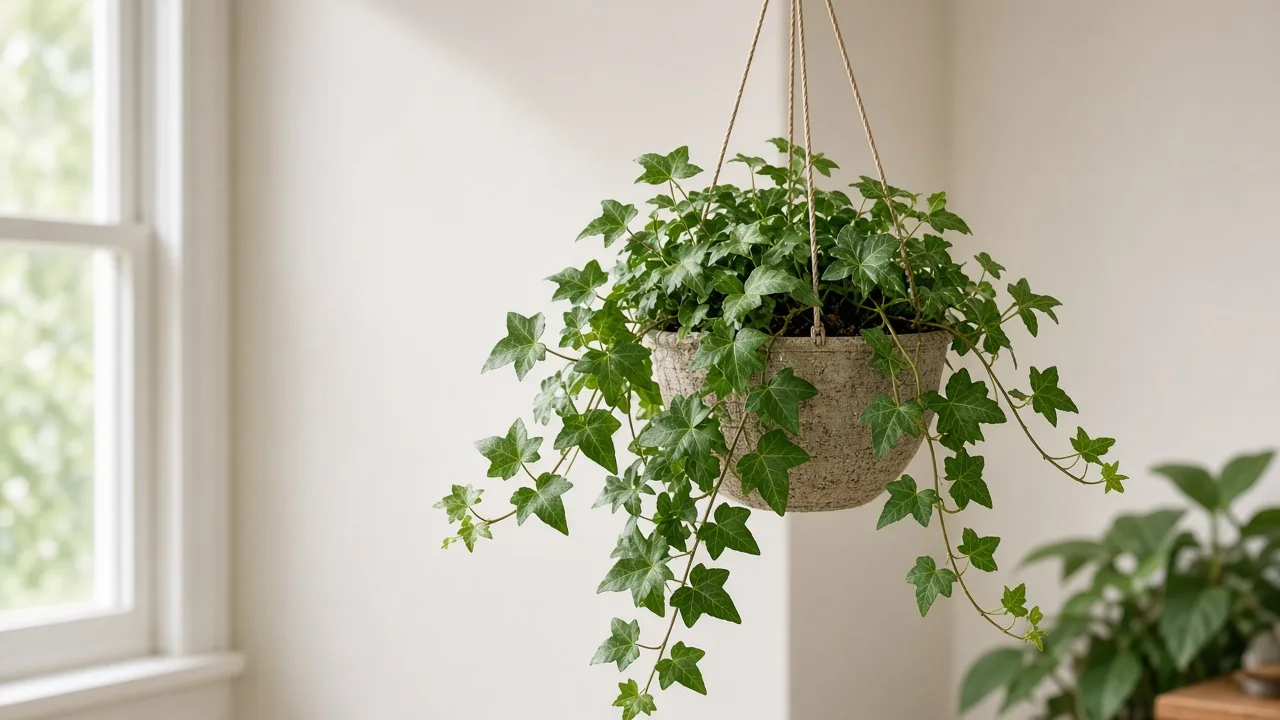
Distorted Leaves on English Ivy: Causes, Checks & Fixes
This guide covers distorted leaves on English Ivy. See also the general Distorted Leaves guide, watering, and light pages for this plant.
Distorted Leaves on English Ivy: Causes, Checks & Fixes
Quick answer
Distorted leaves on English ivy (Hedera helix) break the plant’s usual look: flat to gently cupped lobed leaves along trailing stems, with new tips adding another tier of growth when light and moisture suit the vine. When fresh lobes emerge puckered, twisted, crimped, or noticeably smaller than neighbors on the same stem, something interfered while that leaf was expanding—or sap feeders scarred soft tissue at the growing point.
For how misshapen foliage develops on houseplants in general, see our distorted leaves hub. On English ivy, the diagnostic clue is almost always at the outer trailing edge—the newest vine tips still pushing lobed foliage, whether distortion tracks only that tissue or older inner vines too.
First step: inspect the outermost vine tips and shake two suspect new leaves over white paper to confirm thrips before rinsing the whole plant.
When to use this page vs other English Ivy guides
| Pattern | Start here | Or route to… |
|---|---|---|
| Silvery streaks, black frass, scarred new tips | Thrips | This page when shape—not stippling alone—is the main issue |
| Inward cup or roll without twist on established lobes | Curling leaves | Often dry air or drought stress |
| Sticky clumps on new shoots with pear-shaped insects | Aphids | — |
| Fine webbing and yellow stippling on undersides | Spider mites | Hot dry rooms are a common trigger |
| Yellow lower leaves, heavy wet pot, soft stems | Overwatering | Root rot if roots fail |
| Uniform brown edges without ripple | Brown tips | Salt or dry air—not distortion |
What distorted leaves look like on English Ivy
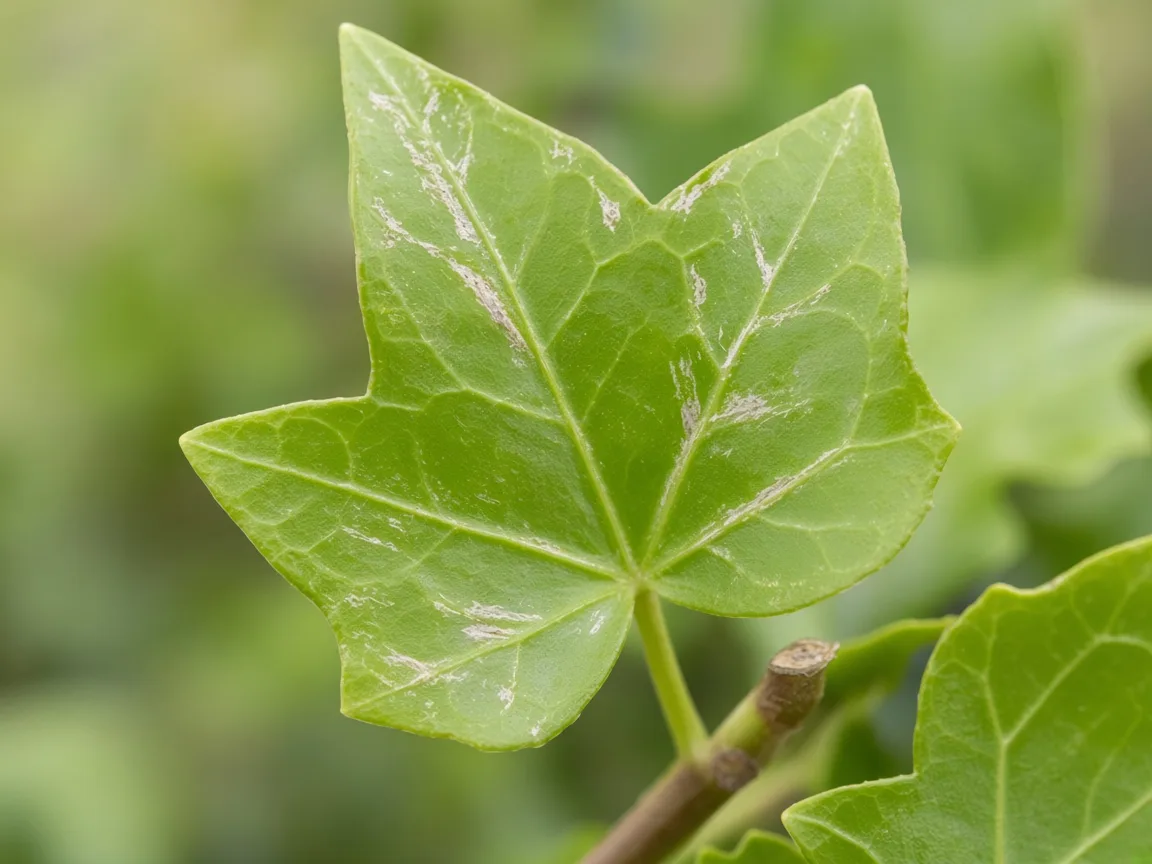
Twisted, undersized lobed leaf at a trailing tip with silvery scarring—compare with the flatter mature lobe below it on the same vine.
Healthy indoor ivy carries three- to five-lobed leaves roughly 1–4 inches long along flexible stems that cascade from shelves and baskets. Distortion means that symmetry fails on tissue that was still forming:
Thrips scarring — Silvery or bronze streaks on young lobes, black varnish-like frass specks, and twisted or crinkled new leaves still emerging at vine tips. UC IPM describes thrips rasping as stippling and scar formation that can distort plant parts; damage often shows before you spot the insects.
Aphid distortion — Soft-bodied colonies on succulent shoot tissue, sticky honeydew, and cupped or narrowed young lobes at tips. Some aphid species inject toxins that curl and further distort growth; once leaves curl tightly, sprays reach pests poorly.
Spider mite puckering — Fine stippling, bronzing, and delicate webbing on leaf undersides, often with bumpy or shrunken new lobes at tips in heated dry air. Mites are common on ivy near radiators and forced-air vents.
Stop-start watering crinkle — Lobes look creased or unevenly puckered along veins without silver streaks or insects, often after the pot dried completely and was flooded, or watering paused during active spring growth. RHS guidance on leaf deformation links crinkled leaves to irregular watering while new tissue develops.
Virus or herbicide warp (rare indoors) — One-sided distortion with mosaic mottling, chlorotic rings, or leaves that look fine on one half of the plant and warped on the other. No cure for virus—isolate and avoid sharing scissors between pots.
Trailing-tip distortion map (English ivy only)
Ivy pushes nearly all visible new growth at the outer cascade of trailing stems, while inner older vines may look flat even when tips are failing. Distortion clustered at every active vine tip—with lower inner lobes still normal—points to pests or care stress at growing points, not a whole-pot root collapse. Follow each runner to its end before you repot the entire basket.
Lobed-leaf cultivar baseline (English ivy only)
Some ivy cultivars carry naturally wavy or deeply lobed margins as part of their look. Judge trouble against what that variety’s healthy lobe should be, not a generic ivy photo. The warning sign is fresh tips emerging crimped and shrunken when they should open flat, telling you the newest tissue was damaged as it formed.
Ivy-aphid shoot focus (English ivy only)
Ivy hosts aphids including Aphis hederae that stay on Hedera without host alternation. They concentrate on the most succulent tissues at vine tips—exactly where lobed leaves expand—so distortion and honeydew often appear on the hanging edge of the plant before inner foliage looks affected.
Why English Ivy gets distorted leaves
Constant soft growth at vine tips. English Ivy overview in good light and steady watering keeps producing new lobed leaves at stem ends. Aphids and thrips feed on that tender tissue; damage locks in as each lobe finishes expanding.
Sheltered undersides on trailing stems. Dense cascades hide leaf backs from casual care. WSU PestSense notes that aphids prefer tender new growth and can rebound after rinsing if undersides are missed—easy on ivy that drapes away from your line of sight.
Dry indoor air and mites. Ivy tolerates cool rooms but struggles when winter heat drops humidity. Spider mites exploit that stress and scar young lobes while you notice only a slight dulling on upper surfaces.
Water swings during fast growth. Spring and summer flushes coincide with the most new lobes forming. A dry spell followed by a heavy soak can leave creased or crinkled leaves without any insects present.
Entry on new plants and cuttings. Nursery ivy, outdoor summer stays, and shared shelves introduce aphids and thrips that distort the next flush of tips before colonies are obvious.
How to confirm the cause
Work through these checks in order:
- Tip-first inspection — Follow the longest trailing stems to their growing points. Thrips and aphids damage newest lobes first; uniform warping on old inner vines only is less typical for sap feeders.
- Shake test — Hold white paper under two suspect new leaves and tap the stems. Thrips fall as tiny yellow to brown specks that crawl; aphids are larger and slower; empty paper with stippling points to mites.
- Underside check — Lift vines and examine leaf backs at tips with a hand lens. Aphids line midribs; mites leave stippling and silk; thrips leave silvery scrapes and frass.
- Honeydew pattern — Sticky residue on upper lobes, pot rims, or furniture below hanging ivy points to aphids or other honeydew producers—not guttation alone.
- Watering history — If the pot went bone dry then sat wet, and distortion lacks insects, compare with underwatering and recent soak cycles before spraying pesticides.
- Asymmetry screen — Warping on one side of the plant with mottling suggests virus or drift; isolate that pot from the collection.
If thrips specks appear on the shake test, treat for thrips. Soft green clusters with honeydew confirm aphids. Stippling and webbing without visible insects fit mites. Clean shake, no pests, and a recent dry-wet swing fit watering crinkle.
First fix for English Ivy
Inspect the outermost vine tips and shake two suspect new leaves over white paper to confirm thrips before rinsing the whole plant.
Move the ivy away from neighbors. At a table, hold white paper under the newest lobes at two trailing tips and flick or tap each stem once. If thrips specks appear, proceed to a thorough rinse. If aphid clusters are obvious instead, skip straight to lukewarm water aimed at undersides and tips—see aphids on English ivy. If the shake is empty but stippling is present, read spider mites before oil sprays.
Wear gloves when handling wet vines; English ivy is toxic to cats and dogs if chewed, and sap can irritate skin during rinsing.
Step-by-step recovery
After the shake test points to a cause, escalate in order:
Thrips-driven distortion
- Rinse all vine tips and leaf undersides in a sink or shower, supporting the pot so mix stays put
- Prune the worst-scarred tip sections once you see clean new lobes forming elsewhere
- Apply insecticidal soap or neem labeled for houseplants on a test lobe first; repeat on a five- to seven-day cycle while new tips emerge
- See the dedicated thrips guide if silvery streaks keep spreading
Aphid-driven distortion
- Isolate and rinse undersides at every trailing tip—curled lobes shelter aphids from contact sprays
- Trim the most distorted tip if insects are concentrated and unreachable
- Follow aphids on English ivy for soap cycles and when to stop pruning
Mite-driven puckering
- Rinse and increase humidity around the basket without soaking crowns overnight
- Treat per spider mites on English ivy; avoid hot dry air from vents on recovering tips
Watering crinkle without pests
- Stabilize watering when the top inch dries—do not alternate flood and drought through the next growth flush
- Hold fertilizer until two weeks of normal new lobes appear
Do not repot on day one. Distortion is a foliage problem unless roots are clearly failing. Do not fertilize stressed ivy to “push it past” warp—lush shoots feed aphid populations you are trying to shrink.
Recovery timeline
Judge progress by new lobes at vine tips, not old puckered tissue.
- Week 1 — Shake test and rinse complete; live thrips or aphids reduced; no new tips added with fresh warp
- Weeks 2–3 — Next lobes emerge closer to normal size; honeydew stops accumulating
- Weeks 4–6 — Trailing edge looks mostly clean; trim remaining ugly tips for appearance once two clean flushes appear
Badly twisted mature lobes will not flatten. Recovery means the distortion stops at the growing point and new growth matches the plant’s usual lobe shape.
What not to do
- Do not spray pesticides before confirming pests—the shake test and underside check come first
- Do not repot, prune every trailing stem, and spray on the same day—you will not know which step helped
- Do not assume every wavy cultivar leaf is diseased—compare against healthy tips on the same plant
- Do not propagate cuttings from warped tips until two weeks of clean new growth confirm pests are gone
How to prevent distorted leaves next time
Quarantine new ivy two weeks before it joins a display. Scout outer vine tips weekly during active growth—the same sites PNW Handbook notes aphids favor. Keep humidity in the 40–60% range and ivy out of hot dry drafts. Water on a steady dry-down rhythm through spring flushes. Rinse dust from undersides during care so thrips and mites are visible early.
When to escalate or discard
Treat as urgent when:
- Distortion races along most trailing tips within a week
- New lobes stop emerging or tear as they open
- Thrips or aphids appear on several plants from one nursery batch
- Mosaic mottling spreads with one-sided warp—assume virus and isolate
A single older lobe with old ripple, firm stems, and clean new tips elsewhere is usually past stress—not a discard case. Remove the plant only when every growing point stays scarred, pests survive repeated targeted treatment, and no clean vine section remains to salvage.
Conclusion
Distorted leaves on English ivy mean something interrupted normal lobe development—usually sap feeders at trailing vine tips or uneven watering during a growth flush. Read the newest lobes, shake-test for thrips, and trace each runner before you repot or feed. Ivy recovers quickly once the cause stops; focus on symmetric new lobes at the growing points.
Related English Ivy guides
- English Ivy overview — placement, growth habit, and care baseline
- English Ivy watering — dry-down checks for hanging baskets
- English Ivy light — bright indirect light for steady new tips
- Thrips on English Ivy — silvery scarring at vine tips
- Aphids on English Ivy — sticky cupping on soft new shoots
- Spider mites on English Ivy — stippling in dry heated rooms
- Curling leaves — cup or roll without twist
- English Ivy problems hub — all common issues on this species
Related tool
Use the Plant Problem Diagnosis Tool to narrow causes for distorted leaves on this plant before changing multiple variables at once.