Wilting on Ficus Benjamina: Causes, Checks & Fixes
Quick answer
Wilting on Ficus Benjamina always starts with pot weight-light dry soil means underwatering; heavy wet soil with limp leaves means damaged roots or overwatering. First step: lift the pot and check moisture at depth before watering again.
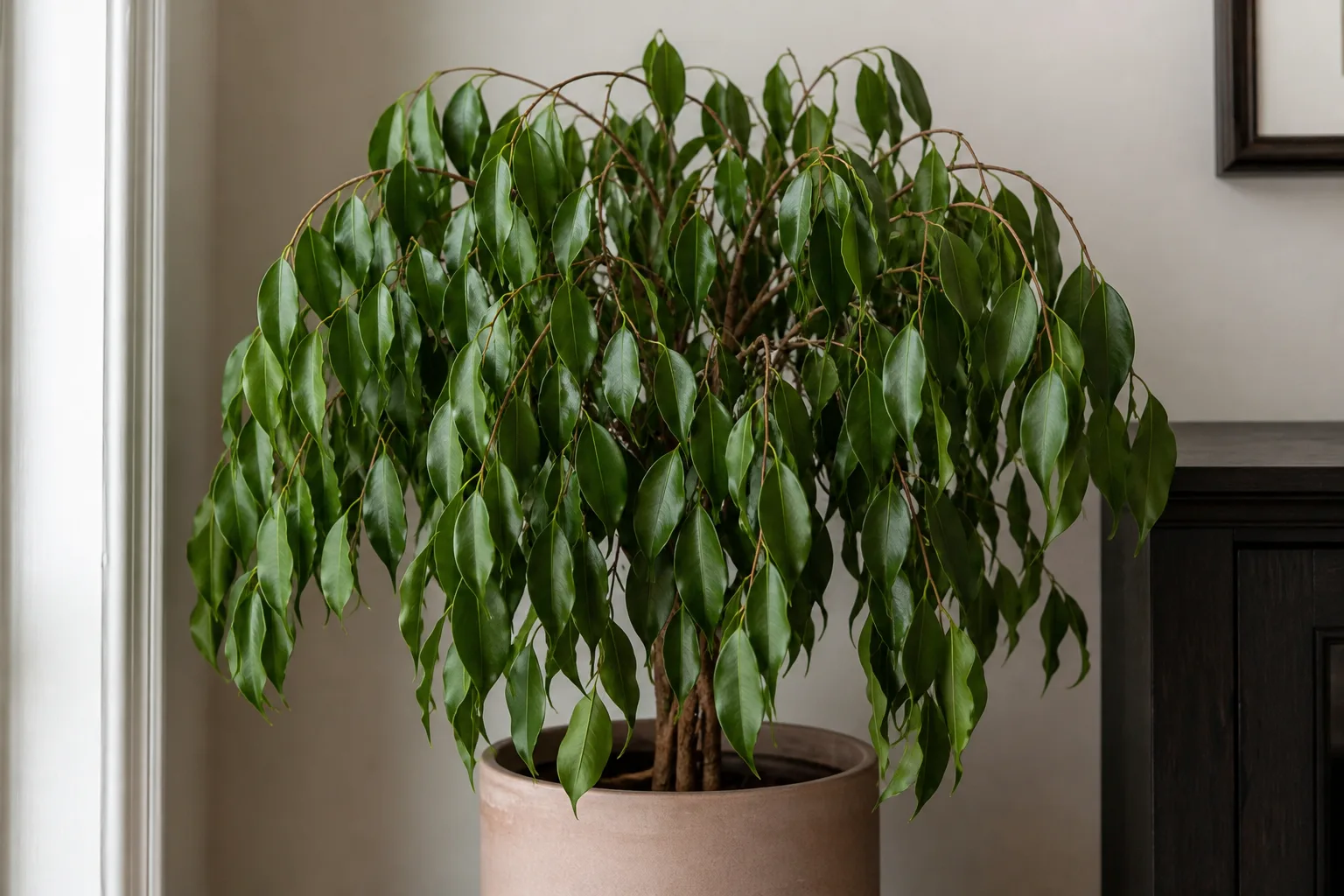
Wilting on Ficus Benjamina: Causes, Checks & Fixes
This guide covers wilting on Ficus Benjamina. See also the general Wilting guide, watering, and light pages for this plant.
Wilting on Ficus Benjamina: Causes, Checks & Fixes
Quick answer
Wilting on Ficus Benjamina (weeping fig) looks alarming because the species drops leaves aggressively under stress-but limp foliage is a symptom, not a diagnosis. This Moraceae tree wilts from underwatering on Ficus Benjamina, overwatering with root failure, move and draft shock, spider mites, or recent repot root damage. The critical split is pot weight versus soil moisture.
First step: lift the pot. A light, dry container needs a thorough soak after the top 1–2 inches feel dry. A heavy, wet pot with limp leaves is paradoxical wilt-stop watering, check drainage, and inspect roots if decline continues. Do not water again until you know which pattern you have.
What wilting looks on Ficus Benjamina
- Dry wilt - leaves droop and may curl; pot is light; top 2 inches of mix are dry; stems still firm
- Wet wilt (paradoxical) - leaves limp while soil stays dark and cool; pot heavy; may follow weeks of dim-room overwatering
- Shock wilt - mass leaf drop within days of relocation, repot, or HVAC blast; canopy thins but stems stay firm
- Mite stress wilt - stippled yellowing on interior leaves, fine webbing under dense canopy, gradual decline
- Cold draft wilt - rapid droop on leaves touching cold winter glass or air-conditioning vents
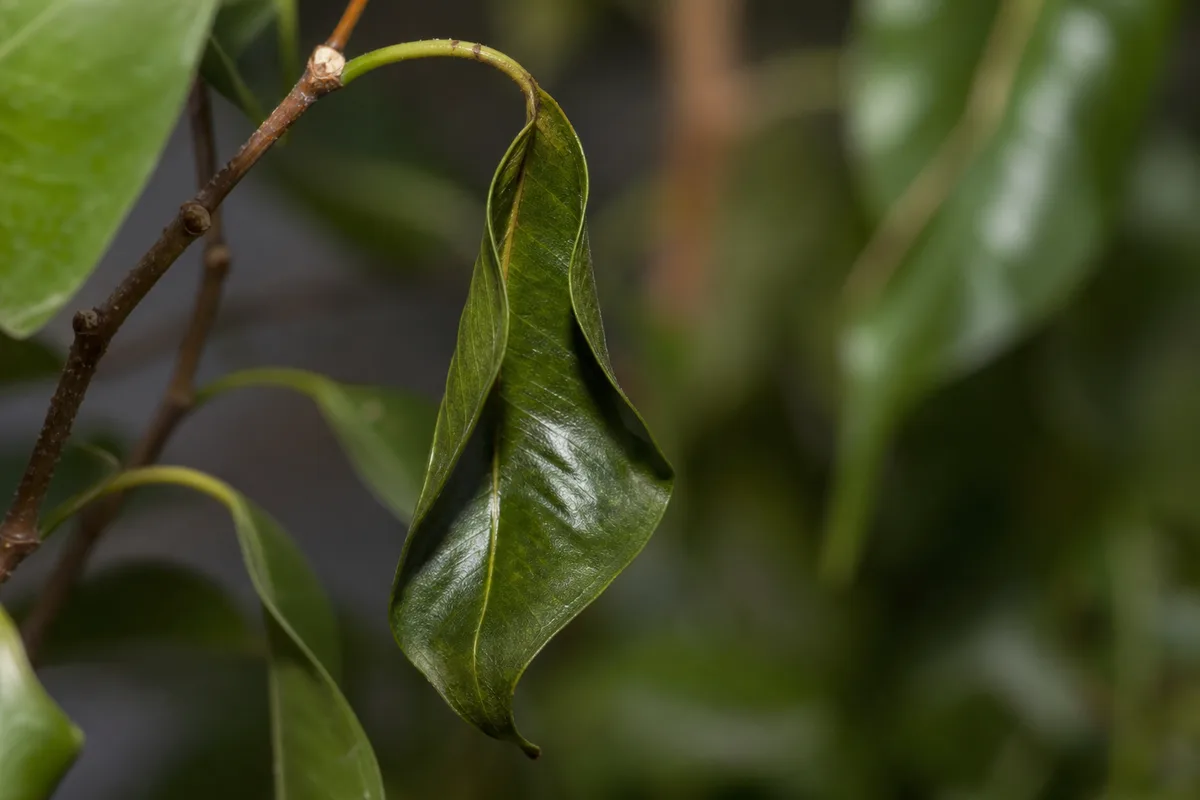
Wilting symptoms on Ficus Benjamina - compare with healthy tissue on the same plant.
Weeping fig communicates through leaf drop before stem collapse-see the overview for normal stress behavior.
Why Ficus Benjamina wilts
Underwatering
Ficus benjamina needs consistent moisture without waterlogging. Missed waterings in bright rooms dry the shallow root zone fast; large canopies lose water quickly.
Overwatering and root failure
Roots in saturated mix lose oxygen; damaged roots cannot transport water-leaves wilt while soil is wet. Common in dim corners watered on a summer schedule. See overwatering and root rot.
Move and draft shock
Weeping figs are notorious for leaf drop after relocation. Moraceae plants shed interior leaves when light direction, temperature, or humidity shifts. Drafts below 55°F (13°C) accelerate wilt.
Spider mites
Dense weeping canopies trap dry air; spider mites thrive on stressed ficus in warm dry interiors. Mite damage reduces photosynthesis and causes gradual wilt.
How to confirm the cause
- Pot weight - light vs heavy at a glance
- Moisture at 2 inches - finger or skewer test
- Timeline - recent move, repot, or heat/AC change?
- Stem firmness - soft base suggests rot
- Mite check - white paper tap test under interior leaves
- Draft scan - vents, doors, cold glass contact
First fix for Ficus Benjamina
Dry pot: water thoroughly until a little runs from drainage holes; empty the saucer within 30 minutes. Expect perk within hours if roots are healthy.
Wet pot with limp leaves: stop watering until top 2 inches dry. Confirm drainage holes open. Move to bright indirect light if in deep shade-slow evaporation worsens wet soil. Inspect roots if wilt persists after mix dries-trim rot and repot only if mushy roots confirmed.
Shock after move: leave the plant in its new spot two to three weeks without further changes; maintain even moisture; expect leaf drop to taper.
Mites: isolate, rinse leaf undersides, confirm active pests before treatment.
Recovery timeline
| Cause | Timeline |
|---|---|
| Dry wilt | Hours to one day after correct watering |
| Wet root stress | 2–6 weeks; judge by new buds |
| Move shock | 2–8 weeks of intermittent drop |
| Mites | 2–4 weeks after treatment and humidity improvement |
Dropped leaves do not reattach-recovery is new growth.
Seasonal watering and light shifts
Weeping figs grow actively in spring and summer when consistent moisture without waterlogging keeps the shallow root zone evenly damp. In winter, the same pot in the same window uses water slowly—owners who maintain summer frequency cause wet-soil paradoxical wilt from October through February.
Short winter days also reduce evaporation. Pair reduced watering with stable bright indirect light; moving the plant closer to glass for winter sun without changing the water schedule is a common wilt trigger. Check the top inch of mix, not the calendar.
Standard tree vs braided weeping fig
Braided multi-trunk ficus benjamina arrangements share one root ball but lose leaves more dramatically after moves because each trunk competes for the same limited root zone. A braided specimen that wilts after repotting may need longer stabilization—four to six weeks without further changes—before judging recovery.
Standard single-trunk trees recover faster from dry wilt but show shock wilt more visibly when rotated. For either form, pot weight remains the first diagnostic tool.
HVAC and window placement
Air-conditioning vents blowing directly on a weeping fig cause rapid transpiration loss and shock wilt even when soil moisture is adequate. Weeping figs are sensitive to environmental changes including drafts and low humidity. Winter heat registers dry the canopy while the root zone stays wet—another paradoxical pattern. Move the pot at least one meter from direct airflow and keep leaves from touching cold window glass on winter nights below 10°C (50°F).
What not to do
Do not water wet wilting plants. Do not move repeatedly during shock. Do not fertilize stressed trees. Do not repot unless rot confirmed-repot shock worsens Moraceae wilt.
How to prevent wilting next time
Stable bright indirect light per light guide, water when top inch dries per watering guide, avoid drafts, inspect for mites monthly, acclimate after moves gradually.
When to use this page vs other Ficus Benjamina guides
- Ficus Benjamina watering guide - Use for routine moisture checks before assuming wilting is the main issue.
- Ficus Benjamina problems hub - Browse all 17 common issues on this species.
- Underwatering on Ficus Benjamina - Different entry point when symptoms overlap with wilting.
- Overwatering on Ficus Benjamina - Different entry point when symptoms overlap with wilting.
- Root Rot on Ficus Benjamina - Different entry point when symptoms overlap with wilting.