Distorted Leaves on Fiddle Leaf Fig: Causes, Checks & Fixes
Quick answer
Distorted leaves on fiddle leaf fig—puckered, rippled, twisted, or undersized violin-shaped blades—usually trace to pests scarring tissue at the crown growing point or uneven watering while a large leaf was still expanding. First step: inspect the newest unfurling leaf at the apex bud under bright light and shake it over white paper before changing fertilizer, repotting, or moving the floor tree again.
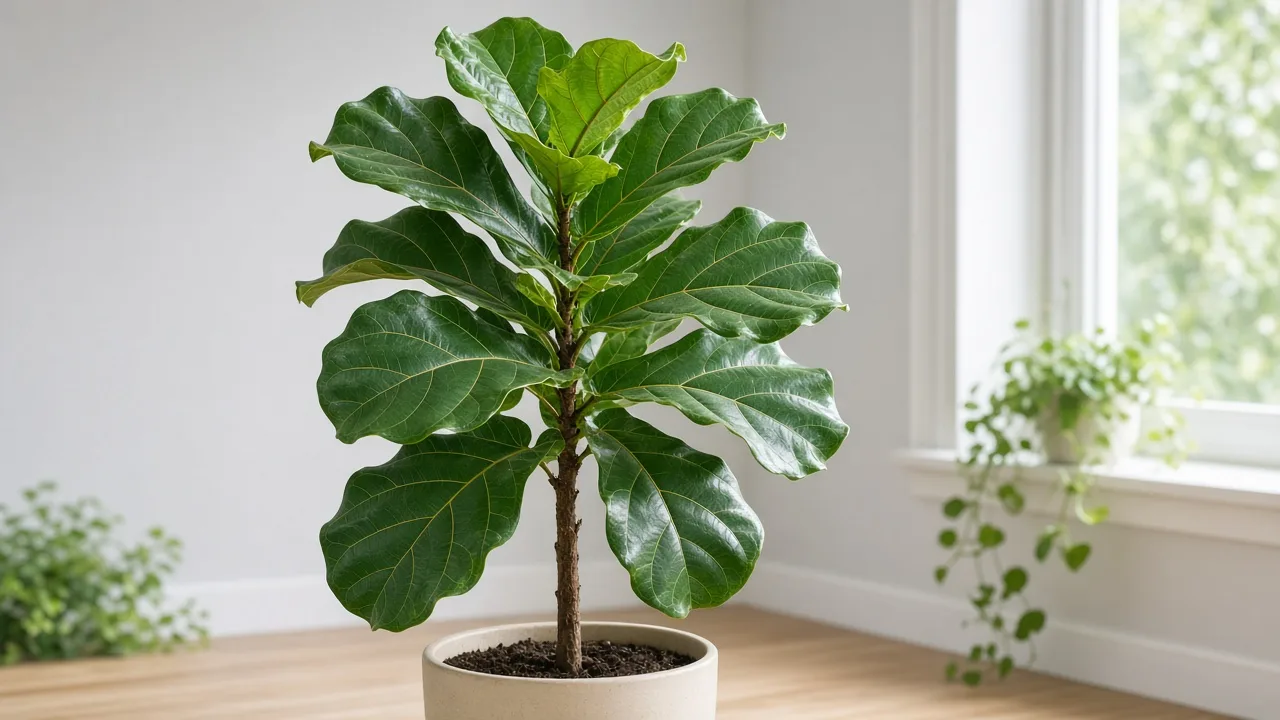
Distorted Leaves on Fiddle Leaf Fig: Causes, Checks & Fixes
This guide covers distorted leaves on Fiddle Leaf Fig. See also the general Distorted Leaves guide, watering, and light pages for this plant.
Distorted Leaves on Fiddle Leaf Fig: Causes, Checks & Fixes
Quick answer
Distorted leaves on Fiddle Leaf Fig (Ficus lyrata) break the plant’s signature look: large, stiff, matte violin-shaped blades on a single upright trunk. When foliage emerges puckered, rippled, twisted, cupped unevenly, or smaller than neighbors, something interfered while that leaf was forming—or pests scarred soft tissue at the crown growing point.
For how crinkled and misshapen leaves develop on houseplants in general, see our distorted leaves hub. On fiddle leaf fig, the diagnostic zone is the apex bud at the top of the trunk—each new violin leaf unfurls in sequence from that single growing point, and any pest, draft, or watering swing during that slow opening window locks distortion into the blade permanently.
First step: inspect the newest unfurling leaf at the apex bud under bright light, then shake it over white paper. Silvery scrape marks with black specks need pest treatment; rippled blades without insects after a dry spell or doorway scrape point to watering rhythm or placement—not repotting on day one.
When to use this page vs other Fiddle Leaf Fig guides
| Pattern | Start here | Or route to… |
|---|---|---|
| Silvery streaks, black frass, scarred new crown growth | Thrips | This page if shape—not pest ID alone—is the main issue |
| Inward cup on scattered mature leaves, dry light pot | Curling leaves | — |
| Only the very newest apex leaf crinkled, lower canopy flat | Calcium deficiency | — |
| Torn holes or ragged edges on mature blades | Holes in leaves | Mechanical damage overlap |
| Yellow lower leaves, wet heavy pot | Overwatering | Root rot if stems soften |
| Fine webbing on undersides | Spider mites | — |
| Bumpy water-soaked patches on leaf tops | This page (oedema) | Ease winter watering per watering guide |
What distorted leaves look like on Fiddle Leaf Fig
Healthy fiddle leaf fig carries lyre-shaped matte leaves up to 12–18 inches long on a tree-like upright trunk. NC State describes the foliage as bullate and not glossy—distortion shows as rippled, puckered, or twisted bullate tissue rather than the smooth cup of drought curl.
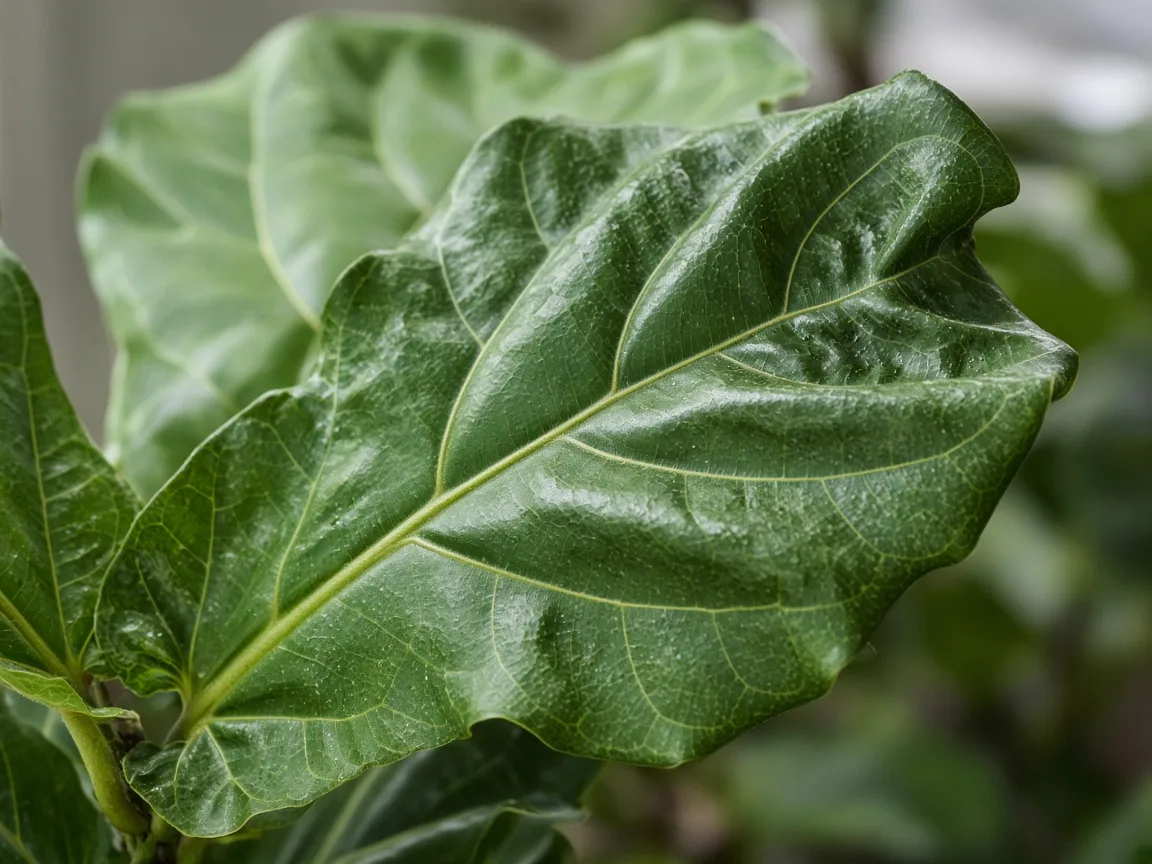
Rippled, undersized violin leaf at the crown growing point—compare with the flatter mature blade below it on the same trunk.
Thrips scarring — Silvery or bronze streaks across the matte upper surface, tiny black varnish-like frass specks, and small twisted or crinkled leaves at the apex still unfurling. UC IPM notes thrips feeding scars and can distort plant parts; damage often shows before you spot the insects. See thrips on fiddle leaf fig.
Spider mite stippling — Fine pale dots, bronzing, and crinkled or cupped new blades with webbing on undersides in dry heated rooms. NC State recommends monitoring for spider mites on indoor fiddle-leaf fig.
Stop-start watering crease — Leaves look puckered or rippled without silver streaks or insects, often after the pot dried completely and was flooded, or watering paused during an active spring growth flush. RHS guidance on leaf deformation links crinkled leaves to irregular watering while new tissue develops.
Mechanical tearing on mature violin blades — Ragged ripples, folded sections, or torn margins on already-expanded mid-stem leaves after brushing a doorway, ceiling fan, or tight corner during a move. Soil moisture and pests may be normal; the damage pattern follows one scraped side of the blade.
Draft or relocation warp — Crispy distorted margins on leaves facing a cold window or HVAC vent; soil moisture may be normal. NC State lists brown spots from temperature fluctuation near heating or cooling vents, and leaf drop from relocation stress on this species.
Oedema puckering — Bumpy, water-soaked, corky patches on the upper leaf surface, often in winter when compost stays wet in cool rooms and transpiration slows. Distinct from pest silver streaks.
Single-apex sequential unfurl on a floor tree (Fiddle Leaf Fig only)
Fiddle leaf fig grows from a single dominant apex bud at the top of its trunk—not a bushy multi-tip shrub. Each new violin-shaped leaf unfurls in sequence, often one large blade every few weeks during active growth. That architecture means distortion timing tells you the cause:
- Apex-only warp on the last one or two unfurling leaves → pests, calcium uptake issues, or crown-level stress. Route to calcium deficiency when lower canopy stays flat.
- Random mature mid-stem blades puckered or torn → mechanical scrape, past thrips scarring, or stop-start watering during that leaf’s expansion months ago.
- Several new apex leaves in a row opening scarred within weeks → active thrips or mites at the crown—treat before the floor tree loses vigor.
Bullate matte violin-blade mechanical scarring (Fiddle Leaf Fig only)
Ficus lyrata leaves are stiff and large—a six-foot floor tree cannot dodge every doorway, curtain rod, or ceiling fan blade when you rotate it for even light. Mechanical distortion leaves permanent ripples or folded creases along one margin of an otherwise healthy mature violin leaf. Check the damaged side: scrape marks and torn bullate tissue without silver stippling or insects point to physical damage, not root failure. This species is relocation-sensitive; repeated moves through tight spaces multiply torn blades faster than pests would.
Mid-canopy blind spots on tall trunks (Fiddle Leaf Fig only)
A mature fiddle leaf fig’s overlapping huge leaves shield the woody trunk and petiole bases where thrips, mealybugs, and scale hide. Owners often spot distortion only when a new apex tip opens at the top—but pests may have scarred mid-stem violin blades weeks earlier. When distortion appears on several leaves at different heights but insects are not obvious on the newest leaf alone, work downward along the trunk with a step stool, spreading matte blades apart at every node. UC IPM recommends shaking foliage over white paper to dislodge thrips before treating.
Why Fiddle Leaf Fig gets distorted leaves
Sap-feeding pests target soft crown tissue first. Thrips and spider mites scar leaves while they are still expanding at the apex bud—leaving permanent ripple on large violin blades. UC IPM notes thrips can distort plant parts through rasping feeding on tender growth. NC State lists thrips and spider mites among common fiddle-leaf fig pests.
Irregular watering during active growth crinkles new leaves. Fiddle leaf fig prefers moist, well-drained mix—not bone-dry then flooded swings. Letting a large floor pot go dust-dry and then soaking—or watering on a rigid calendar while spring growth speeds up—produces stop-start leaf development that looks like distortion rather than simple curling leaves from drought cup.
Winter overwatering triggers oedema. Cool rooms slow transpiration. Wet compost plus reduced airflow swells leaf cells into bumpy patches—distinct from pest silver streaks.
Relocation and draft stress during expansion. NC State warns that fiddle-leaf fig does not tolerate being moved frequently and is sensitive to temperature fluctuation. A chill below about 55°F (13°C) or hot dry air from a vent can warp a leaf still hardening at the apex.
Floor-tree scale hides slow damage. Overlapping 18-inch violin leaves on a tall trunk create blind spots. One thrips female on a nursery plant can scar several unfurling tips before lower leaves show symptoms.
How to confirm the cause
Work through these checks in order:
- New vs old — Distortion only on the last one or two apex leaves → pests, unfurl stress, or calcium deficiency. Warped leaves scattered on mature mid-stem sections → past event, mechanical damage, or old pest scarring.
- Shake test — Hold white paper under a suspect new leaf and tap the petiole. UC IPM recommends shaking foliage to dislodge thrips before treating.
- Surface scan — Silvery streaks and black frass → thrips. Fine webbing on undersides → spider mites. Bumpy water-soaked upper patches → oedema. One-sided ragged ripples without insects → mechanical scrape or draft.
- Pot weight and top 2 inches — Very light pot with limp petioles and crinkled new tips → drought during growth. Heavy wet pot with yellow lower leaves → wet roots, not primary distortion.
- Recent changes — Move, repot, doorway scrape, or HVAC season start in the last two weeks? Stabilize placement before assuming disease.
- Which leaves — Only apex tips twisted while lower canopy flat → calcium or crown pests. Multiple heights involved → broader pest search or mechanical pattern.
First fix for Fiddle Leaf Fig
Make one correction based on what the apex inspection shows—nothing else on day one:
If silvery streaks, black frass, or thrips specks appear on the shake test: Isolate the floor tree. Rinse every leaf underside and the crown growing point with plain lukewarm water in the sink or shower. That single rinse removes active pests before you decide on repeat soap sprays. Follow thrips on fiddle leaf fig or spider mites if damage persists after the rinse.
If no pest signs and distortion followed a dry-then-flood watering swing: Water thoroughly only when the top 2 inches are dry, empty the saucer within 20 to 30 minutes, and hold the pot in one bright indirect spot for two weeks. Judge the next unfurling violin leaf—not the already puckered blade.
Do not fertilize distorted leaves. Do not repot and prune every stem the same day unless root rot is confirmed. Wear gloves when handling cut tissue because latex sap can irritate skin.
Step-by-step recovery
After the first targeted correction:
- Stabilize placement — Bright indirect light per the light guide, away from hot glass and AC blasts. Fiddle leaf fig reacts to repeated moves; pick one spot and leave it for at least two weeks.
- Reset watering — Water only when the top 2 inches dry. Most homes need water every 7–10 days in summer and every 14–21 days in winter in average indoor light.
- Treat pests if confirmed — Apply insecticidal soap on label intervals if thrips or mites return after the initial rinse. Check shelf mates from the same nursery batch.
- Ease winter wet soil if oedema — Let the pot dry an extra few days between drinks in cool rooms; improve airflow around the large-leaf canopy.
- Trim only when stable — Remove leaves that stay severely distorted after two weeks of corrected care; they rarely flatten fully. Sap drips from cuts—use gloves.
- Repot only if roots fail — Mushy roots or sour smell override cosmetic distortion fixes. Follow the repotting guide into fresh perlite-rich soil.
Lookalike symptoms
| What you see | Often confused with | How to tell apart |
|---|---|---|
| Silvery streaks on new crown tips | Thrips | Black frass specks; shake test positive |
| Inward cup on dry light pot, smooth blade | Curling leaves | Whole blade cups; not rippled twist |
| Only newest apex leaf crinkled, lower flat | Calcium deficiency | No silver streaks; feed/water quality issue |
| Ragged tears on one leaf margin | Holes in leaves | Mechanical scrape; no frass |
| Fine webbing, stippling | Spider mites | Dry air; mites on undersides |
| Bumpy water-soaked patches | Oedema (this page) | Winter wet soil; no insects |
| Pale small new leaves, long petioles | Not enough light | Stretch visible; mild warp |
Recovery timeline
Recovery depends on cause and severity:
- Pest scarring caught early: expect the next two unfurling violin leaves to emerge cleaner within three to six weeks after rinsing and follow-up treatment. Scarred mature blades do not reshape.
- Stop-start watering crease: new apex leaves often flatten within one growth cycle once dry-down stays steady—roughly four to eight weeks in active season.
- Mechanical ripples on mature leaves: permanent; prevention is clearance around the floor tree, not more water.
- Oedema: bumps may cork over; stop new puckering within two to three weeks after soil dries appropriately.
- Severe crown thrips with declining vigor: can take a full growing season to know whether the trunk will resume normal sequential unfurl.
Signs of improvement: distortion stops on successive new apex leaves, frass and silver streaks do not spread, pot weight lightens predictably between waterings.
Signs of worsening: multiple new leaves open already scarred within a week, soft stems at the base, sour smell on wet soil, or pest flare-ups while vigor declines.
What not to do
Do not fertilize a stressed fiddle leaf fig before confirming pests and root health—salts stress damaged roots further. Do not repot reactively before diagnosing the apex bud; unnecessary repotting adds stress to an already warped floor tree. Do not move the pot repeatedly while troubleshooting—Ficus lyrata reacts to change before slow neglect.
Do not assume every rippled violin leaf means underwatering; oedema from wet winter soil produces puckering on damp mix. Do not prune heavily on day one unless rot is confirmed. Do not mist heavily as a first response—that does not fix soggy roots and can worsen fungal issues on stressed bullate foliage.
How to prevent distorted leaves on Fiddle Leaf Fig
Match watering to season and light. In active growth with bright indirect light, water when the top 2 inches of soil are dry—roughly every 7–10 days in summer for many homes. From fall through late winter, stretch to every 14–21 days or longer if the pot stays heavy.
Keep temperatures above about 55°F (13°C) and away from drafty windows and vents. Leave the floor tree in one spot when possible; plan doorway clearance before rotating for even light.
Weekly prevention check:
- Confirm apex growth looks firm and new violin leaves unfurl flat.
- Shake one crown leaf over white paper during active growth months.
- Inspect leaf undersides and stem joints on mid-trunk blades with a step stool.
- Confirm the tree is not in direct AC or furnace airflow on the side where new leaves develop.
Fiddle Leaf Fig care cross-check
If distortion keeps returning despite correct watering, revisit baseline care:
- Fiddle Leaf Fig overview — species biology and placement basics
- Watering guide — dry-down method and winter reduction
- Light guide — bright indirect placement for large-leaf transpiration
- Soil guide — drainage mix for floor-tree pots
Related Fiddle Leaf Fig guides
- Thrips — silvery crown scarring and frass
- Spider mites — stippling on matte undersides
- Curling leaves — drought cup vs permanent warp
- Calcium deficiency — apex-only new-tissue distortion
- Holes in leaves — mechanical tears on mature blades
- Overwatering — oedema and root stress
- Leaf drop — relocation shock overlap
- Fiddle Leaf Fig problems
When to worry
Treat distortion as urgent if multiple new apex leaves open already scarred within a week, silvery damage spreads across several blades while soil moisture looks normal, stem bases soften on wet mix, or the floor tree wilts while soil is damp.
Lower urgency cases include one slightly rippled lower violin leaf that has not changed in a month while apex growth remains firm and new blades keep emerging flat.
If symptoms continue beyond three to four weeks despite stable placement and correct dry-down, unpot and inspect roots rather than repeating the same fix.
Related tool
Use the Plant Problem Diagnosis Tool to narrow causes for distorted leaves on this plant before changing multiple variables at once.