Whiteflies on Fiddle Leaf Fig: Causes, Checks & Fixes
Quick answer
Whiteflies on fiddle leaf fig flutter from leaf undersides in a white cloud when disturbed. First step: isolate the plant the same day you see flying white insects, then wash every reachable leaf underside with lukewarm water.
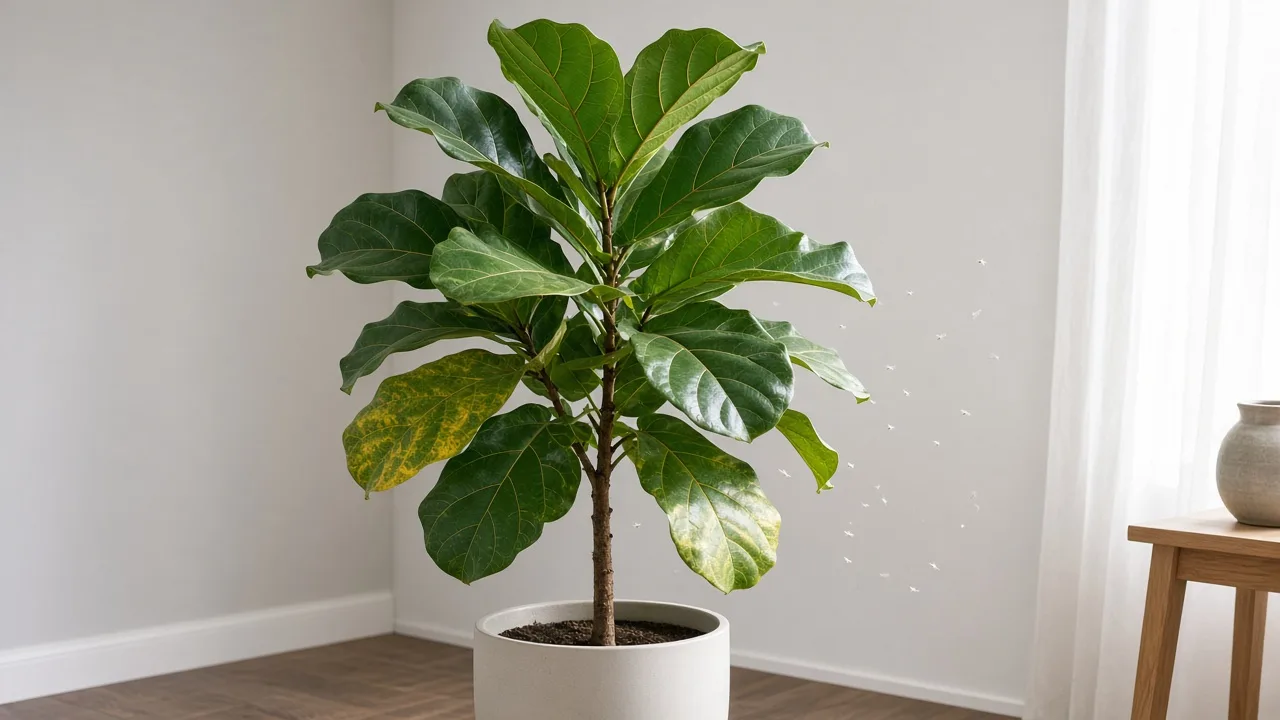
Whiteflies on Fiddle Leaf Fig: Causes, Checks & Fixes
This guide covers whiteflies on Fiddle Leaf Fig. See also the general Whiteflies guide, watering, and light pages for this plant.
Whiteflies on Fiddle Leaf Fig: Causes, Checks & Fixes
Quick answer
Whiteflies on fiddle leaf fig (Ficus lyrata) appear as tiny white, moth-like insects on leaf undersides. Disturb the plant and they flutter away in a white cloud before resettling. Nymphs look like flat pale disks glued to leaf backs—immobile until they emerge as flying adults.
For general whitefly biology and life cycle, see our whiteflies guide. On fiddle leaf fig, colonies concentrate on the undersides of large violin-shaped blades and in leaf axils where petioles meet the woody trunk—places quick top-down watering checks miss on a six-foot floor specimen.
First step: isolate the plant the same day you see flying white insects, then wash every reachable leaf underside with lukewarm water.
When to use this page vs other Fiddle Leaf Fig guides
| Pattern | Read next |
|---|---|
| White cloud when disturbed, flat nymph disks on undersides, honeydew | This page |
| Cottony white wax clusters in crevices | Mealybugs |
| Silvery scrape marks and black frass, no flying insects | Thrips |
| Fine stippling and webbing on undersides | Spider mites |
| Immobile tan or brown bumps on stems | Scale insects |
| Uniform yellow leaves, wet soil, no insects | Overwatering |
What whiteflies look like on fiddle leaf fig
Whitefly damage is easy to miss on a tall floor tree because adults fly when disturbed and nymphs are flat and immobile on undersides. On Ficus lyrata, the symptom signature is a white cloud on disturbance plus pale disks glued to leaf backs—not the silvery streaks of thrips or the cottony wax of mealybugs.
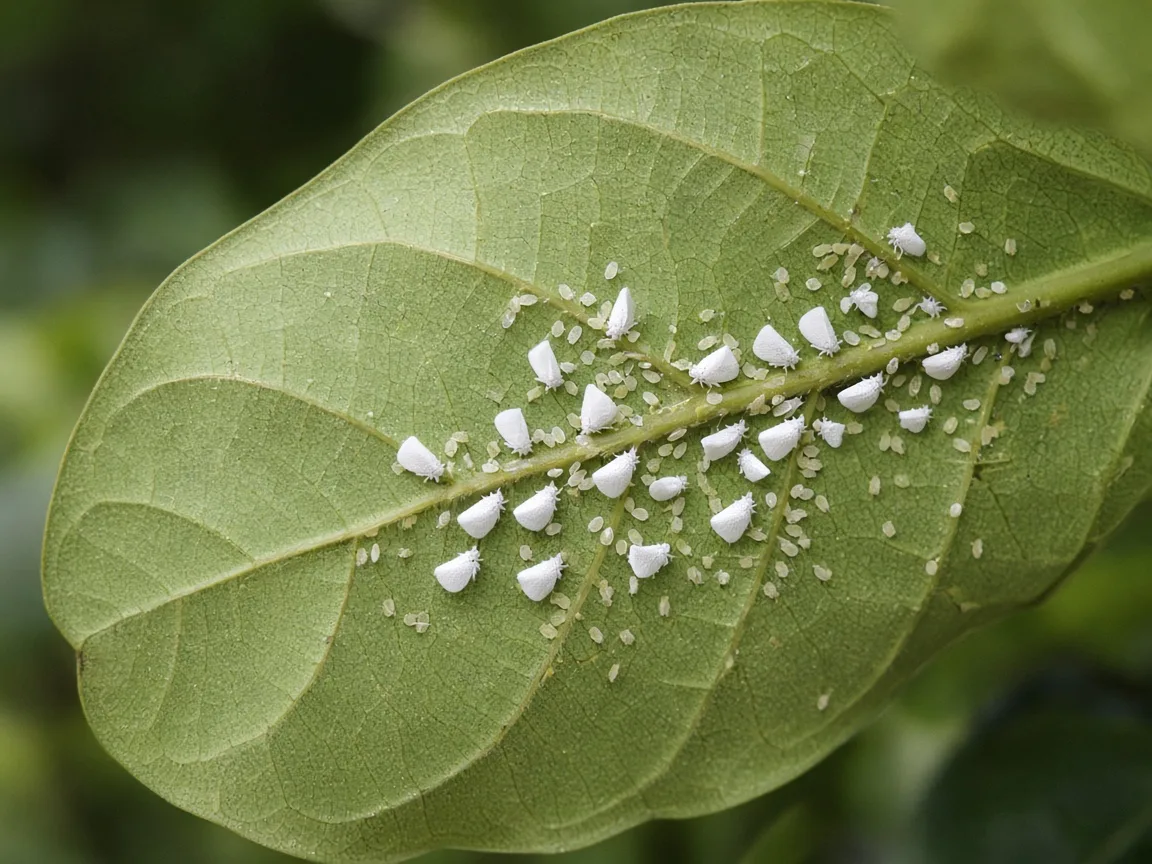
Flat pale whitefly nymphs glued to the underside of a fiddle leaf fig blade—compare with clean green tissue on an uninfested section of the same leaf.
Flying adults and nymph disks:
- Tiny white, moth-like adults that flutter from leaf undersides when leaves are moved or watered
- Flat, oval, pale green or yellow nymphs glued to the backs of large violin-shaped leaves
- Nymphs do not move when touched—unlike mobile aphids or mealybugs
Honeydew and secondary mold:
- Sticky coating on glossy upper leaf surfaces and pot rims below infested blades
- Black sooty mold growing on honeydew-coated foliage on lower canopy leaves
- Ant trails on saucers farming honeydew from whitefly colonies above
Growth impact on fiddle leaf fig:
- Yellowing or stalled new crown leaves when feeding is heavy on tender growth
- Premature leaf drop on lower branches if stress combines with sap drain—do not confuse relocation drop with whitefly damage unless honeydew and nymphs are present
Unlike spider mites, whiteflies do not produce stippling or webbing. Unlike mealybugs, nymphs are flat disks without fluffy white wax.
Why fiddle leaf fig gets whiteflies
Whiteflies are common sap-sucking houseplant pests that thrive indoors where natural enemies are absent. Fiddle leaf fig setups often hide colonies for months:
Large leaf undersides. Ficus lyrata blades are stiff, waxy, and often a foot long—nymph colonies spread across a huge feeding surface hidden from the view most owners see from across the room.
Sheltered petiole crevices. Whiteflies resettle in the tight angle where each violin blade meets woody stem tissue and along the undersides of overlapping lower canopy leaves.
Nursery and shelf spread. Whiteflies arrive on new houseplants and fly between pots on shared watering days. One infested fiddle leaf fig can seed rubber plants, weeping figs, and other shelf mates from the same batch.
Indoor warmth without predators. Indoor plants lack natural enemies that control whiteflies outdoors. Warm rooms let populations reproduce year-round indoors.
Dusty glossy leaves. Dust on large stiff violin-shaped blades hides honeydew sheen and small nymph clusters on lower overlapping leaves until colonies are established.
Lookalike symptoms
| What you see | Likely cause | Key difference on fiddle leaf fig |
|---|---|---|
| White cloud + flat nymph disks + honeydew | Whiteflies (this page) | Adults fly on tap; nymphs glued flat to undersides |
| Cottony white wax in axils | Mealybugs | Fluffy clusters, not flat pale disks |
| Silvery streaks + black frass | Thrips | Scrape marks on upper surface; no flying white insects |
| Pinhead dots + fine silk | Spider mites | Stippling on undersides; no honeydew |
| Immobile bumps on stems | Scale insects | Hard covers on trunk; no white cloud on disturbance |
| Uniform yellow, wet mix | Overwatering | Base-up yellowing, sour soil—no insects |
How to confirm the cause
Work through these checks before you spray:
- Isolate first — Move the fiddle leaf fig away from other houseplants. Adults fly to neighboring pots within minutes.
- Disturbance test — Tap or brush a lower leaf. A white cloud of tiny flying insects confirms adults; watch where they resettle on undersides.
- Underside inspection — Use a step stool and side light. Examine every reachable leaf back, especially lowest violin blades and leaf axils.
- Nymph disk check — Flat pale ovals glued to leaf tissue—not cottony wax (mealybugs) or hard bumps (scale).
- Honeydew check — Sticky gloss on leaf surfaces or pot rims supports whitefly feeding—not dry stippling of mites.
- Sticky traps — Yellow cards near the pot catch flying adults and show whether populations are active.
- Neighbor scan — Inspect ficus, rubber plants, and other trees from the same nursery batch on the same shelf.
If adults fly on disturbance and flat nymphs are glued to undersides, whiteflies are confirmed. If only webbing appears, switch to the spider mites guide.
First fix for fiddle leaf fig
Isolate the plant the same day you see flying white insects, then wash every reachable leaf underside with lukewarm water.
Roll a heavy floor pot into a shower or rinse in place with a handheld sprayer on a mild day. Spray from below so water hits overlapping violin blades, thick petioles, and leaf axils where nymphs hide. Washing undersides helps control nymphs on houseplants. Let foliage drain in bright indirect light the same day—do not leave wet leaves in direct sun.
Avoid unnecessary relocation if possible—Ficus lyrata drops leaves when moved. This single wash knocks down adults and nymphs and gives you a clean baseline before any spray. Do not stack soap, oil, and repotting on the same day.
Step-by-step recovery
After the initial wash, follow severity:
Days 1–14: Physical control (a few flying adults, light nymph colonies)
- Repeat washing every two to three days on every leaf underside you can reach; work petiole by petiole on tall upright specimens
- Wipe honeydew from glossy leaf surfaces with a damp cloth so sooty mold does not spread
- Place yellow sticky traps near the pot to monitor flying adults
Days 7–28: Contact sprays if nymphs return (moderate infestation)
- Apply insecticidal soap or narrow-range horticultural oil labeled for whiteflies on houseplants, coating undersides until runoff
- Repeat on label intervals through at least three cycles—nymphs molt through stages and eggs survive a single spray
- Whiteflies are extremely difficult to control once established; combine washing, traps, and repeat contact sprays
Heavy infestation (sticky leaves, ants, nymphs on multiple branches)
- Trim and bag only leaves too coated with sooty mold to photosynthesize; avoid heavy crown pruning that triggers leaf drop
- Treat every plant on the same shelf, not just the worst-looking fiddle leaf fig
- Hold fertilizer until new growth emerges without fresh honeydew
Recovery timeline
Judge recovery on clean new crown leaves and nymph-free undersides, not old honeydew-stained blades:
- 3–7 days after first wash: Fewer adults on sticky traps; fresh honeydew stops appearing on the highest leaves
- 2–4 weeks: New violin-shaped leaves emerge without sticky coating—this is your main success signal
- 6+ weeks on large floor plants: Several clean leaves and clear undersides confirm the population is broken; continue monthly checks
Mature leaves with sooty mold or yellow patches do not revert—the stiff glossy tissue stays marked. Success means unsticky new growth, not a cosmetic reset of every foot-long blade on a six-foot tree.
Woody trunk and leaf axils: where fiddle leaf fig hides whiteflies
This is the Ficus lyrata pattern generic whitefly pages miss. Colonies follow the protected undersides where each violin leaf meets the woody stem:
- Adults fly when disturbed but resettle within minutes on the nearest leaf back—often at petiole joints below overlapping lower canopy foliage
- Lower canopy leaves overlap and hide infested undersides from a single front-view inspection
- For tall upright specimens, prioritize the crown growing point, upper petiole joints, and lowest reachable blades over random mid-canopy samples
Nymph disks are immobile but numerous—a single foot-long leaf can host dozens of feeding sites invisible from the glossy upper surface owners see daily.
Large violin leaves: honeydew and sooty mold on glossy foliage
Fiddle leaf fig leaves are stiff, waxy, and often a foot long—honeydew drips from upper infestations onto lower blades:
- Sooty mold grows on honeydew without feeding on the plant directly—wipe sticky blades and treat whiteflies, not the mold alone
- Glossy upper surfaces show honeydew sheen clearly against deep green tissue—do not dismiss shininess as healthy leaf gloss until you check undersides
- Overlapping leaves on a bushy specimen shield nymph colonies from a single top-down pass; lift each petiole and inspect the back during treatment
Unlike thrips scrape marks, whitefly damage is slow and sticky—yellowing and honeydew build over weeks while flat nymph disks remain visible on close underside inspection.
Mistakes to avoid
- Stopping after one wash or one spray. Nymphs molt through stages and eggs survive a single treatment; tall trees need repeated underside coverage across dozens of violin blades.
- Spraying only leaf tops. Whitefly nymphs concentrate on undersides and petiole bases—tops-only sprays miss the active colony.
- Confusing whiteflies with mealybugs. Mealybugs form fluffy white wax clusters; whitefly nymphs are flat pale disks glued directly to leaf tissue.
- Moving the plant unnecessarily. Relocation triggers leaf drop on Ficus lyrata—wash in place when possible and judge recovery by new growth.
- Ignoring nearby plants. Inspect every houseplant on the same shelf, not just the fiddle leaf fig with the most visible flying adults.
- Heavy fertilizer while treating. Hold to the usual fertilizer rhythm only after clean new leaves appear.
Prevention
- Quarantine new fiddle leaf figs two to three weeks before placing them beside an established floor specimen
- Inspect leaf undersides during weekly watering checks—rotate the pot to see backs of large blades from multiple angles
- Wipe dust from large glossy leaves every few weeks so honeydew and nymph disks are visible early
- Avoid crowding tall ficuses against walls where the back side of lower leaves cannot be seen
- Keep bright indirect light and stable care so stress leaf drop does not mask new pest signs
Related Fiddle Leaf Fig guides
Conclusion
Whiteflies on fiddle leaf fig are a hidden-underside pest—a white cloud on disturbance and flat nymph disks on leaf backs mean isolate, wash undersides, and repeat treatment before populations become extremely difficult to control. Judge recovery by clean new violin-shaped leaves and nymph-free undersides, not perfect older foliage.
Related tool
Use the Pest Identifier Tool to narrow causes for whiteflies on this plant before changing multiple variables at once.