Slow Growth on Monstera Adansonii: Causes, Checks & Fixes
Quick answer
Slow growth on Monstera Adansonii usually means light is too weak, roots are crowded, or the plant is in winter rest-not that it needs more fertilizer. First step: move it to brighter indirect light and note whether new leaves appear within two to three weeks.
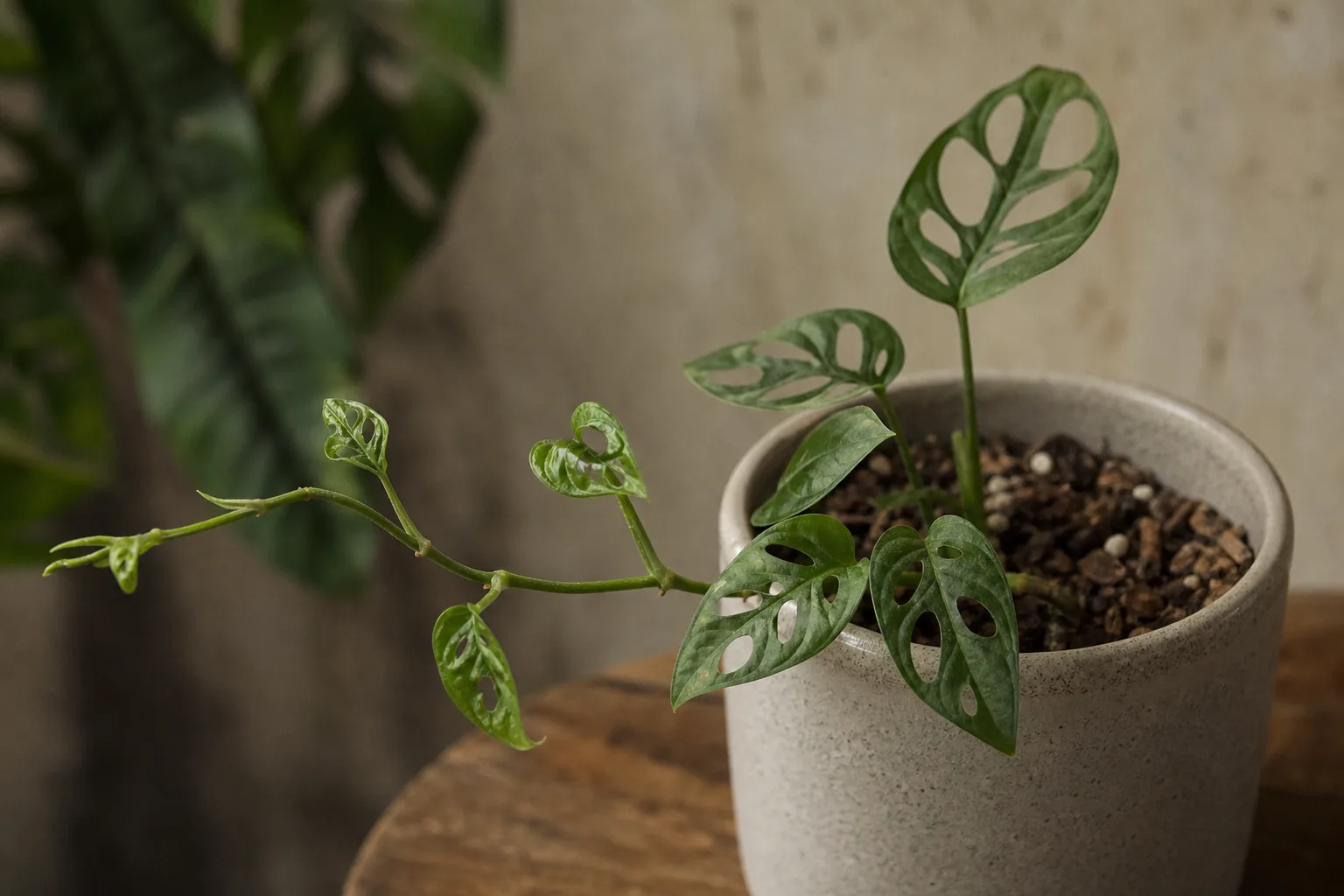
Slow Growth on Monstera Adansonii: Causes, Checks & Fixes
This guide covers slow growth on Monstera Adansonii. See also the general Slow Growth guide, watering, and light pages for this plant.
Slow Growth on Monstera Adansonii: Causes, Checks & Fixes
Quick answer
Monstera Adansonii (Monstera adansonii, Swiss cheese vine) is normally a fast-growing climber. When growth crawls for weeks outside winter rest, the plant is telling you something in the environment is limiting photosynthesis or root uptake-not that it is “lazy.”
First step: move the plant to brighter indirect light and leave everything else unchanged for two to three weeks. Adansonii tolerates dim corners longer than it should, but it will not produce frequent new leaves or well-fenestrated foliage without enough light energy. Only after light improves should you repot, adjust watering, or feed.
Winter slowdown is normal. Concern starts when growth stays minimal through spring and summer despite stable care.
What slow growth looks like on Monstera Adansonii
Slow growth on Monstera Adansonii overview is less about one dramatic symptom and more about what stops happening. Healthy Adansonii in good conditions pushes new leaves regularly during warm months-often every few weeks on a mature vine-with each leaf slightly larger than the last when climbing support is available.
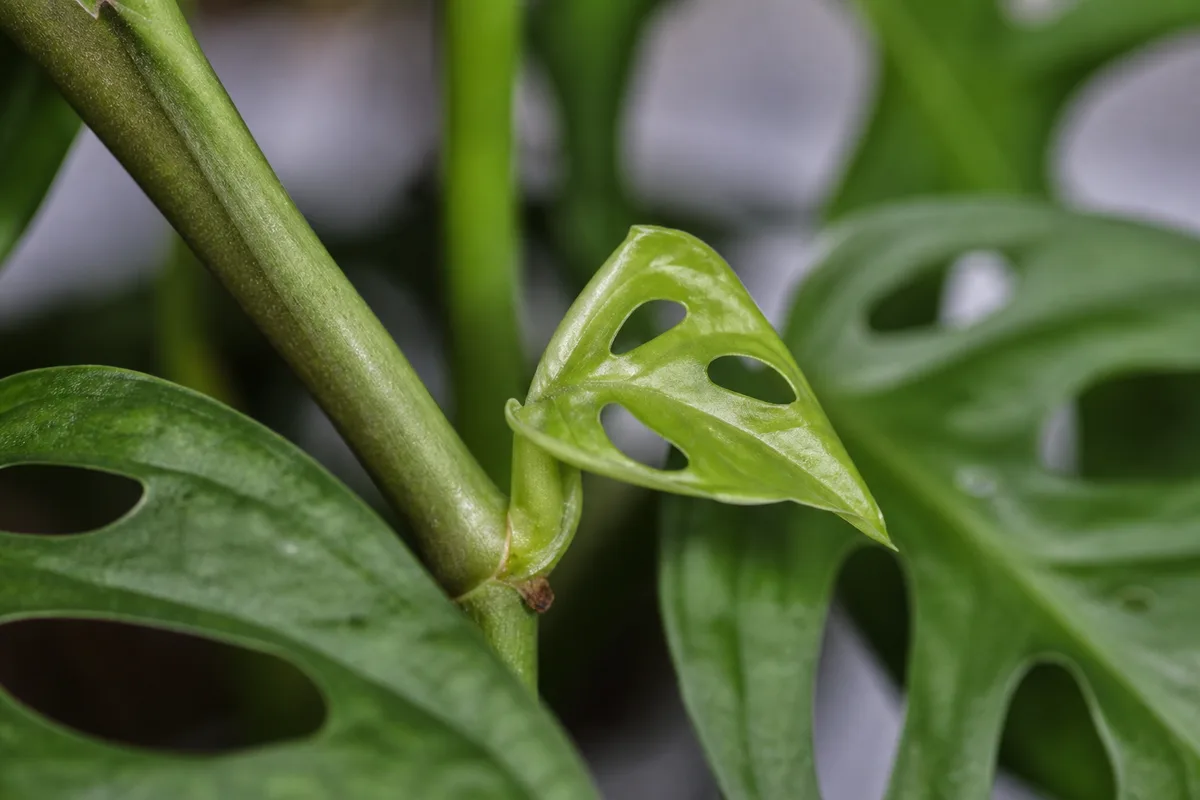
Slow Growth symptoms on Monstera Adansonii - compare with healthy tissue on the same plant.
Stalled growth usually shows as:
- No new leaves for a month or more during active season, while older foliage stays green
- Successively smaller new leaves instead of gradually larger ones
- Long internodes between leaves even without obvious leaning (light stress starting)
- Fewer or no new fenestrations (holes) on new foliage
- Soil that dries in less than two days after a thorough watering-a sign roots have filled the pot
- A pot that feels light again within 24–36 hours of watering because root mass displaced soil volume
Adansonii has thinner leaves than Monstera deliciosa, so it marks and dries faster when stressed. Slow growth paired with brown tips, persistent droop, or yellow lower leaves usually means a second problem-often watering or roots-is layered on top of the growth limiter.
Why Monstera Adansonii gets slow growth
Insufficient light (most common)
Light drives photosynthesis. Without enough intercepted light, the vine cannot build the carbohydrates needed for new stems and leaves. Adansonii evolved as an understory climber reaching toward brighter canopy gaps; indoors, that translates to bright indirect light, not a distant shelf or north-facing room far from the window.
In weak light, growth does not stop instantly. It thins out: fewer leaves, smaller leaves, longer gaps between nodes. The plant may look “fine” while barely moving-the same pattern Maryland Extension describes as spindly stretch toward light with diminished leaf size.
Root-bound or depleted pot
When roots circle the container wall or exit drainage holes, they have less fresh mix to explore. Uptake efficiency drops, and the pot may dry so fast that the plant lives in repeated mini-drought cycles even if you water on schedule. Adansonii in a hanging basket can become root-bound quickly because the root ball is concentrated in a small volume.
Seasonal rest
Short days and cooler indoor temperatures slow tropical vines naturally. Growth that pauses from late fall through winter-then resumes when days lengthen-is expected, not a failure. The mistake is treating winter stagnation like a nutrient emergency.
Watering mismatch (over or under)
Chronic overwatering damages roots and reduces vigor without always causing obvious wilt. Underwatering in a root-bound pot leaves roots dry between drinks. Either pattern diverts energy toward survival instead of new leaves. Adansonii wants moist, well-drained soil and the top 3–5 cm of mix dry before the next thorough watering-not a fixed calendar that ignores how fast the pot dries in your light.
Missing climb support
Adansonii is a climbing vine, not a passive trailer. Without a moss pole, trellis, or structure to attach to, vining stems may produce smaller leaves and less frequent growth than the same plant allowed to climb toward light.
Cool drafts or low temperatures
Tropical metabolism slows below comfortable room range. Drafty windows, AC blasts, or rooms that drop below about 18°C (65°F)-below the 50°F minimum NC State recommends-suppress new growth even when light and water look acceptable.
Nutrient depletion (after other limits are ruled out)
Old, broken-down potting mix may lack available nitrogen. Pale new leaves or poor growth can accompany stagnation-but fertilizer rarely fixes slow growth when light is weak or roots are failing. Feed only after light and root zone look healthy.
How to confirm the cause
Work through these checks in order. You are looking for the one bottleneck to fix first, not five changes at once.
-
Season check - Is it late fall or winter? Has growth always been slow in these months before? If yes, note it and recheck in spring before Monstera Adansonii repotting guide or feeding heavily.
-
Light test - At midday, hold your hand between the plant and its light source. A soft, faint shadow means low light. Move the pot to the brightest indirect spot you can offer-typically within a few feet of an east or west window, or filtered south light-and mark the date.
-
New leaf size trend - Compare the last three leaves. Getting progressively smaller strongly points to light or root constraint. Staying small but stable may mean root-bound conditions.
-
Pot weight and dry-down - Water thoroughly, then lift the pot daily. If it is light again in one to two days, roots likely fill the container. Slide the plant partly out of the pot: dense root spirals against the wall confirm binding.
-
Soil moisture at depth - Stick a finger or skewer 5–7 cm down. Soggy mix days after watering suggests overwatering or poor drainage. Dust-dry deep mix with limp leaves suggests underwatering or a pot too small to hold moisture.
-
Root health (if soil smells sour or stems soften) - Unpot and rinse roots. Firm white roots support other fixes; brown mushy roots mean rot and a different priority than simple slow growth.
-
Support and placement - Is the vine climbing or sprawling in open air? Is it near a heat vent or cold draft?
If light is clearly weak and roots circle the pot, fix light first-it is reversible in minutes and carries no repot stress.
First fix for Monstera Adansonii
Move the plant to brighter indirect light-closer to a window with sheer filtering, or under a grow light for 12–14 hours daily if natural light is insufficient.
Leave watering, fertilizer, and pot size unchanged for two to three weeks while you watch the next leaf. Adansonii should respond with a new node or visibly tighter spacing between emerging leaves when light was the limiter. If nothing budges after three weeks in improved light during warm months, proceed to root and watering checks-not extra fertilizer.
Step-by-step recovery
Once you have confirmed or strongly suspect the cause, work in this order:
-
Optimize light - Relocate to bright indirect exposure. Avoid jumping straight to harsh midday sun on thin Adansonii leaves; acclimate over a week if moving from a very dim spot.
-
Stabilize watering - Water when the top 3–5 cm is dry, then soak until drainage runs clear. Empty saucers. Match frequency to how fast the pot dries in the new light level-brighter light usually means faster dry-down.
-
Repot if root-bound - In spring or early summer, move up one pot size only (about 2–5 cm wider) with fresh aroid mix: standard potting mix plus perlite and orchid bark for drainage. Tease circling roots gently; do not jump to an oversized pot that stays wet.
-
Add a moss pole or trellis - Secure the vine so new growth can climb. Aerial roots attach readily when humidity is moderate and light is adequate.
-
Feed lightly during active growth - After new leaves appear on a stable schedule, apply balanced liquid fertilizer at half strength monthly in spring and summer. Skip feed if the plant was recently repotted or still looks stressed.
-
Maintain warmth and humidity - Target 50–60% humidity if leaf edges brown easily. Keep the plant away from cold drafts below about 18°C (65°F).
-
Track metrics monthly - Count new leaves and note leaf size. Improvement should be measurable within one to two months in active season.
Recovery timeline
In spring and summer, after light improves, many owners see a new leaf within two to four weeks. Spacing between leaves should tighten over the next one to two months.
Repot recovery adds one to three weeks of pause while roots settle-normal transplant stall, not failure.
Winter may show little visible progress even after fixes; judge success by early spring growth surge.
Old small leaves will not enlarge. Recovery means better new growth, not rewriting old foliage.
Worsening signs: yellowing spreads up the vine, soil stays wet and sour, stems soften at the base, or new leaves emerge damaged and distorted. Those point to root rot on Monstera Adansonii, pests, or severe stress-not light alone.
Lookalike symptoms
-
Normal winter rest - Few new leaves, firm stems, healthy green foliage, dry-down slows. Wait for longer days; do not repot in mid-winter unless roots are rotting.
-
Leggy growth on Monstera Adansonii - Long stems reaching toward windows but still producing leaves. That is weak light with some growth; slow growth is even less output. Both need brighter light; leggy plants may also need pruning after light improves.
-
Root rot - Yellow lower leaves, wet soil, soft stems, sour smell. Fix drainage and trim rot before expecting growth.
-
Pest drain - Spider mites or mealybugs on undersides can sap vigor with subtle leaf dullness. Inspect with magnification if growth stalls despite good light and roots.
-
Recent repot shock - Pause of two to four weeks after repotting is common. Hold off on further changes unless mix stays soggy.
What not to do
Do not pile on fertilizer to “wake up” a stalled vine-salts stress roots when light or moisture is already wrong.
Do not repot into a much larger container hoping for faster growth; excess wet mix around a small root ball encourages rot and further stall.
Do not move to direct hot sun without acclimating thin Adansonii leaves.
Do not change light, pot, water, and feed the same week-you will not know which fix helped.
Do not assume slow equals hungry when the plant sits in a dim corner with year-old soil; light and root space come first.
How to prevent slow growth on Monstera Adansonii
Place the vine where bright indirect light is realistic all year-not only where it looks best decoratively. Repot every one to two years or when roots circle, using chunky aroid mix. Water on dry-down, not autopilot. Provide climbing support early. Feed lightly in active months only after basics are stable. In winter, expect slower pace and reduce water frequency accordingly.
When to worry
Investigate beyond simple stagnation if:
- No new growth through an entire warm growing season
- Smaller and smaller new leaves for three or more cycles
- Yellowing, wilting, or soft stems combined with stall
- Soil wet for days with a heavy, sour-smelling pot
- Pest webbing, sticky residue, or clustered insects on stems and leaf axils
A firm, green Adansonii that rests in winter and pushes spring leaves is healthy. A vine that stays static in bright summer light with bound roots or wet soil needs intervention-not patience alone.
Conclusion
Slow growth on Monstera Adansonii is a diagnostic signal, not a personality trait. This species wants to climb in bright filtered light with airy roots and consistent-but not excessive-moisture. Start with light, confirm root space and watering, then feed. Track new leaves, not old ones, and allow seasonal rest without panic. Once the bottleneck clears, Adansonii usually rewards you with the rapid, hole-punched foliage it is known for.
When to use this page vs other Monstera Adansonii guides
- Monstera Adansonii watering guide - Use for routine moisture checks before assuming slow growth is the main issue.
- Monstera Adansonii problems hub - Browse all 22 common issues on this species.
- Not Enough Light on Monstera Adansonii - Different entry point when symptoms overlap with slow growth.
- Leggy Growth on Monstera Adansonii - Different entry point when symptoms overlap with slow growth.
- Yellow Leaves on Monstera Adansonii - Different entry point when symptoms overlap with slow growth.