Scale Insects on Monstera Deliciosa: Causes, Checks & Fixes
Quick answer
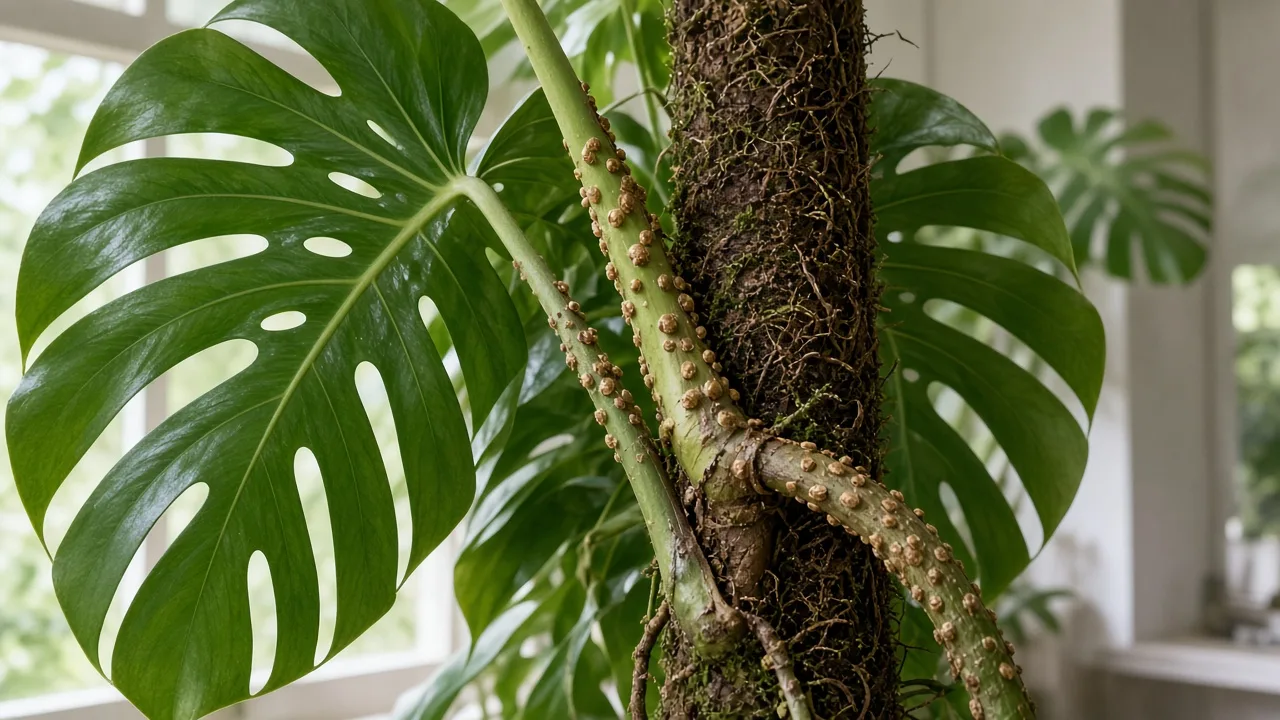
Scale insects on Monstera deliciosa look like small tan or brown bumps glued to thick petioles, aerial roots, moss-pole fiber, and split-leaf undersides—often mistaken for bark until leaves turn sticky or yellow. First step: isolate the plant and scrape every visible bump with a cotton swab dipped in 70% isopropyl alcohol.
Scale Insects on Monstera Deliciosa: Causes, Checks & Fixes
This guide covers scale insects on Monstera Deliciosa. See also the general Scale Insects guide, watering, and light pages for this plant.
Scale Insects on Monstera Deliciosa: Causes, Checks & Fixes
Quick answer
Scale insects on Monstera deliciosa show up as small, immobile tan, brown, or bark-colored bumps glued to thick petioles, climbing stems, aerial roots, moss-pole fiber, and the undersides of large split leaves. They pierce tissue, drain sap, and—on soft scale species—excrete sticky honeydew that can lead to black sooty mold on broad foliage below.
For general scale biology indoors, see our scale insects guide. On Monstera deliciosa, bumps often hide on aerial roots buried in moss poles and at petiole bases behind overlapping fenestrated leaves—places quick top-side watering checks miss on a six-foot floor specimen.
First step: isolate the Monstera and scrape every visible scale with a cotton swab dipped in 70% isopropyl alcohol.
Why Monstera deliciosa gets scale insects
Monstera is a large climbing aroid with thick petioles, aerial roots, and broad split leaves that create protected crevices at every node. Scale are common sap-sucking houseplant pests that arrive on nursery stock, shared tools, or nearby infested plants.
Monstera-specific risk factors:
- Moss-pole crevices - Damp fiber and aerial root attachment points shelter scale from sprays.
- Overlapping split leaves - Large fenestrated blades hide undersides along veins on lower canopy sections.
- Floor specimen scale - Tall plants get watered from above; lower petioles and pole bases stay uninspected.
- Aerial roots resembling scale - Brown root bumps confuse diagnosis until you scrape and find insects vs. normal root texture.
- Shared aroid collections - Monstera beside philodendron and pothos shares pest bridges on crowded shelves.
- Indoor warmth - Indoor ornamentals lack natural enemies that would control populations outdoors.
What scale insects look on Monstera deliciosa
Scale insects are protected by a waxy or shell-like cover that makes adults essentially immobile.
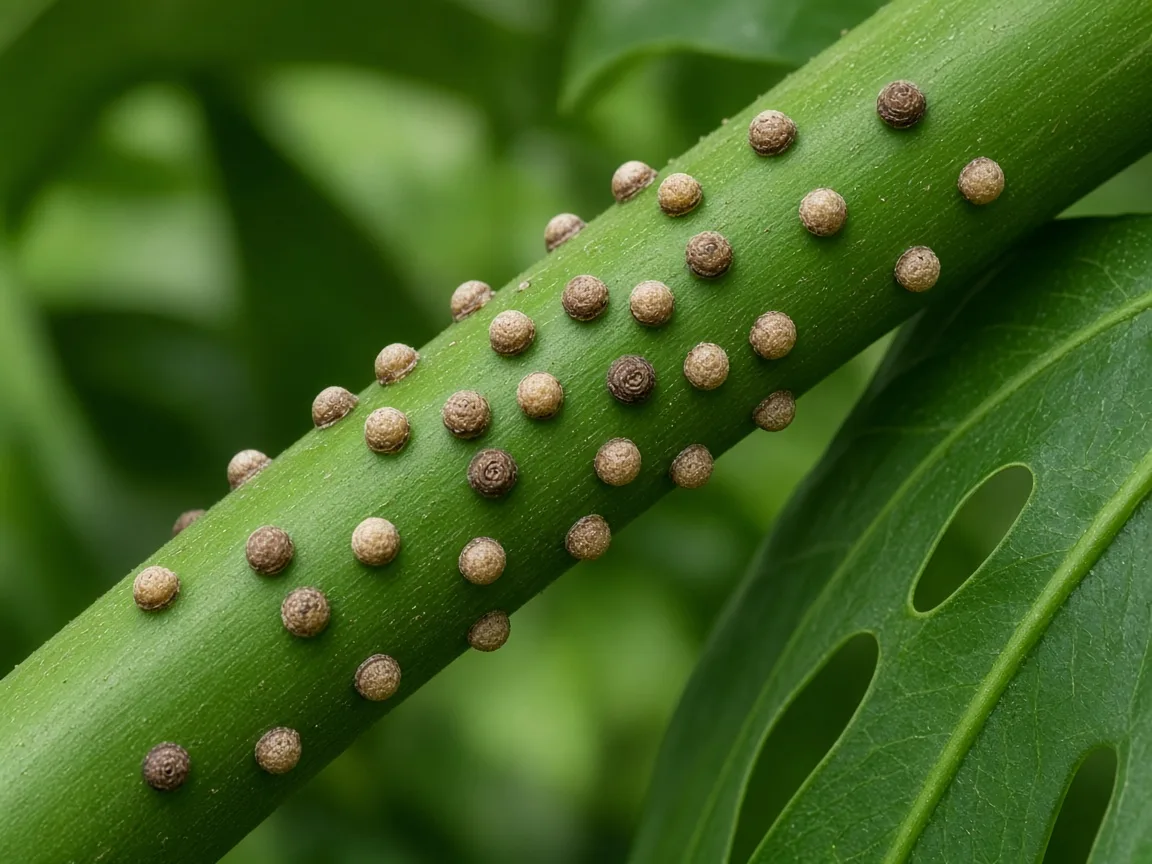
Scale insect symptoms on Monstera deliciosa—compare bumps with healthy aerial root tissue on the same vine.
Typical signs on deliciosa:
- Flat or dome-shaped bumps on green or brown petioles, stems, and along split-leaf veins on undersides
- Bark-colored disks along thick vine stems climbing moss poles
- Sticky honeydew on broad glossy leaves and floors beneath the canopy
- Black sooty mold on sticky leaf surfaces
- Ant trails on pot rims, moss poles, or saucers
- Yellow leaves and stalled new splits when feeding is heavy on growing tips
Press a suspect bump—scales flake off; mealybugs smear waxy cotton. Spider mites leave stippling and webbing, not hard bumps. A bump on an aerial root may be normal callus or scale—scrape gently to tell.
How to confirm the cause
- Isolate before handling other aroids on the same shelf.
- Inspect petiole bases and moss-pole aerial root zones with bright light.
- Check undersides of largest reachable split leaves along veins where soft scales often concentrate.
- Scrape test on bumps vs. normal aerial root texture.
- Neighbor check on shelf aroids—philodendron, pothos, and other monsteras.
- Rule out root rot if stems soften on wet soil without bumps.
Lookalike symptoms to rule out
| Sign | Likely cause |
|---|---|
| Immobile bumps + honeydew | Scale (this page) |
| Cottony wax in axils | Mealybugs |
| Stippling + webbing | Spider mites |
| Uniform yellow, wet soil | Overwatering |
First fix for Monstera deliciosa
Isolate the plant and manually remove every visible scale with a cotton swab dipped in 70% isopropyl alcohol.
Work petiole by petiole from soil line to highest splits. Clemson HGIC notes that early scale infestations can be removed by scraping; alcohol dissolves the waxy cover on contact. Manual removal is effective on manageable houseplant scale when you reach moss-pole crevices sprays miss.
Do not fertilize a pest-hit monstera hoping to push new splits—that produces more tender tissue crawlers prefer.
Step-by-step recovery
- Scrape and swab all bumps on petioles, stems, and reachable leaf veins every five to seven days for three cycles. Adult scales are relatively protected from insecticides by their waxy covering.
- Rinse broad leaves the next day to clear alcohol residue—let foliage dry in indirect light.
- Apply horticultural oil or insecticidal soap; coat petioles and both leaf surfaces thoroughly; repeat on label intervals.
- Peel the vine slightly away from the moss pole during treatment and run alcohol swabs along every aerial root attachment point.
- Yellow sticky traps near the pot for crawlers.
- Prune heavily encrusted leaf petioles only when necessary—monstera tolerates selective removal.
- Wash sooty mold once honeydew stops.
Keep isolated until no new scale for two weeks after the last treatment.
Recovery timeline
Manual removal shows results within days when colonies are small. Full treatment takes two to four weeks. Mature split leaves may stay blemished—judge recovery by clean new fenestrations unfurling without bumps. Monstera rebounds faster in bright indirect light than in dim corners.
Moss poles and aerial roots: where deliciosa hides scale
Monstera deliciosa is often grown as a floor climber on a moss pole—scale loves the junction where aerial roots press into damp fiber and where thick petioles meet the main vine behind overlapping splits.
During treatment, peel the vine slightly away from the pole and run alcohol swabs along every attachment point. Damp moss-pole fiber creates a microclimate scale favors—improve airflow around the pole base after treatment without removing the pole entirely.
Do not confuse normal brown aerial root callus with scale—a scrape test distinguishes them. Normal roots are smooth and continuous; scale sits as irregular disks on top of tissue.
Mistakes to avoid
Do not ignore bumps on one petiole—they multiply along the climbing vine. Do not spray without reaching moss-pole crevices. Do not return the plant to a shared aroid shelf after one treatment round. Do not increase feeding during active infestation.
With severe scale infestations on large floor specimens, starting from a clean cutting may be faster than endless chemical cycles when scale has spread to most petioles.
How to prevent scale on Monstera deliciosa
Quarantine new monsteras six weeks before placing beside established poles. Inspect aerial roots and petiole bases during weekly watering. Wipe dust from broad split leaves so bumps are visible. Missouri Botanical Garden recommends isolating newly acquired plants for two to three weeks.
Separate moss-pole specimens so aerial roots do not bridge between pots. Sterilize pruning shears between aroids.
When to worry
Treat as urgent when bumps encircle multiple petioles, ants swarm moss poles, new splits stall despite good light, or sticky residue coats floors. Severe infestations can cause plant parts to die even on vigorous monsteras.
Conclusion
Scale insects on Monstera deliciosa hide on moss poles and aerial roots that climbing growth creates. Isolate first, scrape visible bumps with alcohol, treat pole attachment points systematically, and judge recovery by clean new fenestrated leaves—not old damaged splits.
When to use this page vs other guides
Use this page for immobile bumps with optional honeydew. Use mealybugs for cottony clusters. Use spider mites for stippling on split leaves.