Drooping Leaves on Philodendron Gloriosum: Causes, Checks &
Quick answer
Drooping leaves on Philodendron Gloriosum usually mean underwatering if the pot is light and top mix is dry, or failing roots if soil is wet and heavy. First step: check top 3–5 cm moisture and pot weight before watering or withholding.
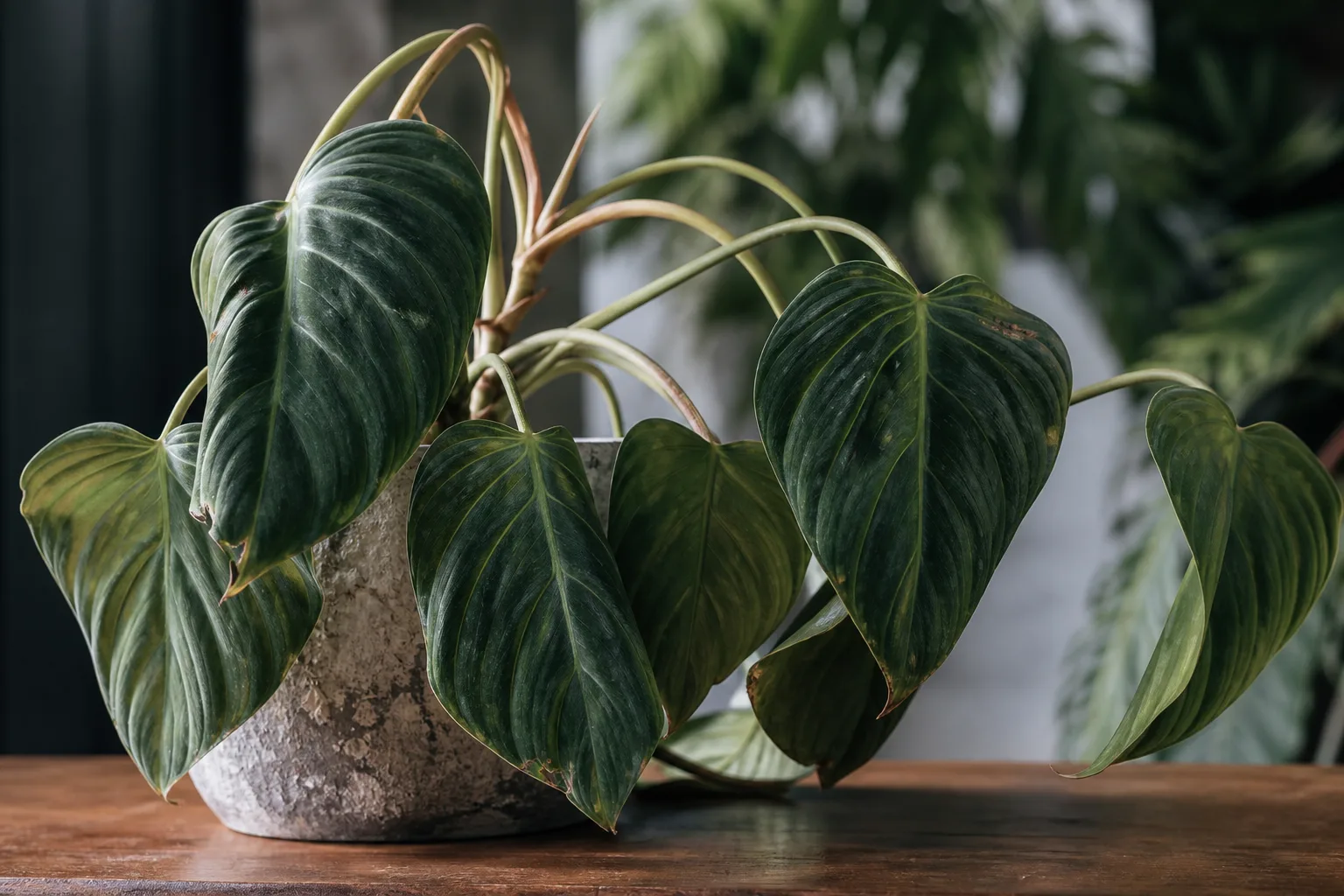
Drooping Leaves on Philodendron Gloriosum: Causes, Checks & Fixes
This guide covers drooping leaves on Philodendron Gloriosum. See also the general Drooping Leaves guide, watering, and light pages for this plant.
Drooping Leaves on Philodendron Gloriosum: Causes, Checks & Fixes
Quick answer
Drooping leaves on Philodendron Gloriosum usually mean underwatering if the pot is light and top mix is dry, or failing roots if soil is wet and heavy. First step: check top 3–5 cm moisture and pot weight before watering or withholding.
Large velvet leaves on this terrestrial crawler have high surface area-petioles wilt noticeably when water balance fails. Wilting can indicate soil that is too dry or too wet; rotting roots cannot take up water, so drooping with wet mix is the confusing overwatering pattern on Gloriosum.
Why Philodendron Gloriosum leaves droop
Underwatering limps leaves when the top 3–5 cm and deeper zones dry too long. The rhizome stores some moisture but cannot support a full expanded leaf indefinitely without root uptake-inconsistent watering causes leaf edge stress on many houseplants.
Overwatering and root rot on Philodendron Gloriosum produce the same visual droop while soil stays wet-damaged roots fail to transport water upward. Rhizome rot at the surface worsens this on crawlers.
Heat and low humidity accelerate transpiration from velvet blades near radiators or in dry AC airflow-leaves droop even when root moisture is adequate short-term.
Recent repot disturbance temporarily wilts roots until they re-establish-normal if mix is appropriately moist and rhizome is firm, similar to transplant stress on houseplants.
Physical damage to petioles from handling velvet leaves can cause one-sided droop unrelated to water.
What drooping looks like on Philodendron Gloriosum
Patterns:
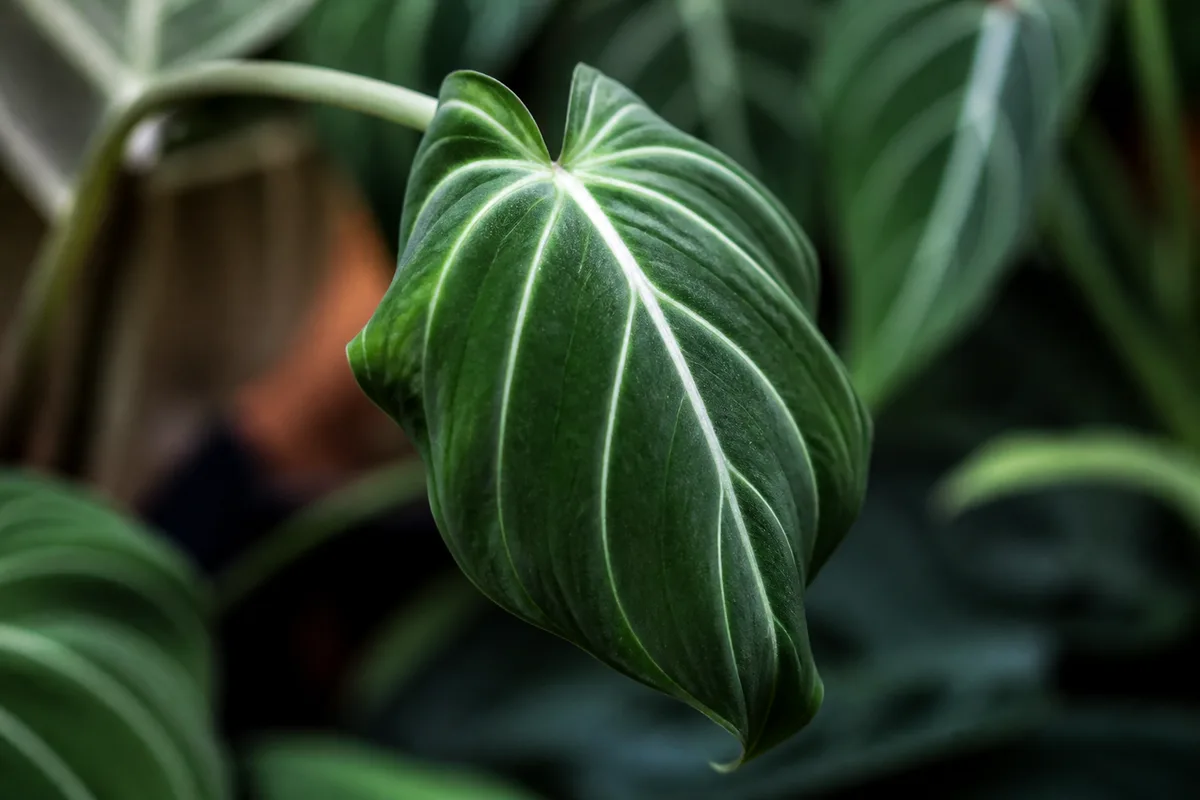
Drooping Leaves symptoms on Philodendron Gloriosum - compare with healthy tissue on the same plant.
- Drought: Limbs hang; pot light; dry top 3–5 cm; perks after watering
- Rot/overwatering: Limbs hang; pot heavy; wet mix; may not perk after water; sour smell possible
- Humidity/heat: Droopy during afternoon near vent; soil moisture normal; crispy edge hints
- Repot stress: Droopy 3–7 days post-repot; firm rhizome; no sour smell
Gloriosum often holds one prominent leaf-its droop is highly visible.
How to confirm the cause
- Pot weight - Light vs heavy is the fastest split.
- Top 3–5 cm moisture - Dry vs constantly wet.
- Smell at drainage - Sour suggests rot path.
- Rhizome firmness - Brush mix from creeping stem.
- Environment - Heat vents, recent repot, heat wave.
Never water by droop appearance alone-confirm moisture status first.
First fix for Philodendron Gloriosum
- If dry/light: Water thoroughly until runoff; drain saucer; expect perk within 1–2 days.
- If wet/heavy with sour smell or soft rhizome: Stop watering; unpot and inspect for rot; repot dry if needed.
- If dry air suspected: Increase humidity to 60–70% while correcting water.
One action based on diagnosis-not both flood and withhold experimentally.
Step-by-step recovery
- Diagnose with weight and probe-not leaf feel alone.
- Apply drought or rot protocol as appropriate.
- Move away from hot dry drafts temporarily.
- Support large leaf from underneath when moving pot to avoid petiole creasing.
- Monitor daily until turgidity returns; watch rhizome tip for next leaf.
Persistent droop with newly moist mix after drought correction suggests root damage-inspect.
What not to do
- Do not water wet limp soil repeatedly.
- Do not withhold water from a light dry pot because leaves “look overwatered.”
- Do not mist heavily as sole fix-does not rehydrate roots.
- Do not fertilize limp plants before stabilizing moisture.
- Do not handle velvet leaf blades roughly while droopy-they mark permanently.
How to prevent drooping next time
Consistent top 3–5 cm dry checks, 60–70% humidity, Philodendron Gloriosum light guide without scorch, and rhizome-safe drainage. Wide pot should dry predictably between drinks-adjust seasonally.
When to worry
Same-day inspection if wet limp soil smells sour or rhizome softens. If the only leaf collapses completely, photosynthesis drops-prioritize root rescue over cosmetics.
Conclusion
Drooping on Philodendron Gloriosum is a water-transport signal. Split dry/light from wet/heavy before acting; fix drought with one soak or rot with dry repot rescue. Humidity and heat matter for velvet leaves but do not replace root-zone diagnosis.
When to use this page vs other Philodendron Gloriosum guides
- Philodendron Gloriosum watering guide - Use for routine moisture checks before assuming drooping leaves is the main issue.
- Philodendron Gloriosum problems hub - Browse all 22 common issues on this species.
- Root Rot on Philodendron Gloriosum - Different entry point when symptoms overlap with drooping leaves.