No Flowers on Heartleaf Philodendron: Causes, Checks & Fixes
Quick answer
No flowers on heartleaf philodendron is usually normal, not a care failure. Philodendron hederaceum is grown for glossy trailing foliage, and its aroid inflorescence is rarely seen indoors. First step: stop chasing blooms and assess vine health—new heart-shaped leaves and firm nodes mean the plant is doing fine.
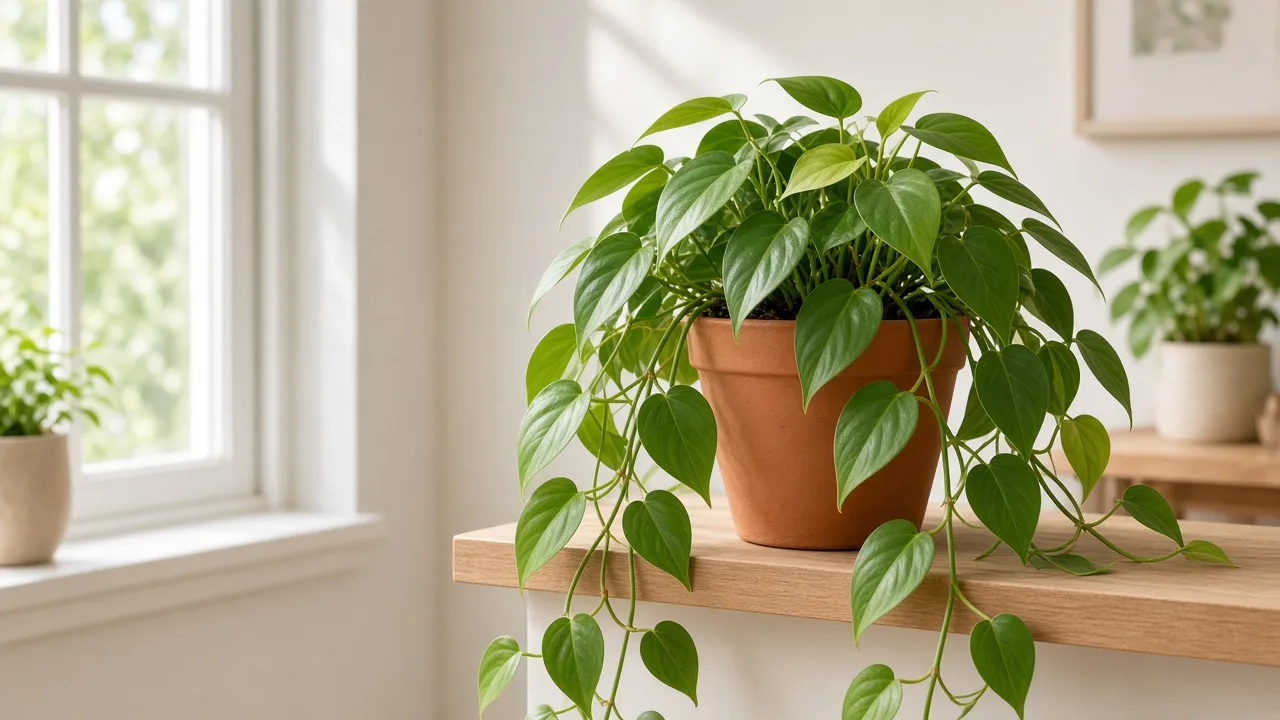
No Flowers on Heartleaf Philodendron: Causes, Checks & Fixes
This guide covers no flowers on Heartleaf Philodendron. See also the general No Flowers guide, watering, and light pages for this plant.
No Flowers on Heartleaf Philodendron: Causes, Checks & Fixes
Quick answer
If your heartleaf philodendron (Philodendron hederaceum) has never produced a flower—and shows no sign of buds, spathes, or spadices—that is normal. Heartleaf philodendron rarely flowers indoors, and the inflorescence is rarely seen in cultivation. This species is sold and kept for glossy, heart-shaped leaves on trailing vines, not blooms. For the general mechanics of why houseplants skip flowering, see our no flowers symptom hub. On heartleaf philodendron, a healthy trailing vine can cover a shelf for years with zero floral structures and still be thriving.
First step: stop trying to force flowers and assess foliage health instead. Check that new heart-shaped leaves unfurl every few weeks in warm months, stems stay firm at the nodes, and the top 2 inches of mix dry between waterings. When those look good, your plant is succeeding—even with zero flowers.
When to use this page vs other Heartleaf Philodendron guides
| Your question | Best page |
|---|---|
| Never bloomed, healthy trailing vines | This page |
| No new leaves for months in warm weather | Slow growth or not enough light |
| Yellow leaves on wet soil | Overwatering |
| Mushy stems, sour smell, wilt on wet mix | Root rot |
| Long bare gaps between heart leaves | Leggy growth |
| Routine moisture rhythm | Heartleaf Philodendron watering guide |
What no flowers looks like on Heartleaf Philodendron
On a healthy heartleaf philodendron, “no flowers” means no inflorescence ever appears—no green spathe, no upright spadix, no bud swelling at leaf axils. That silence is the default, not a late-stage failure.
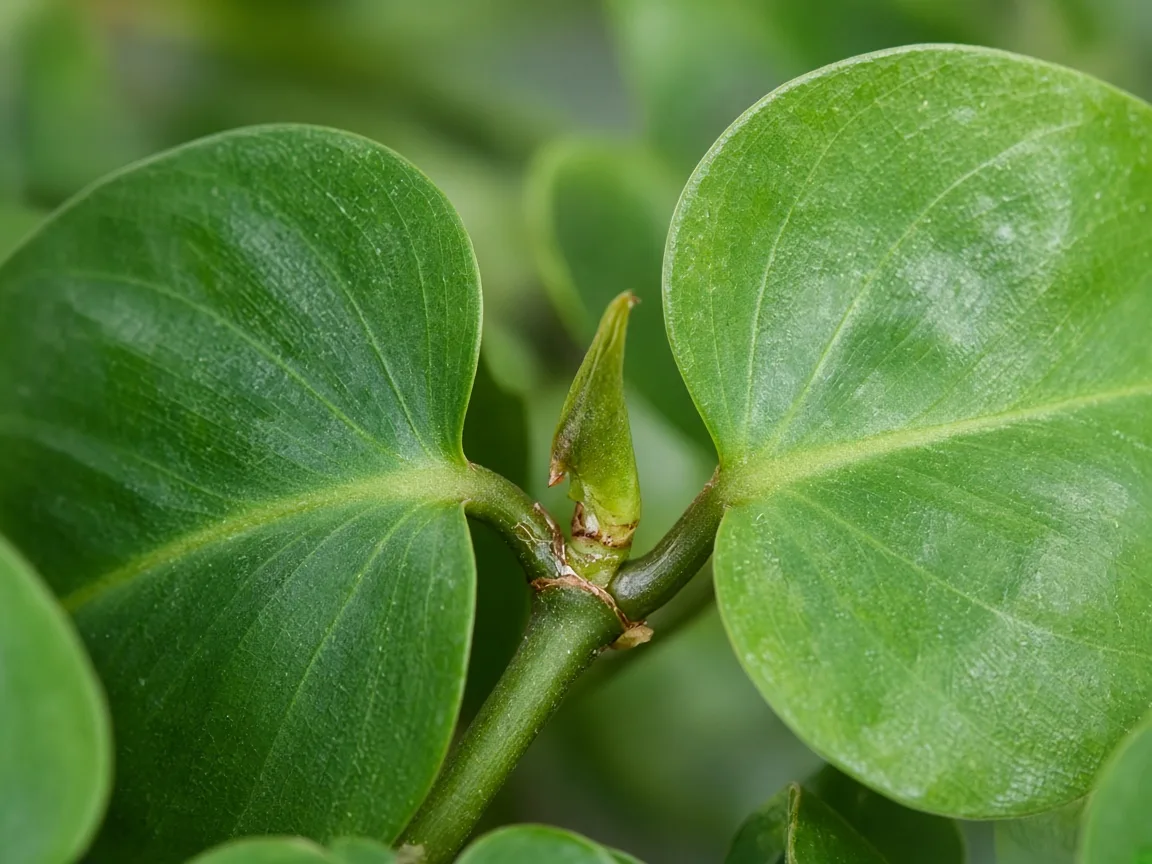
No flowers on heartleaf philodendron means healthy glossy foliage without any spathe or spadix—compare vine tips with older nodes on the same plant.
Normal for this species:
- Years of steady trailing or climbing growth with zero floral structures
- Glossy, heart-shaped, dark green leaves on flexible vines
- Occasional new leaves every few weeks in spring and summer on a rapidly growing vine
- Long cascades from hangers or fuller leaves when trained up a moss pole
Signs something else—not flowering—is actually wrong:
- No new leaves for two or more months during spring or summer
- Yellowing lower leaves while soil stays wet (overwatering on heartleaf philodendron)
- Long bare gaps between leaves while vines lean toward windows (insufficient light makes stems spindly)
- Soft stems at the soil line with sour-smelling mix
Do not confuse “no flowers” with “no new growth.” A philodendron that pushes glossy heart leaves on schedule is healthy even if it never blooms.
Do not confuse a new leaf sheath with a flower bud
Heartleaf philodendron produces new leaves from rolled sheaths at nodes along the vine. Before a heart-shaped blade unfurls, that sheath looks like a pointed green tube—similar enough to an aroid spathe that owners sometimes photograph it as a “first bloom.”
The difference is straightforward once you know what to watch:
| Feature | New leaf sheath | Aroid inflorescence (rare) |
|---|---|---|
| Location | Always at a node where a leaf will emerge | Leaf axil, but distinct from normal leaf sheaths |
| Outcome | Unfurls into a glossy heart-shaped leaf within days | Spadix and spathe persist as a floral structure |
| Frequency on indoor vines | Every few weeks in active growth | Exceptionally rare indoors |
| Color progression | Opens to green foliage | Greenish-yellow hood around a spadix |
If the structure at the tip becomes a leaf, you were never missing flowers—you were watching normal philodendron growth. This confusion is common on trailing aroids and is one reason “no flowers” searches spike even when care is fine.
Why Heartleaf Philodendron has no flowers
Indoor heartleaf philodendrons rarely reach bloom-ready maturity
Philodendron hederaceum is grown primarily for glossy, heart-shaped leaves on cascading stems. In pots, plants stay in a juvenile-to-intermediate growth phase with leaves typically around 4 inches long, while mature wild plants can develop much larger foliage before flowering. Greenish-white arum family flowers infrequently appear on mature indoor plants—and “infrequently” is the operative word.
No grower markets heartleaf philodendron for flowers because indoor bloom is exceptional, not expected. Florgeous describes it as a true foliage plant that rarely flowers and is grown for form and foliage rather than blossoms.
The inflorescence is modest even when it appears
When heartleaf philodendron does flower, the structure is an aroid inflorescence—a spadix and spathe—not a showy petal display. The spathe forms a tube around the spadix and expands to a greenish-yellow hood. Flowers are small and greenish-white. Many owners who do see one mistake it for a new leaf bud rather than a bloom worth celebrating.
Home conditions rarely trigger reproduction
In tropical forests, philodendrons climb tree trunks into brighter, humid canopy light. Indoors, even well-cared-for vines receive lower light intensity, steadier temperatures, and less humidity swing than their native range across Mexico to tropical America. The plant channels energy into leaves rather than costly flowering.
Phosphorus-heavy “bloom” fertilizers will not override this biology. Excess fertilizer can burn leaf margins or push weak growth when nitrogen is high—without moving you closer to a spathe.
Could a moss pole or brighter light trigger blooms?
Training heartleaf philodendron up a moss pole and giving bright indirect light can produce larger leaves over time, mimicking part of the natural climbing habit. That improves foliage quality but still does not reliably produce flowers indoors. Treat any photo of a philodendron spathe as a lucky exception, not a care target.
Trailing basket vs moss pole: what each setup actually changes
Heartleaf philodendron is usually sold in one of two forms—and neither is a bloom trigger.
Hanging basket or shelf trail: Encourages long juvenile vines with smaller heart leaves. Lower nodes sit near the pot rim where splash and dim light slow growth. Zero flowering benefit—but excellent for trailing décor.
Moss pole or trellis: Encourages upward climb, shorter internodes, and larger leaves over seasons. Epic Gardening notes heartleaf philodendron climbs readily when given support and benefits from bright indirect light on the full vine. Better foliage architecture, still not mature enough for reliable blooms indoors.
| Setup | What improves | Effect on flowering |
|---|---|---|
| Hanging basket | Trailing display, easy propagation cuttings | None meaningful |
| Moss pole | Leaf size, vine density, aerial roots | None reliable indoors |
| Brighter east or filtered south window | Faster dry-down, firmer new leaves | Healthier foliage, not blooms |
If you want larger heart leaves, add a pole and optimize light. If you want indoor flowers, choose species bred for that outcome—peace lilies, anthuriums, or many orchids—not heartleaf philodendron.
How to confirm your plant is fine without flowers
Run this quick check before changing anything:
- Identity: Confirm glossy heart-shaped leaves on a vining Philodendron hederaceum—not a peace lily, anthurium, or spathiphyllum lookalike, which bloom readily indoors under different expectations.
- New growth: Mark a vine tip and watch for a new leaf over the next two to four weeks in spring or summer. Steady leaf production confirms health.
- Leaf quality: Newest leaves should be firm and glossy. Pale, limp, or widely spaced leaves signal light or moisture stress—not a flowering block.
- Soil and roots: Stick a finger 2 inches into the mix. It should dry between waterings per the heartleaf philodendron watering guide. Lift the pot occasionally; a sudden weight drop means the plant is drinking normally.
- Stem firmness: Nodes should feel plump, not mushy. Soft stems with sour soil point to root problems unrelated to flowering.
If all five pass, accept that your philodendron is a foliage success story.
The first fix to try
Stop chasing blooms and redirect care toward leaf quality.
Move the plant to bright indirect light if growth is leggy or new leaves are small and widely spaced. Hold watering until the top 2 inches of mix dry. Do not add bloom fertilizer, repot “for more energy,” or move the plant repeatedly hoping to trigger buds—those actions stress philodendron without any realistic path to flowers.
If foliage looks strong after light and watering are dialed in, you are done. There is nothing broken to fix.
Step-by-step: what to do instead of forcing flowers
Optimize light for foliage, not buds
Place in bright indirect light. Avoid full sun that scorches glossy leaves. Near an east window or set back from a south or west exposure works well. If stems become spindly with long gaps between heart leaves, light is too weak.
Keep a steady watering rhythm
Allow the top 2 inches of well-draining mix to dry before watering thoroughly. Philodendron in low light uses water slowly; soggy soil causes root rot, which stops new leaves—not flowers—from forming. UConn notes overwatering causes yellow leaves to drop on philodendron—a clearer health signal than missing blooms.
Feed lightly only during active growth
Use balanced liquid fertilizer at half strength monthly in spring and summer if growth is slow and light is already adequate. Skip feeding in winter when growth slows. Never switch to high-phosphorus bloom formulas for the heartleaf philodendron overview.
Optional: add a moss pole for larger leaves
Training the vine up a moss pole can produce bigger foliage over time. Enjoy the architectural leaves—but do not expect a spadix to follow.
Lookalike symptoms
| What you notice | Likely issue | Not a flowering problem |
|---|---|---|
| No flowers, healthy glossy new leaves | Normal biology | Yes |
| No new leaves for months | Light, watering, or roots | No—fix care |
| Yellow leaves + wet soil | Overwatering / root rot | No—dry out and inspect roots |
| Long bare stems reaching windows | Low light / leggy growth | No—prune and relight |
| Rolled sheath at vine tip | New leaf emerging | Yes—normal growth |
Mistakes to avoid
- Bloom fertilizer: Heartleaf philodendron does not respond to phosphorus pushes; excess salts can brown leaf edges.
- Repotting for “flowering energy”: Repot only when roots circle the pot or mix collapses—not to trigger buds.
- Assuming age alone brings blooms: Even mature indoor specimens rarely flower; maturity is necessary but not sufficient indoors.
- Comparing to peace lilies or anthuriums: Fellow Araceae family members that bloom readily indoors follow different rules.
- Misting for “humidity to bloom”: Epic Gardening notes misting is unnecessary above about 40% humidity and wet foliage invites leaf-spot problems—not flowers.
Recovery timeline and realistic expectations
There is no recovery timeline for flowers because indoor heartleaf philodendron essentially never blooms. Judge the plant on foliage instead:
- Within 2–4 weeks of improved light: first new leaf with stronger color and shorter internodes
- Over a season: fuller vines from pruning leggy stems or climbing a pole
- Flowers: do not expect them indoors; decades of healthy growth still typically means zero blooms
How to prevent unnecessary worry next time
Choose heartleaf philodendron for trailing shelf or hanger foliage with glossy heart-shaped leaves. Before buying, know that heartleaf philodendron rarely flowers indoors. Maintain bright indirect light, dry-between watering, and seasonal light feeding. Success looks like steady new leaves—not a spathe.
When to worry
No flowers alone is never an emergency. Worry when paired with:
- Multiple yellow leaves dropping within a week
- Soft, blackening stems at soil level
- No new growth through an entire warm season
- Visible mealybugs, scale, or spider mite webbing
- Soil that smells sour or stays wet for ten or more days
Those patterns point to watering, light, pest, or root problems worth fixing on their own merits—none of which will reveal hidden flowers once corrected.
Conclusion
Heartleaf philodendron without flowers is the norm, not a crisis. Philodendron hederaceum is cultivated for stunning trailing foliage, and its aroid inflorescence is rarely seen even when care is excellent. Your first and best action is to confirm foliage health, optimize light and watering, and release the expectation of blooms. A philodendron pushing glossy heart-shaped leaves on firm stems is already thriving.
Related Heartleaf Philodendron guides
- Heartleaf Philodendron overview
- Heartleaf Philodendron watering
- Heartleaf Philodendron light
- Heartleaf Philodendron soil
- Heartleaf Philodendron problems
- Overwatering on Heartleaf Philodendron
- Root rot on Heartleaf Philodendron
- Leggy growth on Heartleaf Philodendron
Related tool
Use the Plant Problem Diagnosis Tool to narrow causes for no flowers on this plant before changing multiple variables at once.