Overwatering on Sago Palm: Causes, Checks & Fixes
Quick answer
Overwatering on Sago Palm shows as a heavy pot, wet mix days after watering, and yellowing fronds while the trunk still looks fine. Stop watering immediately and let the top few inches dry completely before the next drink.
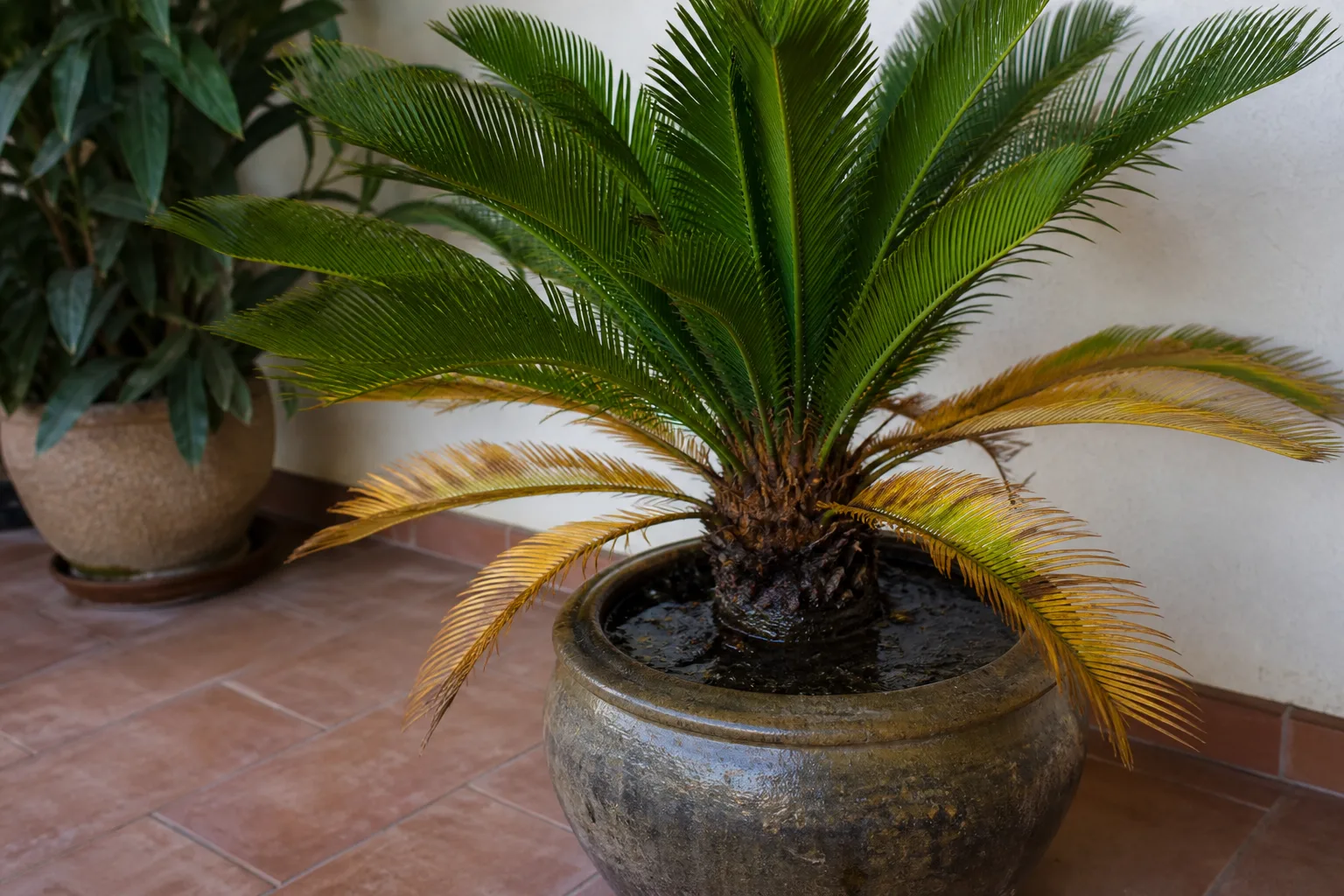
Overwatering on Sago Palm: Causes, Checks & Fixes
This guide covers overwatering on Sago Palm. See also the general Overwatering guide, watering, and light pages for this plant.
Overwatering on Sago Palm: Causes, Checks & Fixes
Quick answer
Overwatering kills more indoor sagos than underwatering. Cycas revoluta is a drought-adapted cycad-not a true palm-and it needs regular moisture with the soil surface nearly drying between water applications, not constant dampness. The plant is intolerant to overwatering or poor drainage and root rot can occur when soil stays saturated.
First step: stop watering and let the top few inches of mix dry completely. If the pot feels heavy, soil stays wet for days, and lower fronds are yellowing, you are likely holding too much moisture-not underwatering. Do not add more water hoping limp fronds perk up when the mix is already wet.
Why Sago Palm gets overwatered easily
The common name is the first trap. Growers treat sagos like thirsty tropical palms, but this ancient cycad evolved on rocky, well-drained hillsides in southern Japan. Its thick caudex stores reserves for dry spells, and established plants are drought tolerant. A sago that is slightly dry is far safer than one sitting in wet mix.
Sago Palm also sends slow, confusing signals. It declines gradually over weeks. A single yellow leaflet on an old lower frond may be normal senescence. By the time multiple fronds yellow, soil smells sour, or the plant wobbles in its pot, root damage may already be significant. That delayed feedback rewards dry-down checks and punishes calendar watering.
Indoor conditions make overwatering worse. Low light slows evaporation so pots stay wet longer. Oversized decorative pots hold a large volume of unused, slow-drying mix around a small root ball. Dense peat-heavy potting soil without sand or grit traps moisture even when you water lightly. Cache pots without drainage keep the root zone saturated. Winter dormancy reduces water use, but many growers keep summer watering schedules through cool, dim months.
Because sagos are gymnosperm cycads with very slow growth, they do not move water through tissue the way fast-growing tropical foliage plants do. They need superior soil drainage and a soak-and-dry rhythm-not steady moisture like a fern or peace lily.
What overwatering looks like on Sago Palm
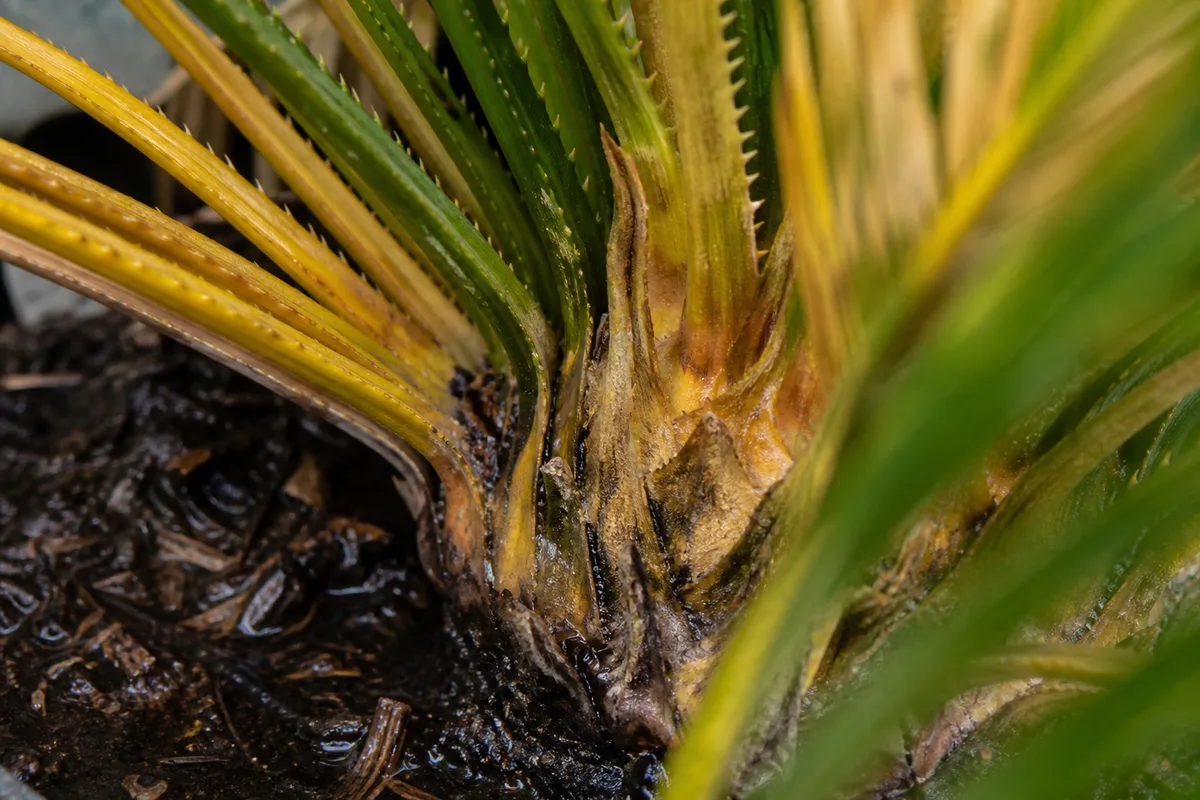
Lower fronds yellowing from the base upward while mix stays wet - stop watering until the top few inches dry completely.
Early and moderate overwatering:
- Pot stays noticeably heavy days after watering
- Top inch may feel dry while deeper mix stays wet and cool
- Lower fronds yellow from the base upward, sometimes across several fronds at once
- New crown spears open slowly, stay smaller than previous flushes, or stall
- White mold on soil surface or fungus gnats hovering near the pot
- Sour or musty smell when you probe near the drainage hole
Advanced overwatering and root decline:
- Fronds droop or collapse while soil is still wet-roots in waterlogged soil cannot absorb oxygen and fail to take up water, which mimics drought stress
- Plant wobbles in its pot because anchoring roots have decayed
- Trunk base (caudex) feels soft or spongy when pressed firmly
- Dark water-soaked staining on lower trunk tissue
- When unpotted, roots are brown, black, mushy, and smell foul-not firm and pale
What healthy sago roots can look like: Firm coralloid nodules on roots are normal nitrogen-fixing structures, not rot. Rotten roots are mushy, slip apart easily, and smell bad. Do not trim firm coral-like growth thinking it is disease.
Damaged yellow fronds will not green up again. Judge recovery by firm trunk tissue, stable older fronds, and healthy new spears-not by old leaf color reversing.
How to confirm the cause
Work through these checks in order:
- Pot weight - Lift the container. A heavy pot days after watering means excess moisture is still held in the mix.
- Depth moisture - Push your finger or a dry chopstick 5–7 cm (2–3 inches) into the soil. Wet at depth with yellowing fronds strongly suggests overwatering. Bone-dry throughout points away from it.
- Drainage test - Water should exit the drainage hole freely and not pool in the saucer for hours. Standing water confirms poor drainage contributing to the problem.
- Smell check - Soil that has been too long without oxygen often smells sour or rotten when probed near the bottom of the pot.
- Frond pattern - Multiple fronds yellowing while mix is wet fits overwatering. Isolated lower frond drop on an otherwise firm plant may be normal aging.
- New spear status - Stalled or pale new crown growth on wet soil is a warning sign. Healthy sagos push one main flush per year in many temperate indoor settings.
- Wilting paradox - Wilting with wet soil often means damaged roots, not thirst. Adding water makes this worse.
If soil is dry, the pot is light, and fronds perk after a deep soak, you are dealing with underwatering-not this guide’s primary problem. If yellowing is limited to older fronds with dry soil and firm roots, consider manganese deficiency before assuming rot.
First fix for Sago Palm
Stop watering immediately and do not water again until the top few inches of mix are completely dry.
Move the pot to bright, filtered light if it has been sitting in a dim corner-filtered sunlight for four to six hours per day helps the plant use moisture faster without harsh scorch. Empty any saucer water. Tilt the pot slightly to confirm nothing is pooling at the base.
Do not fertilize, mist heavily, or repot on day one unless roots are clearly mushy when you inspect. The first priority is oxygen back at the root zone, not more inputs.
Step-by-step recovery
After the initial dry-down:
- Monitor dry-down daily - Track pot weight and depth moisture. In winter dormancy, the dry window may stretch to several weeks.
- Improve airflow and light - A brighter spot with good air movement speeds evaporation from the mix surface. Avoid moving the plant through several environments at once.
- Inspect roots if decline continues - After one to two weeks of corrected watering, if more fronds yellow or the plant wobbles, gently unpot. Rinse away old mix and cut only mushy, foul-smelling roots with sterilized pruners. Leave firm pale roots intact.
- Air-dry the root ball - Let trimmed roots sit uncovered 24–48 hours in shade if rot was present. This reduces pathogen load before Sago Palm repotting guide.
- Repot into fast-draining mix - Use cactus or palm mix amended with coarse sand or grit. Choose a pot only slightly larger than the root mass with a clear drainage hole. Do not jump to a much larger decorative container.
- Resume watering cautiously - After repotting, water once lightly to settle mix, then return to dry-down checks. Wait until the top few inches are dry before the next thorough soak. Discard runoff; never let the pot sit in standing water.
- Remove only fully dead fronds - Trim fronds that are completely brown and crisp. Leave partly yellow fronds until the plant stabilizes-they still support recovery if tissue is firm.
- Manage fungus gnats if present - Let the surface dry longer between waterings. Gnats thrive in constantly moist organic mix and often signal overwatering, not a separate primary disease.
Wear gloves when handling damaged tissue-all parts of Sago Palm contain cycasin and sap may irritate skin. Keep the plant out of reach of pets and children throughout recovery.
Recovery timeline
Minor overwatering caught early may stabilize within two to four weeks once soil dries and watering stops. New spear development is the best long-term sign-sagos grow slowly, so expect weeks to months before a clean new flush appears.
Moderate root damage after trim and repot may need one full growing season before the plant looks balanced again. Advanced caudex softening or crown collapse often does not recover fully even after corrective care. Patience matters; do not interpret slow improvement as a signal to water more.
Lookalike symptoms to rule out
Underwatering - Light pot, dry mix throughout, and fronds that recover turgor within a day of a deep soak. Wet soil rules this out.
Manganese deficiency - Yellowing concentrated in the center of older fronds with green bands at the edges can look like watering stress but often follows alkaline soil or incorrect fertilizer. Soil moisture checks and root firmness separate this from rot.
Normal lower frond senescence - Sagos naturally shed oldest lower fronds over time on an otherwise firm plant with dry-appropriate soil. One yellowing frond without wet mix or crown symptoms is not urgent overwatering.
Cold damage - Brief frost injures foliage on outdoor plants. Indoor cold drafts can bronze or brown frond tips without keeping soil constantly wet.
Scale or mealybugs - Pest stress can yellow fronds, but you will find insects, honeydew, or sooty mold-not persistent wet mix and sour soil.
Not enough light - Dim placement slows dry-down and weakens the plant, but the primary fix is brighter filtered light. Chronic wet soil in low light is still an overwatering problem.
Mistakes to avoid
Do not keep watering because fronds look wilted when soil is already wet-that deepens root decline.
Do not repot into a much larger pot “to help drainage.” Extra unused mix stays wet longer around the root ball.
Do not use dense all-purpose potting soil without grit for a sago. Moist, well-drained soil means fast drainage, not water-retentive peat alone.
Do not water on a fixed weekly schedule year-round. Winter dormancy and dim months require longer dry windows.
Do not mistake firm coralloid root nodules for rot and cut healthy tissue.
Do not fertilize a stressed, waterlogged plant hoping to green up yellow fronds. Feed only after Sago Palm watering guide and root health stabilize.
Do not leave the pot in a full saucer. Empty runoff within 30 minutes of every watering.
Sago Palm care cross-check
Overwatering prevention ties directly to Sago Palm overview’s baseline needs:
- Light - Bright filtered sun several hours daily so the plant actively uses water. Weak light plus frequent watering is a common failure pair indoors.
- Soil - Sandy, loamy, fast-draining cactus or palm mix. Superior drainage is non-negotiable.
- Water rhythm - Thorough soak when the top few inches are dry, then full dry-down. Reduce frequency in fall and winter.
- Pot choice - Unglazed clay or a well-drained plastic pot with a large drainage hole beats sealed decorative containers.
- Growth expectations - Very slow growth is normal. Do not interpret slow dry-down in winter as a need for more water.
How to prevent overwatering next time
Learn your pot’s dry-down speed in your actual room-not a generic calendar. A small pot in a bright window may need water every two to three weeks in summer and every four to eight weeks in winter, but only when depth checks confirm dryness.
Use the finger-or-chopstick test at depth, pot-weight change, and saucer drainage as your three-part routine before every watering decision.
Top-dress or refresh mix every few years if peat has broken down and holds water like a sponge. Repot into the same size container when roots are not crowded rather than upsizing unnecessarily.
Keep the plant in Sago Palm light guide with some gentle direct sun. Pair good light with dry-down watering rather than compensating for dim corners with extra moisture.
Treat Sago Palm as a drought-tolerant cycad with a thick storage trunk, not a moisture-loving tropical palm. When uncertain whether to water, waiting an extra week is safer than adding water to a still-moist pot.
When to worry
Treat as urgent when the trunk base feels soft, new crown spears fail repeatedly on wet soil, the plant wobbles despite a heavy pot, or unpotted roots are mostly mushy with foul odor. Those signs suggest advanced root or caudex decline where recovery odds drop sharply.
Also act promptly if multiple fronds yellow within a short window while soil never dries, especially during warm active growth when rot pathogens spread faster in saturated mix.
A single yellow lower frond on a firm plant with appropriate dry-down is not an emergency. Confirm moisture pattern before escalating to repotting or fungicides.
Conclusion
Overwatering on Sago Palm is a care-pattern problem more than a mysterious disease. The plant stores water in its caudex, needs excellent drainage, and punishes wet roots long before the crown tells the full story. Stop watering, confirm wet mix and pot weight, let the root zone dry, and only then decide whether repotting is needed. That sequence protects firm roots, avoids drowning an already stressed cycad, and gives slow new spear growth the best chance to return.
When to use this page vs other Sago Palm guides
- Sago Palm watering guide - Use for routine moisture checks before assuming overwatering is the main issue.
- Sago Palm problems hub - Browse all 3 common issues on this species.
- Yellow Leaves on Sago Palm - Different entry point when symptoms overlap with overwatering.