Slow Growth on Satin Philodendron: Causes, Checks & Fixes
Quick answer
Slow growth on satin philodendron usually means too little light, chronically wet soil, or cool room temperatures-not a nutrient mystery. First step: move the pot to medium or bright indirect light and confirm the top 1–2 inches of mix dry before the next watering.
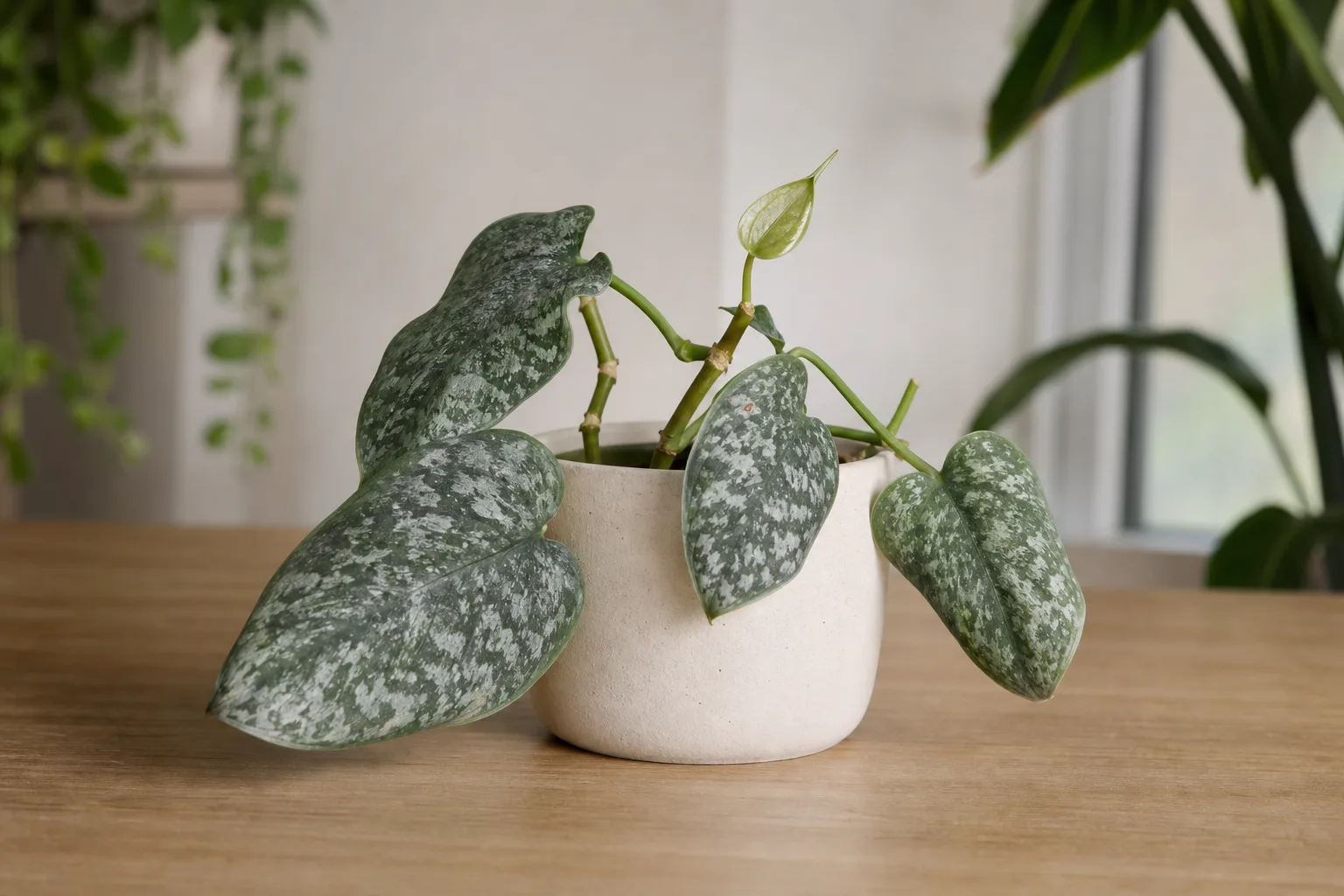
Slow Growth on Satin Philodendron: Causes, Checks & Fixes
This guide covers slow growth on Satin Philodendron. See also the general Slow Growth guide, watering, and light pages for this plant.
Slow Growth on Satin Philodendron: Causes, Checks & Fixes
Quick answer
If your plant is labeled satin philodendron, check the leaves: silvery satin texture on heart-shaped foliage points to Scindapsus pictus - not a true philodendron. Slow growth on this trailing aroid usually means insufficient light, chronically wet soil slowing roots, cool room temperatures, or normal winter dormancy-not a missing fertilizer dose.
NC State Extension classifies satin pothos as a slow-growing tropical climber indoors. Modest new leaves every few weeks through warm months is healthy; months with zero silver-marked tips while care “looks fine” almost always traces to light or root-zone oxygen, not genetics.
First step: move the pot to medium or bright indirect light and probe moisture 1–2 inches down before the next watering. Dim hanging baskets and cachepots that trap wet mix are the most common indoor combo. Do not repot or fertilize until you have confirmed firm stems, drying rhythm, and brighter placement for two weeks.
Is this slow growth or a different problem?
This page is for true stalls-the vine adds almost no new silver leaves for weeks while existing foliage stays mostly firm. Four sibling patterns overlap on satin philodendron but need different fixes:
| Pattern | What you see | Likely cause | Urgency | Go to |
|---|---|---|---|---|
| Slow growth (this page) | No new tips for 6+ weeks in warm months; static vine length; dull silver on any new blades | Light, wet roots, temperature, or winter rest | Low unless wet soil pairs with yellowing | Stay here - start with light and moisture |
| Leggy growth | Vine keeps reaching; long bare internodes; small pale new leaves | Etiolation from low light while still elongating | Low - reversible with light | Leggy growth guide |
| Not enough light | Dim placement; soil stays damp; faded silver before stretch or stall | Overall insufficient brightness | Low - fix placement first | Not enough light guide |
| Root rot / wet soil | Yellow lower leaves climb vine; sour smell; mushy roots; soil wet 7+ days | Overwatering relative to light; root decline | High - act within days | Root rot guide |
| Wilting | Sudden limp collapse; acute water stress | Under- or overwatering spike, not chronic stall | Medium - check moisture today | Wilting guide |
| Winter rest | Little change Nov–Feb; firm roots; stable silver on old leaves | Short days and cool room temps | Low - monitor until March | Resume checks when days lengthen |
For window bands, lux context, and grow-light setup, see the species light guide. For dry-down rhythm once placement improves, see watering. Our species overview explains ID and the full care hub.
What slow growth looks like on satin philodendron
Healthy Scindapsus pictus adds new heart-shaped leaves with silver markings along trailing stems through spring and summer. On a naturally slow vine, one to several new blades every few weeks in good light is normal. Problem slow growth adds these patterns:
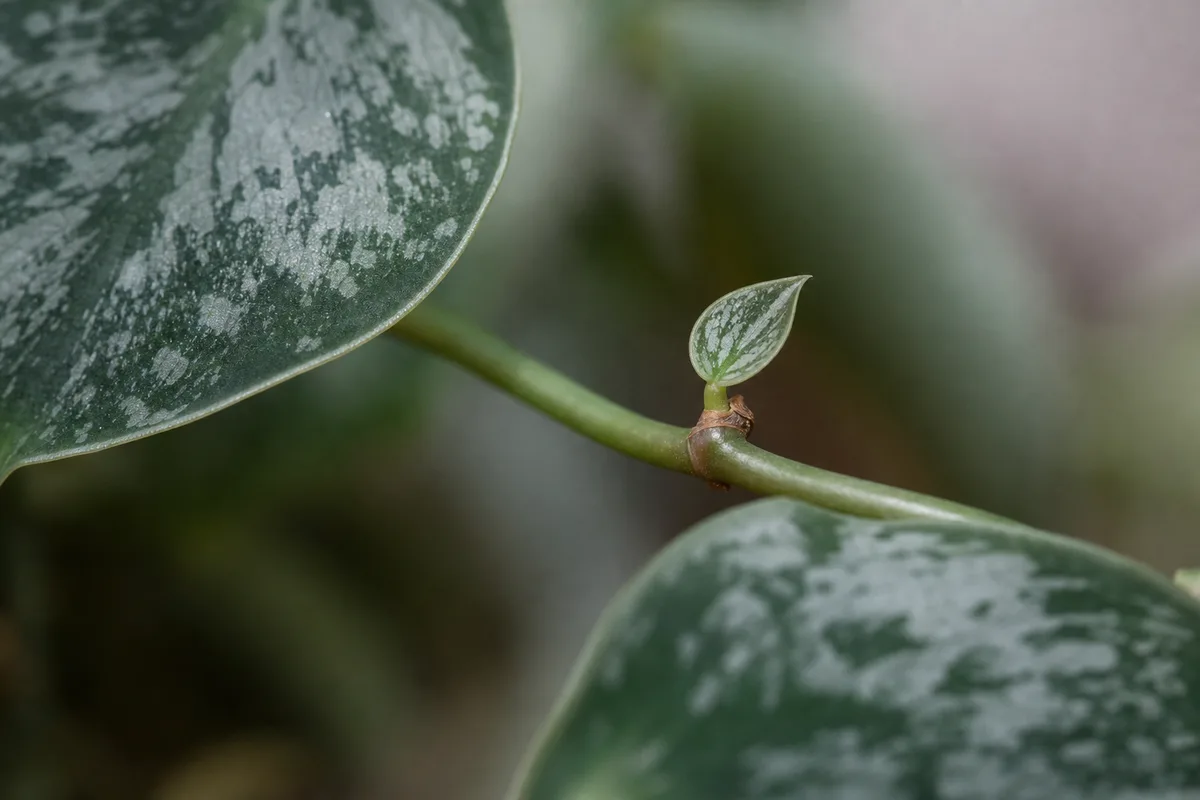
Slow Growth symptoms on Satin Philodendron - compare with healthy tissue on the same plant.
Low-light stall:
- Long gaps between leaves - Stems stretch toward windows; internodes widen
- Smaller new leaves with dull silver pattern - Contrast fades to flat green
- Soil stays wet longer because the plant uses less water in shade
- Often pairs with leggy growth and not enough light
Root stress from wet mix:
- No new tips for months despite bright light
- Yellow lower leaves while mix stays damp
- Thinning vines and soft petioles at the base
- Links to overwatering, fungus gnats, and root rot
Cool temperature slowdown:
- Growth nearly stops below 18°C (65°F) even with adequate light
- Existing leaves stay firm; simply no new segments
- Missouri Botanical Garden notes that cooler air below about 16°C (60°F) can damage foliage
Normal winter rest:
- Slower but not zero growth in short-day months
- Firm stems, stable silver on existing leaves, dry-down rhythm intact
- Resumes within weeks when days lengthen-no rescue needed
Cultivar pace: Argyraeus vs Exotica
All satin philodendron cultivars share Scindapsus pictus biology, but growth looks different:
- ‘Argyraeus’ - Smaller dark green leaves with silver edges; modest trailing pace even in good light
- ‘Exotica’ - Larger heart-shaped blades with broad silver splashes; can look “faster” when each new leaf is bigger, but node spacing may still be slow
- ‘Silvery Ann’ - Lance-shaped leaves with heavy silver; stall often shows as plain green revert on new tips
Judge stall against the same vine’s history, not a neighbor’s pothos. A trailing Argyraeus in a north room may add only two leaves all summer-that can be light-limited stall, not cultivar failure.
Photo check (what to compare): In dim light, new leaves look smaller with washed-out silver and wide gaps between nodes; after a light correction, the next leaves should show sharper silver contrast and tighter spacing on the same stem. Label before/after shots at the growing tip if you want proof the fix worked.
Why satin philodendron grows slowly
Insufficient light is the top indoor cause. Scindapsus pictus tolerates lower light than many houseplants but prefers bright indirect light and partial shade indoors. In dim corners photosynthesis drops, internodes stretch, and new leaves stay small-owners interpret that as “slow” when it is etiolation or light throttling. University of Maryland Extension notes that too little light causes spindly stretch and poor growth.
Overwatering in low light. Trailing baskets in shade receive less water use but the same weekly watering habit. In poorly drained or wet soils, root rot may occur and stall vine tips even when leaves have not yellowed yet. Clemson HGIC links chronic overwatering to root damage and poor overall growth.
Oversized pots. A small root ball in a large wet pot stays anaerobic at the center-common after repotting “to encourage growth” that backfires.
Cool rooms. Scindapsus is tropical; NC State recommends room temperatures of 65 to 85 degrees Fahrenheit and notes cooler air is not tolerated. Sustained cool nights below 18°C (65°F) pause cell division without killing the plant.
Root-bound pots (less common as a full stall). Tight roots can slow uptake and dry the mix in hours-but the vine usually still tries to push tips. See poor root growth if roots are circling and water runs straight through.
Nutrient depletion (less common). Years in the same peaty mix without any feeding can pale new leaves-but confirm light and moisture first. Do not feed stressed wet-root plants.
How to confirm the cause
Work through these checks in order-each one narrows the bottleneck before you change pots or fertilizer.
- Light at the leaf - At midday, a soft shadow on your hand at the vine level confirms usable brightness. No shadow in a “bright room” means insufficient for active growth. Light intensity decreases rapidly with distance from the window.
- Moisture at 1–2 inches - Wet clinging soil weeks after one drink points to overwatering risk. Dust-dry on a regular schedule may mean underwatering-but that usually shows limp leaves, not months of stall.
- Newest leaf quality - Vivid silver splashes on fresh leaves mean roots and light are mostly adequate; investigate pests or pot size instead.
- Stem firmness - Soft base on wet mix escalates to rot workflow.
- Season - Compare growth rate to the same window last year; winter pause is normal.
- Pest scan - Spider mites and mealybugs stipple leaves; growth may stall secondarily. NC State advises monitoring for mites on Scindapsus pictus.
| Pattern | Light | Soil 1–2 inches | New leaves | Likely cause | Urgency |
|---|---|---|---|---|---|
| Stretch, dull silver | Dim | Stays damp | Small, pale | Low light + slow dry-down | Low |
| No tips, yellow lower | Bright | Wet | None | Root stress | High if sour smell or soft stems |
| Firm, no tips | Bright | Normal dry-down | None | Cool temps or winter | Low |
| Occasional new tips | Medium | Normal | Smaller but silver | Normal seasonal slow | Low |
| Stippling, fine webbing | Any | Variable | Stunted tips | Pests | Medium |
First fix for satin philodendron
Move to medium or bright indirect light and establish dry-down watering.
- Light: East window, or three to six feet from filtered south/west glass. Avoid jumping from deep shade to harsh afternoon sun-acclimate over one week. Direct sun is not tolerated indoors.
- Water: Irrigate only when the top 1–2 inches of mix are dry - similar rhythm to pothos, its close cousin in care.
Do not fertilize, repot, or prune heavily until new silver-marked leaves appear within three to six weeks.
Step-by-step recovery
- Improve light - See the light guide.
- Fix watering - Match the watering guide; empty saucers; ensure drain holes are open.
- Inspect roots if wet soil persists - Unpot only when mix smells sour or stems soften; trim mush, repot into airy mix.
- Pinch tips after growth resumes - Pinching stems helps keep the plant tidy and encourages bushier silver vines from nodes.
- Light feed in spring - One diluted balanced fertilizer application after stable new growth-not before.
Recovery timeline
- Low light correction: First tighter internodes and brighter silver on new leaves in three to six weeks during warm months.
- Root stress recovery: Two to four months for consistent tip growth after dry-down holds and any mushy roots are trimmed.
- Winter rest: Growth accelerates naturally as days lengthen-no forced feeding needed.
Judge success by regular new silver-splashed leaves-not by old stretched sections shortening. Bare internodes from prior etiolation will not sprout leaves on their own; pinch or propagate once new compact growth proves the spot works.
Signs you are winning:
- New silver-marked leaves at regular intervals through spring and summer
- Firmer pot weight rhythm between waterings
- Brighter silver contrast on fresh blades compared with the last node
Signs the problem is worsening:
- Yellow lower leaves spreading while soil stays wet
- Sour smell from mix or soft stem base
- No new growth eight weeks after confirmed brighter light and corrected watering
Lookalike symptoms
Wilting - Acute collapse within hours to days, not a months-long stall. Wet-wilt with sour soil points to roots, not light alone.
Leggy growth - The vine keeps adding length with long bare gaps. Slow growth means the tip barely advances; leggy means it advances too fast in the wrong shape.
Drooping leaves - Petioles hang while leaves stay attached; often moisture or humidity stress rather than zero new tips.
Pests - Spider mites and mealybugs stipple leaves and web undersides; growth may stall secondarily. Treat pests before assuming the plant needs more fertilizer.
Root-bound pot - Rarely stops growth entirely; roots circling can mean more frequent watering and smaller new leaves, not zero tips for half a year. See repotting when roots escape drainage holes.
Poor root growth - Stunted root mass after compacted or hydrophobic mix; top growth pauses until roots recover.
Mistakes to avoid
- Do not increase fertilizer in dim light-it can burn roots without fixing stretch.
- Do not repot into a much larger pot “for growth”-extra wet soil worsens stall.
- Do not confuse Scindapsus with true philodendron care calendars from unrelated species pages.
- Do not stack repot, relocate, prune, and feed in the same week during a stall-change light and watering first, then wait for one new silver leaf before the next intervention.
- Do not assume a naturally slow vine is dying because it adds fewer leaves than pothos in the same room.
How to prevent slow growth next time
Keep bright, indirect light with moist, well-drained potting soil, water when the top inch dries, and maintain 18–27°C (65–80°F) active-growth temperatures. Inspect leaf undersides weekly. Pinch trailing tips during warm months for fuller baskets. Rotate the pot so all sides receive light.
In winter, accept slower extension or add a grow lamp rather than letting vines stretch for months until spring. Window bands and lamp setup live in the light guide.
When to worry
Slow growth alone is rarely fatal on satin philodendron. Escalate when:
- Yellow lower leaves spread while soil stays wet and smells sour
- Stems soften at the base or collapse despite watering
- No new growth after eight weeks in bright warm conditions post-fix
- Roots are entirely brown and mushy after inspection
In those cases, propagate firm stem cuttings above healthy nodes if any exist, and treat the root issue as primary-not a light tweak alone. If the plant still stalls after eight weeks with confirmed bright indirect light, firm roots, and corrected watering, contact your local cooperative extension office with photos of node spacing, root condition, and your watering rhythm.
Frequently asked questions
Is satin philodendron a true philodendron?
No. Retail “satin philodendron” is almost always Scindapsus pictus-a trailing aroid with silvery heart-shaped leaves, not Philodendron hederaceum. Growth pace, watering, and light needs follow Scindapsus biology.
How can I confirm slow growth on satin philodendron?
Confirm a problem when no new silver-marked leaves appear through an entire warm season, stems look pale and stretched, or growth stalls alongside wet soil and yellow lower leaves. Firm stems with vivid silver on occasional new tips but slow node spacing may simply match this naturally slow vine-or normal winter rest if days are short and the room is cool.
Will fertilizer fix slow satin philodendron growth?
Not if light or wet roots are the real limiters. Fertilize lightly only after watering rhythm and placement are stable-usually one diluted balanced application in spring when new silver leaves prove active growth. Feeding a stressed plant in soggy mix adds salt injury without speeding vines.
When is slow growth urgent on satin philodendron?
Act quickly if stems soften at the base, soil smells sour, pests spread to new growth, or several leaves yellow within a week while the pot stays wet-that pattern points to root failure, not benign slow growth. Follow our root rot guide before repotting into a bigger pot or increasing fertilizer.
How do I prevent slow growth on satin philodendron next time?
Water when the top 1–2 inches of mix dry, keep medium to bright indirect light year-round, maintain 18–27°C (65–80°F) where possible, and inspect weekly during active growth. Pinch tips once new compact silver leaves show the placement is working. Match basket watering to how fast the pot dries in your light level-not a fixed weekly calendar.
Related Satin Philodendron problems
- Satin philodendron overview - Light, watering, humidity, and general care for Scindapsus pictus
- Watering satin philodendron - Moisture rhythm and dry-down checks
- Not enough light - Faded silver and dim-room wet-soil trap
- Leggy growth - When vines keep reaching with long gaps
- Root rot - Advanced rescue when wet soil and mushy roots persist
- Overwatering - Chronic wet mix and fungus gnat pressure
- Wilting - Acute collapse vs gradual stall
- Spider mites - Stippling before growth stalls
- Poor root growth - Stunted roots after compacted mix
- Repotting - When roots circle and stall uptake
Conclusion
Slow growth on satin philodendron - botanically Scindapsus pictus - is usually a culture limit, not a death sentence. Match the pattern to the right guide: stall here, stretch on leggy growth, wet soil on root rot, then fix light and dry-down watering before repotting or feeding. Watch new silver-splashed leaves, not old stretched stems, and this naturally slow aroid usually finds its pace again within a few warm weeks. For daily rhythm and window placement, pair this page with the watering guide and species light guide.
When to use this page vs other Satin Philodendron guides
- Satin Philodendron watering guide - Use for routine moisture checks before assuming slow growth is the main issue.
- Satin Philodendron problems hub - Browse all 5 common issues on this species.
- Leggy Growth on Satin Philodendron - Different entry point when symptoms overlap with slow growth.
- Yellow Leaves on Satin Philodendron - Different entry point when symptoms overlap with slow growth.
Related Satin Philodendron guides
- Satin Philodendron overview
- Satin Philodendron watering
- Satin Philodendron light
- Satin Philodendron soil
- Leggy Growth on Satin Philodendron
- Yellow Leaves on Satin Philodendron
- Satin Philodendron problems
- Leaf Drop on Satin Philodendron
Related tool
Use the Plant Problem Diagnosis Tool to narrow causes for slow growth on this plant before changing multiple variables at once.