Poor Drainage on Stromanthe Triostar: Causes, Checks & Fixes
Quick answer
Before the next watering, lift the nursery pot out of any decorative cover and empty standing water. Then check that water can leave through an open drainage hole. Stromanthe Triostar needs evenly moist, airy mix; yellow leaves alone do not confirm poor drainage.
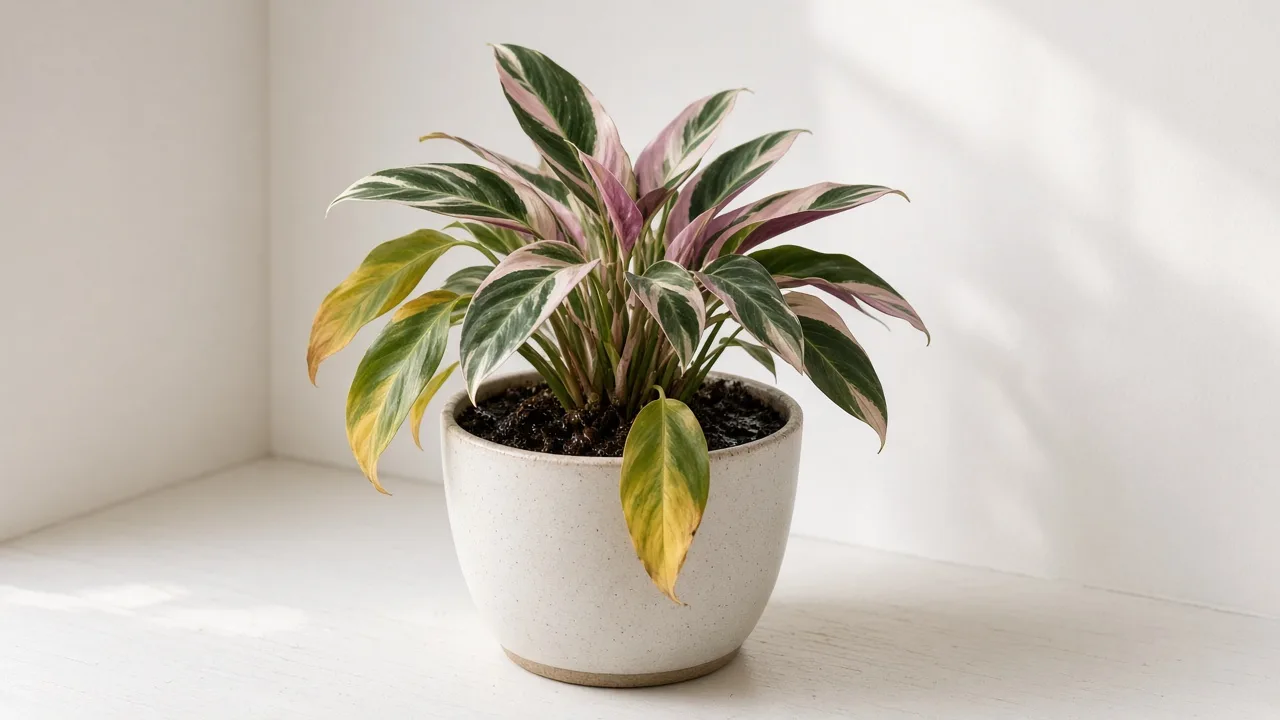
Poor Drainage on Stromanthe Triostar: Causes, Checks & Fixes
This guide covers poor drainage on Stromanthe Triostar. See also the general Poor Drainage guide, watering, and light pages for this plant.
Poor Drainage on Stromanthe Triostar: Causes, Checks & Fixes
Quick answer
Before the next watering, lift the nursery pot out of any decorative cover and empty standing water. Then check that water can leave through an open drainage hole. Stromanthe Triostar needs evenly moist, airy mix, so the goal is to release excess water without letting the root ball dry out. North Carolina State Extension lists Stromanthe as preferring moist, well-drained soil and notes that overwatering can lead to root and stem rot; see its Stromanthe care profile.
This page is for a Triostar whose mix drains slowly or stays wet for too long. For general causes shared across houseplants, see the poor-drainage symptom guide; use the checks below to decide whether the same pattern is happening in your Stromanthe Triostar.
What poor drainage looks like on Stromanthe Triostar
The strongest clue is a root zone that remains wet and heavy long after watering, especially when leaves yellow or wilt despite damp mix. Yellowing lower leaves and wilt in soggy soil are warning signs in container plants, but they do not prove root rot by themselves; a single aging leaf is even less conclusive. Better Homes & Gardens container guidance covers these symptoms and the role of drainage holes.
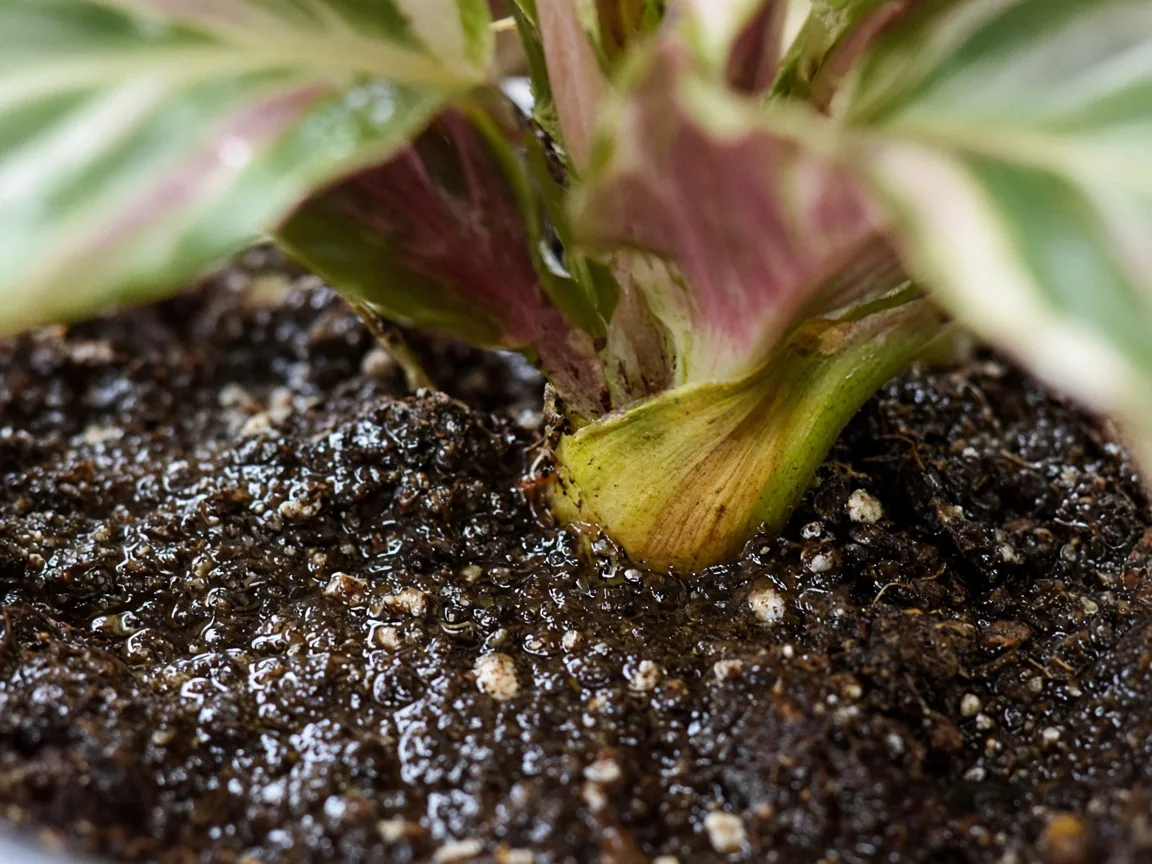
The glossy, wet surface is a reason to check the pot’s drainage; leaf yellowing alone does not confirm root damage.
Look for several clues together: water sitting in an outer pot, a blocked or absent hole, or mix that stays wet below the surface. If only one older leaf is yellow while the crown and newer leaves remain firm, compare it with the yellow-leaf guide for Stromanthe Triostar before repotting.
Keep the Triostar moist without keeping it waterlogged
Stromanthe is not a plant to dry out completely as a drainage fix. It prefers a moist, well-drained root zone and does not tolerate dry soil well, but saturated mix can still cause root or stem rot. Colorado State University Extension describes keeping Triostar’s medium consistently moist during active growth, then allowing it more drying time between waterings in winter; read its Triostar moisture guidance. The plant’s watering guide explains how to adjust checks to your room and season.
Use the pot and mix together: a quality soilless medium should hold some moisture while letting excess water pass through. A moisture-retentive mix amended with perlite is one practical option described in Planet Natural’s Triostar guide, but no ingredient makes a sealed pot drain; use the Stromanthe Triostar soil guide to compare the mix with the container.
Read the Triostar’s leaf movement before diagnosing
Triostar leaves fold at night and reposition during the day. That normal movement is not evidence of poor drainage by itself; check the plant during daylight and compare its posture with the moisture in the pot. Wisconsin’s Stromanthe profile describes this daily leaf movement.
Persistent daytime wilting while the mix is wet deserves a closer root-zone check. If the mix is dry instead, follow the underwatering guide for Stromanthe Triostar; if moisture is reasonable but edges are crisp, compare the pattern with low humidity on Stromanthe Triostar.
Confirm where the water is getting trapped
Start with the container, not the leaves. Remove the inner pot from its cover, empty any collected water, and make sure the drainage opening is not pressed against a flat surface or blocked by debris. After the next normal watering, let the pot drain before returning it to the cover; do not leave the base standing in runoff.
If the pot still feels heavy and the lower mix remains wet for several days, check moisture below the surface with a clean wooden skewer or finger. A dry-looking top can hide wet mix around the lower roots. If the plant continues to decline, slide the root ball out once and inspect it: dark, soft roots and a sour odor are stronger signs of rot than leaf yellowing, while healthy roots remain firm. See root-rot identification guidance.
Do not unpot the plant because of one yellow leaf. If you do confirm soft, dark roots or a softened crown, use the Stromanthe Triostar root-rot guide for the next steps. If the mix is simply staying too wet without root damage, treat the drainage setup first; see the separate overwatering guide when watering frequency is also part of the problem.
Correct the drainage problem without drying the roots
If water was trapped in the outer cover, empty it after each watering and return the inner pot only after it has drained. If there is no usable hole, move the plant into a pot with drainage holes and keep that pot inside the decorative cover. For a blocked opening, clear it rather than watering around it; the no-drainage-hole guide for Stromanthe Triostar covers that specific setup.
Repot only if the mix has collapsed into a dense, slow-draining mass or root inspection confirms decay. Choose a fresh, moisture-retentive soilless mix with an aerating component such as perlite, and use a container only large enough for the existing root ball. The compacted-soil guide for Stromanthe Triostar can help distinguish dense mix from a watering mismatch. If roots are soft and decayed, trim only the damaged tissue with clean shears and keep the remaining firm roots; do not remove healthy roots in an effort to make the plant dry faster.
Once the cause is corrected, keep care steady and check moisture before watering again. Do not compensate by letting all the mix become bone dry: aim for evenly moist soil with free drainage, and hold fertilizer until the plant is stable and producing healthy growth.
Allow for Stromanthe’s cooler-season dry-down
Triostar uses water more slowly when light and growth decrease, so the same potting mix can stay wet longer in winter than it does during active growth. Check the mix rather than following a fixed weekly schedule, and avoid increasing watering just because the leaves fold at night.
Recovery and prevention
After a drainage correction, judge progress by whether the pot begins to dry at a steadier pace, yellowing stops spreading, and the crown and new leaves remain firm. Existing yellow tissue may stay discolored; it is more useful to watch for stable new growth than to wait for old leaves to regain their former color. If the crown and nearly all roots are soft, recovery is unlikely; if firm roots and living growth remain, give the plant time before making another change.
For routine care, empty runoff, keep drainage openings clear, and adjust watering as the room’s light and temperature change. The Stromanthe Triostar overview and soil guide provide the broader care context for maintaining that moist-but-airy balance.
Related Stromanthe Triostar guides
- Use this guide when water drains slowly or the root zone stays wet; use the Stromanthe Triostar problems hub to compare other symptoms.
- If the pot drains freely but the plant still wilts in damp soil, continue with the overwatering guide or root-rot guide.
- If the mix is dry and leaves are curling or drooping, use the underwatering guide instead.
Related tool
Use the Plant Problem Diagnosis Tool to compare drainage, watering, and root symptoms before changing several parts of care at once.