Scale Insects on Stromanthe Triostar: Causes, Checks & Fixes
Quick answer
Scale insects on Stromanthe Triostar look like tan or brown immobile bumps glued to burgundy petioles, midribs, and the bases of rolled new spears—often mistaken for natural stem texture until leaves yellow or feel sticky. First step: isolate the plant and scrape every visible bump with a cotton swab dipped in 70% isopropyl alcohol.
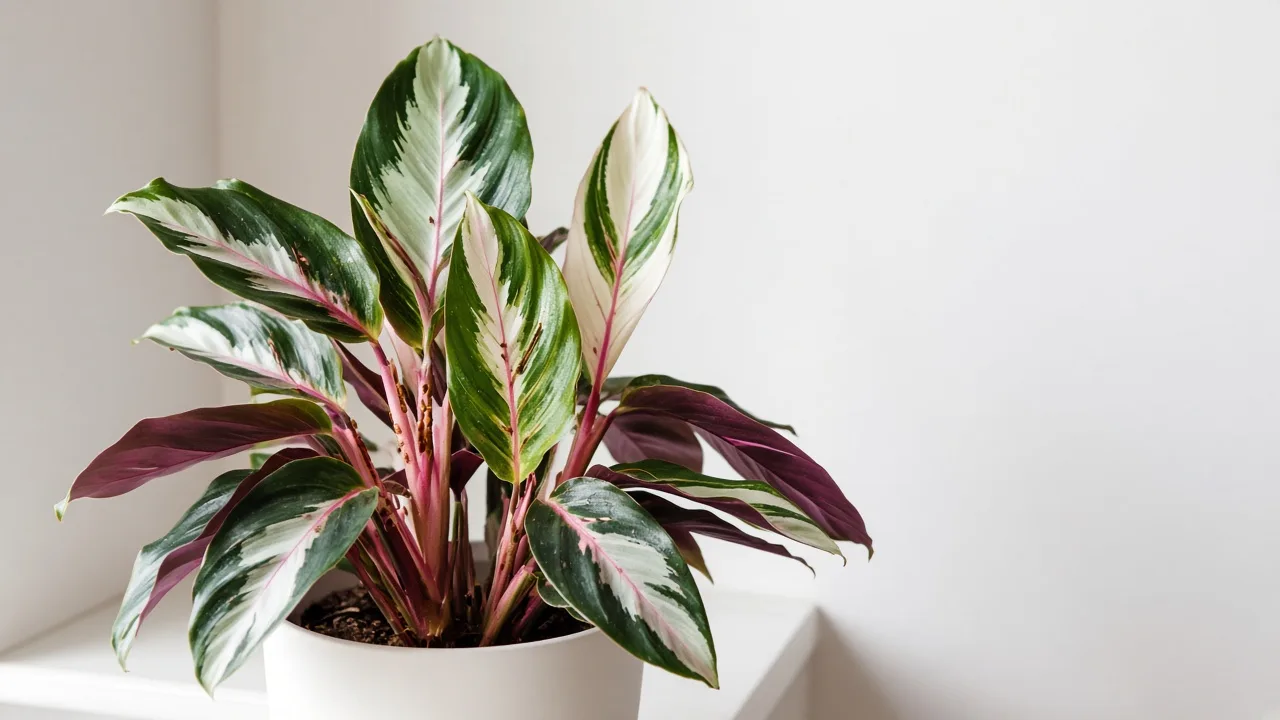
Scale Insects on Stromanthe Triostar: Causes, Checks & Fixes
This guide covers scale insects on Stromanthe Triostar. See also the general Scale Insects guide, watering, and light pages for this plant.
Scale Insects on Stromanthe Triostar: Causes, Checks & Fixes
Quick answer
Scale insects on Stromanthe Triostar (Stromanthe thalia ‘Triostar’) show up as small, immobile tan or brown bumps glued to long pink-to-burgundy petioles, midribs, and the sheltered bases of rolled new spears. They pierce thin variegated tissue, drain sap, and—on soft scale species—excrete sticky honeydew that can lead to black sooty mold on cream and pink foliage.
See our scale insects guide for general biology. On Triostar, pests often hide along burgundy petiole sheaths, inside folded prayer leaves at night, and at the short creeping crown—places quick care checks miss until honeydew dulls the palest variegation.
First step: isolate the plant and scrape every visible bump with a cotton swab dipped in 70% isopropyl alcohol.
When to use this page vs other Stromanthe Triostar guides
| Pattern | Read next |
|---|---|
| Immobile tan or brown bumps + stickiness | This page |
| White cottony wax in leaf axils | Mealybugs |
| Fine stippling + webbing on pale panels | Spider mites |
| Silvery streaks + black frass, no bumps | Thrips |
| Soft green aphids on new growth only | Aphids |
| Sticky leaves without glued bumps | Sticky leaves |
| Uniform yellow, wet sour mix, no pests | Overwatering |
| Crispy margins only, no bumps | Brown tips or low humidity |
What scale insects look like on Stromanthe Triostar
Scale damage is easy to miss on a tricolor prayer plant because most scales are protected by a waxy or shell-like cover that can blend with natural burgundy on petioles and dark green midrib lines. On Triostar, the signature is immobile bumps on thin Marantaceae tissue—not fluffy wax clusters or fine mite webbing.
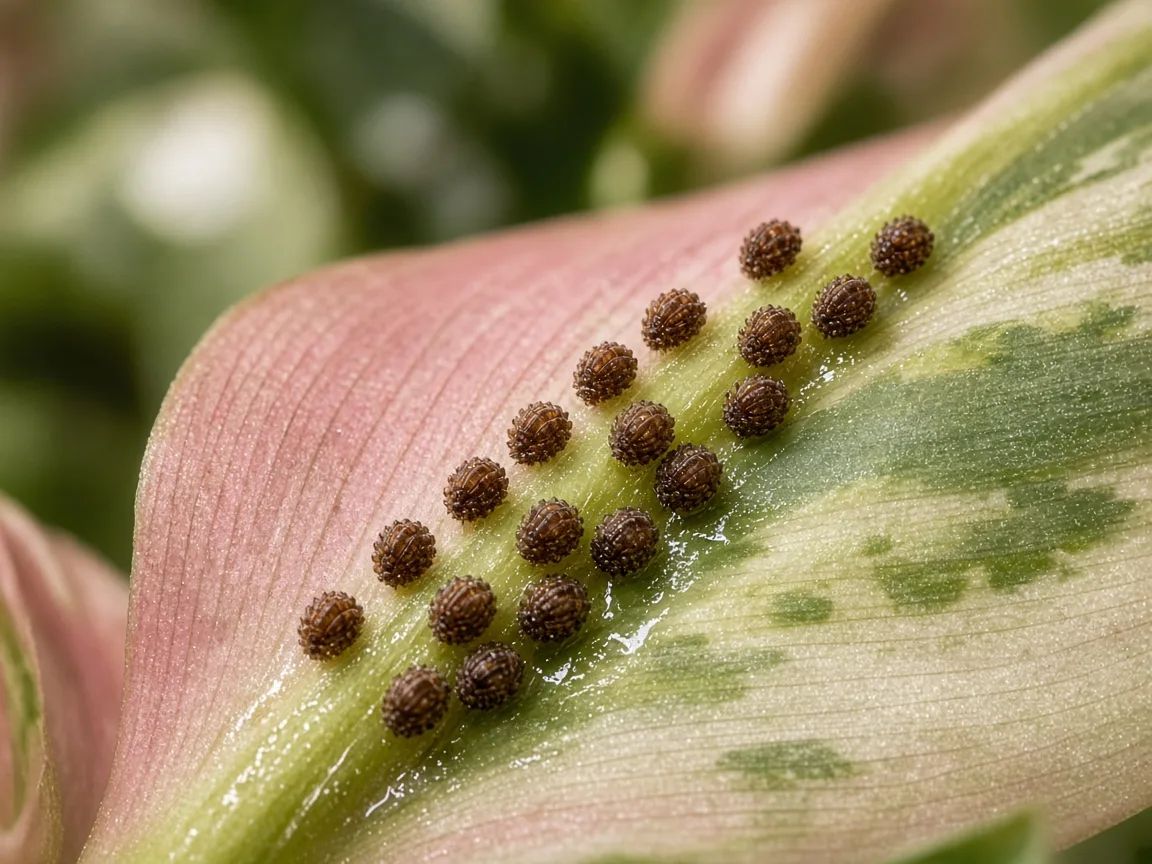
Brown oval scale bumps on a Triostar petiole and midrib—compare with clean variegated tissue on an adjacent leaf from the same clump.
Bumps on tricolor foliage:
- Flat or dome-shaped tan, brown, or bark-colored disks on petioles, midribs, and along pink-to-burgundy undersides
- Bumps at the junction where multiple petioles arise from the short creeping crown at soil line—often mistaken for normal stem texture
- Clusters tucked inside rolled new spears before cream-pink blades unfurl
- Soft scales excrete honeydew as they feed; sticky coating on pale cream panels below active colonies
- Black sooty mold on honeydew-coated variegation, blocking light on the thinnest pink streaks first
- Ant trails on saucers or cachepot rims farming honeydew from hidden petiole bases
Plant stress signs:
- Yellowing or washed-out patches on fed-upon blades while nyctinastic folding may still work at night
- Stalled center spears that should open into full tricolor leaves
- Thin new growth when feeding is heavy at the crown
- Lower leaf drop when sap loss is severe across several petioles
Unlike spider mites, no gritty stippling and webbing unless mites are also present. Unlike mealybugs, no cottony white wax tufts in axils. Unlike thrips, scale leaves glued bumps and honeydew—not silvery scrape marks with black frass.
Why Stromanthe Triostar gets scale insects
Scale pierce plant tissue and suck sap from stems and leaves. Triostar setups often hide colonies until honeydew appears because this prayer plant offers sheltered feeding sites other houseplants lack:
Long petioles from a short crown. Each 6 to 12 inch leaf rises on a long petiole from a compact creeping base. Scale colonize the full petiole length and the crown junction days before bumps show on the opened blade—by the time stickiness coats a mature cream panel, the next center spear may already be infested.
Night folding exposes pink undersides. Triostar leaves fold up at night, turning rosy undersides outward. That temporary angle stacks neighboring blades and creates crawler highways between pots in humid groupings—perfect for scale to walk between Calathea, Maranta, and Ctenanthe on the same tray.
Variegation camouflage. Pale cream streaks and pink patches on thin blades make tan disks hard to spot until you backlight undersides with a phone flashlight. Burgundy petiole color hides armored scale especially well.
High-humidity groupings. Triostar needs high humidity and warm temperatures indoors. Grouping prayer plants for humidity keeps crawlers active year-round when outdoor natural enemies are absent on the windowsill.
Nursery hitchhikers. Scale arrive on new houseplants under waxy covers that survive shipping. One infested Triostar from a greenhouse bench can seed an entire Marantaceae shelf.
Rolled spears and prayer-fold hiding spots
This is the Triostar pattern generic scale pages miss. Damage follows tightly rolled new spears and the folded night posture:
- Tan bumps may sit inside the cylinder before tricolor tissue opens—if honeydew appears on a mature leaf, peel back the highest center roll with bright light before assuming treatment worked
- New spears that should unfurl flat may stall or open with yellow patches when the growing point was fed upon heavily
- For crowded humid displays, prioritize the center roll, every petiole base at the crown, and burgundy undersides on the three newest leaves per clump
- Firm creeping stems at soil line support recovery; soft brown crown tissue with sour smell points to overwatering instead—fix roots before aggressive oil sprays on stressed foliage
Armored scales do not produce much honeydew; soft brown scale on houseplants often does. Ants on the saucer strongly suggest soft scale feeding hidden on petioles you have not reached yet.
Tricolor leaf panels: where honeydew shows first
Triostar’s irregular cream, pink, and green variegation makes plant stress look dramatic before the pest is obvious. Scale-related changes usually follow sap loss, not a watering slip:
- Honeydew sheen appears first on pale cream or pink panels where guttation droplets would be clear and edge-only
- Sooty mold darkens the lightest panels and can make variegation look “faded” in a way that mimics not enough light—check for bumps and stickiness before moving the pot
- Yellow patches on fed-upon blades differ from uniform yellow leaves from chronic wet mix when bumps are present on petioles and undersides
- Wiped honeydew often returns within days when the colony is active—cultural fixes alone do not stop that cycle
Unlike thick-leaved rubber plants, Triostar has no woody trunk to scrape in bulk—work petiole by petiole from crown to newest spear.
Lookalike symptoms
| What you see | Likely cause | Key difference on Triostar |
|---|---|---|
| Immobile bumps + honeydew | Scale (this page) | Bumps do not move; alcohol may discolor soft scale bodies pink or orange |
| Cottony wax in leaf axils | Mealybugs | White fluffy clusters, not hard tan disks on petioles |
| Stippling + fine webbing | Spider mites | Gritty pale panels; mites move when crushed—no glued bumps |
| Silvery streaks + black frass | Thrips | Mobile slender insects on paper shake; no immobile disks |
| Uniform yellow, wet sour mix | Overwatering | Soft crown, no immobile bumps on veins |
| Crispy margins, sharp patterns | Brown tips | Edge burn without bumps or stickiness |
How to confirm the cause
Work through these checks before you spray:
- Isolate first — Move Triostar away from other prayer plants. Crawlers walk between humid groupings on contact days.
- Inspect rolled center spears — Gently open the highest roll with bright light. Bumps inside the cylinder confirm scale before tricolor tissue opens.
- Petiole pass — Run a finger along every pink petiole from crown to blade. Immobile bumps that do not wipe away support scale.
- Underside vein check — Tilt each blade and inspect burgundy undersides along midribs when leaves fold at night.
- Alcohol spot test — Dab one bump with 70% isopropyl alcohol on a swab. Manual removal is effective on houseplants when soft scale bodies turn color under alcohol.
- Honeydew check — Sticky coating on pale panels or pot rims supports sap feeders—not thrips frass alone.
- Crown scan — Inspect where multiple petioles emerge from the creeping stem at soil line.
- Neighbor scan — Check every plant on the same humidity tray, not only the Triostar with the most yellow leaves.
- Rule out watering stress — Yellow from overwatering comes with sour wet mix and soft crowns—no immobile bumps.
If you find glued bumps with honeydew, scale is confirmed. If only silvery streaks appear, switch to the thrips guide.
First fix for Stromanthe Triostar
Isolate the plant, then scrape every visible bump with a cotton swab dipped in 70% isopropyl alcohol.
Work systematically from creeping crown to center spear. Manual removal is effective on houseplants when you reach hidden crevices sprays miss on thin prayer-plant tissue. Peel back rolled new spears gently—do not tear unfurling blades. Wipe honeydew from cream and pink panels with a damp cloth so sooty mold does not spread across variegation.
This single alcohol pass knocks down adults and many soft scale nymphs and gives you a clean baseline before any spray. Do not stack soap, oil, repotting, and fertilizer on the same day—Triostar is sensitive to chemical stress on already fed-upon foliage.
Step-by-step recovery
After the initial alcohol scrape, follow severity:
Days 1–14: Physical control (few bumps on one or two petioles)
- Repeat alcohol swabbing every three to five days on every bump you can reach; work petiole by petiole from crown to center roll
- Wipe honeydew from pale panels so sooty mold does not block light to remaining tissue
- Inspect burgundy undersides during weekly watering checks
Days 7–28: Contact sprays if bumps spread (moderate infestation)
- Apply insecticidal soap or narrow-range horticultural oil labeled for scale on houseplants—coat stems and leaf surfaces thoroughly, including undersides, until runoff per label directions
- Repeat on label intervals through at least three cycles—scale eggs under waxy covers survive a single spray
- Test one leaf first; Triostar’s thin variegated tissue can react to oil—wait 48 hours before full application in bright indirect light
Heavy infestation (honeydew on multiple blades, ants on saucer)
- Treat every Marantaceae plant on the same humid shelf, not just the worst-looking Triostar
- Trim and bag only leaves too yellow to recover—keep as much photosynthetic variegated area as the crown can support
- Hold fertilizer until new rolled spears open clean without fresh bumps
Recovery timeline
Judge recovery on new spears unfurling from the creeping crown, not old honeydew-stained blades:
- 3–7 days after first alcohol pass: Fresh honeydew stops appearing on the highest center roll; fewer ants on the saucer
- 2–4 weeks: Clean new tricolor leaves unfurl without bumps at margins—this is your main success signal
- 6+ weeks on mature clumps: Several unstained new blades confirm the population is broken; continue spot checks at petiole bases
Mature leaves with yellow patches or sooty mold do not revert—thin variegated tissue stays marked. Success means clean new growth unfurling from the crown, not a cosmetic reset of every outer prayer leaf.
Mistakes to avoid
- Stopping after one alcohol session. Scale crawlers and eggs under covers hatch after the first treatment; Triostar needs repeated passes on rolled spears and petiole bases.
- Spraying only leaf tops. Scale hide on undersides, inside center rolls, and along full petiole length—tops-only sprays miss the active colony.
- Confusing bumps with burgundy petiole color. Natural stem pigment mimics small disks—alcohol spot tests and immobility confirm pests.
- Oil spraying stressed Triostar in hot window sun. Treat in medium to bright indirect light per the light guide; oil plus intense sun burns pale panels.
- Ignoring nearby prayer plants. Inspect every plant on the same humidity tray, not just the Triostar with the most honeydew.
- Repotting on day one. Repot only if mix is failing or the crown is rotting from overwatering—not as a first response to bumps on foliage.
- Misting heavily into folded leaf bases during treatment. Trapped moisture can mark cream and pink tissue on prayer plants—wipe instead of soaking crowns.
Prevention
- Quarantine new Triostar three to four weeks before placing them in humid Marantaceae groupings
- Inspect rolled center spears and petiole bases during weekly watering checks
- Avoid crowding prayer plants so tightly that you cannot tilt blades to see burgundy undersides and the creeping crown
- Wipe dust from pale variegated panels every few weeks—dust hides honeydew on cream tissue
- Keep the high humidity Triostar prefers—cultural vigor helps tolerance, though humidity alone does not eliminate scale
- Use airy, moisture-retentive soil without chronic wet crowns that weaken the plant while pests persist
- Isolate any new nursery batch before it touches established prayer plant collections
When to worry
Escalate when:
- Honeydew and bumps spread across most petioles within two weeks
- New spears stop emerging or open mostly green with heavy feeding damage
- Ants persist on the saucer despite plant treatment
- Sooty mold covers large sections of pale foliage and blocks light to the crown
- Repeated weekly alcohol and labeled sprays for six weeks fail to stop fresh crawlers
Heavily infested houseplants with scale coating most petioles and multiple shelved neighbors may warrant discarding one plant rather than risking the entire collection—especially when the creeping crown is soft and new growth has stopped.
Conclusion
Scale on Stromanthe Triostar is a petiole, spear, and folded-leaf pest—tan bumps on burgundy stems and honeydew on cream panels mean inspect the center roll, isolate, and alcohol-scrape before you reach for sprays. Judge recovery by clean new tricolor blades unfurling from the crown, not perfect older variegated leaves.
Related Stromanthe Triostar guides
Related tool
Use the Pest Identifier Tool to narrow causes for scale insects on this plant before changing multiple variables at once.